TRUE OR FALSE? “Talking about dying will kill you.”

FALSE.  Talking about dying is non-toxic and perfectly safe for all ages.

I hit this wall a lot though, because deep down the majority of people believe it’s true.

In polite company, when it comes up that I’m writing a blog about…well…the “topic” (maybe if I don’t say the word, you won’t run)…I usually get a blank stare, long pause, and visible squirming, followed by an abrupt change of subject. Some people even turn around and walk away without saying a word.  (Which I admit makes this topic a valuable extraction tool in a pinch.  For anyone seeking to escape a chatty person, its eerie power of repulsion does have uses.)

In any case, there’s rarely an opportunity for a follow-through discussion.  The conversation is dead before taking its first breath and, so far, this hurdle has stumped me.  That’s why I spend so much time poking around the carcass in my mind afterwards, trying to find another angle which might induce more people to join me.

For instance this morning I was chewing on the common question; I’m not dying yet.  No one I know is dying yet.  So why should I think about it now?

This, of course, is the unstated question behind most blank stares and…I’m not gonna lie to you here…it’s a good one, possibly the most important question of all.  In spite of my flippancy, I fully understand why people don’t want to have this discussion: Talking about dying is a courageous act.  In order to do it, you have to stop running, turn around, and face the very monster that IS someday going to kill you and all your loved ones.  Let’s face it, as conversations go, it just doesn’t get much braver than that.

So when I broach the topic to someone who’s half-dressed at the next locker, or trapped next to me for three hours on a plane, or suddenly choking on their turkey over Thanksgiving dinner, I understand their reluctance.  I do.  I realize I’m asking them to start thinking right now about a real-life horror flick that at best they can delay, but will never escape.

Which brings me back to the question, Why should they?  The reasons had better be compelling.

Well they are.  And actually there’s just one:

It’s so they don’t have to spend their whole lives dragging the deadweight of this secret dread behind them.  Once a person learns how to talk comfortably and freely about dying, they can finally stop looking over their shoulder and relax a little. Living every hour, every day, year after year, with a yawning, existential, chronic fear…even if it’s kept pinned down in the subconscious most of the time…is draining and toxic.  Denial can help for a little while, sure, but ultimately it has huge downside.  Huge.  Trust me on this one.  As a long-time phobic I know.

Courage is a far better option and, while it’s harder to muster initially, it makes up for it by having no downside.  None.  In fact, courage not only eases the fear around talking about dying, it actually makes the event itself a whole lot easier to deal with when it finally arrives.

So when I grin at a 31-year old cashier and say Hey!  What do you think about this whole dying thing anyway?  It’s not because I’m the Grim Reaper’s administrative assistant trying to schedule an appointment for her.  It’s only because I’d like to ease some of her fear about the whole thing.  I’m willing to stay and hold her hand.

Facing into any fear shrinks it, and facing into this fear–as early in life as possible–can improve every day that follows in a way that most people don’t even know is possible yet.  I mean, how could they know when nobody ever talks about it?!

Sheesh.

So, what would make you more likely to stick around and have this chat?  If I said:

1)  I write a blog about dying.

2)  I write a blog about talking about dying.

3)  I write a blog that can help ease your fear about dying.  (Actually, is that even true?  You’ve read this.  Are you less afraid of dying now?  More afraid?  Unchanged?  Are you at least more willing to talk about it?  Are you even there?  Hello?  Hello?)

If anyone else has ideas about how to broach the topic of dying in a way that doesn’t repel everything within a hundred yards, I’m totally up for suggestions.  (And please don’t feel you have to be serious.)  Comments are even more welcome than usual on this one.

Thanks.

copyright Dia Osborn 2011

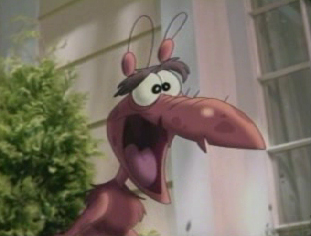
P.S.  The terrifically fun photo above is from Ambro’s Portfolio.

Sometimes the small picture IS the big picture.

Actually, most of the time it is.   But it’s easy to forget.

There’s nothing quite like the reality (or threat) of dying to help clear up any misunderstanding on this point.  I saw that a lot.  In almost six years of working with hospice I never once saw a person at the end of their life still wishing they could meet a celebrity.  Or win the lottery.  Or grab fifteen minutes of fame.

You know what they did long for?  (Besides wishing they didn’t have to die of course.)  To see their child or friend one last time.  To make sure their spouse or partner knew…really knew…how much they loved them.  To still be a part of the circle. To be in their own home, surrounded by their own things, and cared for by people they knew they could trust.

It hit me every time, how all the events that were happening in the big wide world…things that just a little while ago had seemed so huge, overwhelming, and important to them…telescoped down to the tiny, the few, and the essential.  It was a revolutionary insight.  I’d somehow completely missed this lesson before; that the small things ARE the big things.

Something reminded me of it again this morning.  A couple of YouTube videos have been hanging around my inbox for quite a while now.  They’re both on the long side, ten minutes or so, and…really…who has time for that shit?  I can’t get to all the real stuff that needs doing.  The only reason I didn’t delete them outright was because they were from people who might ask if I’d watched them.  And I suck at lying.

I’m pretty good at procrastination though.

But this morning the guilt set in so I watched them both.  And, lo and behold, what used to happen in hospice happened again.  I had the weirdest sensation of the world turning inside out (where big things get small and small things grow huge) and then I suddenly remembered what’s really important.  Yes, the broader world is something of a mess right now, but there are always plenty of little things going on in it that are perfect and beautiful and right.  And if I just remember that, then all the chaos in the universe can’t stop me from being grateful for my life, or for the many small but essential miracles that fill it.

So…if you ever have some extra time:

The first video is the story of the spontaneous boat lift that happened on 9/11, when a random flotilla of boats materialized out of nowhere to evacuate the hundreds of thousands of people trapped in lower Manhattan that morning.  (If you only have time for one video, make it this one.  It helps heal something that’s still, after a decade, surprisingly raw.)

The other video is a David Letterman segment about a young woman and her horse who got between a charging grizzly bear and the boy it was about to kill, and actually charged the bear.  Twice.  They saved the child’s life.  It’ll blow you away.

Editor’s note:  The original embedded video was taken private so I’m supplying a link to the interview which has been posted on Youtube instead.

copyright Dia Osborn 2011

Bone Monsters And The Evolution of Vocabulary

In the spirit of Halloween, here’s a spooky story.  And because I am who I am and can’t help myself, there are a few thoughts on dying that follow. (It’s like a tic.)

Without further ado I give you:

My Son And The Bone Monster

One night long ago, on a full moon in July, Father was away on a business trip leaving me, his pregnant wife, and our just-turned-three-year old son alone in the house to sleep.  It was a warm and peaceful summer night, not the kind where spectral things usually wake and wander, yet my sleep was restless and I woke up several times during the night to glimpse something shadowy passing down the hallway outside my bedroom door.  Each time I shook it off and went back to sleep, thinking it was just my imagination playing tricks on me.

In the morning I was jolted from slumber by the high-pitched screaming of my son, and I threw back the covers, leaped out of bed, and ran down the hall before I was even half-awake.

I entered the room to find him wide awake and sitting bolt upright, his back pressed hard against the headboard of his bed.  The bright morning sun streamed through the windows illuminating the entire room, yet he was looking into the empty corner near the foot of his bed as though he could see something.

As I approached the bedside he dragged his eyes away from the corner, looked at me and screamed, “It’s a bone monster!  A BONE MONSTER!!”  And I, of course, responded by doing what every good mother does; I tried to reassure him that nothing was there.  That the suspicious corner was actually empty, that bone monsters don’t really exist, that he’d just had a nightmare.

But he only shook his head in frustration, looked me straight in the eye, and said in a low, urgent, rational kind of voice, “No, Mommy.  Not that kind. This is a REAL bone monster!!!”  His voice rose back up to a scream by the last word and he raised his arm and pointed into the empty corner, as though the proof was right there before both our eyes.

That did it for me. The hair rose on the back of my neck and I climbed onto the bed, scooped him into my arms, and pressed my own back against the headboard.  I flashed back to the strange impressions I’d had during the night, of shadowy things passing down the hallway toward his room, and the coincidence gave me just enough pause to quit telling him he wasn’t experiencing something.  His terror was certainly real.  He’d done a remarkable job for a three-year old of communicating that he understood what a nightmare was and that what he was currently experiencing was something else.  I respected the effort and decided to bail on a rational approach and go with maternal instinct instead.  Here’s what She had to say:

Honey, he’s facing a monster here.  Imaginary or not, are you gonna let this thing fuck with your child?

Well, not when you put it like that.  No.

So I planted myself firmly on the bed, gripped my trembling son against my chest, and crooned ferocious words of protection into his ears.  It’s not gonna get you, sweetheart.  I won’t let it.  I will rip that freaking monster bone from bone…tear its head off, smash it down in the street, and run over it with the car a million times…before I’ll ever, EVER, let it get anywhere near you.  And trust me, I meant every word.

I continued along these lines until Bone Monster seemed to throw in the towel and leave.  I realized we’d won when my son suddenly relaxed, looked up, and told me he was hungry. Hallelujah.  We got up, got dressed, and traipsed out to the kitchen to make pancakes.

As far as I know, the Bone Monster has never returned.

Now, I don’t know why my son and I saw the things we did that night but, since it never happened again, not knowing doesn’t matter.

What’s more interesting to me is that my son called what he was seeing a Bone Monster.  Frankly, the term confused me at first.  (And apparently, only me.  Everyone else who hears the story immediately recognizes that he’s describing a skeleton.)  But when I realized what he’d done…that in lieu of the word skeleton which he hadn’t learned yet, he’d put two words together that he did know, bone and monster…the linguistic elegance of the feat just about knocked my socks off.

Think about it for a second.  The two words he chose had a lot of depth.  Both are multiple use, ancient words that have existed in pretty much every language since the dawn of time.  Bone is steeped in anthropological and folklore traditions as well as modern medical and scientific understanding while monster, still used to describe everything from childhood scary things to giant construction equipment to the heads of despotic political regimes, is quite simply one of the greatest words of all time.  (In fact, with the emotional relief its capable of delivering, I think monster ranks right up there with obscenities.  It can be that powerful.)

So separately they pack a punch, but putting these two words together created a description that was unbelievably sophisticated.  It conveyed not only a physical description of what he was seeing (a collection of bones-sans-flesh that were still arranged in the original shape of some kind of creature) but the intense emotional impact as well (monster–communicating supernatural animation, malice, and immediate threat.)

And it was all because he didn’t know the word skeleton yet.

But children do this all the time, you might argue.  So what?  And of course you’d be right.  Small children are wizards of language right out of the gate, which is probably why we usually take the sophisticated achievement that it is for granted.  I honestly don’t know why I woke up for a minute and saw it this time, but I did.  I goggled.  Positively gaped.

But here’s where it gets even more interesting.  The thing is; It’s not just kids who do this, falling back on old words to describe new thingsIt’s what we all do, whenever we try to communicate about rare experiences. Common names don’t exist yet for uncommon things so if we’re going to try and talk about them anyway, we always have to cobble together existing language in a new way.

And, finally, here it comes…

This is what I feel like I’m up against when trying to talk about my work with the dying.  I mean, I have to use the word dying.  I have to.  Physiologically, that’s just what’s happening.  But it’s also a misleading word, because when I say dying most people hear horror + terror + suffering + death, and then they shut down and that’s the end of the conversation.

For a lot of people dying is the Bone Monster.

But it means something different to me.  After working around it a while, caring for and learning from the people who were doing it, the word dying gained more grace and lost some darkness.  When I say it now there’s still horror in it, of course, but there’s also something strange and luminous involved that takes my breath away.  Its terror is countered by first hand observation of our inherent reservoir of courage, and its suffering is buoyed by my discovery of unsuspected strength.

And death?  It’s still there, too.  But now its death + the dawning awareness that our lives are so irrevocably entwined…our dreams, emotions, cells, and breath are so deeply woven into the physical fabric of the world itself…that on some weird, tangible level that I can see and touch and smell and hear and yet still can’t name, we’re indestructible.

I guess for me, dying is the whole package now, instead of just its worst parts.  I think of it as both Bone Monster and everything that protects us from bone monsters at the same time.  It reminds me of my son’s bedroom that morning; where there was a terrifying source of darkness in the corner, but there was also a fierce, radiant bond of love on the bed. That radiant bond exists in the rooms of the dying, too, and I saw it over and over again, a benign force that seems to emanate from everyone involved but also from the environment.  Almost as though it’s structural, like something we’re made out of.

Sorry, that’s the best I can do.  I don’t have adequate language to describe it except in the most primitive terms, which is incredibly frustrating and part of the reason why I started this blog.  I realize I keep harping on this over and over again.  I think it’s just my way of trying to work out some viable language.

Currently, we have hundreds of common ways to describe the horrible aspects of dying but almost none that describe the beauty involved.  It’s no wonder so many people are still dying bad deaths.  Maybe if we start developing some language for the good parts, too, it’ll get easier to start building good deaths for everyone?

copyright Dia Osborn 2011

Disappearing Pools And Our Deep Love Of Places

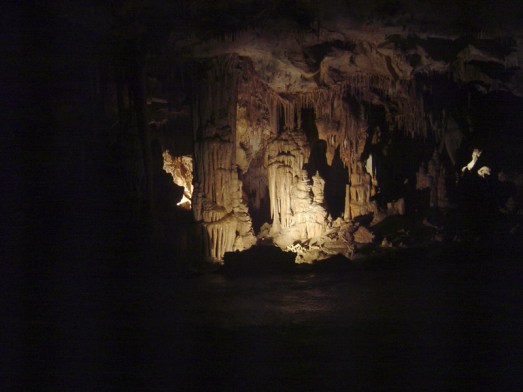
Sunken Gardens inside Lehman Caves

Editor’s note:  This post is a sad one.  Sorry.  I tried and tried but just couldn’t get it to come out any other way.  I know a lot of people who are struggling with these kinds of losses right now (I don’t know, maybe we all are to some degree, there are certainly sweeping changes afoot…) and, while fear and anger are perfectly natural responses, I personally just needed the room to feel sad.  Thought I should let you know.  Dia 

Sometimes we develop relationships with physical places that feel as intimate and necessary as anything we share with people.  It can happen with a childhood home, the family farm, a neighborhood, a church, or a sports stadium.  A stretch of coastline or a forest behind the house.  A garden, an old tree, a park, or a mountain.

Opportunities for this kind of bonding are pretty endless.

And once we sink our roots into one of these places, losing it for any reason can also be as wounding as the loss of a human relationship.  Yet these kinds of wounds are seldom recognized or acknowledged for as serious as they are.

I’m not sure why we’re so resistant to admitting that losing anything other than a first generation relative can be devastating, but we are.  I’ve seen people reel just as much or more from the death of a friend, a pet, or the loss of a home, as from that of an immediate family member.  I’ve watched them struggle just as hard to climb back out of the resulting hole and rebuild their lives afterwards.  But I’ve rarely seen them granted the necessary room to grieve.  Our reluctance to accept and dignify these other losses is both powerful and entrenched.

(But then again, we barely give each other room to grieve the loss of a close family member so I suppose this isn’t surprising.  Y’know, we really need to stop doing this to ourselves.  Communities riddled with chronic wounds aren’t healthy for anyone.)   

I bring this up because I lost a place like this a few years ago.  It was a still, dark pool hidden in a cavern deep underground, and the loss of it is still haunting me.

My mother’s people come out of Ely, Nevada in Spring Valley.  It’s one of those little towns out in the middle of nowhere that you drive through and wonder Why in the world would anyone live here?  Five generations of my family have though.  Four inhabit the cemetery.  Seven have walked the streets of the place and, even though I never lived there myself for longer than a summer, I bonded to it like it was home anyway. It was the central, unchanging hub of my early nomadic life, the one and only place my family returned to again and again, no matter how many times we moved or how many homes we abandoned.  Its high desert, mountainous lands became the geographical North Star off which the rest of my life was mapped.

Surprisingly, underneath those dry, desert lands…winding through a vast system of tunnels and caverns carved out over millions of years…is water.  A lot of it.  And when these subterranean aquifers are relatively full (as they have been for aeons), they seep up to the surface as springs, creeks, and small lakes that support an ancient and delicate ecosystem that would quickly perish without them.

This secret water also collects in countless pools underground that are, for the most part, eternally hidden from human view.  But a few of them are accessible.  When I was growing up there were a number of such pools in the Lehman Caves at the base of Mt. Wheeler which is a little over an hour’s drive from Ely.  The caves were discovered back in 1885 and when my great grandparents first moved to Ely in the early 1900’s, they used to go over and take the “tour” that was available back then.  It involved miner’s carbide lights and crawling through tight cracks (with colorful names like Fat Man’s Misery) to access the spectacular caves that are a part of the system.

Lehman Caves, Mt. Wheeler, and its surrounding lands are such a treasure in fact that they were placed under protection in 1986 and declared Great Basin National Park.

Every generation of my family since the great-grandparents has toured the caves, and it was during my own childhood visits that I became acquainted with a particular pool.  I could never see very much of it because the water stretched back into a recess outside the range of the electric light illuminating the walkway.  But what I could see of it was dark and absolutely still.

Now, some of the pools in the caves tend to ebb and flow with outside water conditions, but this pool had been there far longer.  It stirred something old and unsettled inside me as I learned about it.  How the pool was thousands of years old.  How it had always existed in total darkness and never reflected anything.  How it had never known a current because no wind ever touched it, no living thing ever swam in it, and no water ever flowed in and out to create one.  It seemed so lonely and pure to me.  So dark and foreign.  And yet, in some deep, secret place way down inside me, it was familiar, too.  Like being so sad, for so long, that finally you don’t even mind anymore, and so can be happy again at the same time.

Everything about it mesmerized me.  I wanted to slide my fingers into the water and wiggle them in that dark wetness but didn’t, because the rangers said it would harm the pool somehow and I didn’t want to hurt that still, silent, ancient thing.  It had a tangible presence that enfolded me in a sense of age and weight and peace.  It both soothed and suffocated me a little at the same time, and as a child I responded.

I fell in love with it.

Eventually, I grew up though, and there followed a gap of decades where I didn’t return.  When I did finally go back, I discovered something unexpected and devastating.  My secret, ancient pool was now half empty.  It was slowly draining away.

As the explosive growth taking place hundreds of miles to the south in Las Vegas demands more and more water to support its expansion, aquifers from farther and farther north are being tapped to supply it.  The local water tables are dropping as a result and the dark, beautiful pool I fell in love with as a child is just one small example of a much larger kind of collateral damage taking place.

The system of large, interconnected aquifers that exist throughout the Great Basin is fragile.  If more water is pumped out of it than is flowing back in, the system sustains structural damage.  Caverns can collapse without the support the water gives them, but an even greater harm comes when the layers of soil dry out and ground subsistence sets in.  The sinking, hardened, compacting earth no longer allows enough water to filter down from the surface to refill anything.  There comes a point where the aquifers can no more be recharged with water than a dead human skull can house another living brain.  As with biological life, the ancient, geological processes that created these systems only work in one direction.  In a very real sense, aquifers can die.  Indeed, this has already been the fate of the aquifers of the Las Vegas valley itself, which is why the desperate city has been thrusting its pipelines northward.

And standing there that day in the Lehman Caves, watching my dear little pool slowly drain away, I couldn’t bear to think about what was happening, much less see the evidence of it with my own eyes.  I finished the tour, climbed in the car, and then left the cave, the park, and the state behind me and stayed away for a few more years.  Eventually though, I couldn’t bear that either and I’ve gone back to the park a number of times recently, but I still haven’t been able to make myself go down to the caves.  A park ranger told me that the pool I loved is gone now and sometimes I wonder if I’ll ever go back in.  I spend my time up on top of the mountain instead, where the vast changes taking place below haven’t shown up yet.

In my years with hospice I learned how to be around human dying, how to navigate all the emotions that our final passage entails, but this is different.  Geological dying is so achingly slow.  When a person dies, no matter how important or how beloved they are, it happens and then it’s over with.  Even a long dying process finally ends and then survivors can move on with the tasks of grief and rebuilding.  Sooner or later they can climb back out of the shadowlands into sunlight.

But this? These aquifers, these ancient systems, take so much longer than that.  The disappearance of my pool was only an early symptom of a dying process that could continue for…I don’t know how long.  I don’t even know how to define when they’re alive and when they’re dead.  What does the death of a geological system look like?  They don’t have heart beats and brain waves so what am I supposed to measure instead?

I think that I’m still reeling from the loss of that pool because on some deep, genetic level I can’t make sense out of it.  I don’t have any ancestral memory for this kind of thing.  My predecessors didn’t survive global shifts of this magnitude and speed often enough to pass down the instincts I now need to navigate them.

I guess what I’m really trying to understand is this:

What am I supposed to do now?  What is the last person standing at the end of a thousands-and-thousands-of-years-long line of people supposed to do when the music suddenly stops with her?  What is my duty as witness here during the dying of a small, dark pool and the larger changes that it entails?

And as I wrote that last sentence the answer suddenly came clearer.  I guess that is what I’m supposed to do now…just bear witness and continue to love these places.  I need to do the same thing I did while working with hospice.  I never turned away from those rooms, never refused to look at those who were dying or tried to pretend like they weren’t.  I didn’t ignore or abandon them.  I was there to help and to care.  To listen and touch them as many times as they still needed to be heard and touched.  To witness their dying and affirm their lives, and to catch and contain as much of the wonder and miracle of them as I possibly could, so I could carry it forward in my own life afterwards.

I guess it’s time for me to return to the empty pool now.  I need to go back and touch its dry, limestone bed, to remember and say good-bye, thank you, and I really, really miss you.  And, for both our sakes, I also need to keep visiting, touching, and caring about the caves and mountains and high desert lands that I love so much.  Because no matter whether it happens in my lifetime or some far-off day in a different age, the dying of these places was never meant to stop my loving them.

In closing, here’s a photo of one of the larger, ebb-and-flow pools.  Beautiful, no?

Great Basin National Park Photos, Lehman Caves

copyright Dia Osborn 2011

Links about the impact of a pipeline:

Will Federal Study Save Great Basin National Park?

Sparks Tribune:  Wandering Water

How Thinking About Dying Is Helping Me Navigate Life

Rudder

This week I got a surprise dividend from all the time I’ve spent thinking about;

1) how I’d like to die, and

2) how to explain it to a loved one making choices for me.

But in order to explain the dividend I have to go back to the beginning of the year.

As I relayed in False Positives Are The Tenth Circle of Hell, starting in January the hubster and I endured four stressful months of an unnecessary prostate cancer scare.  What I didn’t mention in that post was that, during Month Three of this ordeal, I went in for my first mammogram in eight years and afterwards received a call back informing me that I needed to come in for further scans.  The radiologist had questions and wanted a second look.

I felt like I’d just been slugged.  I was already grappling with the onset of a depressive episode because of the fear and uncertainty surrounding the hubster’s prostate scare and I quickly realized there was no way I could simultaneously navigate the stress of a second scare without going down for the count.  I decided to postpone dealing with mine until I found out what was going on with the hubster’s.

Which was easier said than done.  The aggressive barrage of phone calls and letters that followed pressuring reminding me to schedule an appointment for further treatment only pressed me deeper toward the depressive episode I was fighting to stay out of.  (What’s up with that anyway?  People with real cancer don’t get that level of follow-up.)

Finally, we received the news that in spite of an elevated PSA, the hubster’s prostate was actually perfectly healthy.  The last four months were “just” a scare.  As I described in my post about the incident at the time, I didn’t feel relieved.  I felt conned.  Not by any of the people we dealt with…everyone was genuinely concerned and trying to help…but rather by a system that had gone horribly wrong for us.

Clearly, I needed to understand how it went wrong so I could navigate my own health scare differently.  I started researching.  What I discovered dismayed me.  First, I learned that the PSA test isn’t even FDA-approved for cancer screening, and the fact that it’s been widely deployed for that purpose has been the subject of controversy for over twenty years.  The jury is still out on whether the benefits of mass testing justify the resulting high rates of over-diagnosis, false positives, and over-treatment.

Then I moved on to mammograms and found some equally disturbing news.  Mammography neither prevents nor cures breast cancer and, while there does seem to be a modest benefit in decreasing mortality, the length of time screening actually extends lives has yet to be determined. Yet estimates for false positives run anywhere from a conservative 60% to a radical 90% of all callbacks, and some say over-diagnosis of breast cancers that would have regressed on their own may run as high as one in three.  Over-treatment is rife.  But the harm caused by all this is only just beginning to be studied.

Now, there are a lot of people who feel that if even one life is saved by all this over-doing, then any harm it causes is worth it.  And I really appreciate the fact that they value life that highly.  Because I do, too.

However, being one of the harmed myself now, I can’t help but feel some reluctance to continue the project.  While I’d dearly love to help save that one life, too, I can’t afford a descent into depression every time the system makes one of these frequent mistakes.

So with all this on my mind, for the last six months I’ve been considering what other course I could chart for myself; researching, sifting, weighing, and waiting for the voices battling in my head to reach some kind of consensus. On the one shoulder I’ve had all the aggressively pro-mammogram voices screaming, Go for the call back, woman! You could die! You could DIE!!  While on the other shoulder I’ve had my own voice warning, Careful Dia. You could easily slide into a depressive episode here that you can’t climb back out of.

(BTW, for those of you who asked what I meant by exercises for developing emotional endurance, this is an example.  I had to sit and hold hands with some incredibly uncomfortable, even frightening emotions while waiting for my eventual answer to put in an appearance.)

Then this week, I suddenly remembered a choice I made seven or eight years ago about dying that immediately and completely put all the voices to rest.  In her book Talking About Death Won’t Kill You (great title, no?) Virginia Morris offered a question to use when trying to talk to elderly parents about end-of-life choices.  She suggested we ask them:

If something happens and I wind up having to make medical choices for you, would you rather I erred on the side of doing too little or doing too much?

First let me say, this question is worth its wait in gold.  I kid you not.  I’ve posed it to a lot of different people over the years and the answers I received have frequently surprised me. I think this one question alone could save a boatload of suffering, if everyone only knew and asked it.

But back to what my own personal answer would be if I was asked, the instant I heard the question it was a no-brainer.  If anyone ever asked me, I’d tell them to definitely err on the side of doing too little.  Always.  I’m just not wired for the game of brinksmanship involved in trying to grab as many extra moments as possible at the risk of getting hopelessly entangled in the medical interventions that make them possible.  While that kind of extra time is worth the risk for some (particularly those with small children or other dependents who still need them) at this point in my life it certainly isn’t worth it to me.

It’ll be enough for those who love me to know that I have no qualms about giving up extra time…years if necessary…if it means being able to live a full and vibrant life, journey through a meaningful dying time, and then die a peaceful, simple death at home surrounded by people that I love.

So.  What does this understanding I’ve come to about the end of my life have to do with the current choice I’m facing in the middle of it?  Well, as you’ve probably figured out by now, it’s essentially the same question, only in a different situation.

Faced with a questionable mammogram but high rates of false positives, would I rather err on the side of doing too little or doing too much?

And as soon as I realized what the real question was, I immediately knew the answer.  I’ll choose for the least medical intervention possible, because that’s who I am.  It’s actually the same choice I’ve been making my whole life, only without realizing it.  Clearly, it’s the one I’m most comfortable with.  

It’s why I gave birth to both kids at home and navigated two decades of depression without antidepressants.  It’s why, when dealing with any illness or injury, I start with the least invasive treatment first and then work my way up from there.  It’s why I’ve spent so much time exploring less-invasive forms of medicine to supplement my use of modern medicine.  And I think it may even be part of the reason why I was so drawn to work with hospice; because it’s the way to die that usually involves the least amount of intervention.

The whole realization was kind of blinding.  I mean sure, I’d been hoping for some kind of resolution but I certainly wasn’t expecting an answer that big.  Suddenly my entire life, as well as a huge chunk of medical decisions I’m going to have to make going forward, just got a lot simpler.  And why?  Because of something I learned about myself while considering how I want to die of all things.

That’s the surprise dividend I mentioned.  Not bad, eh?

So what will I do about the current situation going forward?  Well, I’ll practice weekly home breast exams and watchful waiting until my next check-up in December.  Then I’ll discuss the whole thing with my doctor and get his input on where to go next.

And then (this is unrelated but something I’m kind of excited about)…if he’ll let me…I’d like to initiate our first conversation about how I want to eventually die a good death and see if I can get him on board with talking about the whole idea.  (I don’t think it’ll be a big leap.  Dying is totally the topic on the table as soon as you start talking cancer screening.)  I like Dr. R.  He’s a nice guy and a good doctor and if he’d be my primary till the day I died, I’d be happy.  We’ll have to see if I scare him off though.  I’ve never done this before and don’t really know what that kind of conversation is supposed to look like, but still.  There’s no time like the present to try, y’know?

copyright Dia Osborn 2011

Update:  10/10/11  Looks like I’m not the only questioning  what’s going on.  New recommendations are being mulled over for PSA tests.  See following article for details.

PSA Exams Should End in Men Without Cancer Symptoms, Panel Says: 

A draft report, released today by the Health and Human Services Department’s Preventive Services Task Force, recommends against so-called PSA tests for men who don’t have symptoms that are “highly suspicious for prostate cancer.”

A Childhood Portrait Reminiscent of Alice in Wonderland and A Question Of Emotional Endurance

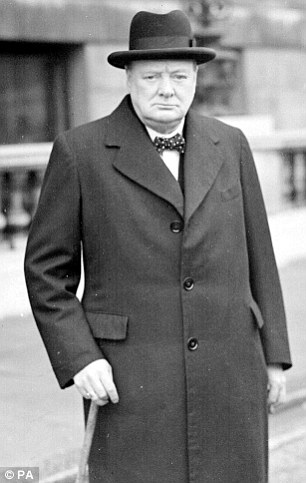
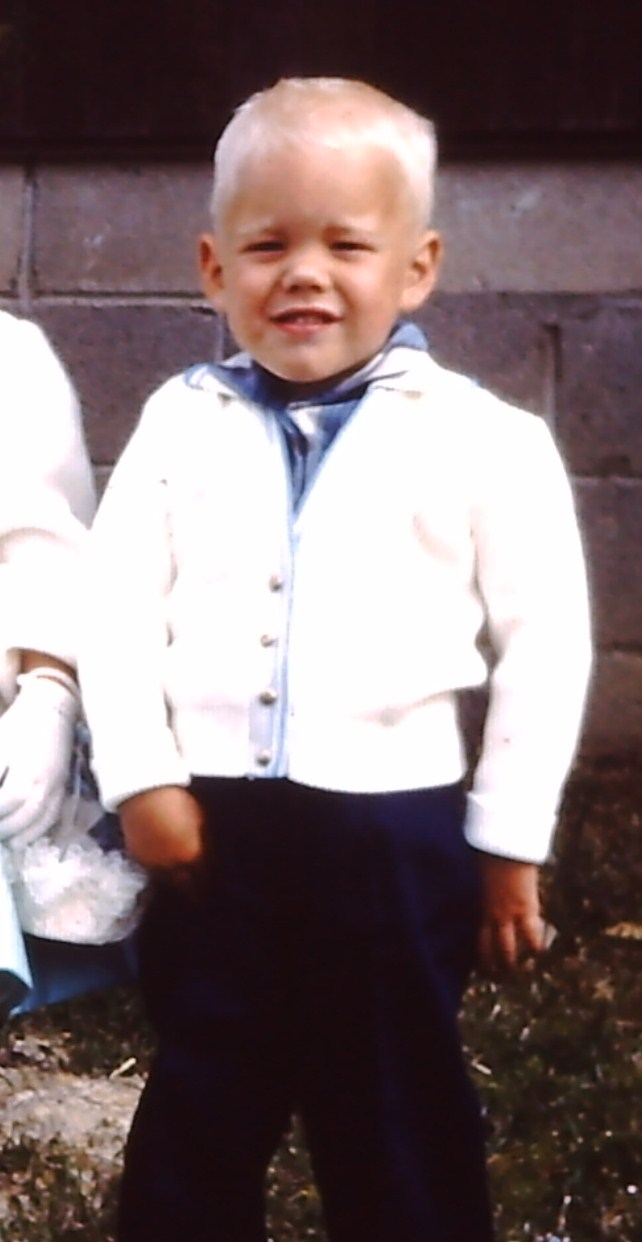
I’m the baby, fair budding to become a sunflower, second from left.  The young Queen Mother to my right is my only sister, while the boy doing the Winston Churchill imitation to her right is my middle brother.  Then there is the Eldest on the far left dignifying the portrait with his expression of Supreme Effort.  The youngest among us (who recently discovered this little treasure) was not yet born.

ABOUT WRITING:

LAST WEEK I RAN AWAY TO THE MOUNTAINS, and I think this is the first time I’ve ever missed posting on or around my Friday deadline.  Not a first-time I’m proud of or would like to repeat anytime soon.  I know there are tools available for scheduling a post to publish even when I’m gone so really, there’s no excuse.  (Not that I think it’s a life or death issue but still, the discipline is important for me as a writer.  So, note to self: research “scheduled publishing” tool and use it at least once before the end of the month.)

There.  Now on to the Easter Portrait.

ABOUT THE PHOTO:

My youngest brother became Guardian of the Box of Old Photos when my mother died a couple years ago and, during the ensuing sifting, has turned up a couple of gems like the one above.  We had no idea this thing existed.  Indeed, there are a whole series of Easter portraits that he’s uncovered, with a wide variety of outdoor backdrops (let’s play Guess What Military Base We Were Stationed At!), but this one clearly takes the cake.

The photo is of us but actually speaks volumes about my mother.  She was, like most women of her generation, trying to keep up with Jackie-O and, other than at Easter, we were always dressed in jeans and t-shirts, a fact that makes this snapshot-of-an-age even more absurd and delightful.

Ultimately though, I think it’s the accident of lighting that makes it most striking–we’re so illuminated it looks surreal, like we slipped down the rabbit hole in a string of held-hands and landed all dressed up in Wonderland.

ABOUT EMOTIONAL ENDURANCE AND THE DYING:

Moving on, I wanted to take a minute to answer a question about my last post.  In her comment afterwards, Linda over at Rangewriter asked what I meant by “emotional endurance.”  I thought it was a great question and, because emotional endurance is such a vital tool for dealing with difficult challenges of any kind, I wanted to address it in a regular post rather than just in the comment section.

Emotional endurance is just what it sounds like; the ability to endure one’s own emotions.  (Obviously, pleasant feelings don’t require much effort.  What I’m talking about are the painful ones like sadness, despair, anger, shame, loss, bitterness, guilt, regret, helplessness, etc.)  This skill was actually prevalent among the older generations but, during the current, unfolding age of budding-pharmaceutical options, has increasingly fallen into disuse.

And unfortunately, as a treat-and-cure cultural mindset has gradually replaced the older accept-and-endure one, the threshold of discomfort, pain, or uncertainty most people can continue to live and thrive with has fallen considerably.  Now…please.  I’m not saying medical advances aren’t a miraculous gift and blessing; they are.  Anyone who’d want to turn the clock back a century is, in my humble opinion, extreme.

However, there’s also profound value to be had from the old skill of knowing how to contain, endure, and navigate heavy emotions without needing to immediately escape them.  And nowhere was this made clearer to me than in the rooms of the dying.

In hospice I saw person after person after person, (all elders BTW,) deal with levels of emotional pain and loss that absolutely staggered me.  And, with only a couple exceptions, they ultimately did it without requiring antidepressants or a hastened death.  Over the course of their lives these people had somehow learned to navigate huge waves of overwhelm, fear, pain, and sorrow without losing sight of the beauty, love, and value that also populated their end.

I cannot begin to tell you what an eye opener this was for me.  I had no clue…no clue…how much stronger we are than I’d ever imagined, and if I could only pass on one bit of insight from all the wisdom I learned from the dying, that would be it.  Allow me say it one more time, because that’s just how important this is:

We are far, far, FAR stronger than most of us currently understand or believe.  By a multiple of thousands.  I know this, I’ve been there, I’ve seen it.  And I’m not talking about the rare hero, warrior, or saint, either.  (Although they are totally amazing.  Whew…)  No.  I’m talking about the rest of us.  All the ordinary, everyday, getting-along people like you and me that weren’t created for greatness; those of us who just want to raise our families, work a good job, have some hope, and live a decent life.  Us.

What I’d love to see is a cultural return to the recognition and development of this skill for emotional endurance, all the while keeping the growing arsenal of available treatments and interventions ready as back-up, just in case.  Y’know…for those rarer yet dangerous periods when life erupts into something that really is too much, too hard, too destructive, unendurable.

Can you imagine what we’d be capable of, what our lives would be like, what our world could become, with the power of inner endurance and medical relief at our disposal?

copyright Dia Osborn 2011

When NOT To Tell Someone They’re Dying

People who work in end-of-life care feel pretty strongly about telling people the truth.  If someone is dying and they want to know, then they damn well deserve to be told.

Why? Because wrapping up a life requires time to tie up the practical details, deliver final messages, bid farewells, and savor all the myriad “last times:”

Last birthday or bike ride, vacation or dance.

Last scent of fresh rain.

Last kiss of a beloved.

Last pang.

Last breath.

These moments are essential.  Validating.  Sacred.  They’re like rare, sparkling jewels scattered through a gathering dusk, and their aching sweetness is life multiplying itself a thousandfold as it picks up speed.

Yes, definitely–receiving the news that we’re going to die is a blow like no other, and trust me, delivering the message sucks, too.  But the alternative…to strip a person of their opportunity to gaze around in final wonder, to direct them instead to keep their head down and keep running, running, running on some exhausting, futile wheel of cure-seeking or worse, allowing them to die bewildered, panicked, or lost…is to strip them of life’s final and greatest miracle.

It’s selfish.

Now.  Having said all that, there’s one situation where it’s advisable not to inform someone they’re dying, even if they say they want to know.  It’s when they’re suffering from short term memory loss.  Whether the damage sources from dementia, brain injury, alcoholism, or pharmaceutical side-effect doesn’t really matter.  The effect is still the same.  Each time they hear it, it’s like hearing it for the first time all over again.

Personally, I think people in this situation should still be told initially, even though they’ll probably forget.  But telling them repeatedly would be kind of cruel.

Nobody needs that.

copyright Dia Osborn 2011

(The graphic above is by scottchan and, like many of the photos I use here, I found it on the terrific open source website: FreeDigitalPhotos.net.)

A Huge Life In A Tiny Box

(Sorry for the blur but this is the only picture anyone thought to take.)

A couple weekends ago we drove down to the little town in Nevada from whence my people come and buried a small box in the cemetery there.  It contained a variety of things; a seashell, photos, an old, scribbled note in a silver-plated box with blue velvet lining, a thank you card, a George Washington $1 coin from the U.S. mint presidential series, a Chinese coin, pictures of two Hindu saints, downy feathers, a secret bundle, and a handful of ashes from my mother who died over two years ago.

Some of these things belonged to her and others were things we thought she should have.  The seashell and feathers–because she adored the ocean and migrating birds.  The Hindu saints–because they guided her in life, so how much more important that they be there with her afterward?  The secret bundle–from a secret person for secret reasons known only to them.  And the ashes because they were a last, little part of her that we could come and visit whenever we felt the need.

The old note, I found a couple months after she died.  It was a short list of prayers folded up inside the silver box and stashed with her jewelry, dating from about a year before she died.  The prayers were written in this order:

1)  For an improvement in her health (which clearly didn’t work out so well).

2)  For ten million dollars invested in a trust yielding 8% a year (also a no-go). 

3)  For greater clarity (yes!…she was having amazing breakthroughs and insights during her last months).  And,

4)  A last, loving wish for enlightenment and peace for the whole world. This was the one that made me cry.  It was so like her, my mother, forever toting the world around with her in her bottomless basket of good wishes.

I spent days before leaving for Nevada sifting through the mementos of her life again–through all the deep, swirling emotions they resurrected–looking for the right pieces to place inside the box.  Because my mother believed in reincarnation I carefully tucked in the list…just in case prayers carry over from one life to the next.  The coins went in for murkier reasons even I don’t entirely understand; maybe as a token for the wealth she craved, or as an irrational but oh-so-necessary payment to the Boatman for safe passage, or perhaps just because they were made out of metal and would still be there long after the box itself decomposed.

Six of us came to sit around that small, square hole in the ground, drinking water and wine, soaking up the sun and wind, toasting her memory and telling her stories.  We had a folding chair for each of us and an extra one where we set the box.  We occasionally grew raucous, sprinkling wine over it after a toast, because sometimes remembering in the midst of great loss can just do that to you.

Before we placed the box down in the hole, I opened it one last time so we could have a look inside.  The wind rustled the downy feathers and then blew one out, whisking it over the hillside below us.  It floated above the headstones…more like a butterfly really, than the bird it came from…before finally rising higher, then higher, then higher into the sky.  We all stood transfixed and staring, following its lovely escape in surprised silence, but the same thought was in each of our minds.

Look!  Look! There she goes!

Afterwards we took handfuls of dirt, one by one, and threw them into the hole to cover the box, and with each handful we cried or laughed or were momentarily still…throwing our prayers down for her, too, along with the love of others who couldn’t be there.  With the first handful, grief overwhelmed me and I sobbed on my knees, unconsciously dragging my dirty hand across my forehead and cheeks.  I had no idea why I was doing it except that the grit across my skin felt welcome and good; raw and sharp enough to match the scraping of the wound inside me.

It was the leading edge of a brief but wild storm, and once it passed I felt calmer and lighter for it.  Cleansed and good.  Eventually we finished and, after replacing the small square of turf over the loose dirt, we packed up our things and traipsed off to the city park to eat a small picnic and finish the wine.

I like to think of that small box now, pressed down by the weight of dark, moist earth and already starting to decay, its cache of love and prayer, life and joy, seeping out into the ground like something with a half-life of ten thousand years.  It never ceases to amaze me, how relentless this great current of Life is that flows through us, spilling down from one generation to the next like a perpetual champagne fountain, as if we were ever-widening tiers of crystal flutes constantly filling and spilling simultaneously.

My mother is gone but the huge gifts of her life are still washing down through the bewildering number of other lives she altered just by existing here for a while.  They’re inside all of us who loved her and passing on into all those we love in our turn–inside everything she touched and every place she passed through.

And as of a couple weekends ago those gifts are now inside that tiny box, too, buried up in the high desert mountains where they will be leaking their grace for generations to come.

copyright Dia Osborn 2011

The Danger of Blowholes

This photo was taken moments before the man behind the water spray was sucked down a blowhole on Maui last week:

Photo from the article in the Daily Mail.

Sadly, he only came back up to the surface once before being dragged under again and disappearing for good.  At the time the article was written, his body had still not been found.

It’s an odd way to go, death by blowhole, but that’s not what grabbed me.  My eldest brother was also sucked down a blowhole, decades ago now, also in Hawaii only on Oahu, not Maui.  It was during a high surf alert generated by an earthquake on the Asian side of the Pacific rim and, as soon as they heard about it, Bro (an occasionally professional surfer), his girlfriend, and another surfer friend drove up to Waimea Bay to check out the waves.

They weren’t going there to surf.  The waves were coming in around thirty feet and big wave surfing wasn’t yet as popular as it is today.  No. They were just heading up to watch, because waves that big are a rare phenomenon and, like solar eclipses, tornadoes, and eagles mating, sightings are a privilege and opportunities shouldn’t be wasted.

The three were standing up on the cliffs overlooking the bay, admiring the monster surf, when they first noticed it.  Huge spray coming out of a blowhole none of them had ever seen before.  It clearly had a long tunnel, starting down in the bay and running all the way up through the rock to its exit farther out on the point, and no one had noticed it before because it was inactive in smaller water.  It took seismically generated waves to finally send water all the way up and out the top, and Bro and company were understandably excited by the discovery.  They wandered out to take a closer look.

Now understand, these were experienced island people.  They knew about blowholes.  They understood how strong and deadly water that only reaches up to your ankles can be.  But somehow, in spite of keeping what they thought was a safe distance, the wash coming out of the hole suddenly snaked across the cliff, wrapped around Bro’s feet, whipped them out from under him, and sucked him struggling and clawing back to the mouth of the hole, over the edge, and down inside it.  Just like that.  Blink of an eye.

The Hawaiian Akua are known to be mischievous.

He had just enough time before going under to grab a lungful of air and, because he was a surfer and accustomed to spending long periods of time held under by powerful waves, his lungs could hold a lot.  He began the descent and traveled deeper and deeper down the wormhole, with no idea where it would come out or even if it would remain large enough to allow his passage all the way through.  What he did know was a long, narrow, hurtling slide down through water, rock, and darkness, with a steadily growing pressure in his chest as his air started to run out.

Finally, as he was beginning to think he might not make it, he felt himself whoosh out the bottom of the tunnel into open water. He immediately struck for the surface and when he broke into open air, found he was so far out in the bay he was actually past the surf line.

Needless to say, Bro’s girlfriend and friend were freaking out back on the cliff, and they failed to spot him where he came up because they were looking closer to shore.  But eventually someone sighted him and called the Coast Guard who quickly launched a rescue.  I’m delighted to tell you that my brother survived to tell the tale.  Because he was a strong swimmer, and because he didn’t lose his head, and because our Aumakua were protecting him, and because…well…it just wasn’t his day to die.

Working with hospice is about working with those who die slowly, navigating the process as it gradually unfolds, step by step, over a period of time.  Sudden death is different.  When a person dies abruptly the laws that govern the dying process are moving so fast that it becomes impossible to see the underlying physiological sequence in action.  It’s still taking place mind you.  Every physical body has to go through a shutting down process on it’s way to death.  But while a wasting disease takes us through those stages one at a time, sudden death strikes every point along the sequence simultaneously.

Why is this important?  Because even though these stages of the dying process are the only part we have any control over, we leverage this control into an illusion that we actually have some power over death itself. (We can save lives!  We can!!)  But when a sudden death comes along and collapses the various stages into a singular, catastrophic event which is beyond our ability to influence, then our illusion of control over death is instantly vaporized.

Poof.

The shock of this is absolutely terrifying.  As a people we are very, very, committed to both our denial of death and our illusion of power over it. Pretending like we can somehow conquer it by throwing billions and trillions of dollars into ever-escalating research, treatment, surgeries, medical insurance, regulations, legislation, screenings, hospitals, and drugs has become one of…if not the…central tenet of our modern society.  The pursuit of this illusion has actually now taken over the bulk of our economy.  It’s consuming more and more of the healthy parts of our individual lives.  It’s really, truly massive.

Which is, of course, what makes those moments when the illusion shatters so horrifying.

While medical/technological advances are granting us a greater level of confidence and control than we’ve ever known before, that control is not…and never has been…over death.  It’s over time.  Yet we constantly forget this.

What I’m trying to say here is that dying is negotiable, but death is destiny.  When it’s time to die, it’s just time, whether it’s at the end of a long illness or on the lip of a blowhole.  I realize that saying something like this sounds superstitious in a society that prizes rational thinking, analysis, and control as much as ours does, but only as long as we’re speaking in today’s relatively young scientific language.  In other, older languages this understanding of death as destiny is common.

Try talking to soldiers who’ve seen active duty on the battlefield, or emergency room personnel working long shifts in busy, urban hospitals, or 8,000 meter mountain climbers who’ve seen a lot of companions die climbing, or morticians, or clergy who work with the bereaved, or anyone else who’s been around it a lot and gained an intimate knowledge of the mechanics of sudden death.  They’ll say pretty much the same thing I am; while devastating to watch, the experience also grants one an expanded perspective of reality, an aching grasp of the limits of life, and a deeper understanding of mystery, than all the long, hallowed hallways of science strung together will ever be able to deliver.

To close, here’s an outrageous video from Neptune Surfing.  It was evidently taken at Waimea Bay in 2009 during a storm surge that was creating more monster waves.  Yeah, baby.

copyright Dia Osborn 2011

Hospice in Louisiana Prison is Decreasing Levels of Violence

Photo from the award-winning photographic documentary Grace Before Dying

What transformed the Louisiana State Penitentiary at Angola, one of the most violent prisons in the South, into “…one of the least violent maximum security institutions in the United States”?

A hospice program.

If you get a chance, check out this website that Linda over at What Comes Next? turned me onto.  It’s called Grace Before Dying and is inspiring (which is saying a lot with all the turbulence in the world right now) and is about the photographic documentary by Lori Waselchuk that chronicles the prisoner-run hospice program at Angola State Penitentiary, Louisiana’s maximum-security prison.  Evidently, a life sentence in Angola means both life and death.  85% of the roughly 5100 inmates die there and, up until the hospice program was started in 1998, that meant dying alone in the prison hospital.  But now they have a hospice ward where the terminally ill inmates are transferred, and once there the dying are tended almost entirely by inmate volunteers who are serving life sentences themselves.

It seems to be this most basic act of simple humanity that’s transforming the prison population…which comes as no surprise to me.  Tending the dying in hospice transformed me, too.  It transforms everyone who does it.  From the website:

“The hospice volunteers’ efforts to create a tone of reverence for the dying and the dead have touched the entire prison population.”

Frankly, the prison system we’ve set up in this country has always puzzled me.  I’ve never been able to figure out just what, exactly, we’re trying to accomplish.  The focus on isolation and torture (because really, I don’t think you can call what happens in these hell-holes simple punishment) and then release for godsakes, strikes me as short-sighted.  It’s like capturing a dog doing damage near a downtown cafe, locking it up in a small cage, systematically brutalizing it for five years, then taking it back to the same sidewalk cafe, telling it to behave, and turning it loose again.

What do we expect?  Lassie?

In this country, we’ve coupled justice with revenge and their offspring have been multiplying for years now.  Our prison populations have swelled to the point where they’re wreaking havoc with both our public safety and economic stability, (look at what California’s currently dealing with.)  Doesn’t it seem like now might be a good time to consider trying something different?

Well, some prisons are.  There’s a growing trend to team with animal shelters, allowing inmates to help care for and train abandoned and/or abused dogs.  Another program in Mississippi called PACT partners inmates with abused horses.  Like hospices in Angola and other prisons, these programs structure relationships for the inmates that cultivate bonding, vulnerability, kindness, responsibility, and empathy, all qualities that naturally deepen our innate humanity.

Like tends to beget like.  Cruelty begets cruelty and inhumanity begets inhumanity.  If we really want to create a better, safer, kinder world, then we should probably be trying to foster everyone’s humanity, not destroy it.  By instituting a hospice program, the prisoners at Angola have been given the opportunity to foster theirs.

Dying is generally regarded as the ultimate destructive force…and it is.  I would never argue with that.  But what most people don’t understand (yet) is that it also has a profound ability to heal.  Everyone acknowledges that a “good death” is important for the person who’s actually dying but it goes much farther than that; a good death is also critical for the well-being of those left behind.  A bad death creates scars, the tentacles of which usually spread far and deep through the lives of survivors, and it embeds a terror of the future that eventually infects everything.  Everything.

A good death, on the other hand, tends to nourish our compassion, deepen our humanity, expand our understanding of life, and lift us out of that underlying sense of loneliness and individual isolation that defines so much of modern life; all things that ultimately serve to ease this fear of the future rather than aggravate it.

To close I’d like to leave you with this last quote from the website:

“The hospice volunteers must go through a difficult process to bury their own regrets and fears, and unearth their capacity to love. Grace Before Dying looks at how, through hospice, inmates assert and affirm their humanity in an environment designed to isolate and punish.”

copyright Dia Osborn 2011

Going Light

John Grey, a thoughtful and entertaining blogger/smallholder over at Going Gently, mentioned in a recent post that “going light” is a Welsh phrase for the accelerated wasting process that happens during the last days and hours of dying.  During this time it often looks like they’re starting to disappear right before your eyes.

The phrase really struck me, not just because it’s the loveliest way of describing this transition I’ve ever heard, but because it’s also the most accurate.  That’s exactly what the rapid changes look and feel like with both the body and spirit of someone who’s dying.

I’m going light now, Ma.  I’m going light.

Beautiful.

(Image: dan / FreeDigitalPhotos.net)

copyright Dia Osborn 2011

“The Good Short Life”

The New York Times ran a great opinion article by Dudley Clendinen last Sunday called The Good Short Life.  Great title.  It’s about just what it sounds like.

Mr. Clendinen has A.L.S., the best known of the motor neuron diseases which are generally held to be one of the most difficult ways to die.  It involves a gradual shutting down of the involuntary nervous system which, when left to its own devices, leads to a very, very slow suffocation.  The disease takes years to play out and is beyond horrible.

In the article he talks freely, openly, and gracefully about the good and bad involved with dying…and I love him for it.  He’s refusing to disappear into that cloud of gray mist where we so often relegate our dying–that place where we don’t have to see them or deal with them or think about what they’re going through.  Instead he’s speaking up (or writing up in this case), doing his part to maintain a normal, ongoing, comfortable chat about the whole thing.  About dying, that one other universal reality besides being born and drawing breath that we all have in common.

The article is two pages and worth a read.

He broaches a number of controversial topics including the overwhelming costs involved with long term medical care for a condition such as his and the moral question of who’s going to pay for those costs (…the respirator and the staff and support system necessary to maintain me will easily cost half a million dollars a year. Whose half a million, I don’t know…)  He also talks about the choice he’ll have to make about when he’ll die because that’s something those with a motor neuron disease always face; when to fight it, when to manage it, and finally how to either surrender or escape it, whether through the blessing of pneumonia or other infectious disease or a method more proactive.

Of course these are extremely loaded subjects to address, ones which tend to invoke some very strong emotions in people, but that doesn’t mean we don’t still need to talk about them.  Our medical system has advanced to the point where most of us are eventually going to have to face the same kind of choice as Mr. Clendinen.  A lot of people don’t understand this yet but most of us won’t just die anymore.  Medical advances have made it possible to sustain the barest physical functioning for indefinite lengths of time, usually far, far longer than anyone desires.  This means that sooner or later someone has to actively, consciously decide that we’re going to die.  Either we decide to forgo further treatments, our loved ones decide to withdraw life sustaining measures, or somebody else decides they’re not going to pay for it or provide us care anymore.

This is the darker underbelly–the turbulent, terrifying, whitewater rapids–we’ve created with our brilliant, modern, technological capabilities.  For better or worse, these are the kinds of choices that now go with the territory and we are all going to have to learn how to navigate them.  There’s no such thing as a gift–however miraculous, however blessed–that isn’t also accompanied by a burden of responsibility.  In this case we now need to learn how to bear the burden of miraculous choices.

Not everyone will agree with the particular choices Mr. Clarinden eventually makes–which is fine, everyone doesn’t have to–but we can all benefit from studying the way he’s willing to talk about them.  Each of us, when faced with the unique circumstances of our own dying time, is going to have equally difficult choices to make, and simply knowing how to talk about them with our doctors and loved ones will make them far easier for everyone to navigate.

copyright Dia Osborn 2011

It’s OK To Still Love Their Bodies Once They’re Gone

Before Mr. B died, he made sure his body would be left lying for twenty-four peaceful hours–at home–before going to the crematorium.  How sure?  Sure as in he sat down with his lawyer and wrote it into his will sure, making his wish legally binding in Idaho.

His request may sound strange to a lot of people–it certainly does to the average person around here–but the practice is customary among Buddhists who believe that the bond between personality and body takes time to unwind after death.  (I’m not Buddhist but I think the following link is a fairly good explanation of Buddhist beliefs about death and dying for those curious to learn more.)  Of course, the Buddhist belief is different from the prevalent one held in our culture which says our personality/essence/soul/consciousness/whatever one calls it…our us-ness…separates from the body completely at the moment of death.  Even Christians and scientists are aligned on this point–they don’t seem to diverge until the question of what-happens-afterward crops up.

Mr. B’s family was totally on board with his choice and perfectly willing to keep him around.  And me?  I was all for it, too.  I had a personal stake in finding out what effect this choice would have on the loved ones Mr. B was leaving behind. Two years later and I’m still grappling with the distress I felt at abandoning my mother’s body in the hospice house where she died.  I looked at this opportunity with Mr. B as my chance…a gift!…to see what it’s like for a willing, loving, respectful family to keep the body of their dead beloved with them for a little longer–to discover if it helps ease their grieving afterwards.

The hubster and I lingered for an hour or two after Mr. B died, drifting along on the tender current of hugs, tears, laughter, phone calls, rehashing, and story-telling that always follow a good death.  But finally I needed to head home.  I hadn’t gotten much sleep during the night and required a shower and a nap.  Just before leaving, I returned to the bed, leaned over, and laid my cheek against Mr. B’s, whispering I sure do love you, sir.  Have a safe journey.  Knowing you was an honor and a gift.  Then, unexpectedly, I started to cry.

Mr. B’s face was still soft and life-like and, for whatever reason, in that moment it felt like like he was still there.  Not necessarily inhabiting his body per se, but just present somehow.  Around.  It seemed like he was smiling and relieved.  Like everything was okay.  No…better than okay…good.  It felt like he’d suddenly gotten a lot bigger, too, in some insubstantial but still oddly tactile kind of way.  Hard to describe.  (This experience of a sense of presence is actually common among the bereaved, with some studies putting the rate of occurrence at well above 50%.)

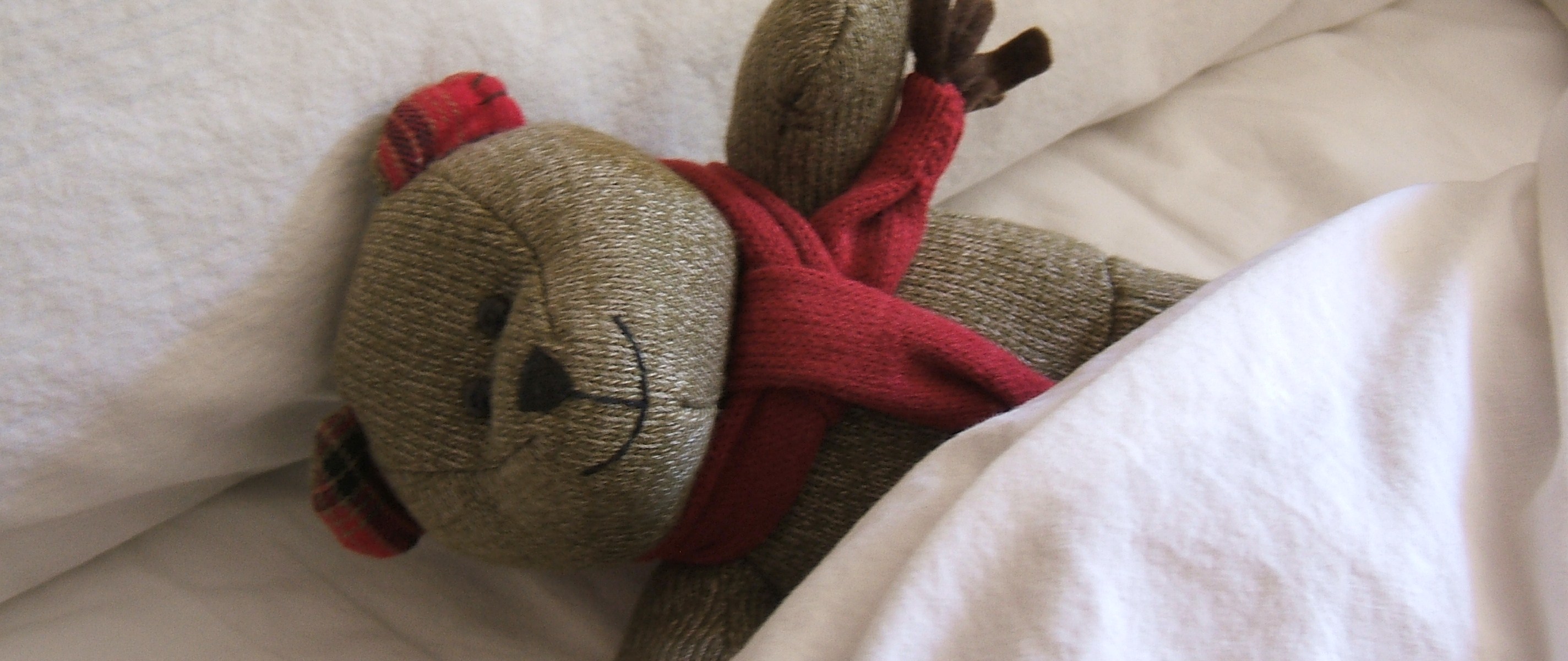
That momentary sense of his presence pierced the numbness of fatigue creeping over me and sent me plunging back down into my heart again.  The tears felt painful, bewildering, and sweet, all at the same time.  It reminded me of the day I discovered the stuffed animals my daughter abandoned the day she left home, still sprawling against the pillows in her bedroom.  It was unexpected, walking in and finding them like that–an innocent reminder of her childhood life with us–and I curled up on her bed, gathered them in my arms, and lay there in the ache of remembering for the longest time.

We shared a bond, these toys and I.  They’d been left behind, like I’d been left behind. She loved them, like she loved me.  And lying there clinging to their soft bodies and fake fur, I was awash in all the nourishing, enduring love she’d left behind for us.  I could feel her again, all across the bed, and I realized we’re all born magical like that–with a mysterious ability to place a tangible, lasting kernel of ourselves inside the people we love so that no matter where we go, no matter how big the hole our departure creates, at least we never leave those behind us completely alone.

(This post is turning out to be longer than I originally anticipated so I’m going to spare you all and spread it out over a couple posts.  Next time: Their Body: It’s Not Them Anymore But It Still Deserves Our Thanks)

copyright Dia Osborn 2011 

A Blogging Topic That Repels Spammers

In the eternal, unwanted, ebb and flow reality that is spamming-on-the-blog, I’ve noticed something intriguing.  Posts on my main topic of interest…Dying…repel spammers.  (These posts also, unfortunately, repel readers, but let us leave that topic for a brighter day.  Sigh.)

It is oh-so curious, no?

The pattern has just recently become clear to me.  Roughly eighty-five percent of my posts involve something I’ve learned from the dying and the longer I stay on topic, the likelier the flow of spam will trickle off and die. (No pun intended.)  But when I drift off-topic and broach subjects like Arab spring, or annoying Google advertising, or Stihl gas powered pole tree pruners, the velocity of spam immediately increases at a spanking pace.

Spanking, I tell you.

Then I return to my main focus and voila!  All I have to do is write three or more dying-related posts in a row and it crushes the burgeoning torrent of spam as efficiently as Raid on roaches.  Seriously.  It’s just that good.

Even I never dreamed the taboo on speaking about dying was this powerful; that spammers respond to it (in a second hand, traffic sniffing kind of way.)  Who would have thought anything was that strong?  A fascinating and, for once, entirely happy consequence of breaking said taboo.

(Image from Wikipedia)

copyright Dia Osborn 2011

Jack Kevorkian: The Elephant Is Still In The Room

Jacob “Jack” Kevorkian

May 26, 1928– June 3, 2011

Jack Kevorkian, the outspoken, determined, abrasive champion of physician-assisted suicide died last Friday in a Detroit area hospital.  He was 83 years old and died of natural causes.  He took on one of the most thankless jobs around…trying to get people to actually talk-and-do something constructive about how we die.  I’d like to sincerely honor him for his efforts in that direction, however controversial his methods, as well as wish him a smoother journey going forward than he had while he was here.

May you rest in peace, Dr. Kavorkian.  Thanks for having the courage to try and do something.  You were braver than most.

The tone of the articles I’ve read so far is all over the map.  A few roundly condemn him,  a few unapologetically celebrate him, most fall somewhere in between.  And I guess that’s appropriate considering the terrifying nature of the subject he tried to force the American public to face and address.  This quote from The New York Times article summed it up best for me:

 But Jack Lessenberry, a prominent Michigan journalist who closely covered Dr. Kevorkian’s one-man campaign, said: “Jack Kevorkian, faults and all, was a major force for good in this society. He forced us to pay attention to one of the biggest elephants in society’s living room: the fact that today vast numbers of people are alive who would rather be dead, who have lives not worth living.”

(Well, I’m not sure about vast numbers, but certainly more than there should be.)

Personally?  I admire the man for his bulldog tenacity in trying to make us look at how we treat those who are dying.  Back in the 90’s the terminally ill were holding the very shortest of straws, and really, somebody had to stand up and fight for them.  Kudos to Jack for being willing to put the target on his back.

But as far as his solution of physician-assisted suicide is concerned, I tend to lean more towards the view of Ira Byock, the Director of Palliative Medicine at Dartmouth–Hitchcock Medical Center and one of the most powerful voices out there calling for more aggressive care of the terminally ill.  In a 1994 paper he said that, while Kevorkian addressed the right problem, he proposed the wrong solution:

The problem is that of unmet suffering – indeed, unaddressed suffering – among many of the terminally ill in this country. Kevorkian deserves credit for loudly calling attention to this situation in a manner that the public – and the medical profession – finally can no longer avoid.

…This regrettable frequency of uncontrolled symptoms exists because of a critical deficiency of medical education as well as a lack of commitment on the part of established medicine to do whatever is necessary to alleviate the distress of the dying. The requisite knowledge, medicines, techniques and technology exist; they are simply not being applied. Physicians who do not aggressively respond to anguish among their dying patients deserve the sternest professional sanctions.

I think that the main thing Dr. Kavorkian was fighting for, access to a humane death, has been accomplished with the advances we’ve seen in hospice and palliative care in the last couple of decades.  In hospice care there are already established protocols in place that allow the possibility of medicating a dying person enough to successfully control their pain and suffering, even if it involves death as a possible outcome.  (That’s a whole other blog post that I’ll tackle soon.) For now, the biggest problem I see is that the majority of people still aren’t using hospice and palliative care services anywhere near enough.

To address this problem I’d like to see more aggressive steps taken to:

1) see that both hospice and palliative care services are made more universally available,

2) get more doctors to recommend their use earlier in the process, and

3) educate the general population on what hospice and palliative care really do so they’ll more readily turn to them when the appropriate time comes.

The conversation about dying in this country has come light years since Jack Kavorkian first forced us to start talking, but overall the topic remains an elephant looming large and untended in the room.

Personally, the idea of legalizing assisted-suicide makes me a little nervous.  It’s not a moral issue for me, it’s a social one.  As David Callahan mentions in The Troubled Dream of Life, we already have three other ways we get to legally kill one another (war, capital punishment, and self-defense) and for all our sakes, I’d rather be shrinking than growing this list.  Social fabrics are fragile under the best of circumstances.  I can’t help but feel it would be wise to proceed with caution and have a much more open, reasonable, and in-depth public conversation before we decide.

copyright Dia Osborn 2011

related articles:

Jack Kavorkian Dies at 83, Slate Magazine

Letting Go, The New Yorker