CSA’s and Thoughts About How Hard It Is To Address Childhood Sexual Abuse

I have to start writing faster.  I’m too anal and obsessive, to the point where I spend three hours on a sentence that I should just delete.  Then I do.

(I’m now fighting off the compulsion to go back and extensively rewrite the previous three sentences before I can move on.  Sigh.)

So, since I’m up against my deadline today, and since I’ve wasted the entire week on writing and re-writing a few paragraphs of a post that I’ve now decided not to use, and since I now have nothing to show for all the hours I worked, today I’m going to just write something and then throw it up in the air to see if it flies.  Here goes.

First, CSA’s (Community Supported Agriculture.)  We joined a CSA hosted by a local farm this year and it’s been a terrific experience.  Our membership included a set poundage of locally grown, organic fruits and vegetables each week in addition to which we splurged for a free-range chicken or a dozen eggs on alternate weeks.  It’s a whole different way to eat, let me tell you.

We met a number of new vegetables we don’t normally consume (lemon cucumbers and purple potatoes…yum!!, beets…no.  An unfortunate childhood brush with forced feeding seems to have ruined me forever for beets…) and menu planning was an exercise in surrender and total flexibility.  I had no idea what I’d find in the bag from week to week so Tuesday nights involved a steep learning curve and creative (if not always edible) menu planning.  I was feeling increasingly overwhelmed by it all until the lucky discovery that I could throw everything I didn’t know what else to do with into a roasting pan, coat it with olive oil, and then grill it for half an hour.  No waste, little effort, and surprisingly tasty results.

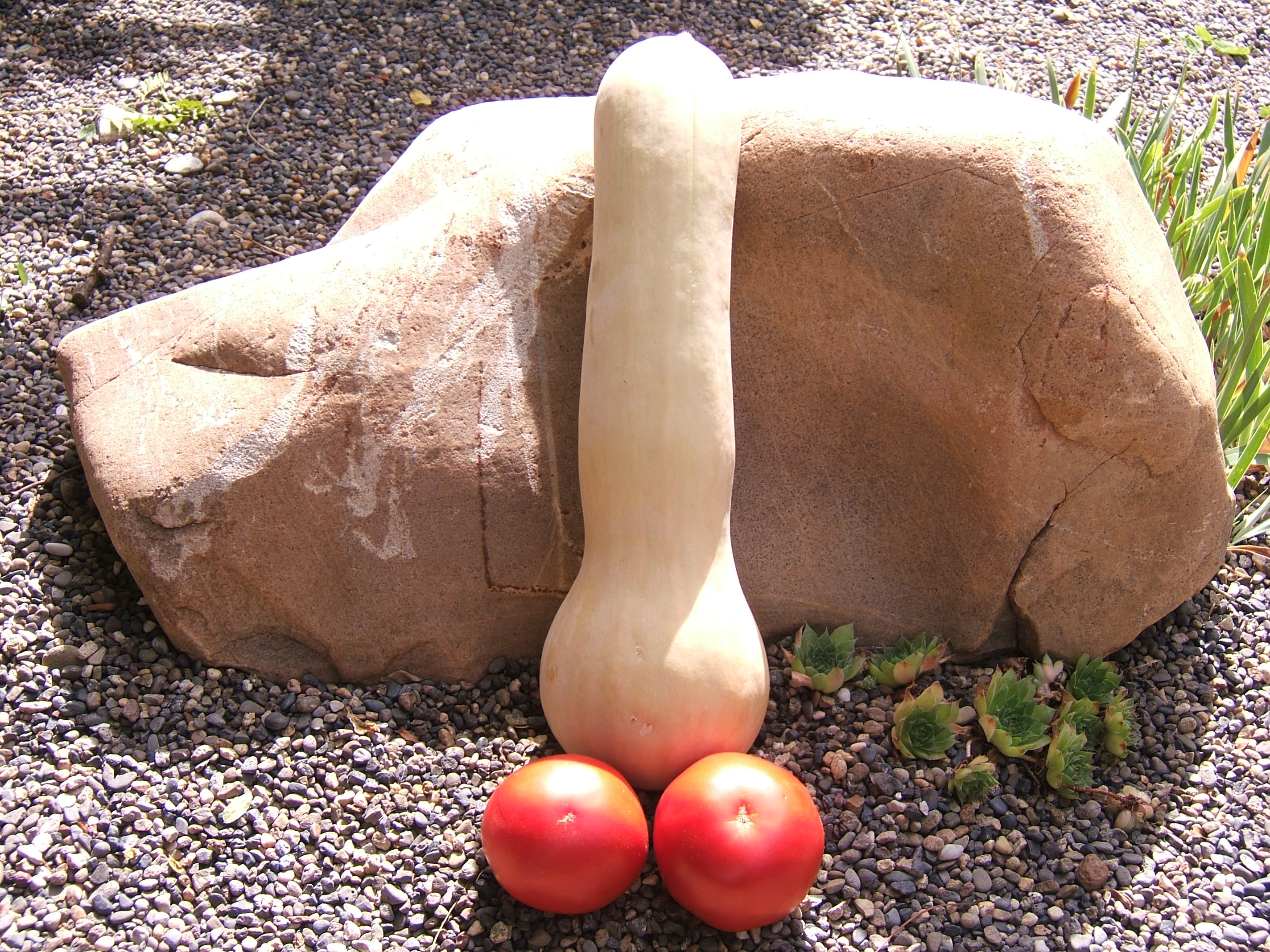
Here’s a pre-roasting photo of some beautiful, colorful mixed vegetables we got from the farm:

It was like eating a trip to Mardi Gras.  What a pleasure.  We’ll definitely be signing on as CSA members again next year.

And now, the difficult part of this post.  The avalanche of shocking revelations this week of child sexual abuse in the showers at Penn State stirred up a lot for me again and…I’m sure…many others who live with that particular legacy.  It also, unfortunately, stirs up a lot for those who love us.  The coverage was so extensive it proved impossible to escape and of course it dredged up old ghosts.  I grew increasingly agitated as the week progressed which inevitably led to the hubster and I having an emotionally loaded discussion about it all which was painful and distressing.  My tail was lashing and claws were out, and he was doing his level best to listen without actually emerging from the behind the door where he might become a possible target himself.

But somehow, in spite of the dangers, we stuck with the discussion, refusing to collapse back into the standard, polite silence that Big Lie insists is more civilized but is really just poisonous and creepy and awful.  The hubster stayed near-but-not-too-close until my wild anger finally broke and the rain of tears began, at which point he knew from experience it was safe to come out and help me wrestle the remaining storm of emotions back to the mat.

We had a really great talk after that and wound up finding a lot of hope and anchors to tie into, and by the time we were through we both felt a lot more positive, strong, and courageous looking forward than we had beforehand.  Here are a couple of the insights we came too:

First, Silence is the biggest enemy we have, bigger even than the predators and the crimes themselves.  Without our longstanding cultural willingness to look the other way, predators would have a far more difficult time finding the hiding and secrecy they need. They exploit and thrive on our instinctive tendency to avert our eyes.  It’s also been well-established that having to keep the secret of abuse afterwards does more lasting damage to a victim than the original abuse itself.  So silence really is the worst thing…but it’s also the one thing that all of us can address, no matter where we are.

Second, stepping up to the plate and reporting this kind of abuse is one of the riskiest, most frightening, and potentially devastating things that a person can do.  Ask any victim.  And it’s not much different for their advocates.  A revelation of this nature has the annihilating power of a nuclear bomb, and to unleash that devastation on a person, or a family, or a community, or an institution that one either still deeply cares about and/or is afraid of, requires a level of courage far beyond what most of us have ever had to muster.  And when it reaches a powerful institutional level as it did with the Catholic church and Penn State, the inevitable costs involved in speaking out can grow so daunting it paralyzes.  I’m not surprised that the men who knew about Sandusky’s predation failed to speak up.  Frankly, I would have been more surprised if they had.  Protecting the status quo has been stand-by operating procedure for centuries, if not longer.  We shouldn’t underestimate just how revolutionary the current movement to expose and address childhood sexual abuse really is.  We’re breaking some serious new trail here so everyone should expect a lot of turbulence during the transition.

In a sense, reporting child sexual abuse is a lot like throwing yourself in front of the gun.  You never know whether someone will decide to shoot you or the predator.  I remember when Mackenzie Phillips released her book with the bombshell that she’d had an incestual relationship with her father that lasted into adulthood.  In spite of all the other unconscionable things her father had done to her that no one argued with, and in spite of the fact that Ms. Phillips was a catalog of symptoms that correlate to childhood sexual abuse, the majority of media coverage still had a bias toward protecting her father and doubting her.  Very few public voices at the time seemed inclined to believe her and the spiraling frenzy of blowback was frightening.

(That was another tough week for those of us with childhood sexual abuse in our past.  As one blogger so succinctly put it at the time, “Evidently, the only thing more taboo than committing incest is a victim trying to talk about it afterwards.”)

One thing that the hubster and I came to in our discussion was the realization that there were times when we, too, had failed to speak up in situations that called for it.  They hadn’t involved anything nearly as extreme as witnessing a child being raped in a university shower, but then most of the time these kinds of things don’t.  On the contrary, they’re usually small enough that we can tell ourselves they’re innocuous and really not worth making a stir over.  Yet it’s on the smaller things where it’s easiest to begin to develop a voice.  When we hear someone at the next table trashing someone we care about, or when our friends are hassling someone unfashionable, or when our coworkers are stealing office supplies, or when someone tells us an offensive joke.  These are the times we can practice saying Y’know, that’s not right.  Please stop.  I believe we’re better than that.  

The hubster said he uses the shame from the memory of his past failure as a motivation to do it differently next time.  Because in that way, he actually harnesses past harm as an energy for future good.  I loved that, because it means that past mistakes are never written in stone.  We can’t go back and change them but they don’t have to define us.  We can define ourselves instead by what we do about them going forward.

And…shoot.  It still took me seven hours to write this frigging post.  The whole spontaneous thing is definitely gonna require practice.

copyright Dia Osborn 2011
Do’s and Don’ts Around People Who Are Wounded And Reeling

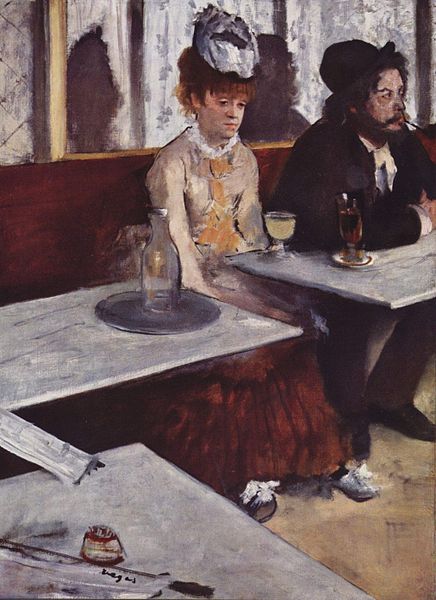
L’Absinthe by Edgar Degas

I was thumbing through the journal I kept during the hospice years and came across this entry:  [Identifiers have been changed BTW.]

“Gertie was visibly shaken yesterday.  Her mom’s youngest brother, aged 94, died this past weekend and, as she stared down at the coffee table she told me, “I’m afraid she’ll go now, too.  She’s the last one you know.”   Grammy’s appetite has been off and Gertie doesn’t think she’s eating enough to survive.

She’s not.

All the other times when Grammy was going through one of her diminished-appetite spells, Gertie would worry and I would try to gently explain that loss of appetite is natural toward the end.  But she always acknowledged and dismissed the fact simultaneously.

The truth is she’s just not ready to lose her mom and I’m now beginning to suspect she never will be.  Watching her yesterday—the way she stared off into nothingness as she spoke, eyes turned inward, searching and frightened—I wondered how long she’ll survive herself, once her mother is gone.  I even wondered if she’d go first. [Gertie was 83 at the time.]  For such a strong, stubborn, tenacious woman she is remarkably fragile underneath it all.

And quite ill herself.

So yesterday I said nothing.  Didn’t ask her, “Are you ready for this?” Or say, “You know Gertie, she may be getting ready to go now.”  Of course she knows.  Shock is already starting to creep in, an early mist rising to help shield her from the unbearable loss lying just ahead.  Instead I just sat there, as still as I could.  Quiet.  Listening.  Trying to catch and contain as many of her scattering pieces as I could.

I didn’t want to move or breathe or do anything to disturb the tendrils of mist gathering around her.   She is so achingly delicate.”

As I read it all came back to me in a rush; how grieving people (and those who are catastrophically ill or dying) are sacred.  The wounding and shock caused by any kind of profound loss makes a person vulnerable; and a society’s traditional job is to close ranks around them, shielding them until they have a chance to stop reeling and reorient.  To get through the worst of it and find their footing again.

In older times this understanding of the sacredness of those in deep grief was fairly common, but I think we may have grown a little fuzzy about it since then.

Although…I do think most people still feel this sacredness instinctively.  I often see it in the awkward pause that happens after someone confides they’ve lost a loved one, or that they have a catastrophic illness.  The person receiving the news is usually aware that something huge just fell out of the sky right in front of them, but they frequently appear confused as to what they’re supposed to do about it.

So even though I frequently fail to follow these myself (they’re appropriate…not easy) here are a few of the Do’s and Don’ts about how to interact with a person who, through no fault of their own, has become temporarily sacred:

The DO’s:

1)  Do no harm.  The disorientation of the deeply wounded is the emotional equivalent of a compromised immune system.  Even if they try joking about it or brushing it off as embarrassing, remember that their shields have taken a hit and are not functioning properly.  Be gentler, be kinder, be slower, be quieter.

2)  Do acknowledge their wounding.  Go ahead and be silent for a moment, then look at them (really look at them…don’t shuffle your feet and look at anything else but) and say I’m sorry.  Then be quiet again. That’s it. This is the traditional ceremonial acknowledgement of wounding in our culture and, when genuine, it’s enough.  Even if it’s been years since their loss took place, it’s still okay to say this.  You’d be amazed how long some wounds can last.

3)  Do follow their lead.  If they feel like talking about it and you have time, then listen.  (Listening is actually one of the greatest gifts you can give.  People usually need to tell the story of what happened, or is happening, multiple times in order to coax events out of the weird, limbo world of shock and back into practical reality where they can harness and deal with it.)

On the other hand, if they don’t want to talk about it, then it’s okay to let it go.  They don’t have to.

And if, as is often the case, they don’t know what to say and stumble around awkwardly searching for words, then just be quiet and patient while they figure it out.  Let them know you’re fine with awkward. Wounded people are bewildered and need extra time. Giving it to them willingly is like encircling them with a protective charm.

Which leads us to the final Do:

4)  Do be willing to be silent.  Sometimes words just aren’t big enough and, in that case, compassionate silence says everything necessary.

Then there are The DON’Ts:

1)  Don’t give advice unless specifically asked.   Everyone has to find their own way through this one.

2)  Don’t abandon or ignore them.  Even if you feel awkward or uncertain yourself, being willing to stay anyway is worth it’s weight in gold. Wounded people already feel a little disembodied and unconnected.  Ignoring them could make this experience chronic or permanent.

3)  But Don’t rub their noses in it either.  Everyone grapples with grief and loss differently and if they prefer to deal with their emotions privately, then respect their ability to know what they need most.

4)  And finally, Don’t try to save them from their task.  You can’t…and it’s not necessary anyway.  Wounded people are vulnerable, not incompetent.  Believe in them. The journey of illness and loss is hard but it can be strangely deepening, too, and those who navigate it with courage and grace enrich us all.  It’s more than worth our while to give them whatever help they need.

copyright Dia Osborn 2011

You mean him, dear?

Most people have a few friendships that are based on different things.  Some are for having fun, some share a common interest, and then there’s always that one required for long, long talks that last well into the night (with or without accompanying beverages.)  These relationships may develop in childhood, at work, in the neighborhood, from traveling, from school, or even these days, online.

But the mother of all friendships is the one that’s forged in the furnace of life.  I have an old friend like this, a woman with whom I share a level of bonding similar to that between comrades on the battlefield.  We’ve been through a lot together.

A lot.

We first met when I was seventeen and she was nineteen, working together in the kitchen of what, in those days, was essentially a spiritual commune.  We wound up attending the same college, settling in the same small community, making similar bad first marriages, and bearing babies which we then helped each other nurse, care for, and even once…after an explosion of domestic violence…hide through the bad divorces that followed.

Afterwards, we were merry divorcees together for a couple of years, sharing in the wild and uninhibited adventures that a sudden release from oppression often unleashes. We ran laughing and naked together through woods and creeks, danced (also naked, it was a theme) around bonfires under moons, had lots of sleepovers drinking smuggled moonshine on late nights around the lake, and shared endless stories about the amazing lessons in kindness, respect, new ideas, repeating old mistakes, letting go, saying no (and saying yes, Yes, for godsakes YES!!!) we were learning from dating a variety of other men.

The stories from this period are nothing if not fun to tell.

Eventually, way down deep, beneath the many layers of wounding and rebelling, adventures and healing, we both discovered our inner loyal, monogamous selves.  We each found a trusted partner…really, really good men…remarried and, even though we’ve mostly lived apart for the last twenty years, have continued sharing and supporting each other through the wild adventures of our offspring who (seem to have inherited the fearless/high risk/high mistakes gene and) have amazing stories of their own to tell now.

I count this friendship, along with motherhood and a happy marriage, as one of the greatest gifts of my life.  I don’t how I got so lucky.

It’s long been the dream of this friend and I to wind up living together and seated in twin rocking chairs on a front porch somewhere in our old age. All the other details are sketchy (those wonderful husbands dead and kids traipsing across Argentina perhaps?) but every once in a while something pops up to help fill in the gap.

She just sent me this joke about three old ladies in a retirement home and, judging from the history the two of us share, something along these lines seems likely:

Three ladies were sitting in their retirement home reminiscing.

The first lady recalled shopping at the grocers and demonstrated with her hands, the length and thickness of a cucumber she could have once bought for a penny.

The second lady nodded, adding that onions used to be much bigger and cheaper also, and demonstrated the size of two big onions she once bought for a penny a piece.

The third lady said, “I can’t hear a word you two are saying, but I remember the man you’re talking about.”

Oh honey, do I ever.  Love you always, dear.

copyright Dia Osborn 2011

The Garden That Got Me To Settle Down

Gardens are not static environments.  You can’t just plant a flower bed and a tree and then expect them to stay put like, say, an arrangement of furniture.

No.

Those lovely flowers will instead grow (hooray!), bloom (yowza!), get spindly (huh?), wilt (wait a second…), and die (ugh) before scattering their seeds to areas of your property you wouldn’t have thought possible (WTF?!!).  At the same time that tree you planted will also grow (and grow and grow) until it eventually shades out the flowers below and the seed scattering which seemed like such a problem in earlier years will no longer be the issue.  It’s now the bare dirt where nothing survives.

Even though I fell in love with growing green things in adolescence when my first, obliging houseplant survived, I didn’t discover this longer-term, dynamic garden relationship until my forties.  This is because, for the first 37 years of my life, I didn’t live in the same house for longer than three and a half years.  For the first seventeen, I was a Marine brat and that’s how often my father was transferred.  The next six years of migration were the result of my on again/off again college attendance.  And the last fourteen involved first one husband who bought and fixed up properties (our homes) for resale, and then a second husband who was adventurous and highly mobile.

Due to this nomadic lifestyle, I’d never had a long-term, committed relationship with a garden before.  Oh, sure, I’d dated quite a few, but always with the understanding that it wouldn’t last.  I was basically in it for the botanical sex; sticking my seeds of choice into the fresh, fertile soil and then devouring the resulting, delicious fruits of the tryst before cinching up my roots and moving on to the next plot.

I was a confirmed bachelorette of the garden world…and perfectly happy with the life.  So when the hubster (adventurous husband #2) and I made our fifth jump in five years and landed in Boise, I had no reason to think this garden would be any different.

I went ahead and sunk my heart and soul into tearing out all the old landscaping (i.e. roses and grass) and replacing it with something more eclectic, but mentally, I always kept myself ready for the next move.  For the first five years, I told myself I could still dig everything up and take it with me when we moved again.  Then, once it became clear that this plan was delusional, I resigned myself to taking a smaller collection of favorite things; a few large rocks, all the container plants, and the old bathtub I’d rigged up as a fountain.  (Basically anything that weighed more than a quarter ton.  The hubster usually fell silent during this part of the conversation.)

This lie survived for eight more years before transitioning into the final period of denial where the hubster and I no longer talked about moving at all, but didn’t realize we were no longer talking about moving.

And then, in 2008, I suddenly realized I was trapped.  I’d held still for too long.  My roots…which had been kept oh-so-carefully tucked up in the belt for decades…had slipped loose while I wasn’t paying attention, snaked their way down into the soil, and transformed this house and garden from temporary way station into permanent home. We’d accidentally and unintentionally created something I could no longer afford to lose.

I had no idea until that moment just how badly I’d needed a home that I wouldn’t have to leave behind.

So.  That’s the story of how, over the last sixteen years, the garden and I (I call her Redbud) have become intimately acquainted.  She’s the lady who landed me, the one who finally got me to settle down.

But, as with any good relationship, I’m always discovering something new, too.  Redbud’s microclimates are constantly shifting with the changes in tree cover and watering experiments.  (I do so love to tinker.)

One of our recent successes involves a narrow strip of side yard on the north side of the house which leads from the front yard to the back.  It’s barely eight feet wide and, for the first nine years we lived here, I mistakenly assumed that nothing would grow there but shade plants.

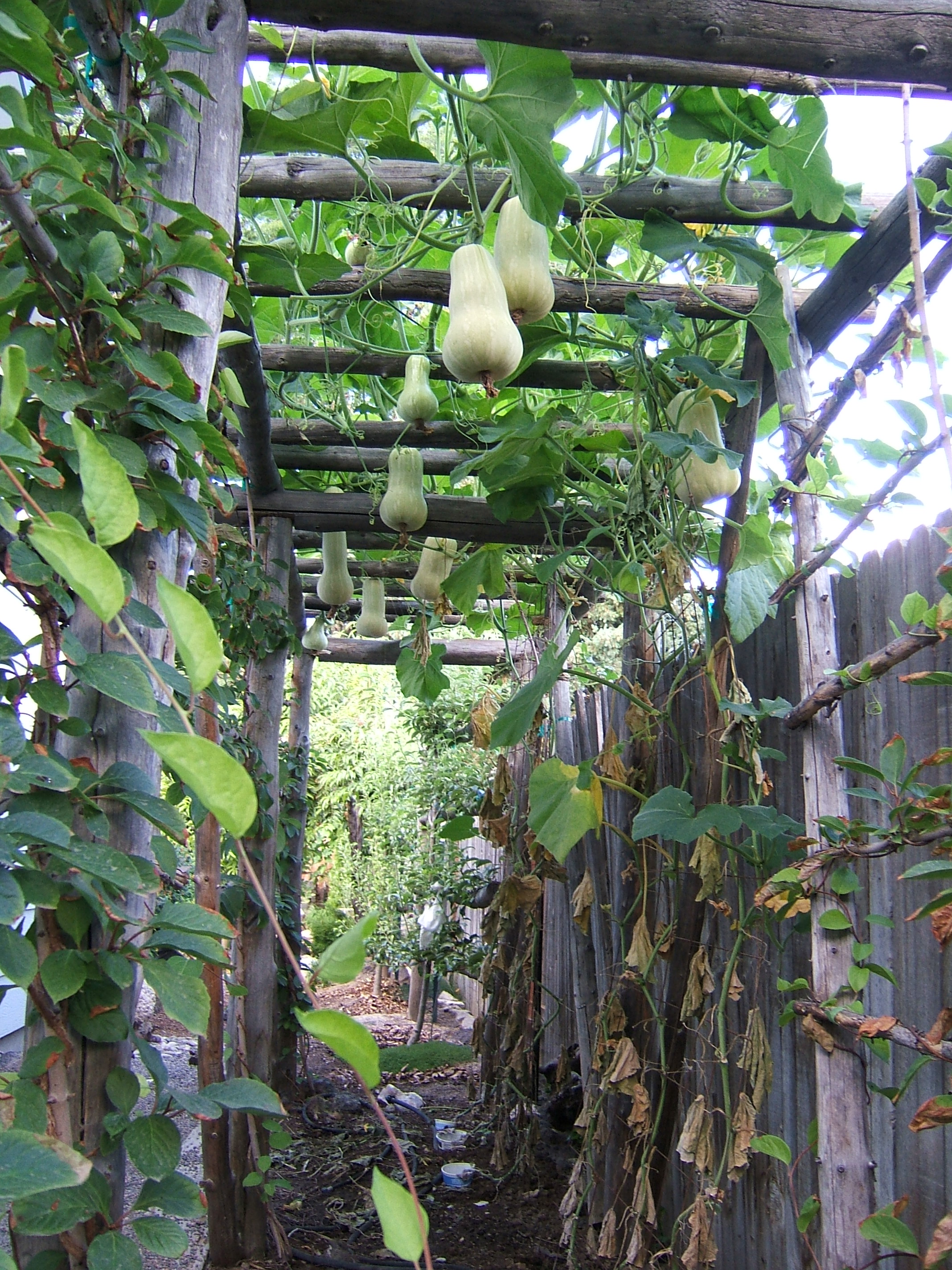
Upon closer study I realized about half this strip actually receives direct sunlight from May through early July, enough time for any seedlings planted to get a good head start.  So I began to think vertically.  I suspected that if I built a trellis tall enough, any vines started in May would be able to to chase the southward shifting sunlight high enough to escape the return of shade in mid-summer.

And lo and behold, I was right.

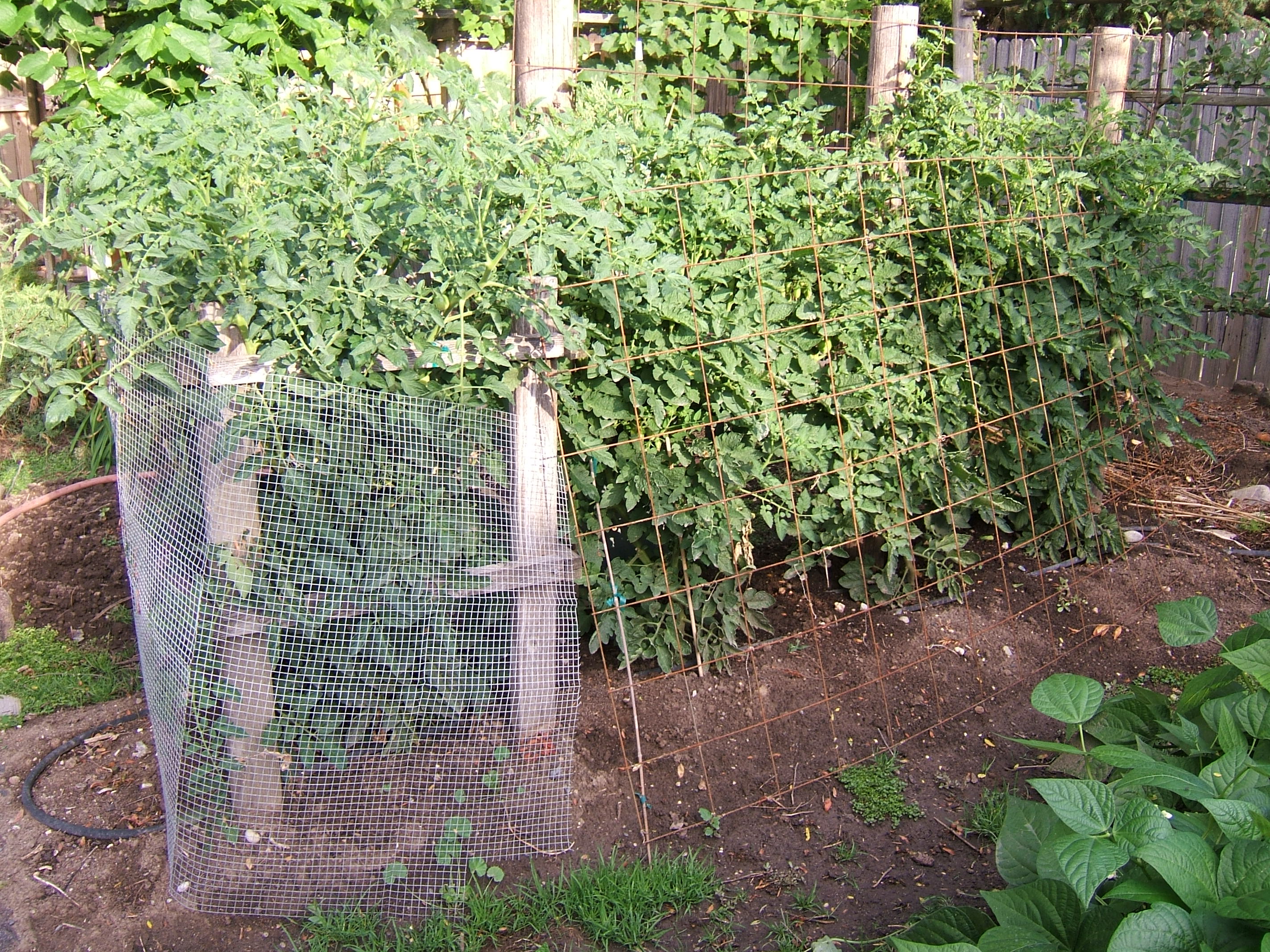
You can see how the lower squash leaves die off from lack of light (on the right) while the vines on top flourish. This year has been good for butternut squash.  I have six vines and will probably get fifteen or sixteen squashes.  I try and alternate years between winter squash and pole beans.

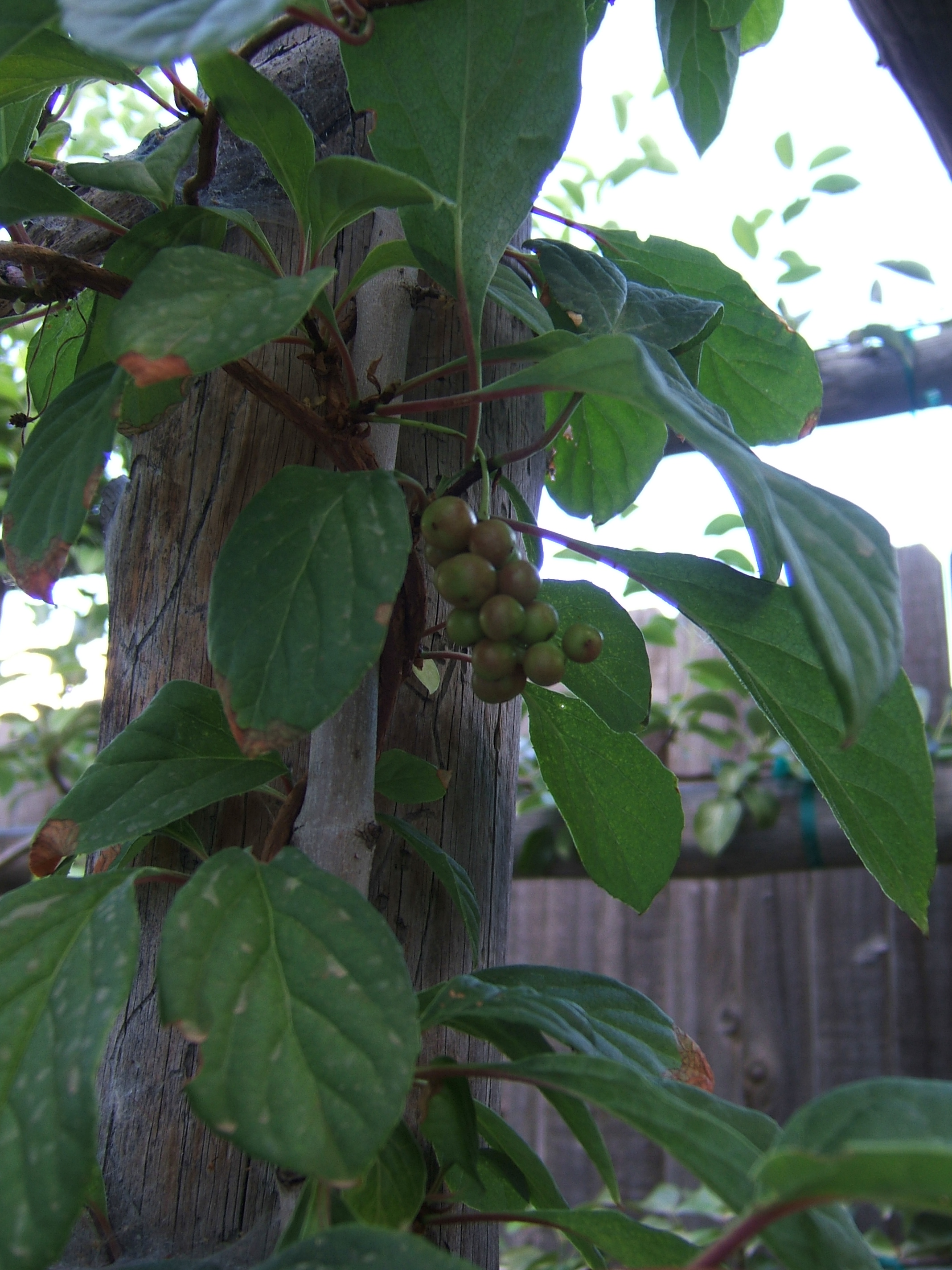
To utilize growing space, I planted four shade-loving Schisandra vines on the shadier (left) side of the trellis.  (They require both a male and female for cross pollination so the more vines one plants, the better the odds of getting one of each.)  Schisandra berries are supposed to be a powerful herbal remedy but I wouldn’t know anything about that.  After four years I’ll finally harvest a single cluster of berries this fall, which is not enough to have an herbal effect on anything.

Since the fence that continues along the northern border of the backyard has the best southern exposure on the property, I’ve lined it with espaliered fruit trees.  There are two pears and two apples, which all failed to produce this year because the f—g squirrels bit off almost all the fruit buds in late April.  Here are the espaliered pears:

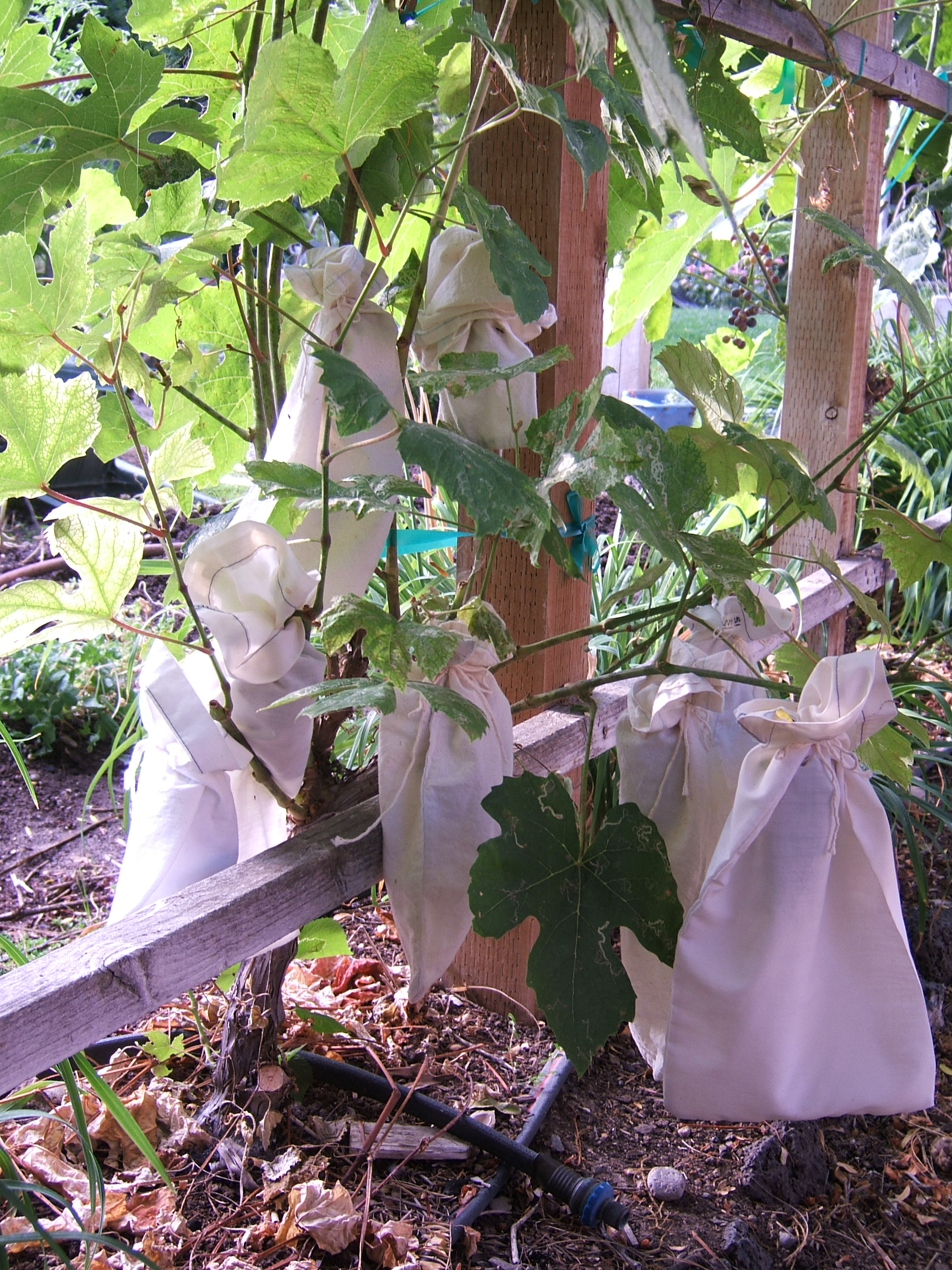
The two muslin bags in the lower right corner are protecting this years crop–two pears–from further depredation.  It’s working so far.

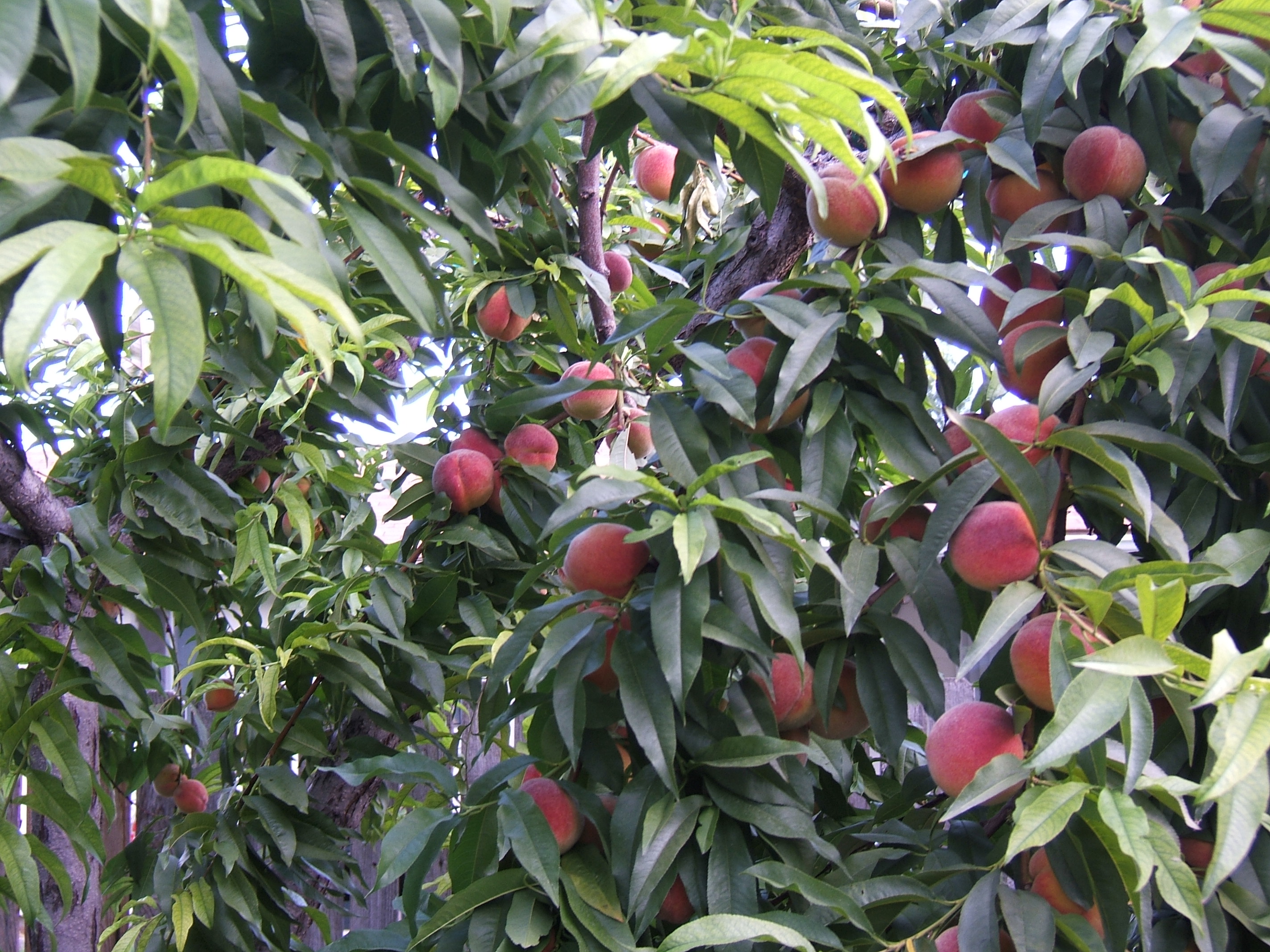
I’ve had better luck with the peaches; so much so in fact that, despite early fruit thinning, three branches have broken so far under the weight.

The squirrels are chewing off upwards of ten or fifteen fruits a day now, so I’ll probably revert to last year’s strategy and strip the tree early, allowing the green fruit to then ripen in a protected area.  While the taste is inferior that way, at least I win. Gardening, like any good, long-term, committed relationship, is full of compromises.

Redbud’s grape predators are threefold; squirrels, robins, and Dane the mangy rescue mutt. Muslin bags have been an effective deterrent for all three.

Occasionally, a frustrated squirrel will chew through the stem causing a grape cluster, bag intact, to fall to the ground.  Dane has discovered that if he picks these up and delicately mouths them, he gets a delicious shot of grape juice.  He therefore leaves the squirrels unmolested when they’re working around the vines.

Dane is the sole predator of garden tomatoes.  He stripped the bushes once this year.

We were forced to cut down a couple of beloved but badly misplaced trees this year.  We decided to create pedestals out of them.  The driftwood are pieces we’ve collected from various spots along the Pacific Northwest coastline.


Clearly, there is no tree stump involved in the last photo but I like the driftwood and figured I’d toss it in anyway.

And now, I apologize for the abrupt ending but Redbud calls and I must away.  Happy gardening to you all!

copyright 2011 Dia Osborn


For Constance And The Other Pets We’ve All Lost

I learned that a big, flatulent, snore-prone, asthmatic bulldog died suddenly of a heart attack over in Wales a few days ago.  Her name was Constance and her bereft humans are John and Chris.  The news made me sad.  They’d only had her for about ten months…she was a kinda, sorta rescue dog…but in that short time they fell for her pretty hard. 

(Which was something of a puzzle to me, as it often is to non-bulldog people.  Bulldogs are not the most attractive of animals and she could be quite a bitch besides.  But I think that’s part of the reason WHY John and Chris loved her so much, because she was always so fearlessly and unapologetically herself, warts and all, and really, when I think about it, I kind of love that, too.  You go, girl.)

Today’s post was going to be about the dying music that’s come down to us through time, the valuable information embedded in that music regarding how to die, and how in the hell we’re supposed to extract said information all these years later, across changing attitudes, languages, and cultures.

But it doesn’t seem right.  Not today.  Instead, I’d rather play one of the songs I had in mind and dedicate it to Constance and the other beloved, joy-bringing, innocent, vulnerable, and deeply missed pets we’ve all lost over the years.  They’ve mostly died quiet and unnoticed by the wider world.  For some strange reason, we’re not usually given much room to grieve our animals when they die, in spite of the fact that their loss can be as painful and devastating as that of any other family member.  So today, I thought I’d make a little more room.

Goodbye Constance, and all you other beauties who graced our lives for a little while.  We love you.  We miss you.  We thank you.

http://youtu.be/q4egb2gpIg4

Lyrics:

Oh all the money that e’er I spent
I spent it in good company
And all the harm that e’er I’ve done
Alas, it was to none but me
And all I’ve done for want of wit
To memory now I can’t recall
So fill to me the parting glass
Good night and joy be with you all

Oh all the comrades that e’er I’ve had
Are sorry for my going away
And all the sweethearts that e’er I’ve had
Would wish me one more day to stay
But since it falls unto my lot
That I should rise and you should not
I’ll gently rise and I’ll softly call
Good night and joy be with you all

copyright Dia Osborn 2011

A Huge Life In A Tiny Box

(Sorry for the blur but this is the only picture anyone thought to take.)

A couple weekends ago we drove down to the little town in Nevada from whence my people come and buried a small box in the cemetery there.  It contained a variety of things; a seashell, photos, an old, scribbled note in a silver-plated box with blue velvet lining, a thank you card, a George Washington $1 coin from the U.S. mint presidential series, a Chinese coin, pictures of two Hindu saints, downy feathers, a secret bundle, and a handful of ashes from my mother who died over two years ago.

Some of these things belonged to her and others were things we thought she should have.  The seashell and feathers–because she adored the ocean and migrating birds.  The Hindu saints–because they guided her in life, so how much more important that they be there with her afterward?  The secret bundle–from a secret person for secret reasons known only to them.  And the ashes because they were a last, little part of her that we could come and visit whenever we felt the need.

The old note, I found a couple months after she died.  It was a short list of prayers folded up inside the silver box and stashed with her jewelry, dating from about a year before she died.  The prayers were written in this order:

1)  For an improvement in her health (which clearly didn’t work out so well).

2)  For ten million dollars invested in a trust yielding 8% a year (also a no-go). 

3)  For greater clarity (yes!…she was having amazing breakthroughs and insights during her last months).  And,

4)  A last, loving wish for enlightenment and peace for the whole world. This was the one that made me cry.  It was so like her, my mother, forever toting the world around with her in her bottomless basket of good wishes.

I spent days before leaving for Nevada sifting through the mementos of her life again–through all the deep, swirling emotions they resurrected–looking for the right pieces to place inside the box.  Because my mother believed in reincarnation I carefully tucked in the list…just in case prayers carry over from one life to the next.  The coins went in for murkier reasons even I don’t entirely understand; maybe as a token for the wealth she craved, or as an irrational but oh-so-necessary payment to the Boatman for safe passage, or perhaps just because they were made out of metal and would still be there long after the box itself decomposed.

Six of us came to sit around that small, square hole in the ground, drinking water and wine, soaking up the sun and wind, toasting her memory and telling her stories.  We had a folding chair for each of us and an extra one where we set the box.  We occasionally grew raucous, sprinkling wine over it after a toast, because sometimes remembering in the midst of great loss can just do that to you.

Before we placed the box down in the hole, I opened it one last time so we could have a look inside.  The wind rustled the downy feathers and then blew one out, whisking it over the hillside below us.  It floated above the headstones…more like a butterfly really, than the bird it came from…before finally rising higher, then higher, then higher into the sky.  We all stood transfixed and staring, following its lovely escape in surprised silence, but the same thought was in each of our minds.

Look!  Look! There she goes!

Afterwards we took handfuls of dirt, one by one, and threw them into the hole to cover the box, and with each handful we cried or laughed or were momentarily still…throwing our prayers down for her, too, along with the love of others who couldn’t be there.  With the first handful, grief overwhelmed me and I sobbed on my knees, unconsciously dragging my dirty hand across my forehead and cheeks.  I had no idea why I was doing it except that the grit across my skin felt welcome and good; raw and sharp enough to match the scraping of the wound inside me.

It was the leading edge of a brief but wild storm, and once it passed I felt calmer and lighter for it.  Cleansed and good.  Eventually we finished and, after replacing the small square of turf over the loose dirt, we packed up our things and traipsed off to the city park to eat a small picnic and finish the wine.

I like to think of that small box now, pressed down by the weight of dark, moist earth and already starting to decay, its cache of love and prayer, life and joy, seeping out into the ground like something with a half-life of ten thousand years.  It never ceases to amaze me, how relentless this great current of Life is that flows through us, spilling down from one generation to the next like a perpetual champagne fountain, as if we were ever-widening tiers of crystal flutes constantly filling and spilling simultaneously.

My mother is gone but the huge gifts of her life are still washing down through the bewildering number of other lives she altered just by existing here for a while.  They’re inside all of us who loved her and passing on into all those we love in our turn–inside everything she touched and every place she passed through.

And as of a couple weekends ago those gifts are now inside that tiny box, too, buried up in the high desert mountains where they will be leaking their grace for generations to come.

copyright Dia Osborn 2011

Hospice in Louisiana Prison is Decreasing Levels of Violence

Photo from the award-winning photographic documentary Grace Before Dying

What transformed the Louisiana State Penitentiary at Angola, one of the most violent prisons in the South, into “…one of the least violent maximum security institutions in the United States”?

A hospice program.

If you get a chance, check out this website that Linda over at What Comes Next? turned me onto.  It’s called Grace Before Dying and is inspiring (which is saying a lot with all the turbulence in the world right now) and is about the photographic documentary by Lori Waselchuk that chronicles the prisoner-run hospice program at Angola State Penitentiary, Louisiana’s maximum-security prison.  Evidently, a life sentence in Angola means both life and death.  85% of the roughly 5100 inmates die there and, up until the hospice program was started in 1998, that meant dying alone in the prison hospital.  But now they have a hospice ward where the terminally ill inmates are transferred, and once there the dying are tended almost entirely by inmate volunteers who are serving life sentences themselves.

It seems to be this most basic act of simple humanity that’s transforming the prison population…which comes as no surprise to me.  Tending the dying in hospice transformed me, too.  It transforms everyone who does it.  From the website:

“The hospice volunteers’ efforts to create a tone of reverence for the dying and the dead have touched the entire prison population.”

Frankly, the prison system we’ve set up in this country has always puzzled me.  I’ve never been able to figure out just what, exactly, we’re trying to accomplish.  The focus on isolation and torture (because really, I don’t think you can call what happens in these hell-holes simple punishment) and then release for godsakes, strikes me as short-sighted.  It’s like capturing a dog doing damage near a downtown cafe, locking it up in a small cage, systematically brutalizing it for five years, then taking it back to the same sidewalk cafe, telling it to behave, and turning it loose again.

What do we expect?  Lassie?

In this country, we’ve coupled justice with revenge and their offspring have been multiplying for years now.  Our prison populations have swelled to the point where they’re wreaking havoc with both our public safety and economic stability, (look at what California’s currently dealing with.)  Doesn’t it seem like now might be a good time to consider trying something different?

Well, some prisons are.  There’s a growing trend to team with animal shelters, allowing inmates to help care for and train abandoned and/or abused dogs.  Another program in Mississippi called PACT partners inmates with abused horses.  Like hospices in Angola and other prisons, these programs structure relationships for the inmates that cultivate bonding, vulnerability, kindness, responsibility, and empathy, all qualities that naturally deepen our innate humanity.

Like tends to beget like.  Cruelty begets cruelty and inhumanity begets inhumanity.  If we really want to create a better, safer, kinder world, then we should probably be trying to foster everyone’s humanity, not destroy it.  By instituting a hospice program, the prisoners at Angola have been given the opportunity to foster theirs.

Dying is generally regarded as the ultimate destructive force…and it is.  I would never argue with that.  But what most people don’t understand (yet) is that it also has a profound ability to heal.  Everyone acknowledges that a “good death” is important for the person who’s actually dying but it goes much farther than that; a good death is also critical for the well-being of those left behind.  A bad death creates scars, the tentacles of which usually spread far and deep through the lives of survivors, and it embeds a terror of the future that eventually infects everything.  Everything.

A good death, on the other hand, tends to nourish our compassion, deepen our humanity, expand our understanding of life, and lift us out of that underlying sense of loneliness and individual isolation that defines so much of modern life; all things that ultimately serve to ease this fear of the future rather than aggravate it.

To close I’d like to leave you with this last quote from the website:

“The hospice volunteers must go through a difficult process to bury their own regrets and fears, and unearth their capacity to love. Grace Before Dying looks at how, through hospice, inmates assert and affirm their humanity in an environment designed to isolate and punish.”

copyright Dia Osborn 2011

It’s OK To Still Love Their Bodies Once They’re Gone

Before Mr. B died, he made sure his body would be left lying for twenty-four peaceful hours–at home–before going to the crematorium.  How sure?  Sure as in he sat down with his lawyer and wrote it into his will sure, making his wish legally binding in Idaho.

His request may sound strange to a lot of people–it certainly does to the average person around here–but the practice is customary among Buddhists who believe that the bond between personality and body takes time to unwind after death.  (I’m not Buddhist but I think the following link is a fairly good explanation of Buddhist beliefs about death and dying for those curious to learn more.)  Of course, the Buddhist belief is different from the prevalent one held in our culture which says our personality/essence/soul/consciousness/whatever one calls it…our us-ness…separates from the body completely at the moment of death.  Even Christians and scientists are aligned on this point–they don’t seem to diverge until the question of what-happens-afterward crops up.

Mr. B’s family was totally on board with his choice and perfectly willing to keep him around.  And me?  I was all for it, too.  I had a personal stake in finding out what effect this choice would have on the loved ones Mr. B was leaving behind. Two years later and I’m still grappling with the distress I felt at abandoning my mother’s body in the hospice house where she died.  I looked at this opportunity with Mr. B as my chance…a gift!…to see what it’s like for a willing, loving, respectful family to keep the body of their dead beloved with them for a little longer–to discover if it helps ease their grieving afterwards.

The hubster and I lingered for an hour or two after Mr. B died, drifting along on the tender current of hugs, tears, laughter, phone calls, rehashing, and story-telling that always follow a good death.  But finally I needed to head home.  I hadn’t gotten much sleep during the night and required a shower and a nap.  Just before leaving, I returned to the bed, leaned over, and laid my cheek against Mr. B’s, whispering I sure do love you, sir.  Have a safe journey.  Knowing you was an honor and a gift.  Then, unexpectedly, I started to cry.

Mr. B’s face was still soft and life-like and, for whatever reason, in that moment it felt like like he was still there.  Not necessarily inhabiting his body per se, but just present somehow.  Around.  It seemed like he was smiling and relieved.  Like everything was okay.  No…better than okay…good.  It felt like he’d suddenly gotten a lot bigger, too, in some insubstantial but still oddly tactile kind of way.  Hard to describe.  (This experience of a sense of presence is actually common among the bereaved, with some studies putting the rate of occurrence at well above 50%.)

That momentary sense of his presence pierced the numbness of fatigue creeping over me and sent me plunging back down into my heart again.  The tears felt painful, bewildering, and sweet, all at the same time.  It reminded me of the day I discovered the stuffed animals my daughter abandoned the day she left home, still sprawling against the pillows in her bedroom.  It was unexpected, walking in and finding them like that–an innocent reminder of her childhood life with us–and I curled up on her bed, gathered them in my arms, and lay there in the ache of remembering for the longest time.

We shared a bond, these toys and I.  They’d been left behind, like I’d been left behind. She loved them, like she loved me.  And lying there clinging to their soft bodies and fake fur, I was awash in all the nourishing, enduring love she’d left behind for us.  I could feel her again, all across the bed, and I realized we’re all born magical like that–with a mysterious ability to place a tangible, lasting kernel of ourselves inside the people we love so that no matter where we go, no matter how big the hole our departure creates, at least we never leave those behind us completely alone.

(This post is turning out to be longer than I originally anticipated so I’m going to spare you all and spread it out over a couple posts.  Next time: Their Body: It’s Not Them Anymore But It Still Deserves Our Thanks)

copyright Dia Osborn 2011 

Old People Know A LOT

Photo by Diego Grez

Here’s a tiny smattering of things I learned from the elderly hospice patients I worked with…

1. how to run a table saw

2. an effective home remedy for the 1918 bird flu pandemic

3. how to trade options in the stock market

4. how to stay safe in the box car when jumping a train

5. how to celebrate a traditional Bavarian yuletide

6. the absolute necessity of paying off a home mortgage

7. how to stack dead bodies after an attack on home soil

8. how an iron lung works

9. what the bedding was made out of in a concentration camp

10. how much stronger we are than I ever, EVER imagined.

copyright Dia Osborn 2011

A Curious, Amazing Thing That Often Happens Just Before Death

Image by Vlado

Both the hubster and I were there with the family, at the house, when our good friend, Mr. B, died a couple weeks ago, and I wanted to tell you about something amazing that happened right before he passed.  Actually, this type of dying event is common and it frequently (certainly in every case that I’ve been involved with) lifts the spirits of those who are there to witness it.

It was nearing the end and Mr. B had been unconscious for close to a day and a half.  The hubster, driven by the common, but often unspoken, instinct displayed by loved ones to never leave their dying person alone, was taking his turn sitting beside the bed and holding Mr. B.’s hand.  The family was scattered throughout the house, cleaning up from breakfast, while Mrs. B was on the other side of the room discussing something with their son.  She’d just finished and was walking past the bed on her way out to the kitchen when Mr. B. suddenly, the hubster later told me excitedly, squeezed his hand.

Hard.

“Like this!” he said, grabbing my hand and crushing it in a way that sent shooting pains up my arm.

“Ow!”  I snatched my hand away and glared at him.  “That hurts!”

“I know!” the hubster started nodding vigorously, relieved that I got it. “That’s just what it was like!  He did that to me, too!”

And suddenly I did get it, and I was amazed.  My mind flew back to the last hour when Mr. B. lay there helpless and still; pale, shrunken, and almost gone.  He’d grown so weak he fell into a final coma from which he couldn’t seem to climb back out, but then somehow…in that last minute…he powered back up anyway.  He’d grabbed onto the only thing available, the husbster’s hand, and squeezed it so hard that the hubster had to sit up and pay attention.

“He opened his eyes and locked onto mine…and I just panicked,” the hubster admitted.  “I didn’t know what was going on but I sure didn’t feel like I was the last thing he needed to see.  So I called Mrs. B. and she was right behind me.  She sat down and took his hand, spoke to him gently telling him she was there, and then a few seconds later Mr. B died while gazing into her eyes.”

The husbster paused, reflecting for a moment, then looked at me and said, “I feel like that’s what he really wanted, y’know?  That’s why he squeezed my hand.  He knew it was time to go and he wanted me to get Mrs. B. for him.”

Later, Mrs. B told me the same thing.

“It happened just as I was walking past the bed,” she mused.  “I think he knew it.  I think that’s why he made his move right at that moment.  He wanted to tell me good-bye.”

It’s well known within hospice circles that the dying are far more aware of and, in a lot of cases, far more involved in the timing of their actual departure, than most people realize.  Hearing seems to be the last sense to go and the dying often still respond to auditory stimuli…familiar voices, favorite music, sensitive information (which is why it’s so important to exercise caution when speaking within their hearing btw), etc….even from the depths of coma.

I love this…the fact that our relationships with one another don’t just stop because one of us loses consciousness.  The connections we build are so much more complex, beautiful, delicate, and tenacious than that.  It often feels…there in the rooms of the dying…like some vast and luminous web has been spun around us, supporting and binding us at a thousand, twinkling, alternate, junction points so that, even if we can no longer speak or see or touch, our love still travels easily along the other pathways, the ones that haven’t collapsed.

My mother awakened in her last moments, too (even though that was scientifically impossible with all the heavy sedation she was under,) her eyes opening for one last, brief glimpse as my brother read a passage aloud from the Upanishads.  My grandmother was decidedly more active about her’s.  After three days of coma (and six solid hours of heavy labor where she seemed to be stuck in her body and unable to leave) she finally sucked in one last, mighty breath, opened her eyes, and let out a yell on the exhale, as though she’d stripped off her helmet, mounted the sound, and was riding it wildly out of her own mouth in a last, triumphant charge.   I remember how I sat there stunned for a moment…and then burst out laughing.  With relief.  With applause.  With joy.

But my favorite story, the one that always cracks everyone up, involves the last moments of The Feisty One, an elderly German woman whose final words probably best sum up the sheer shock-and-awe effect of the transition from life into death.  She was what we call a colorful character; a regal prima donna who commanded everyone, was disdainful of doctors, dismissed all the symptoms of her decline with contempt, and who kept telling me that really, it was all just a bad case of constipation and she’d be up and around again soon. 

And then, she insisted, I’m going to cook you a real German meal.

I adored this woman.

Her daughter-in-law was the one who told me the story of The Feisty One’s last moments.  How she’d had a burst of energy and talked for something like fifteen hours straight, all through the night and well into the following morning, before falling into a coma.  How she then just lay there, finally quiet, for a day and a half, her breathing growing increasingly labored and shallow.  And then how, right at the end, she drew one last breath and opened her eyes again, staring at them all in complete surprise, before exclaiming, “Shit…SHIT!…SHIT!!!”  After which she collapsed back against the pillows again and promptly died.

I can only imagine how those may very well be my own sentiments exactly some day.

copyright Dia Osborn 2011

The Laughter and Sorrow of Being There

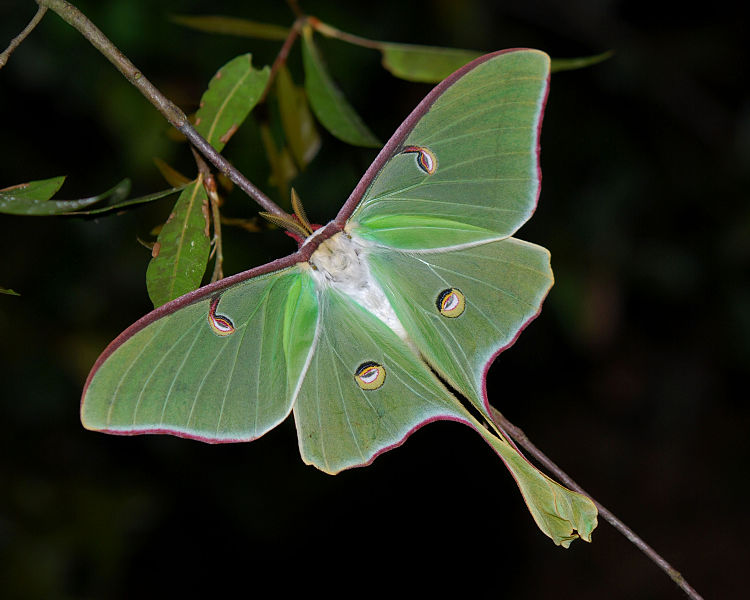
Luna Moth

I’d forgotten…how much better it is to be there when someone dies, than not.

Our dear friend Mr. B died at home, surrounded by those who loved him, last Sunday morning…which was actually pretty fast.  The doctors said he’d have more time, but then I’ve found that doctors usually overestimate;  partly because they feel it’s kinder and partly because they tend, personally, to be more afraid of death than the rest of us.

But Mr. B was glad it didn’t take as long as they said it would.  After four grueling, futile months of rotating between hospital, rehab center, and wound care center he was more than ready to move on.  He was grateful.

That’s the often overlooked gift of extended suffering.  Horrible as it is, there’s simply nothing like it for helping us let go of this otherwise far too rare and luminous world.  If something didn’t come along to tarnish the glow and loosen our grip, dying could (and sometimes does) drag on forever in this current age of limitless medical intervention.

Mr. B and his beautiful wife, Mrs. B, wanted the hubster and I to come and be there with the family during the passage; to help, to laugh, to cry, to steady, to witness.  I was surprised, deeply touched, and thrilled.  I love “a good death”; the kind that happens when someone dies prepared, surrendered, and surrounded.  There’s something potent and magical that happens when a family assembles to lift and love one of its members through the final transition,  something mystical and disorienting that occurs when a body and the life that inhabited it whisper farewell and break their long embrace.  Standing as witness to these things both shatters and transforms me, every time; actually it shatters and transforms everyone that’s lucky enough to be there.

Strangely enough, this…the good and healing part of dying…is the aspect I somehow forget about in between.  I’m not sure why exactly.  Maybe because, in spite of its potency, the experience is nevertheless fleeting and insubstantial and therefore easily overshadowed once it’s past.  Or maybe I forget because this part has become so invisible in our culture of death aversion that’s its just hard to hang onto.  I don’t know.

What I do know is that there’s an energy, a force generated during a good death that both cuts and cauterizes simultaneously.  It mauls me extensively, each time, but then it lays eggs of some vast and tender love there in the wound itself, as if it was some horrible yet sublime parasite, transforming me against my will into something better.   Someone more courageous, caring, and gentle.  Somebody wiser.

I think that was the gift Mr. B. wanted for me..for all of us.  I think that underneath everything else that was going on, somehow he intuitively understood that giving us all a good death would make the gaping hole after he left easier to survive.  Easier to recover and return from.  He used his own dying to create a final, profoundly generous, and life-affirming act.

copyright Dia Osborn 2011
Shark Whisperer

I just stumbled across this three minute, somewhat-unnerving-yet-deeply-moving video of Christina Zenato, a woman diver, interacting with sharks down in the Bahamas.  Frankly, I didn’t believe this kind of gentle relationship was even possible and yet here it is anyway.  Sometimes it feels so good to be wrong.

Disclaimer:  Evidently she’s a pro, so I wouldn’t recommend trying this at home. 


What fascinated me most was what happened in my brain while I watched.  I swear I could feel it rewiring.  Some deep and unquestioned prejudice against sharks took a hit here.  Big time.

(Which was strange, because I thought I was already fairly enlightened in my attitude toward sharks.  The hubster feels a deep affinity for them and his love for them has rubbed off on me over time, so it was surprising to discover these deep underlying layers of stereotype still lurking in the shadowy recesses of my mind.)

Initially, I admit I thought this woman was an idiot, especially when she started feeding them by hand.  But by the end I realized she has a much fuller understanding of sharks than I do, based on actual, nourishing, beautiful and real life interactions with them.   Something I totally lack…which is probably why my bias has thrived.

Prejudice is funny that way, isn’t it?  It feeds on unfamiliarity.  It doesn’t tend to fare as well when faced with living, breathing, sentient beings.

(Stray thought: Believing in stereotypes is like eating cheap carbs.  They’re like white bread, candy, and soda pop for the mind, not very healthy but what a rush!   Relationships with living, flesh and blood creatures, on the other hand, are more like whole grains; harder and slower to digest but far more nourishing in the long run.)

Once again I’m reminded that all creatures tend to respond positively to understanding, patience, respect, and intelligent handling.  I don’t know why I keep falling back into the default belief that some creatures (including some humans) are impervious to kindness and love…that monsters are real.  That kind of early conditioning is hard to shake I guess.

The video is only a couple minutes long.  If you get the chance I highly recommend it.  It’s soothing and inspiring.

About the technique she employs at the end of the video:  “Practicing a little known technique of rubbing and manipulating her fingers across the ampullae of Lorenzini, the visible dots [electro-receptive sensory organs] all around a shark’s head and face, she induces a tonic immobility. To the observer, this looks like a shark falling asleep right in her lap.”  

copyright Dia Osborn 2011

Squirrels and Spring: The War Begins Anew

The Enemy

The little shits.  I just discovered they’ve gone and bitten most of the flower buds off the espaliered apple and pear trees I planted three years ago.  This…the fourth year…would have been my first to actually get some fruit off these trees, but now?  There will be nothing.  Nada.  Zip.  Zilch.

No flowers, no fruit.  I’m beaten before the season even started.

Squirrels.  I hate them again.  I spit to the side after saying their name.  I bite my nails at them, chop my elbow and flick my fingers in the air.    I suddenly remember everything they did to the garden last year (every year!) and abhor them with the same passionate loathing I feel in the beginning of each new spring.  My animosity towards them resurrects like some dark and toxic perennial plant, the longer days and increasing warmth calling it forth from its long, winter dormancy.  I recently received a wondrous book for my birthday, The Synonym Finder by J.I. Rodale, and I turn now to look up hatred because this terrible lust for vengeance I feel requires long and sharpened words on which to impale the little, rodent horrors.

Malevolent, bitter, venomous, antipathy. They are abominations. An execration upon the land. And I hold them, my enemies, in eternal aversion and disaffection.

Take that.

It’s so strange, how this resumption of hostilities takes me by surprise every year.  I’m not sure how it happens but, every winter, I seem to mysteriously forget the previous year’s vandalism and begin to think they’re cute again.  Probably because they are, with their flicking tails and miniature hands and adorable, pointed little faces.  During the season of Long Cold I somehow forget how they laid waste to my peach harvest and bit the heads off every last sunflower and ate my bean sprouts just as they were emerging above ground.  The fact that they gnawed vast patches of bark off our trees and dug up the potted plants and chewed big holes in the tool shed eaves slips my mind and instead, I enjoy watching them hop around the porch, nosing among the fallen bird seed and coming up to peek at me through the sliding glass door.

In winter they’re like a meditation, these tiny gifts of life itself.  A reverie.  A delight.  A lovely, hope-filled reprieve from an otherwise bleak and dreary  garden hibernation.  And then?  Spring comes…poof!…and their true nature reveals itself as they start mindlessly destroying things like the furry, four-footed Jekyll and Hydes they are.  Warm and fuzzy one second, then fanged and slavering the next.

So the battle resumes.  Time to go load up on packages of carpet tack strips to tie along the branches of the peach tree and run some electric wire along anything espaliered.  I need to make more muslin bags to cover the grape clusters as the gray monsters chewed holes through a majority of them last year, but I think I still have enough chicken wire to protect the veggie beds until the seedlings reach a stage where they’re no longer so enticing.

And last but not least, as the most important weapon in my arsenal, I have the squirrel-catapult-is-awful-yet-we-can’t-look-away video.  (Click top video if you, too, need release.) And just so you know, this time of year I make no apology (none!) for laughing oh-so-hysterically when I watch this.  Firstly because, as I mentioned in last year’s squirrel rant, I once saw one fall fifty feet out of a tree in our backyard, stand up, brush its pants off, and light a cigarette.  You can’t injure these things.  C’est impossible. But second and more important, even the squirrels are glad I have an alternate outlet for the violent emotions I feel towards them right now.

copyright 2011 Dia Osborn

A Dream of Her Dead Beloved

image by Salvatore Vuono

I arrived at a patient’s house one morning to be greeted by the news that Adelle, 104 years-old, had seen her husband last night in a dream.  It was a vivid, full screen, Technicolor kind of dream that she couldn’t stop talking about once she woke up.  Father of her children, love of her life and dead for over 40 years, she told me how healthy he looked in a tone of mixed surprise and delight, her face luminous with a happiness I hadn’t seen there in the year I’d helped to care for her.

Usually, she didn’t remember her dreams—in fact she was remembering less and less of just about everything.  Nearly blind and almost deaf, her retreat into the chambers of stillness and shadows had been recently accelerating.  We’d all noticed.  The complex web of threads that had once moored her here to the people and places she loved was unraveling, while her physical senses, whose job it had been to reach outward and connect her to the things of this world, were now reversing and cutting her off.  Spinning closer and closer around her like some kind of growing cocoon.

A shower fog thick with shimmering and whispers slowly curled around us there in the bathroom as I toweled her dry. 

It was like nothin’ I ever seen before she confided softly and I felt a little breathless myself at the strange radiance lighting her face.  Her words helped lift a growing load from my heart.  She’d been turning inward, slipping away from us to struggle alone across the borderlands for so long that I was relieved she was finally coming within reach of the other side.

Adelle lived a long, clean, healthy life and her heart, while ancient, was still strong and vital.  For over a hundred years that had been a good thing.  But now, as the rest of her body was slowly grinding to a halt, her persistent, tenacious heart had unexpectedly become a liability.  It was yet another of those odd reversals that take place in the dying world—how good health can turn out, at the end, to be something unlucky.  I saw it a few times in those with unusually strong physiologies.  There was a man with the strength of an ox whose cancer advanced to a degree of horror before his heart finally (finally!) gave out.  And another woman centenarian whose muscular control and mind had long since failed but whose heart (Oh, fabulously strong, pulsing, galloping heart!) continued it’s pounding on and on.

It puzzled me, how one organ could be so oblivious to the fact that its fellow body parts were dropping around it like flies.

Or, even more bewildering, why we would step in and medically intervene with a heart or any other body part that was paying attention and trying to shut down.  Propping them up with the brilliant science and medicine we’ve developed over the decades and thereby unintentionally furthering a degree of suffering that was never naturally intended, aggressively slamming shut every other door that offers a kinder and more timely exit.

I’ve been viscerally struck by the dear and true friend that various acute diseases turn out to be as we decline and fall apart.  Even with as miserable as things like diarrhea, flu and bacterial infections are in the short term, they can save us from an equally miserable and far, far longer dying process.

Adelle was blessed with an extraordinary heart.  She was the last of her generation by a long shot, and now longed to catch up with those who had gone ahead…more than ready to leave but forced to linger on and on.  I don’t understand, in the grand scheme of things, why her journey entailed the extended suffering that it did and it’s not my job to judge it in any way.  (Thank god.)

But I’d grown to love her and in my heart I couldn’t help but feel she’d endured enough…enough joy and grief, love and loss, strength and pain, enough long, long life.  She was ready to go and as far as I was concerned she deserved to.  She’d earned it.

I was glad her beloved had come.

Van Gogh

copyright 2011 Dia Osborn

The Film: Departures

I finally watched the Japanese film Departures last night and was astonished and blown away, both.  The 2009 Oscar winner for Best Foreign Language Film also captured thirty-four other international film awards and, in my humble opinion, deservedly so.  It took the difficult subject of “encoffining”, the ceremonial (and totally fascinating) bathing and dressing of the recently deceased which is performed in front of the family, and treated it with a lightness of touch and reverence that made it both moving and accessible.  Add in a stunning soundtrack and cinematography and no wonder it was such a hit.

I’ve caught a rabid cold from the hubster so, much as I’d love to go on and on about it, I don’t have the energy.  It’s hard to juggle a parade of soggy tissues and tea cups while trying to type so I thought I’d just leave you with the trailer for the movie.  That way you can get a flavor of it for yourself.

The one thing I will say is that this movie captured the beautiful, uplifting experience I had over and over again with the dying and their families.  It somehow managed to portray a little of everything that’s involved; the grief and joy, anger and humor, the awkwardness that so often arises in circumstances of profound intimacy, the need for forgiveness, the graphic elements involved, the enduring love, and the ultimate affirmation of life that comes when death is received with dignity and grace.  It also captures how the gifts of those who die can pass outward in a spiral, swirling back into the lives of those left behind to aid in healing their wounds, both new and old.

I give this movie two thumbs up needless to say.  Here’s the trailer:

copyright Dia Osborn 2011