A New Standard of Absurd

I sent leftover pizza to work with the hubster today, forgetting that he has a company lunch to attend.  He just called and when I mentioned it, he laughed and said, Oh don’t worry about it.  The pizza will keep.  It’ll last for months.  Years.  It has a shelf life of a thousand years…no…ten thousand years.  The stuff is like radioactive waste. And then we laughed because the thought was just so absurd.

The hubster’s sense of humor is always escalating like that.   His jokes climb stairs, scale cliffs, then sprout wings and fly.  He loves stretching farther and higher for the most ridiculous comparison he can find and, I admit, the more ludicrous it gets the harder I laugh.

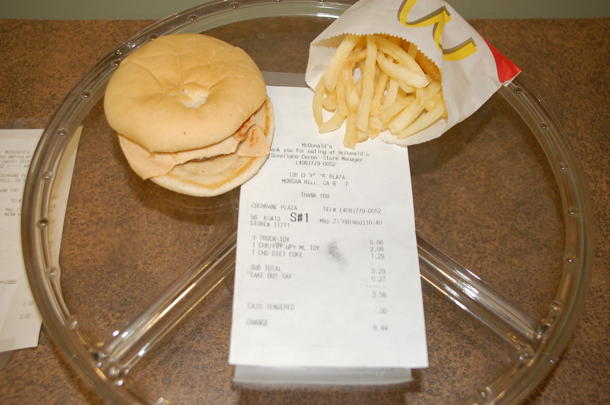
Then, out of the blue, I remembered all the photographs I’ve seen on the internet recording the daily decomposition (or lack thereof) of a McDonald’s hamburger.

And all of a sudden I wondered:  Will McDonald’s hamburgers eventually take over from radioactive waste as the new comic standard against which all decomp-resistant materials can be measured?  Instead of It has the shelf life of radioactive waste will we say: It has the shelf life of a McDonald’s hamburger?

(Evidently fifteen years and counting on this one.)

copyright Dia Osborn 2012

When does living stop and dying start?

This is the kind of question I understand repulses most people but for some reason fascinates me.  It’s not so much about dying…I think…as it is about transitional zones in general.  For me, they’ve always been the place where everything interesting is going on.

I ask the same kind of question when I’m lying around up in the mountains and watching the sun set…at what point does it turn from daytime into twilight and then into night?  Or standing on a beach and watching the waves roll in and out…where are the lines that define where land becomes coast becomes sea?

Where do the colors really change on a rainbow, or is there an exact moment when a marriage fails, or at what length of tail can you stop calling it a tadpole and start calling it a frog?

These kinds of questions have always struck me as important even though I’m not entirely sure why.  Maybe they give me a way to puzzle through the nature of change and the necessity for it?  Or perhaps it’s because I’m not very good with loss and transitional zones all involve losing one thing as it changes into something else?  Maybe I think about it a lot because I’m still trying to learn how to say good-bye, let go, and look forward again?

Or maybe it’s just how I was born.  I mean, really.  Who knows why any of us are fascinated by the things that we are?

But back to the original question, when exactly does dying start?

I used to unconsciously believe that it started when a doctor said that it did.  At that stomach sinking, deer-in-the-headlights moment when a person was told, “I’m sorry.  There’s nothing more we can do.”

Did anyone else think that’s when it starts?  And that everything that happens before that horrible moment…all the whirlwind of treatments and waiting and bad news and worse news and more treatments and uncertainty and all the fear…is still living?

That’s what the journey of dying looks like so often these days.  Plunging into diagnosis and treatment can be so much like being caught up and tumbled in a huge, breaking wave that scrapes you along the bottom and nearly drowns you before finally washing you up on shore, beaten, battered, and gasping…only to be told that now you’re going to die.  Honestly, thinking about it like that absolutely terrifies me. I’m not all that worried about dying but I’m petrified of being over-treated for it.

But anyway, once I started to consider the question, and once I realized what my default answer was, I started observing more closely what was going on in my work and eventually discovered a couple of things that helped reshape my answer and ease that scary feeling a lot:

1)  In hospice I learned about a thing called “active dying.”  It’s when the body starts to go through the final shut-down sequence…when you get what’s called a “cascade of organ failure.”

(For the record, I really dislike that term.  Watching a body shut down never looked like failure to me.  On the contrary, it looked like a brilliantly…BRILLIANTLY…conceived protocol designed to both protect us from further horrendous suffering, as well as extract us from a clump of physical matter that’s starting to break back down into it’s essential elements for future life.  To me, active dying looked just as miraculous and sacred and wild as birth ever did.)

The period of active dying is relatively short, lasting from a couple of days to a few hours and, in my evolving understanding anyway, became the clearest definition of when dying actually starts.

I have to admit, that conclusion really surprised me.  It turned a lot of the standard cultural view I grew up with on it’s head.  It even messed with the entire basis for referring a patient for hospice care in the first place, as they’re supposed to be dying to qualify.

And yet, it also explained something that hadn’t made sense up to that point.  When I first volunteered with hospice I thought I was going to work with “the dying.”  And yet I quickly discovered that the extraordinary people I was meeting were actually living.  Times ten.  In fact, probably more than most of the not-dying people I knew.  I quickly surmised that I’d been laboring under a misperception, but it wasn’t until I finally figured out that dying doesn’t start until the very end that the nature of that misperception became clearer.

So for me, in strictly physical terms anyway, dying starts when our bodies enter the “active dying” stage.  And everything that comes before that, no matter how turbulent or ominous or final, is still living.

So when a doctor delivers that terminal diagnosis…we’re still living.  And when we get referred for hospice care…we’re still living.  And when we start losing our appetite, energy, and bowel control and maybe can’t even get off the bed, I’ll be danged if we’re not STILL living.  Maybe in a period of uncomfortable decline which is a definite bummer, but bummers have always been a part of living, too.  So, so what?

And that was the second thing I figured out which helped ease that scary feeling.

2)  Life and death, and living and dying, are completely different things.

Life and death are nouns.  They’re things that exist as an independent fact, like cell division and tooth decay.  They’re built into the system itself so they happen to us whether we deserve them or not/want them or not/appreciate them or not.  First we’re dragged into life without any discussion and then we’re dragged back out again and, ultimately, we have zero power at either end.  Granted, that’s a little unnerving but I still find the simplicity of it appealing.  Turns out life and death are not…thank you God…something I have to try and control after all.

Living and dying on the other hand are verbs.  They’re the smaller, more manageable ways that we get to participate in these vast and fundamental forces.  Whereas we have no say whatsoever about life and death, we have enormous power over how we choose to live and die within them.  How we choose to deal with them and face them (or not.)  Depending on our inclination, we can turn either one into something meaningful, generous, and humbling or something ugly, painful, and degrading…or more likely a little of both.  We are human.

In any case, that part of it is all up to us.

Which I love a lot because I need something to control.  (As the hubster can testify.)  I will happily give up trying to control life and death as long as I have living and dying to strap into the harness instead.

So back to the original question of when exactly does dying start, over time I’ve found it most useful to think of in birthing terms of all things.  It goes kind of like this:

Life enters the world in in four stages; conception, pregnancy, labor, and delivery.  From where I’ve been standing it looks like it heads back out along the same lines.

1) Conception, for me, would be the moment when I first realize I’m officially heading for the exit.  This is it.  I’m going to die.  I think this one might be the hardest part.

2) Pregnancy would encompass most of the time I have left and would involve all the many and varied preparations required for death; wrapping up my life, finishing all the paperwork, giving and receiving any forgiveness, savoring all my “last times,” navigating all the tricks of a body in decline, saying my good-byes and thank you’s, making damn sure everyone knows how much I’ve loved them and, finally, making my peace.

3) Labor would be the briefest part and would constitute the active dying process.

4) And birth?  Well, to be honest…it’s always kind of looked like birth is happening at both ends to me.  If there’s one thing I’ve learned from studying all these different transitional zones over the years it’s that endings and beginnings are pretty much the same thing–a moment of conception.  I know there are a lot of different theories out there about what’s going to happen after death…and I think they’re all pretty interesting…but I, personally, have no idea what the exact nature of my death/birth will be…and I like it that way.  It makes it all seem like more of an adventure.

But I do know this; in all the time I spent in the rooms of “the dying” I never once saw life itself destroyed.  On the contrary, with each person’s passage I saw it becoming something more vast and measureless than I’d ever understood.

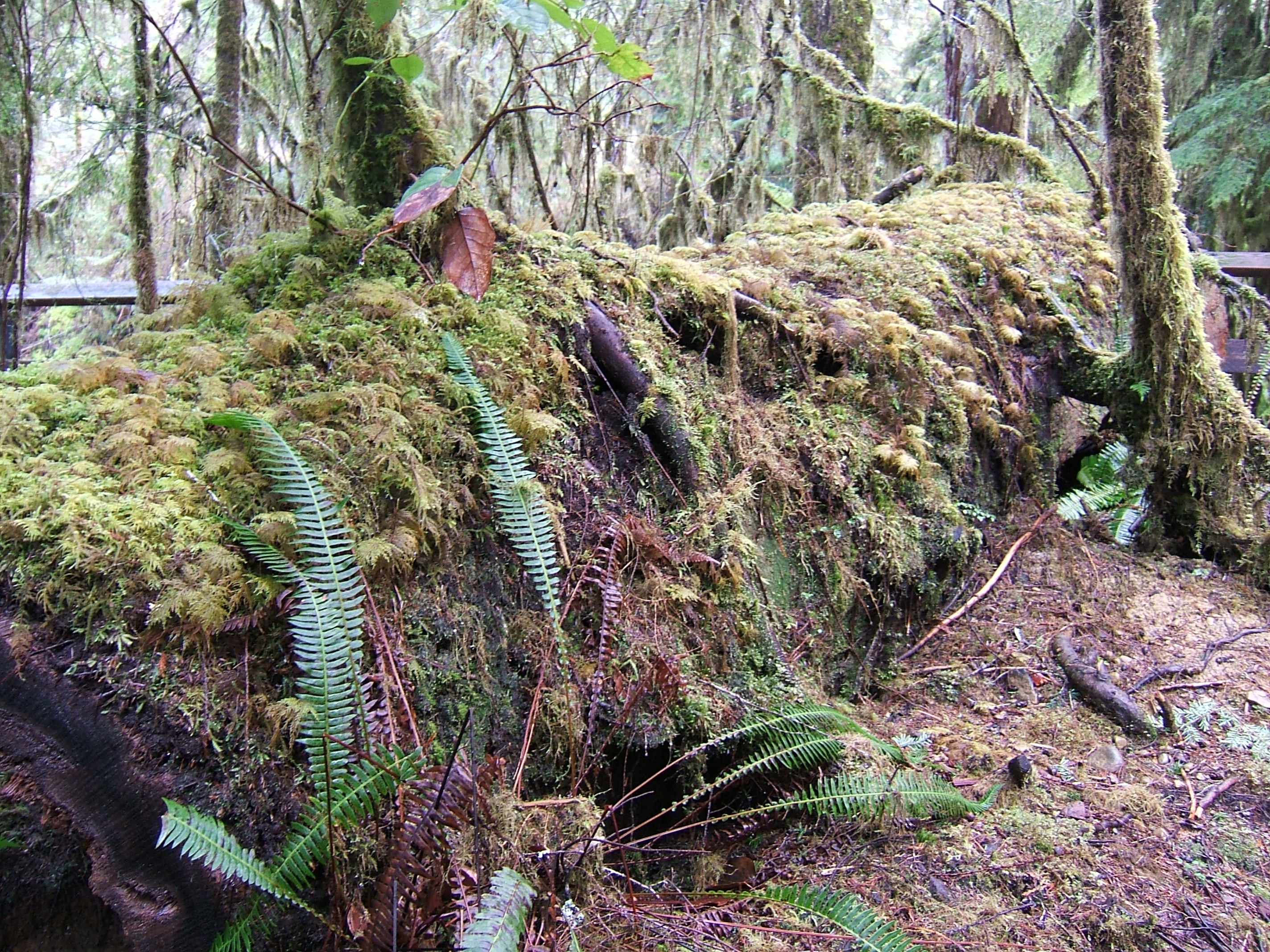
Here’s a photo I took in the Olympic rainforest that captures a little bit of that feeling for me.  The physical part of it anyway.  (Rainforests are like the transitional zone incarnate.  Changing from one thing into another is all that ever goes on in there.)  This is what’s called a “nurse log.”  It’s when one of the old giants falls to the forest floor and magically becomes a raised and fertile world for countless new seedlings to begin their tiny lives.  Nothing wasted, nothing destroyed…only transformed and renewed.

copyright Dia Osborn 2012

A Little Interview With Mr. Will To Live

(This beautiful guy is Hotei, the god of happiness.)

Since I’ve gotten serious about finishing the book I’m spending a lot less time in Blogland so first, I’d like to offer my sincerest apologies to anyone living solely for my next post.  How some people whip out well-researched, erudite, interesting posts a few times a week (or even…gasp…daily) while simultaneously self-publishing multiple books and promoting them is beyond me.  I can’t even type that fast.

Where the book is concerned, I’m currently taking a tip from that wildest of writers, Jack London, to heart.  He claims:

You can’t wait for inspiration.  You have to go after it with a club.

Accordingly, first thing each morning I get out of bed, pick up my club, give it a swing or two for warm up, then sit down at the laptop and dutifully beat on it for an hour.  I figure this way if inspiration ever strikes at my house, at least it won’t be hitting an empty chair.

But my blog-attention has clearly suffered as a result and just in case anyone 1) noticed or 2) cared, I thought I should at least offer an explanation.

And there you have it.  Now on to today’s topic of the will to live.

Lately during club hours I’ve been having some long, thoughtful conversations with an on-again/off-again companion of mine called Mr. Will To-Live.

Mr. Will has mentioned that he’s enjoying our talks enormously as most of the time people seem to take him for granted.  Well not so, me.  I’ve always found him fascinating in the most elusive of ways.

He tells me that, depending on a variety of factors, he shows up a little differently for each person; sometimes strong and pulsing, sometimes erratic, sometimes frail and tenuous, and in a handful of hardship cases like mine, fractured to the point of being almost useless at times.

I asked Mr. Will what factors determine the quality of a person’s will to live and he cocked his head to one side and thought about it for a moment, then ran through this quick sampling:

1)  the will to live has both nature and nurture components to it.  Everyone is born with some degree of a will to live, but no matter how weak or strong it is starting out, it can always change.  (In other words, don’t get too cocky on the one hand or lose hope on the other.)

2)  the will to live puts down most of its root system in childhood so it needs to be fed lots of good, yummy stuff during that period.  A few things that the will to live loves are:

     a)  safety (this lets a child know that they are very, very worth protecting)

     b)  kindness (this allows a child to unfurl all of their amazing, tender, new shoots)

     c)  encouragement (this tells the child that it’s perfectly okay to want things, even a lot)

     d)  freedom to explore (this confirms that the world really is a curious, interesting, worthwhile place to be)

     e)  tolerance for mistakes (this lets a child know that of course they can keep trying)

     f)  a lap and strong arms when things go wrong (this teaches a child that help is a good thing.)

3)  However, if a person reaches adulthood with a gimp sort-of will to live like mine, there are still things that can strengthen it.   A few of them are:

     a) finding someone or something to love (we can continue to stay alive for others even when we’ve lost all desire for ourselves)

     b)  finding a purpose (having something meaningful to accomplish will up anybody’s endurance levels by multiples of ten)

     c)  finding something to fight against or spite (hate and anger can provide powerful reasons to live but have seriously debilitating side-effects. Use with caution.)

     d)  and lastly…service of just about any kind (bringing joy, comfort, aid, companionship or meaning to others in need can nourish not only their will to live but, mysteriously, one’s own.  A marvelous trick, no?)

Service has the additional benefit of inviting Ms. Longing For Life into the room…the wind-beneath-the-wings and beautiful close cousin of Mr. Will To Live.   Hopefully, I’ll be able to secure an interview with her for a future post.

In the meantime I’d like to thank Mr. Will To Live for his time and valuable insights and encourage everyone to try nourishing him with one of his favorite foods once a day.  (Children aren’t the only ones who thrive with a little extra safety, kindness, encouragement, etc.)  It can at least bring a little lift to someone’s day and at best totally turn things around.

copyright 2012 Dia Osborn

Guinea Pig Rescue and the (Historic) War On Women

Meet Hashbrown and E. Benedict.

These are the newest additions to the family of Foxed In and, believe it or not, both their little lives have already been touched by tragedy.  Little Hashbrown, pictured on the left, was recently purchased from a well-known chain of pet stores along with poor little Nacho who is not pictured because he died suddenly and horribly a scant three days later.  I’ll let you go over to Foxed In yourself for a hint of the sad, bad news about pet mill horror that exists in the retail world.

But in the meantime, being left with a bewildered and lonely little piglet (guinea pigs are evidently “super social animals and pretty much need to be in pairs”) Foxed In then located E. Benedict, pictured on the right, with the help of an absolutely fabulous (wait for it, wait for it…) guinea pig rescue/adoption group that the vet who did the (wait for it, wait for it…) autopsy on Nacho recommended.  Seriously.  Foxed In requested an autopsy.

I find that sort of humbling actually.  Evidently, this is a woman who doesn’t discount life simply for the sake of size.  Perhaps something for us all to consider.

On a humorous little side note, Foxed In calls E. Benedict a “walking toupee.”

I think I can see it.

On another topic, I began my hospice work as a volunteer but quickly realized that it was the nurse’s aids who got to spend the most time with patients.  (i.e. my own ulterior motive.)  I therefore dutifully trotted down to the university and enrolled in a class to get my certification and become a C.N.A.

The evening classes were held at the old Idaho State Penitentiary, which is now shut down and maintained as an historical monument. I took a tour of the place once, which was pretty fascinating in a horrible kind of way, but I noticed that it entirely ignored the history of the women prisoners who were also once incarcerated there.

The Idaho women’s prison is a small building constructed outside the walls of the men’s prison and, while it’s not a part of the formal tour, there is an exhibit in the main hall explaining some of the criminal history of Idaho’s gentler sex.

Strolling around the room I was initially surprised to learn just how many women were locked up for killing their husbands. (For those interested, poison was the method of choice by a clear majority.) But it all started to make more sense as I read about some of the laws governing women back in the late 1800’s/early 1900’s.

To varying extents depending on the decade, women were not allowed to own property and had no legal right to either their children or any wages they might earn.  Everything they “owned” legally belonged to their husbands.  This complicated the divorce option for a woman whose husband chose to contest it.  If she wanted to leave the marriage he could keep everything she owned as well as prevent her from seeing her own children, not to mention confiscate her wages until the divorce was finalized, making savings impossible.  So unless a woman had a family or friends to turn to, the likeliest outcome was that she would wind up on the street, probably forced into prostitution.

Evidently, this law was not as binding for women from the upper class who retained some property rights under specific circumstances.  But for women from the middle and lower classes, the law in effect made them the property of their husbands with rights equivalent to…say…a chest of drawers..

Add to this the law commonly known as the “rule of thumb”…which defined the acceptable size of a stick that a man could legally use to beat his wife and children with as being no bigger than his thumb…and perhaps these guilty women might be forgiven for believing that murder was their only alternative.

Clearly, the underlying purpose of these laws was to bind a woman to her husband in a way that would establish his dominance and prevent her from leaving him.  (It might be wise for other men with this agenda to note that the plan backfired significantly in some cases.)

I wonder what happened to all the other Idaho women trapped in the kind of abusive marriages that laws like these actually helped to create? How many others wound up poisoning their husbands and getting away with it?  How many decided instead to escape with nothing, only to wind up in prostitution or starving or dead?  And how many simply gave up and stayed in the marriage, dying a slower, black and blue kind of stick-death?

I look at what the Idaho legislature is doing these days where its laws governing women are concerned, and I can’t help but notice a similarity between today’s governing mindset and the one at work during this earlier, abysmal period of our state history.  Yesterday’s elected officials were finally forced to abandon their sticks only to have today’s politicians embracing  some of the stick’s newer, high-tech equivalents like ultrasound machines and health care exclusions.  Laws concerning almost every aspect of a woman’s reproductive capacity are multiplying at an alarming rate (it’s amazing how obsessed our predominantly male legislature is with the subject.)…

(24 hours later…)

Blah, blah, blah.  Believe it or not I wasted three precious hours of my life yesterday on a following rant about Idaho politics.  It was such useless kvetching that finally even I couldn’t stand it anymore.

How do you spell d-e-l-e-t-e?

Let me just finish by saying this.  Women?  Respect yourself, remember how much less we once had and, if all else fails, poison the fucker.  (Kidding!!@#!!!)  Call your elected representatives and picket Congress for a century.  That’s what our foremothers did and they got us property rights and freedom from sticks.  Let’s learn by example and not drop the torch.

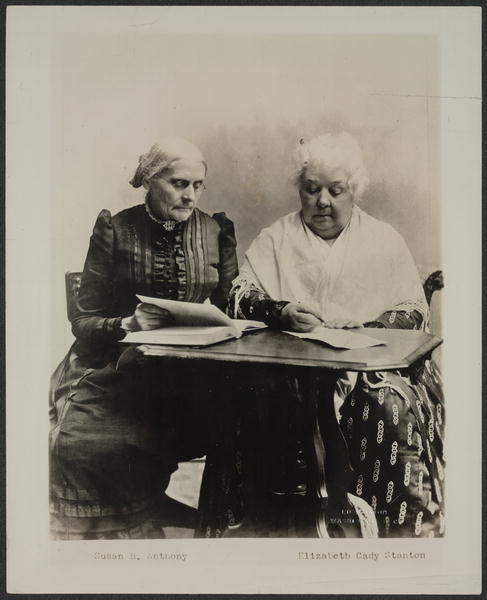
A brief tribute for two women to whom we owe much: Elizabeth Cady-Stanton and Susan B. Anthony 

(Photo credit of American Memory)

Thank you, thank you, thank you.

So.  Rather than ranting about politics, I’d rather spend my last paragraph observing that the above-mentioned guinea pig rescue/adoption people believe in the dignity and beauty of life so much that they’re willing to fight for it even in the most ridiculous of little pet-creatures.  And that gives me more hope than just about anything.

I think one of these kind of people is worth a thousand…no…a million politicians.

copyright 2012 Dia Osborn

Where The Hell Is Matt Is Back Again!

For anyone who loved Matt and his crazy dance around the world the first time, he’s back!  And it’s not just a rehash of the same old dance with more places.  There’s some choreography this time which is really fun, and of course he’s managed to bring this unique dancing joy to a handful of people in very difficult parts of the world.

Particularly poignant for me was the dancing sequence in Syria.  I can only imagine he captured that footage before the country melted down in civil war, and I’m really glad the editor blurred the faces of the women for their protection.  It was also beautiful to see him dancing with a woman in North Korea.  In the last video he only got as far as the demilitarized zone…which, btw, was probably that video’s most poignant footage.

And I was both thrilled and TOTALLY BUMMED to see that he was here in Boise at some point!!  I can’t believe I missed it! Damn.  I would have loved to dance with Matt.  But you can catch him and a whole bunch of other lucky locals dancing on the Boise State University blue football field at around 2:39 if you’re interested.

Thanks again Matt.  You keep pulling us back together again in spite of all the things trying to drive us apart.

P.S.  If you’ve never seen the first video from 2008, here it is.  Prepare to be delighted.

New Everything: The Earliest Stage Of Resolve

Today, in keeping with my new burst of enthusiasm to actually finish the book, I opted to drive down the stake of a unique and personal domain name.  (In other words I dropped the “wordpress” out of the URL.)  The address for the book and the blog are now the same and official:

acuriouscure.com.

To tell you the truth, the change felt a little intoxicating.  Like first rum.  It was all so new and different and kind of spring-break-name-gone-wild and I got all wound up.  In a burst of total abandon, I changed the header picture and then the theme, too.  And believe me, if I knew how to change anything…anything…else on the site I would.  But for now my lack of technical expertise will keep the rest of my clothes on.

So anyway, that’s why everything looks a little different today.

BTW, the alligator sculpture in the header above is my newest and most prized-of-all-prized art pieces.  And I know, she really belongs in a big fountain, or a bed of deep periwinkle, or on the nightstand next to my bed as primeval protector of dreams, but for now I can’t bear to have her out of sight for that long.

So instead she’s hanging out on the hearth next to the wood burning stove, right in the center of the house.  That way every time I forget she’s there, and then walk around the corner and catch her out of the corner of my eye again, my stomach can do another flip flop and I go…what the…?!!  before I remember.

She’s that real looking.  I love her.

Here’s a full view:

Ma belle.

Someone Else Wrote My Book. What Now?

I’ve been working on a book about my time with hospice for about five years now–or rather working on it for two years and then procrastinating for three.  On the advice of an agent, I originally started this blog to build an author platform and then got hijacked.  Publishing blog posts is a lot more fun and immediate than slogging away for years on a book that may or may not ever see the light of day.

But while I was thusly blog-distracted, some upstart hospice nurse back east snuck under the police tape and wrote my book before I could finish.  It’s called Transitions by Becki Hawkins and, while I haven’t read the book yet, I did read the press release:

For the most part modern western culture has distanced itself from the celebratory and positive aspects of the dying process, instead either ignoring it, or focusing on only the negative aspects of death…Becki felt there was another more joyous and beautiful side that she was learning from her patients that she wanted to share with others.

That’s exactly what I was going to say.  Shit.

Now don’t get me wrong here.  There does lurk an altruistic/decent person inside me who says thank god and good on her for getting the word out when I was too lazy and undisciplined to get it done.  Ms. Hawkins’s accomplishment is everything good and noble and generous, and Transitions is a wonderful boon to the world and thank you a million times over for writing it.  There.

But I’d be lying if I said there isn’t also a poisonous/jealous writer in a dark corner of my soul, nursing a double and hissing a pox on her for stealing my idea.  (Inner writers are all neurotic, not just mine. Hold the stones please.)

So what now?  Do I shoot my languishing book in the head and put it out of its misery once and for all?  Or do I buck up and take the immortal words (and graphics) of Chuck Wendig over at Terrible Minds to heart?

Well, I’m either a writer or a masochist because I printed this puppy off and taped it up on half the cupboards and all the mirrors in the house.  Guess I’m still in.

The other voice haunting me belongs to the ever wise and balanced Linda over at Rangewriter, and in its own way, is both finer and more compelling.  After being informed that my book was already written, she thought about it for a second then gently asked:

“Do you think one book on this topic is really enough?”

That sobered me.  I looked up from my whiskey and suddenly recalled this one basic truth I heard about writing once that I’d somehow forgotten:

Everything under the sun has already been written about before.  There is no…NO…such thing as a new topic.  Ever.  There are only new voices to express them in different ways, and each one of those voices is important because there’s at least one reader waiting out there that only that voice can reach.

So, do I really think that one book about the joyous and beautiful side of dying is enough?  That Ms. Hawkins and Transitions can (or should) carry the entire burden alone from here?  That all the mindless terror of dying out there in the world has now been forever eased?

Probably not.

But truly, even if her book WAS enough–even if that one truth I know about writing turned out to be sheer self-delusion and there wasn’t really a lonely reader waiting anywhere out there for my unique voice to reach –I could still fall back on this completely selfish reason and finish my book anyway.  It’s from Mr. Wendig again, from his post 25 Things I Want To Say To So-Called “Aspiring” Writersand comes in at #24:

“As a writer, the world you create is yours and yours alone. Someone will always be there to tell you what you can’t do, but they’re nearly always wrong. You’re a writer. You can make anything up that you want. It may not be lucrative. It may not pay your mortgage. But we’re not talking about that. We’re talking about what’s going on between you and the blank page before you. It’s just you and the story. If you love it and you want to write it, then wire your trap shut and write it. And write it well. Expect nothing beyond this — expect no reward, expect no victory parade — but embrace the satisfaction it gives you to do your thing.”

Amen to that Chuck.  Back to the keyboard.

copyright 2012 Dia Osborn

It’s Too Early Until It’s Too Late

Has anyone finished their advance directive yet?

(This post sponsored by Niggling Reminders.  “When you can’t remember for yourself, we’ll remember for you.”)

My Son Is Too Old To Colonize Mars

Just when you think you know somebody, they can still surprise you.

I was chatting with my twenty-nine year old son on the phone the other night and discovered two things about him that I didn’t know before.

1)  He’s leaning towards atheism. (Which is both disconcerting and kind of cool.  We don’t have one of those in the family yet.)  And

2)  If he had the chance to be among the first to colonize Mars, he’d jump.  No questions asked.

Of course, as his mother, I went straight to neediness when he confided the latter piece of information. “But…what if you could never come back to earth? Would you still want to go?”  My fear of abandonment in old age was showing.

He didn’t hesitate.  “You bet.”

I clutched at my heart for a second then sighed.  I suppose it’s my own fault for teaching him to be truthful.

In case anyone is thinking that this is a ridiculous conversation, it’s really not.  There are actually a number of plans on the table for colonizing Mars.  In a brief article on The Norwegian Space Centre website (for the government agency under the Ministry of Trade and Industry) it says that the earliest date mentioned for moving to Mars in official papers is 2019.

In another article on The Daily Galaxy, the author sites evidence of Mars colonization becoming an imperative of the new U.S. space strategy taking shape under Obama.

And Stephen Hawking, the renowned British physicist and author of A Brief History of Time (among many, many other books), is a strong supporter of space colonization in general.  In fact he believes that, with the poor resource management so far displayed on Earth, human life simply won’t exist long-term without it.

 “Life on Earth,” Hawking has said, “is at the ever-increasing risk of being wiped out by a disaster such as sudden global warming, nuclear war, a genetically engineered virus or other dangers … I think the human race has no future if it doesn’t go into space.”

But keep in mind he also said, while talking about the possibility of other intelligent life in the universe:

“Personally, I favour the second possibility – that primitive life is relatively common, but that intelligent life is very rare…Some would say it has yet to occur on Earth.”

Which kind of begs the question of why save us at all, but I guess there’s no explaining species loyalty, which is an instinct-thing.  (Which then loops us back to the question of intelligence, which is a mental hamster-wheel thing.)

The project that got my son dreaming about all this in the first place involves a Dutch start-up called Mars One that’s planning to fund the first colony on Mars in 2023 with the proceeds from a reality show documenting the whole thing.  Before you laugh (which was admittedly my first reaction when he brought it up) check out their website.  A realistic Mars shot is evidently a lot closer than I understood.

Luckily, before I donned the black veil and started throwing ashes on my head, my son sadly explained that he was already too old to participate in any of these projects.  Turns out that, while he may be as scary smart, technologically astute, and space visionary as the best of them, it’s not enough.  Thankfully nubile youth is also required.  Which means it will be some other unfortunate mother standing at the dock in 2023 waving her crumpled little handkerchief good-bye.

My son will be stranded to die right here on Earth with me.

Oh for godsakes…what a horrible thing to write.  (In case anyone was wondering where he gets his deplorable truthfulness from.)

On a brighter note, evidently Virgin Galactic (that Richard Branson, I tell ya…) is actually booking seats for space flights now and my son feels that this is an adventure within his reach. I have to admit, if I had a spare $200,000 sitting around I’d be tempted to join him and book a flight myself.

Now, for the record, I adore, a-d-o-r-e, this planet and would never, ever leave her, even if a gigantic asteroid was about to annihilate us all and I was offered the last remaining seat on the only spaceship out of here.

I’m really not kidding when I say I want to die at home.

But to be able to go up and just orbit around her a few times?  To see with my very own eyes the Blue Planet, this exquisitely beautiful, miraculous place that we all get to share in, live on, suckle from, contribute to, and be a part of for however long it lasts?

Now that would be something.

copyright Dia Osborn 2011

The Little Gosling That Couldn’t and How The Kayak Got Her Name

This one falls under the heading of “strange and magical things experienced while kayaking.”  My twin interests of paddling and dying paired up for a brief dance last weekend.

On Saturday we strapped the kayaks to the car and drove out to a canyon area that…long, long ago and far, far away…had a creek running along the bottom of it.  But one day the Army Corps of Engineers came along and built Lucky Peak dam and, lo and behold, the canyon became a long finger of the resulting reservoir instead.  (A change that unquestionably sucked for everything that lived down there at the time, but turned out to be a boon for municipal water storage and boating of all kinds.)

We got up at 5:30 to beat the power boats and water skiers and were rewarded with the stillness and solitude that only goes to the early risers. (Which I normally am not.)  We started at the tip of the long finger and paddled along for an hour and a half, gazing up at basalt cliffs and the clouds of wheeling, flitting birds that make their homes there.  Later we discovered a small but breathtaking cove with lichen covered cliffs rising straight from the water and a couple of tinkling, tiered waterfalls cooling the already hot day.

And then, as we finally neared the end of the narrow canyon and prepared to enter the main body of the reservoir itself, we sighted a pair of Canadian geese shepherding twenty-three, brand new goslings in a tight bunch between them (count them! twenty-three!!) and we immediately swung the kayaks out into deeper water, giving them as wide a berth as possible out of concern for those unpredictable, wide-eyed, bits of fluff.

By that time the power boat traffic had picked up in the main reservoir and a few of them were turning into the canyon, roaring and dragging their bouncing, scooting loads back up what we’d just paddled silently down.  The clash of water-recreational cultures had begun and it was now time to share.

The hubster and I had gotten separated somewhere along the line, with him paddling along one side of the widening channel heading for the main marina, while I followed the line of cliffs on the other side, gazing up and studying the geology.  Deep down I knew I was going to have to cross eventually, to join him, and navigate the boat traffic in the process.

But I didn’t want to….I just didn’t…and some deep, stubborn thing inside me dug in and grabbed on with it’s toes.  I didn’t want to go to the marina.  I didn’t want to deal with the boats.  I didn’t want anything to do with the human world at all because I knew it would break the spell I’d fallen under earlier in the canyon…of water and wings, rhythm and rock.

So I ignored his lead and kept to my own side until, just up ahead, I was distracted by something strange floating on the water.  It wasn’t the occasional driftwood or flotsam or jetsam bumping past my boat.  It was soft brown and upright and I soon realized that 1) it was a lone gosling drifting perilously close to the wakes from the main boat lane and, 2) that it belonged to the gaggle of other goslings we’d passed earlier, back up the canyon, but had somehow gotten separated.

I never really decided to do it.  On the contrary.  It happened with no reflection whatsoever and entirely without my consent.  My arms simply paddled the kayak around behind the gosling, turned the bow back up the canyon, and started to patiently, relentlessly herd him along the base of the cliffs after his family.  Just like that.

Looking back now it’s amazing to me, how my perception could change that much in a single breath.  How a world as populated and noisy as the reservoir was, could suddenly telescope down to a single, tiny, bobbing life like that.  My vision went tunneled and everything else ceased to exist…the power boats, the hubster, time.  It’s funny.  Over the years and on into menopause, I’d forgotten what a fierce thing the maternal instinct can be and what odd things can invoke it.  But in an instant there she was again, up on her hind legs with claws spread, just like old times.

It’s nice to know the hormones still work.

The spell deepened.  As I paddled slowly…s-l-o-w-l-y…along, nudging, urging, heading off, backing up, turning, resting, then urging the little gosling on again, I started to feel a strange kinship with all the Canadian goose mothers I’ve watched over the years as they guided their own babies along.  It was like there was a second, phantom world gradually superimposing over the first, one where the yak was turning into a plump, feathered body and the paddle, a long, stretching neck.  It was an odd sensation, that tactile feeling of goose-ness settling over me, but I welcomed it anyway for the additional skill and information it lent me.

The gosling wasn’t doing well…at all…and I soon realized why he had been abandoned.  He was weak and getting weaker.  The effort required for him to swim ahead of my kayak was clearly a lot and he also suffered occasional spasms of some kind of palsy.  I wondered if he was born with neurological damage or if he’d been caught in the wake of a boat right out of the egg, maybe dashed against some rocks or injured in some other way.

At some point it dawned on me that the little guy wasn’t going to survive, and my mission changed from saving his life to reuniting him with the family so he wouldn’t have to die alone.  By this time the hubster had noticed my preoccupation and come over to check out what I was doing.  As soon as he saw the gosling he joined my efforts without a word and together we urged the tiring baby forward as gently as we could.  But the gosling was so weak…and the going so achingly slow…that eventually the hubster decided to paddle up the shoreline to try and find the family.  To perhaps herd them back down towards us if he could.

I began crooning encouragement to the gosling, who was pausing to rest with increasing frequency, and he seemed to respond to the soft, loving sounds.  He stopped and looked up at me a few times, relaxing a little, and started trying to follow the edge of the bow as I held the careful distance between us that I’d maintained the whole way.

And then something happened that took me entirely off guard.  A spasm of palsy struck the gosling that was so strong his bowels emptied into the water.  And as I sat there waiting for it to pass, watching the small patch of white refuse sink and disperse beneath the surface, the baby suddenly turned towards me…disoriented, overwhelmed, and unable to continue…and swam straight for the hand that I instinctively lowered into the water.

He never hesitated but climbed right in, balancing there among my careful fingers as I lifted him up and nestled him protectively in my lap.  And as he sat there quietly, exhausted, I started paddling in earnest, heading for an inlet about a quarter mile up the canyon where the hubster was signaling that he’d found the rest of the goose family.

I honestly don’t know how to describe the strange mixture of emotions and instincts that had taken possession of me by that time.  I don’t really understand it myself.  There were flashes of stories going through my mind, stories I’d heard of other mothers from other species who had done the same thing I was doing.  There was a female gorilla in a zoo somewhere.  The one that picked up an injured human child who had accidentally fallen into her enclosure and cradled it against her, protecting it from an aggressive male gorilla that could have done further harm.  There was a Labrador Retriever bitch that a friend of mine once owned, who patiently, lovingly nursed a litter of orphaned kittens to term, taking them on as her own when the mother cat had been killed.

There are other stories, too, of this particular phenomenon—of surprising cross-species interactions filled with tenderness and generosity–and these stories tend to both puzzle and delight all of us who hear them.  I wonder if it’s because maybe, each time, they hint that we’re not quite as different from each other as we thought.  Or that we’re not quite as alone as we feared.

What I do know is that sitting there in the kayak that morning with a beautiful, dying gosling across my thighs, I suddenly understood with crystal clarity how those other animal mothers could behave the way they did.  I got it, how an innocent life falling from the sky, however damaged or brief, can instantly become the only thing that matters.  How the kind of terrible vulnerability they present can trigger the most primal of instincts…and what a good and sacred thing that is.

By the time I reached the hubster in the inlet where the family was resting, the gosling was sinking into permanent disorientation.  He was actively dying and, as I cupped him in both hands and placed him back into the water, he kept trying to swim the wrong way.  He didn’t seem to see or hear the other geese as they clacked and shifted uneasily at the end of the inlet, and we weren’t quite sure what to do.  We didn’t want to get any closer out of concern for the other goslings, but at the same time we wanted to guide our own little guy near enough to the others to have a chance to see and join them.

Finally, the two adult geese seemed to notice the gosling swimming near us and one of them raised its wings a little, making alert and angry goose noises and moving aggressively in our direction.  At this our little guy seemed to clear the fog for second and see them and he turned to swim down the inlet in their direction.

For a brief and dazzling moment, I thought everything would be okay.

But it wasn’t.  Everything started going wrong.  Instead of crossing the water towards the family on the right bank, the dying gosling hugged the opposite shore.  His head wobbled with palsy, his swimming grew increasingly erratic and aimless, and with a sigh I recognized all the signs.  He was losing awareness of the physical environment around him as he commenced the final stage of dying.  He was going light…entering that luminous border world around life that has to be crossed on the way out.

I’d also made a classic mistake with the adult geese.  Forgetting everything I know, I’d projected all my human emotions onto them and childishly expected them to welcome the gosling–which they’d already abandoned once–back into the fold.  Far from the joyful reunion I’d imagined, the parents herded the other babies as far away from the injured gosling as possible, actually moving them down the inlet towards us.  I realized they were willing to risk a dangerous level of closeness with humans rather than get anywhere near the dying gosling and, too late, I remembered about that other, harsher instinct that also lurks inside us all.  The one that whispers mistrust of all things sick, misshapen, or dying.

It’s the one that always errs on the side of caution in order to avoid contagion and preserve life.

Strangely, I accepted the unexpected turn of events with no more rational thought than I’d given to anything else that had happened.  That deep, clawed thing inside me simply fell to all fours and ambled off.  Nothing felt wrong or sad to me, still sitting under the spell of primal things as I was.  It just felt done.

I watched for one lingering moment as the blinded gosling bumped his way up the inlet and then, when the hubster suggested we get going, I turned my kayak without a word and followed him.  We needed to get out of the way of the way of the other geese and besides, I couldn’t chase the gosling down to try and cradle him at the last.  It would only have frightened and traumatized him as he died and that wasn’t allowed.

There’s an instinct for that one, too.

I’ve been haunted by that morning ever since, by the image of that strange, breathless moment when a mortally wounded gosling turned and, against every instinct, swam straight into my hand.  The memory of it fills me with both wonder and questions.  I don’t understand why he did it.  I don’t know whether it was a gesture of desperation and disorientation, or a moment of recognition and trust.  And there’s no way I can ever know, because I think there are some things we’re only supposed to ponder, not solve.

But even though I can never know for him, I can know for me…from my side…and I know this much:

That in his brief and tiny time here, the miracle is that I found him at all.  He was so infinitely small floating alone there in that vast body of water, and a later start, a different trajectory or speed, something as simple as a longer gaze up at the cliffs, would have made me miss him completely.  I’ll never know whether the crossing of our paths turned out to be a better thing for him or not, whether my efforts ultimately eased or increased his suffering.  I can only hope that I did more good than harm.

But whatever it was for him, it was most certainly a gift for me, one of the rarest in fact, to be placed in my secret treasure box full of sparkling things.  It was an encounter full of the dizzying reminder that life is beautiful, yes.  Without doubt.  But it’s only in opening up to let all the world’s shadows and all the world’s light pour inside to fill me, that life transforms from the merely beautiful into an enchanted, shimmering place of wonder, seen with ever widening eyes.

Epilogue: I’ve been secretly chafing ever since our first kayaking adventure when the hubster bravely towed that fishing boat back to shore and earned his kayak its name–Tug Boat.  I wanted a good name for my kayak, too, but after his naming adventure, everything I came up with sounded made-up and lame.  Unearned.

But there was a moment in the middle of shepherding the gosling, when he was still in the water and my yak and I were jockeying around him, trying to guide and protect him both, when the name came to me out of the blue, like it had been whispered in my ear.  

“Mother Goose.”

And that was how the kayak got her name.

copyright Dia Osborn 2012

Gosling image above is from Wikipedia

When Vacations Turn Hard Left: Kayaks and Snow

We hauled the boats up to our usual haunt…the family cabin next to the Sawtooth National Recreation Area…to paddle the various glacier carved lakes over Memorial Day weekend.  We woke up the first morning to a perfect day for kayaking.

Absurd, no?  We laughed and laughed at this joke on ourselves.  We later learned that out of the last twenty-five Memorial Days in Stanley, Idaho, only two have been warm and sunny.

The morning snowfall turned to spitting rain for most of the day and then, in early evening, we got a surprise window of clear skies.  The air temperature shot up into the low fifties and, after some nervous waffling over warm soup, our impulses got the better of us and we decided to go for it.  We learned we could strap the kayaks on the car, load all of our gear, and suit up in exactly twenty-three minutes.

This was our reward:

Not bad, eh?  That’s the view looking down to the very end of Redfish Lake which is about five miles long.  Here’s one more shot of it with the hubster and Tug:

That was as far as we dared go that day.  The sun had just set behind the mountains and we still had to paddle an hour back to our launch site.  Neither of us were excited about trying to load the boats in the dark.  Nevertheless, we both secretly dreamed of coming back and going all the way to the end of the lake, if for no other reason than to sit at the foot of those gorgeous peaks and gaze up in slack-jawed wonder.

But the next day was a total bust weather-wise.  Rain all day…ALL day…turning to another four inches of snow overnight.  No surprise windows for us, I’m afraid.

Our worry started to shift from a concern that we might not get to paddle again to a fear that we might not be able to drive from the cabin back out to the highway.  The winding, steep dirt road that connects the two can get irritable and uncooperative when saturated.

The last, full day of our vacation dawned to (wait for it…wait for it) more rain and spitting snow.  We watched as the heavy, gray squalls entered the long valley from the north then rolled on down, engulfing the mountain ranges on both sides and dumping everything on us as they passed.  This went on over and over and over again, all day long.

But then, in late afternoon, there was a…well, not a window exactly.  More like a brief pause.  A slightly longer gap.  Hardly noticeable in fact, but we decided to load everything up and go down to the lake to watch and wait anyway.  You know.  Just in case.  The hubster especially wanted to go and it seemed better than giving up for good.

The hubster later confided that he knew if he could just get me down onto the water, my own impulsive side would take over from there.  There’s a little dance we always do in situations like this…when he wants to jump in and take a risk, but I’m not convinced that it’s safe.  He’s really kind of brilliant about it.  Rather than trying to get me to “go for it,” his strategy is to nudge me along in incremental baby steps.

At home:  Come on, sweetheart.  We’ll just drive down to the lake and see.  We can always turn around and come back home.

At the lake:  Come on, sweetheart.  We can just sit here a little bit longer.  And by the way, I really don’t mind if you don’t want to do it.

Rolling down the window:  Look, sweetheart!  It stopped raining.  You want to just walk down to the beach and look around before we go home?  I promisewhatever happens, I’m fine with it.

He eventually got me down to the water’s edge but it was a young family staying at the lake lodge…also waiting hopefully for some kind of break in the weather…that tipped me into the boat.  They were on the dock near the rental station, the kids begging Mom and Dad to go out on the paddle boat…clutching, pulling, pleeeeeeasing…and finally, after three long, sodden days of whining, the battle-weary parents caved.  The current squall passed and the next one hadn’t arrived yet, so they all clambered aboard.

The children were beyond ecstatic and the parents were clearly relieved to give up the fight.  Their happy, joyous voices carried across the water to where we stood and, as I watched them paddle and splash around the small, buoyed area surrounding the dock, a kind of stealth, emotional transfer traveled along on the back of the noise.  It was like a computer virus downloading, installing, and rebooting inside me, without my ever realizing what was going on.  The first I knew of it’s presence was when I suddenly looked at the hubster, grinned, and heard the words coming out of my mouth:

“Okay!  Let’s do it.”

Totally irrational, I know.  The happy family never got farther than twenty feet away from the dock. We, on the other hand, paddled the whole five miles down.  (The hubster was right again…getting me into the yak was the real hurdle.)  We pushed through successive squalls of rain and…once…sleet, and…once…snow, all the way down to the pristine and secret, holy bay of bays that we stumbled upon at the very end of the lake.

It blew our minds.  It was that beautiful.  Even the hubster had never seen it before and he grew up on that lake.  (Evidently, ten miles round trip was just too damn far for his father to paddle a canoe full of wiggling boys.)  We had of course been down to the almost-end a hundred times over the years, to the lonely dock where the shuttle boat from the lodge drops off/picks up backpackers and day hikers every few hours during the summer.  But we’d never continued on around the small and innocuous promontory of land that separates the big lake from the tiny bay.  We couldn’t.  We didn’t have boats.

Until now.

Those far off mountains in the photos above towered over us…rising up from the water for thousands of feet through a layer of steep pine forest…while the melting snow coming off their peaks fell back down again in cascading, musical, multi-tiered waterfalls.  The clouds and mist shifted constantly across the rocky crags and sheer cliffs above, while the silence of the place was so heavy that it eventually stilled our tired arms completely.

We just floated for a while, staring around in wonder while slowly, slowly filling back up again.  We hadn’t known we were that empty.  I think it’s hard to tell sometimes, just how much has been drained out of you into the busy activities of regular life, until you get a chance to sit still in a place like that and feel the outgoing flow reverse again.

I don’t know.  Maybe we were stupid and impulsive to paddle that far in weather that unstable.  I honestly don’t know.  I’m not experienced enough yet.  It was certainly cold and wet but we were prepared for that…wetsuits, wool, and rain jackets…so really, that part was not a problem.

Wind is what can pose a real danger with kayaking but the day’s squalls, for all their blowing around up high, never reached down into the bowl of that lake, never generated more than an occasional mild breeze rippling the water.  In fact, a few times when it stopped raining, it was like we were paddling over crystal clear glass.

I guess all I can really say is this:

If we were stupid to go out in those conditions then, clearly, sometimes luck goes to the idiots.  There wasn’t another boat out on the lake the whole time we were there.  No raucous voices drifting across disturbed waters.  No motoring, crisscrossing wakes to block our wondering view of the submerged, ghostly boulders and tree trunks that litter the entire coastline.  Nothing to scare off the otter that stopped it’s gliding play among the rocks to watch us float past, curious and unafraid.

And neither was there anything to jar the profound and surprising reverence we felt back there in the bay for those rare moments…when all the bad news and angry voices and scary, unfolding events of the world grew small and still and far enough away that we could finally relax and remember again.  That we’re okay.  That we were always okay.  That we will always be…in some hard to define but deeply reassuring way…totally and truly okay.

Yesterday…the day we returned to Boise for a resumption of our other, busier lives…dawned sunny, warm, and clear.  Perfect, perfect, paddling weather.

Of course.

We laughed and laughed at the great joke of it all again, then waved good-bye to the mountains and drove away.  Only the difference was that, this time, we felt like we were in on it.

copyright Dia Osborn 2012

Preventive Cancer Screenings: “Serpentine Shel! Serpentine!”

I talked about the terrible experience we had last year as the result of a false positive PSA test for the hubster in the post False Positives Are The Tenth Circle of Hell.  Since then, I’ve been following closely as the U.S. Preventive Services Task Force tackled the question of whether PSA tests do more help or harm and am am not surprised that, today, they announced the answer is harm.

There’s an opinion piece in CNN.Opinion today, by Otis W. Brawley, chief medical and scientific officer of the American Cancer Society and professor at Emory University, where he eviscerates the practice of mass screenings for PSA that has become the gold standard.  Particularly chilling is his memory of a discussion he had with the marketing executive of a major American hospital fifteen years ago who was explaining his lucrative “prostate cancer business plan.”

As he explained it, for every 1,000 men over age 50 who were screened at the mall, 145 would have an abnormal screen, and 135 would go to his hospital for evaluation. Fees collected from them would easily cover the cost of the free screening event. About 45 in that group would have cancer; the rest would be false positives.

The marketer had figured out how many men would be treated with surgery, radiation, and hormones. He had estimates of all the money the center would make from treating all 45 cancer cases. He knew how many men would be treated for urinary incontinence, and what his net profit for treating that would be. Amazingly, he even knew how many of the men would want penile prostheses surgically implanted to treat their impotence.

I asked him one question: “How many lives will you save if you screen a thousand men?” He looked at me as if I were a fool, and said, “Don’t you know? No one knows if this stuff saves lives. I can’t give you a number on that.”

I’m keenly aware and deeply grateful that the adverse effects of this test on our lives were relatively small.  An invasive and potentially dangerous biopsy is as far as it went.  There are a lot of men out there (about a million) who fared worse.  I’m also aware that with a family history of the disease, the hubster is at higher risk than the average man and a false positive on the last test doesn’t mean he’s now bullet proof.  Future PSA tests are by no means off the table but they’ll be approached with more caution and far better reasons in the future.

What makes me so angry is that the considerable risks involved were either not explained to us fully or glibly dismissed before the hubster obediently began the regimen of annual PSA testing.  Pretty much all we heard for two decades, in the media and in doctor’s offices, was the mantra-like assurance that it saves lives, this in spite of the fact that there was no direct clinical evidence to support that claim.  It blows my mind that the first clinical trial suggesting that PSA mass screening does save lives wasn’t published until 2010, and even then the trial had internal inconsistencies that make it suspect.  From Otis Brawley again:

 It showed screening saves lives in the Netherlands and Sweden, but not in five other European countries. Even the positive parts of that study did not show a considerable increase in lives saved.

It makes me wonder what really drove the push for mass screenings over the last twenty years?  The above mentioned hospital marketing executive springs to mind.

The good news is that everything we went through with the hubster’s PSA false positive broke trail for my own more considered, skeptical, research-laden approach to the mammogram alarm I received shortly thereafter.  Before the PSA fiasco I, too, would have obediently returned to the hospital for further scans and a probable biopsy (considering the incredibly vague nature of what was flagged on my original scan.)

But because we were already once burned, I dug in and started looking for more information.  I discovered that with all factors considered I’m actually in the lowest risk category for breast cancer, that an “architectural distortion density” is basically a last shotgun-scatter call for a radiologist practicing defensive medicine, that the rates of mammogram false positives range anywhere from fifty to eighty percent depending on who’s talking, and that no less than five different factors put me in the highest risk category for a false positive diagnosis.

I also learned that once a woman has one false positive, her mammograms are at much higher risk for being flagged again, and that women with false positives receive more diagnostic scans and resulting radiation exposure than women who actually have breast cancer.  Add to all that the fact that the rates of antibiotic resistance infections received in clinical settings are increasing at a clipping pace, and I decided that a biopsy should probably be avoided if at all possible.

Weighing everything I learned, I eventually realized that if I adopted a watchful waiting approach, the odds were in my favor for a good result.  I was right.  After waiting for eight months I finally went back for a follow-up mammogram that could be reasonably compared to the first one, and the new scan was deemed clean.  Nothing had changed indicating nothing was growing.  I was satisfied.

Granted, as a depressive, I still lost most of last year to the threat of slipping into another episode from all the stress and anxiety, but at least I managed to avoid most of the physically invasive fall-out.  And for last year at least, that was enough.  However, in the future I’ve decided not to pursue annual screenings unless I find a lump.  For me, the risks outweigh the benefits.

And that’s the main takeaway I’d like to offer with this post.  Each person is completely unique and there is no medical screening, procedure, or treatment out there that is a one-size-fits-all solution.  On the one hand, be skeptical.  Ask questions.  Do research.  Learn from past mistakes.  Make educated choices and, if your doctor doesn’t provide you with all the information, then go out and get it on your own.  Whether you’re confident in the continuing value of PSA tests and mammograms or not, make your own decisions based on what you feel is right for you.

But on the other hand, respect and support the directions that others are exploring, too, even if they’re different directions than you would take.  I felt mostly alone last year, trying to figure out what to do, because almost everyone I tried to talk to went straight to an expectation of the worst possible outcome.  I could see it in the back of their eyes, that dark flash of terror like they were looking at a woman who was about to be dead because she wasn’t doing what she was supposed to.

I’m not anti-preventive screening.  Far from it.  A pap smear in my twenties probably saved my life and, even with all the other chaos going on last year, the hubster and I both still got our colonoscopies.  But honestly, most of my preventive energy and attention goes into how I live because after working around the dying I finally got it, how little power we’re ever going to have where death is concerned.  I don’t want to waste the precious little time I have tilting at windmills.

I’d rather just live openly with death as my inevitable companion.  I’d prefer to amble around, and graze, and play, and explore the meadow of my life, relaxed and peaceful…and then die…rather than trying to zig zag back and forth across it (Serpentine Shel!! Serpentine!), bent over through the grass trying to hide from it all the time…and then die.

Because that’s exactly what I felt like last year; Alan Arkin trying to dodge bullets in the original The In-Laws.  And pooh on that.  I remember again the wisest thing my father…a grizzled, old warrior with a couple of gruesome wars under his belt and a vast experience of death…ever said to me:

Dia, if it’s your time to die then it’s your time to die, and nothing’s gonna save you.  But if it’s not your time to die, then it’s just not, and there’s nothing out there…nothing…that can kill you.

As a parting gift, here’s one of the funniest movie scenes of all time: the serpentine scene from The In-Laws.  Watch it and weep.

copyright Dia Osborn 2012

Looks like completed advance directives rates are low all over.

This just in from an Australian news outlet:

“The survey found that almost 90 per cent of respondents lacked an advance care plan, and 78 per cent did not know what an advance care plan was.”

In the U.S., approximately 70% don’t have an advance directive yet, which is better than 90% but…still.

Have you done yours yet?  Ours are all filled out but we still need to get them filed and distributed.

So, okay.  June is hereby declared “Finish it Up, Dammit” month.  For anyone else who started and then slacked off in the middle, feel free to join us!

A Cautionary Note Concerning Paper Toilet Seat Covers At Public Pools

I’m looking for ways to procrastinate on the transcription and thought another quick blog post could work.

I just wanted to warn people about this because, being not only unmentionable but embarassing, I doubt anyone else will:

Whatever you do, don’t ever, ever sit down on a paper toilet seat cover while you’re soaking wet.  Ever. It’s like instantly coating your backside with a layer of papier mache and it’s very, very difficult to remove.

Especially when you discover the problem as you stand up in a narrow, public, bathroom stall with your bathing suit hanging around your knees and you panic because it won’t peel off and your feet start spreading too far apart as you try to reach around and under and through to try and rub it off your cheeks and thighs but it just disintegrates turning into a thousand, million little wet paper balls falling down to the floor like gray snow for anyone in the stalls on either side to glimpse causing them to wonder what the hell is she doing over there anyway and…what IS that?

You can’t get it all off without washing, BTW.  You just can’t.  It’s that sticky.  The good news is that you, yourself, won’t be able to see all those ragged, little remnants of sanitary protection clinging to the back of your legs as you peek both ways before making a mad dash for the showers.  You’re spared that lingering mental image at least.

On the other hand, if you ever want to make a piñata shaped like a butt, this could be an excellent way to begin.

(Can you believe it?  You can find pictures of ANYTHING!!!!  These lovelies are for sale over at Bigass Pinatas).

Oh.  And P.S.  Wet turns a once-sanitary paper toilet seat cover into a veritable delivery system for virus and bacteria so humiliation could be the least of your problems.  It’s been two weeks and I’m still alive and wiggling so no harm done in my case.  But you be careful out there.  These things turn dangerous when cornered.

copyright Dia Osborn 2012

I hope everyone else has a nice day.

I haven’t written much here on the blog lately because I’ve been doing some transcription work.

Yesterday, I spent all my productive hours trying to finish the transcript for a ninety-minute writing class, but woke up this morning to find the Word document containing all the work had vanished.  It’s somewhere in the belly of this laptop.  I know it is…

…but I just can’t find it.  Fuck.

After an hour and a half of searching every which way but loose, I’ve finally given up and will start all over again.

This may be my only post for the week.

I love you all.  More than I can say.

Send prayers.

(the photo above is from the most excellent Device Magazine where they totally understand these things.)