Your Early Exposure to Death: Was It Scary Or Curious?

“Children do not respond to death as adults do. Their normal reactions are much more natural, curious and varied, until that is changed by the adult world”.  From Children and Pet Loss.

(This post follows Five Major Influences that help Shape Our Acceptance Or Fear of Dying and Death.)

Before I start, I want to say that every person is unique, so of course the relationship they forge with death over time will be unique, too.

It’s like a lifelong dance we do; each successive loss is a new partner that whirls us about the floor for however long it lasts, then drops us in our chair by the wall again.  Every encounter is different and our perspective on dying evolves with each one.  As John Gray over at Going Gently wisely reminds me from time to time, there is no right or wrong way to look at dying.  Each person’s experience just is what it is, and that makes it absolutely true for them and deserving of respect.

Having said all that, it’s also important to remember that both trauma and beauty are inherent in the dying process.  And with increased, gentle awareness, it’s possible to help ease the first and strengthen the latter.  (That’s actually one of the main goals of hospice and palliative care.)  In practice though, this shift happens a lot faster with a person who’s already open to the good.

I guess what I’m trying to say is that, while there really is no right or wrong way to look at dying, there are some perspectives that might be more helpful than others.  (Of course, anyone currently reeling with a loss is sacred and off-limits.  Period.  I’m not talking about you trying to change anything right now.  You have enough on your plate.)  But for the rest of us, it wouldn’t hurt to consider at least trying to tweak our view of dying before our next up on the dance floor.  It could make a difference.

So what shapes any given perspective?

Well, early impressions sure pack a punch and go a long way towards forming our view of dying thereafter.  There are a number of variables that feed into whether our first brush with death leans toward the strengthening or scary side, but the top three would probably include, 1) how big the loss is, 2) how the people around us respond, and 3) the manner of the death.

A friend of the hubster’s came for a visit a couple years ago, and when we ventured onto the topic of my work with hospice and my perspective about the beautiful side of dying, he disagreed that there was anything beautiful about it.  He related the story of his first experience with death and, truly, it was not a good one.  He lost his father to illness when he was in his teens, a time when he was particularly vulnerable and unprepared, and he was still, some forty odd years later, carrying a burden from that loss.  In his experience, dying really had been something bleak and terrible; there wasn’t anything good involved to help counter the pain.  Dying was a force that stripped him of the father he still desperately needed and then left him struggling alone in the vast hole it ripped in his life.

So when I spoke about the beautiful side of dying I encountered in my work, he looked at me like I was speaking Swahili.  Because beauty had played no part in his primary encounter with death, it was difficult for him to even consider it as a possibility.

My aunt had a similar devastating encounter with death when her husband died in his forties of colon cancer back in the eighties.  The battle for a cure beforehand had involved five years of grueling, toxic, and unproductive treatment and then, on top of it all, towards the end of the fight his pain was poorly managed (as happened more often than not, back then.)  His death was not pretty and the scars it left for my aunt were profound.   So when my grandmother, her mother, died a peaceful, easy death a little while later, my aunt declined to be in the room when she passed because her prior experience made her believe that dying, by nature, is gruesome and harsh.

I always wondered (privately of course, I never said anything to her) if being present at my grandmother’s benign death might have helped heal some of the earlier trauma but, of course, there was no way to know.

But then my mother, her sister and best friend, died a few years ago and my aunt wound up accidentally being in the room when she passed in spite of her intention not to.  The moment was profoundly beautiful for all of us assembled, a final gift of grace from a woman whose life had been all about love, and it provided me with a means of finally learning the answer to my question.  When I asked my aunt about it later she answered that, yes, witnessing my mother’s good death really did help ease the burden of horror she’d been carrying for so many years.  She felt a little more peaceful with it now.

It was a revelation for me…the realization that our initial perspective on death isn’t written in stone.  That, if the luck of the draw brought us a difficult first death, we’re not helplessly doomed to tremble at the thought forever after.  It is possible to ease some of the fear of dying and create a measure of peace.

Of course first brushes with death don’t always involve a primary relationship, in fact they usually don’t, and these milder, less threatening experiences can provide an opportunity to get one’s toes wet a little at a time.  One of the most common ways that children get a first look at death is through the loss of a family pet or other animal, and these encounters provide a golden opportunity for teaching them how to navigate the dying world with courage and strength.  Children take their cues on how to respond to death (and everything else for that matter) from the adults around them so it’s important what we model for them.

I found the following story on a forum where people were discussing the potential value or harm, for children, of holding funerals for a pet.  I thought I’d include it here because it’s such a great example of how a parent’s response can so profoundly shape a child’s perspective of not only death, but the value of life:

“My parents’ dog died at home when I was two and a half — they hadn’t wanted to put him down at the vet’s. I recall him quite vividly lying there on the kitchen floor on some sheets of newspaper, and I also remember the questions I asked my mom and dad as I grappled with what had happened. I asked if I could pet him, and they said that would be okay. They were quite attached to the dog, which they’d gotten before they were married and had been a fellow-traveler with them in their journey together, and so they both cried a little. I remember trying to comfort my mom, telling her it’d be okay. Later, I watched my dad dig a large hole out in the woods, carry Jonathan out in a fuzzy red blanket, bury him and mark the spot with a large piece of white quartz.

I was very clear on what was happening, for the most part, even at two and a half. I think your daughter would be fine with it at six.

Those events left a very strong impression on me, evidently: they’re my very first memories. Though sort of melancholy, they’re by no means bad memories. My dad still lives in the same house. Occasionally, when I go back home to visit, I notice that piece of quartz a little way out in the woods, half-buried in leaf litter. I think: that rock is a testament to a life not taken for granted.”posted by killdevil at 11:39 PM on May 24, 2007 [28 favorites]

For anyone looking to learn more about how to guide children through the loss of a pet (or anyone struggling with the loss of a pet themselves) The Association for Pet Loss and Bereavement has a really terrific website.  A lot of people deny that the loss of an animal relationship can be just as devastating as the loss of a human one.  Whoever runs this website is not one of them.

So our early exposure to death goes a long way towards shaping and sizing our lifetime fear of it, but that still doesn’t mean it can’t change.  I’d love to hear some accounts of other people’s first exposure to dying or death.  Did it influence you more towards acceptance or fear?  (Or no influence at all?)

In the next post I’d like to talk about the influence of the attitude of those who teach us about death.

copyright Dia Osborn 2012
Falling Into Enormity

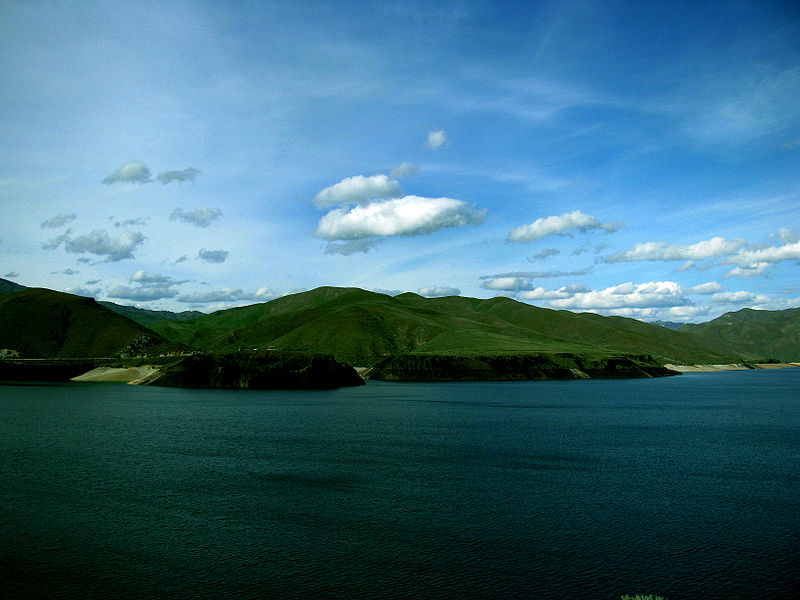
Lucky Peak Reservoir by Boise, Idaho.  Photo by Karthik Chinnathambi 

(Side track:  I’m still going to write about the first influence on our fear of death as I promised in the last post, but something came up and I wanted to write about it before I forgot. Editor.)  

Ever had one of those moments when the blinders peel back and you suddenly look at the world around you like it’s the first time you ever had eyes?

I had one yesterday.  We were out for our second adventure with the kayaks and, in spite of every reason for it not to, everything felt perfect.  The weather was supposed to be overcast, windy, and cold.  Water levels are low so the part of the reservoir where we’d initially planned to paddle was high and dry.  We got started late and then the scramble for an alternate place to launch made us even later.  And the launch site we did eventually find involved an awkward climb down to the water and broken glass on the shore to boot.

But somehow, none of it got to us.  We didn’t care.  Not because we were trying to stay positive or anything, but because that’s just how we woke up.  We were excited to hit the water again whatever the circumstances, so we brought extra layers of warm clothing, stayed flexible, stepped gingerly, and eventually found ourselves paddling along under much better conditions than we’d expected.  We were gazing up at sunshine and basalt cliffs, green mountainsides covered with wild, black-eyed Susans, and the sweet scent of blooming bitterbrush on a very, very mild breeze.

Turns out the Weather Man was wrong.  Go figure.

Towards the end of a long, lovely paddle we found ourselves a little way up the river that feeds the reservoir, and we finally beached near a grassy meadow to pee.  (Interesting activity in a wetsuit, BTW.)  It was an amazing spot, secluded and silent, surrounded by steep hillsides covered with Ponderosa pine and jutting rock spires.  Once we’d relieved ourselves we just stood there in the middle of the meadow staring, breathing in the heavy scent of pine, watching cumulus clouds blow across the narrow strip of sky above us while a bald eagle flew in and out of it’s nest in a towering, old growth pine.  It was something to behold.  It truly was.

And then, because I was so damn moved by it all, I started to sing, although it wasn’t even a song really.  Just a melody and some made-up sounds because I didn’t know a real song with words that came anywhere near doing justice to the place.  Maybe a hymn could have done it, but I didn’t know any.  Or better yet, a song from the Shoshone Paiute people who were on this land first and took better care of it, but I didn’t know any of those either.  So I made up my own half-song/half-prayer kind of thing, something that sounded more or less like how I felt, and while I was singing it everything around us seemed to get very quiet.  Kinda eerie.

But then I ran out of song so I stopped, and it was just a few seconds afterward that it happened.  That moment I mentioned earlier.  The one where I fell into enormity.

Everything sounded unnaturally still, the way things always do when you stop making noise in a really silent place.  I watched as the last of my song settled down to the grass like an old leaf falling, or a layer of dust.

And then, right after that, the wind started.

We heard it first like a low, sweet note that seemed to come from everywhere all at once, and when I looked up into the branches of a Ponderosa pine standing nearby, I suddenly remembered that what I was hearing was the sound air makes when it moves gently through pine needles.  It hit me in a flash; the mechanism of that sound, the wind through needles, was the exact same mechanism at play when I was singing.  It was the same air moving over my vocal cords and, coming out of left field the way it did, the thought kind of stunned me.  I felt a sudden and surprisingly profound kinship with that tree, a sense of shared beauty that instantly dwarfed my usual identity as a human being.

Please understand, it’s not that I didn’t know the facts before.  Of course I did.  I’ve heard the wind blowing through pines all my life and I learned the mechanics of sound in elementary school.  But that prior knowledge must have only penetrated as far as my head because I never felt the tactile, gut-level sense of sameness before, of what this tree and I were both doing.  Somehow, I’d always thought that because I was a human being, my sounds were different.  Higher.  I was singing, whereas the trees were just making noise.  It was a shock to suddenly realize that I was just making noise, too.  It was only because it was my noise that I knew it meant something.

Then the wind swelled through the canyon, catching the leaves of a copse of young cottonwood trees, making a higher, rustling sound that worked in exquisite counterpoint to the sweet note of the pines.  I felt my heart swell with it, too, and then noticed all the birdsong kicking up, various honks and calls and peeps and cries, and those sounds struck me as a kind of staccato punctation to the deeper melody laid down by the trees.  And after that…well…I pretty much just floated away in slack-jawed wonder, lost in the ebb and flow of the wind and water and the unearthly music they were making.  I was fighting back tears and retained just enough awareness of human world protocols to turn my face away from the hubster in embarrassment.  But other than that I fell deep and hard into another world that was a whole lot bigger.

I don’t know.  Standing there listening to the rich, tenor sound of wind through pines…for all the world like the french horn section at a premier symphony orchestra…I guess I finally just fell out of my head.  The sounds flowing through the canyon turned out to be the very song I’d been trying so hard to sing moments before, only times a thousand.  No.  A million.  It was like they’d all been standing around…the trees, the birds, the mountains, the wind…quietly amused, listening to me struggle to find the right music.  And then, when I couldn’t, they stepped in to play it for me.

It was such a gift, and I think I started crying because I felt…just a little bit…like I didn’t really deserve it.  Like there I’d been standing, subconsciously believing that I was all that.  More evolved than any of them, with a song that was more complex and meaningful because I was human.

Fortunately, none of them seemed to care.  They just circled me up and sang me into their bigger world anyway, and I got to realize where I was wrong without feeling shamed for it.  Which actually, when you think about it, is quite a trick.  I wonder if I could learn how to do that?

This canyon is actually in China, but it sure FELT like this.

copyright Dia Osborn 2012

Five Major Influences That Help Determine Our Acceptance Or Fear Of Dying and Death

Vitruvian Macrocosm

Anyone who’s been following this blog for a while knows that I don’t believe dying and death need to look as terrifying, crippling, or hopeless as they’re so often portrayed in American media and culture.  (Dying and death are two completely different things by the way. I wrote about the difference in the post Dying Is Still Alive a while back but it’s important enough to mention again here.)  In the U.S. we live in a profoundly death-averse culture that has not only stripped out most of the beauty, grace, and strength involved, it’s taken the innate sadness, loss, and suffering of the dying process and blown them up a hundred times bigger than they already were.

Which is a common function of denial.

I’m deeply concerned by the pervasiveness of this bloated kind of fear.  Partly because of the driving role it plays in the unsustainable costs of our health care system, but more because of how much harm it does to people in their everyday lives, a harm that a lot of people don’t even realize is there.  Living with the kind of chronic, low grade terror that comes when one doubts they’ll be able to handle dying when it arrives, is very hard on a person’s basic sense of security in life.  It’s like trying to enjoy a journey down a magnificent river when you know there’s a Class 5 rapids up ahead somewhere (nobody knows the exact location) that’s gonna beat the shit out of you when you get there because you lack the knowledge and skills to navigate it successfully.  Under those circumstances who can relax for very long?

Part of what I’ve wanted to do with this blog is to try and counter some of the negative effects of this pervasive, cultural aversion we have.  To try and rebuild…by talking about the particulars of dying in a normal, unafraid kind of way…some awareness of, and confidence in, the native abilities we were all born with that help when the time comes.  It’s never been my intention to try and eliminate the fear of dying completely because, frankly, I don’t think that’s wise.  Some fear of dying is actually helpful and necessary if we plan to survive for very long as a species.

But I do want to try and ease some of the excess, buried terror I so often glimpse in the back of people’s eyes, to see if I can’t offer something that might help shrink that part of it back down to a size they can live with.  Happily.  Safely.  Confidently.  With an abundance of hope and optimism about their own dying time, whenever it comes.

Pipe dream?  I honestly don’t think so.  There are some practical steps people can take to ease their fear, if they ever want to.  What I’d like to do with the next few posts is talk about five of the things that have a big influence on whether a person is more likely to accept or fear dying, and then identify which ones we have some control over, and what we can do to try and change them if need be.

Five Major Influences That Determine Whether We Accept or Fear Dying and Death:

Influence Number One:  The quality of our first exposures to dying and death.  This includes things like, a) How old we were when we first encountered it, b) How old the person dying was when we lost them, c) How close our relationship was with the person dying, and d) The nature and graphic details of the dying and/or deaths that we witnessed.

Influence Number Two: The attitude towards dying and death of those who taught us about it.  If they were afraid of it, we probably learned to fear it, too.  If they couldn’t, wouldn’t, or didn’t know how to talk about it, we probably learned that it’s a taboo topic to be feared and avoided.  If they were unfamiliar with, but curious about it, we were more likely to feel safe thinking about it and exploring it ourselves.  And if they were familiar and at peace with it, then chances are higher that we’d become familiar with it and learn to accept it, too.

Influence Number Three: How much and what kind of knowledge we have about the details of dying and death.  The less we know about it, the greater the likelihood of fear due to the unknown factor.  However, partial knowledge can be even worse. If we know a lot about the difficult aspects of dying but nothing about the beautiful side, there’s likely to be some additional irrational terror on top of our fear of the remaining unknown.  But if we know both the difficult and beautiful details about it, we’re far more likely to harness a courageous view of dying, as well as make a plan for navigating our own when the time comes.

Influence Number Four:  Our level of practical familiarity with dying and death.  I’m talking about hands-on, in-the-room experience here as versus just philosophical knowledge.  An increased familiarity with, and tolerance of, the nitty gritty, physical details involved is usually helpful where easing fear is concerned.  But only as long as the quality of the dying and death being experienced is good.  When the dying process swings the other way and is out of control, hopeless, violent, or otherwise horrible, then it’s more likely to just confirm our worst fears.  A bad death is not a great situation for novices, but of course sometimes that just can’t be helped.  See Number One above.

Influence Number Five:  What meaning we assign to dying and death.  This influence is perhaps the greatest of them all.  The meanings we weave are completely unique to each person and will usually be a product of the accumulated experience from the previous four influences.  It’s important to remember that this one is constantly evolving, and that it can (and probably will) swing back and forth between a negative and positive view over time.  It’s very heavily influenced by the quality of the deaths it’s exposed to (including movie deaths, news stories of deaths, etc.) The greater the frequency of good deaths that we hear about, witness, or participate in, the more positive our meaning about death is likely to become.  And vice versa.  I believe a person’s aggregate exposure to good deaths vs. bad deaths is the strongest indicator of whether a person will view dying and death in a positive or negative light.  I believe this exposure is an even stronger indicator than a person’s religious or philosophical beliefs.

(This is why I feel that striving for a good death might almost be considered a social responsibility.  Not only because it’s absolutely in our own best interests to die a good death, but because the legacy of a bad death is so powerful and lingering that it can sometimes harm, cripple, or even destroy the individual lives left in its wake.  I’ve seen the influence of both good and bad deaths first hand and I assure you, the difference for survivors is profound.)

In the next post I’d like to discuss how our early exposure to dying and death plays a big role in shaping our view (for better or worse), but how a subsequent brush can shift or change it again.  I’ll share a few stories that I think might be interesting.

copyright Dia Osborn 2012

The Little Kayak That Could

Did I mention we’ve taken up kayaking?

(Kidding.  That’s not either of us.)

It began as a New Years thing (as in I’m really going to do it this time…) and, as hobbies go, is pretty easy to pick up around here since lake and river-rich Idaho is a major hub for paddling sports of all kinds.  (Except sea kayaking.  Obviously.)

We started by renting a couple of twelve foot yaks to paddle around a pond next to the river (from Idaho River Sports for anyone local and interested.  GREAT store.  GREAT people who work there.  Friendly and laid back.  They all LOVE paddling and LOVE sharing their love of paddling.  All you have to do is walk in the door and you’re their friend.)  We figured we’d rent for the summer, try out a few different kinds of kayaks, raise some money, raise some more money, then raise a wee bit more, until maybe we’d have enough to buy our own boats later in the fall or next spring.

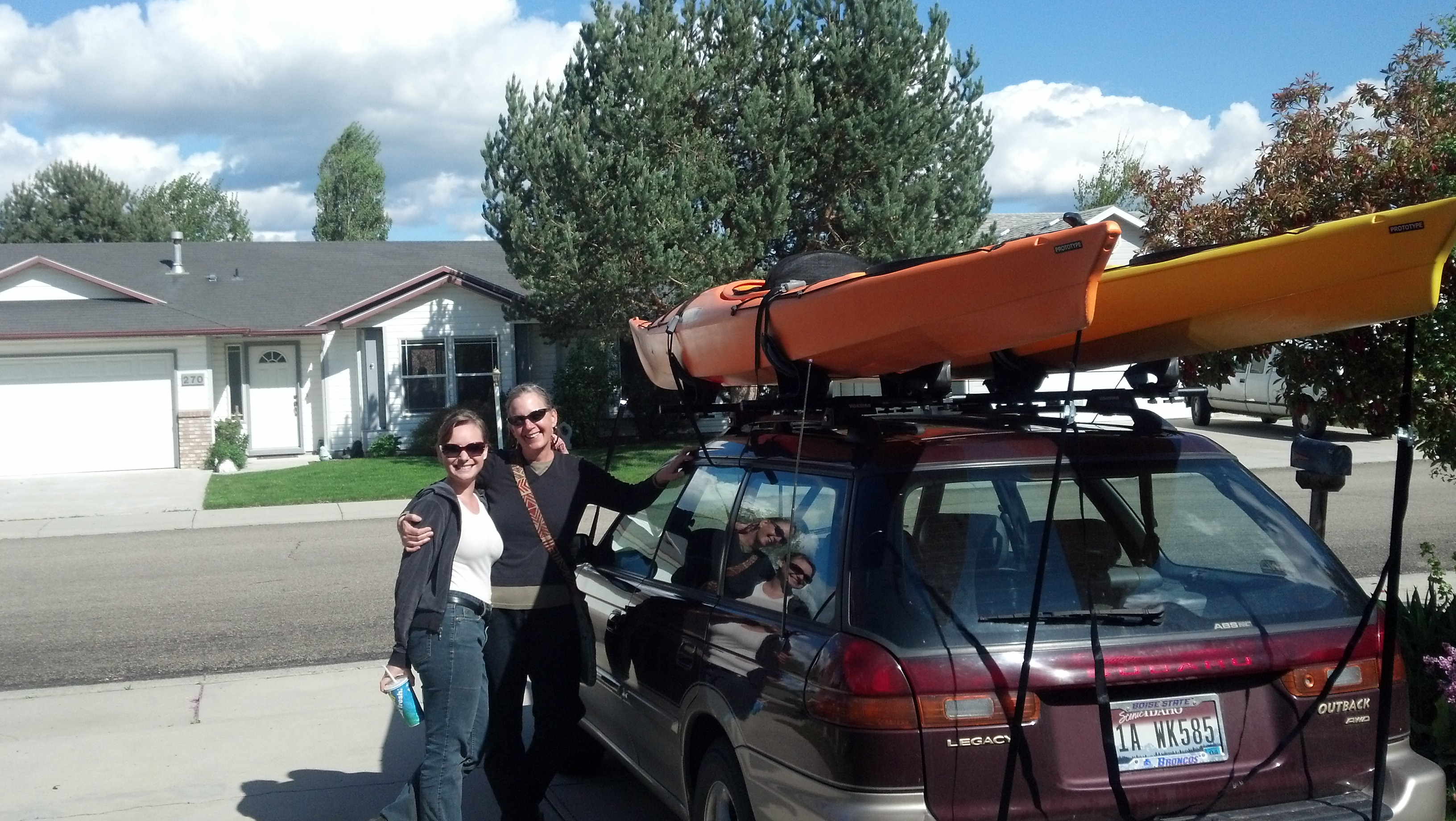
But then we got a call.  They said that a couple of used ones had come up for sale (cheap!!…CHEAP!!) and the next thing you know, we were pulling back into the driveway with a couple of kayaks on the car.

(BTW, that’s not the hubster standing there with my arm around him.  He’s standing behind the cell phone camera.  That’s actually B. Daughter who had just dropped by to say hi.)

And then, abandoning all of our careful plans for gradual safety equipment accumulation (actually that should read “my” plans…the hubster, being a strong advocate for spontaneity and adventure, doesn’t have much use for safety planning,) we grabbed the wetsuits and life vests we’d (I’d) obtained so far and bolted up to Arrowrock reservoir on Sunday for a trial run.

Clearly, we survived, as you must have guessed by now since your’re reading this.  And even though we paddled across a fairly large body of very cold water twice, neither the rising afternoon winds nor the wakes from various power boats overturned us after all, thereafter requiring a long, weakening, futile swim into hypothermia, eventual unconsciousness, and drowning before we could ever reach shore again.  (Again, this type of mental scenario is strictly my territory.  I was made for disaster planning.  The hubster’s mind runs along far more optimistic lines and, indeed, is my saving grace.  Without it, by the time I got through envisioning all the bleak possible futures out there, I’d never leave the fricking house.)

But the indomitable hubster still managed to find an adventure for himself, in spite of all my best efforts to avoid one.  We had just pulled the car down next to the water in order to load the kayaks for departure, when a camping fisherman from the next site over wandered by with his dogs for a chat.  But barely had he arrived when he glanced out across the water to discover his power boat…which he realized with some chagrin he hadn’t moored securely enough…had come loose and was floating away down the lake.  It’s canopy was catching the afternoon wind, moving it along at a fair clip.

Then, to my horror, the fisherman casually mentioned that it looked like he was going for a swim.  A swim?  My disaster radar started beeping.  He was going to swim after his boat??

“You can’t!” I blurted out in alarm.  “You can’t swim that far in water this cold!  You’d never make it.  Hypothermia would set in before you could get there.”

At which point the hubster stepped bravely forward, ripped back his wetsuit revealing the large letter H on his chest, and said in a deep, booming voice, “I can get it for you.”

Well, needless to say the fisherman wasn’t turning down an offer like that.  The hubster quickly zipped up his life vest, grabbed his paddle, and launched his kayak again in the direction of the boat.  At first I thought (in resignation) that I’d just wait at the car since my arms had already fallen halfway off my shoulders from the earlier four hours of paddling.  But it didn’t take long (seconds!) for my mind to generate a surprising variety of different capsizing possibilities so the next thing I knew, I, too, was back in the water, paddling furiously after the love of my life, determined to save him from himself if necessary, or at least drown beside him in the ultimate worst case scenario.

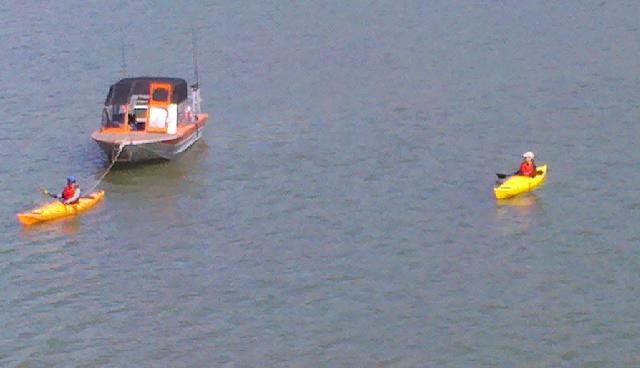
In the end, neither were necessary.  Super H reached the boat, tied the dangling mooring line around his waist, and commenced paddling into the wind to try and cover the approximately quarter mile of water that now lay between the boat and the beach.  The fisherman’s girlfriend, sensing the uniqueness of the moment, wisely grabbed her boyfriend’s cell phone and started taking pictures.  This is what it looked like:

The wind eventually proved too strong for the hubster to return it to the beach.  He had to take it into a less convenient part of the shoreline but, all in all (since neither of us died and the fisherman was grateful to land it anywhere) it was tremendous fun.  A great maiden voyage for our new-used, spunky, little kayaks.  We were wondering what we should name them at the start of the day but the fisherman graciously took care of at least one of them for us.  As a parting gift he christened the hubster’s kayak Tug Boat.  In the future we’ll be calling it Tug for short.

copyright Dia Osborn 2012
SOBERING UPDATE:  My sister-in-law in Spokane read this post and then forwarded me a link to an article in the Spokesman Review concerning a novice kayaker who died of hypothermia in early April after his boat capsized in wind-driven waves out on a lake up there.  They were exactly the kind of conditions I worried about for us.  I’ll definitely be picking up a couple of tow ropes and a pump before we go out again.  And I’ll have the hubster watch this excellent video on the effects of cold water immersion, too, just so we’re on the same page. 

Spear Fishing Gone Wrong

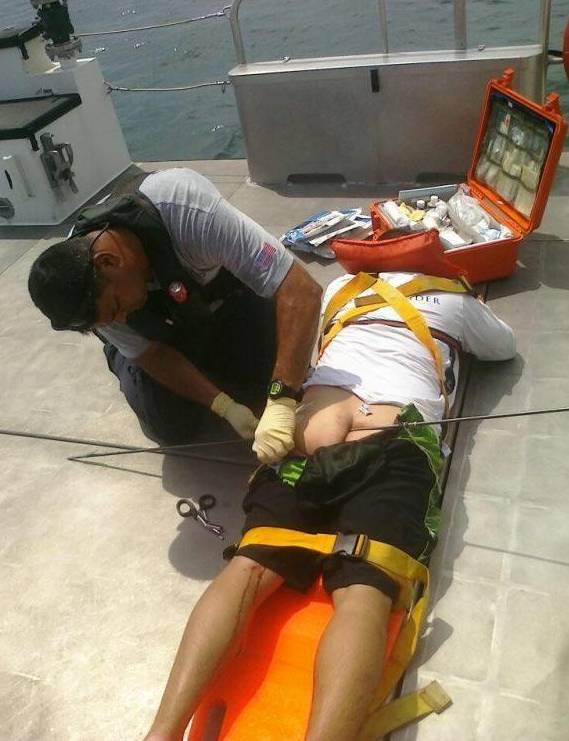
This photograph sent me in about six different directions at once.

1) Horror.  Whoa.  A butt is never, never supposed to look like that.

2)  Fascination.  But…it does.  It does!  I can’t look away.

3)  Curiosity.  Is he unconscious?  What did the spear go through?  What’s in a butt cheek anyway?  Just muscle, right?  No major arteries or veins?  And how will they get it out of there?  Break off one end and pull out the other?  (Owwwwww!!!!!!)  Will they use an anesthetic?  And who is this guy?  I wish I could see his face. And where’s the other guy who shot him?  Or…good god.  Could he possibly have done it to himself?  Why doesn’t he look wet?  Did the accident happen on the boat?  Did they cut his shorts to pull them down like that?  And what’s that logo on his shirt?  Something…DER?  Why is he strapped down?  And is that a fishing boat?  It looks industrial.  Was he commercially fishing?  Is that really even a spear?…

4)  Amorous.  That medic is pretty cute.

5)  Clinical.  What’s with the scissors?  Is he applying gauze?  Like…a band aid?  Seriously?

6)  Empathetic.  Wow.  So that’s what the fish feels like.

copyright Dia Osborn 2012


It’s Still Wilderness Without The Crowds

Okay.  Time to post, no matter what.  I’m being distracted by travel, spring gardening, a writing project, a new hobby, the intense gurgling coming from our dog’s stomach, lint on my pajamas, insecurity…you name it.  I published a post last week, left it up for about four hours, then took it private again because of my old friend, the obsession about Will it offend somebody?  I can handle obsessing about the quality of my writing, I’ve got some protocols in place to keep that one on leash.  But my fear of offending some unsuspecting, trusting reader out there is a lot more savage and last week it leapt out of nowhere and just mauled me.

Which makes it about two weeks without a post, so this…my friends…is gonna be it.  (And probably safe and bland as well.)  Here we go.

We escaped to the Sawtooth mountains again last weekend for some long, gruelling snowshoes through the shitty conditions that always exist up there in April.  It was like seasonal dawn…a transition between stable states.  It wasn’t exactly winter anymore but not full spring yet either.  There was a lot of major snowpack melting down at the rate of a foot a day with all the resulting soft snow and slush, puddles and rivulets, marsh and mud.

This is what it looked like on the first day:

And this is what it looked like two days later:

Who knew snow could melt that fast?  We were amazed.

The great thing about that much mess though, is that nobody else wants to be up there.  The snow is worthless for snowmobiling or cross country skiing, and the area is still too wet and cold for the hikers, backpackers, and river-runners that turn up in droves during summer.  Hunters can’t hunt, ranchers can’t graze their cows yet, and no one can drive off the pavement and not get stuck in the mud, no matter how good their four-wheel drive is.

Actually, I take that back…the Fishing People were already in the valley, which surprised me.  They’re apparently even crazier than we are when it comes to non-deterrence from muddy, boot-sucking conditions and we saw a few of their camping caravans set up in places where the river bends up near the highway.  I wondered at it considering that the Salmon River is swollen, turbulent, and loud with all the snowmelt right now.  I’m not expert but are those really decent fishing conditions?  Or were the Fishing People just fed up with winter and willing to pretend for a while…just to tide them over until the fish really do show up?

Perhaps they were just practicing becoming one with the river.  I’ve heard that’s a big part of fishing, too.

In any case, we had the entire mesa to ourselves, although a neighboring, palatial home owned by a rich doctor from Wisconsin had left a light on again…which drives me absolutely nuts.  I mean, a security light?  Really?  Like…what?  Robbers are going to strap on their snowshoes and trudge two miles uphill to carry off their big screen TV in a backpack?

I really struggle with things like this.

There’s an interesting dynamic going on in the valley where the family cabin has sat for decades.  The Stanley Valley (webcam link) is a relatively poor region mainly populated by ranchers, forest service employees, and a few scrappy souls who eke a living out of the brief but intense summer recreational tourist trade.

It also lies one easy mountain pass away from the extraordinarily wealthy town of Sun Valley, part-time home to Hollywood celebrities, a smattering of billionaires, and an internationally reknowned ski resort.  Over the last decade or so, a lot of that money started pouring over the hill into the Stanley valley, mainly in the form of real estate purchases and second homes/mansions.  This has driven local property values way up creating a serious problem for the less financially-fortunate natives watching their property taxes climb into the rarified air of pretty-much-unaffordable.

With this as our backdrop, now imagine a large mesa perched about halfway down the  valley where the humble family cabin sat in relative isolation for decades.  It served as home base for the hubster’s mother, one of the first nurse practitioners in the state of Idaho who founded and then ran the small, rural medical clinic in Stanley for twenty-five years.  She was a tough old bird even when she was young, on call 24/7, snowmobiling up and down the hill in an area known for some of the most frigid winters in the continental U.S., hiking the two miles up and down in the mud season when neither car nor snowmobile would work, and deeply beloved by those in the region who wouldn’t have had easy access to medical care otherwise.

Fast forward a few years and now multi-million dollar homes have cropped up all around the cabin, making for some interesting neighborhood dynamics.  Don’t get me wrong, everyone who owns up there is united in their deep and abiding love for the entire valley.  We’re all drawn to the place for the beauty of the mountain wilderness, and every neighbor I’ve met is generous, willing to help, and friendly.

But there are natural differences, too, created by the politics of money, the politics of natives versus second-homers, and the politics of environmental concerns versus property and commercial development.

As I’ve watched the building take place over the years it’s gradually sunk in how strange it is…that these days we human beings love our wilderness so much it makes us want to build our homes and communities right in the middle of it, which then, of course, makes it not really wilderness anymore.  We want to be near wild animals so much that we build on the land they need to survive, or we long for the pristine woodland glade so much that we blast a road through the rest of the virgin forest to get there.

It seems so irrational and yet so deeply human, too, to love something so much that we’ll actually harm it to have it.  Like small children hugging a puppy to death, our deep, instinctual need for the beauty, silence, and healing of true wilderness is leading us to damage and even destroy it when that’s the last thing in the world we want to do.

I don’t know what the answer is.  And I have to be careful, too.  Clearly, where the Stanley Valley is concerned, any lofty observations I make about human encroachment are laced with a built-in conflict of interest.  I remember once hearing my eldest brother, a successful real-estate developer around the Pacific Rim, make some acid remarks about how often the first people to move into an area then cite environmental protection as a reason to keep everyone else out.   There’s a lot of truth in that and I feel the sting of it here.  It’s very easy for me, with legacy access, to point fingers at the newbies who only want to do the same thing that we did, only first.

So these days I just try and go up when it still feels most like wilderness to me; i.e. when nobody else is around.  When the silence is still deep enough to catch the faint sound of the river rising up from the valley below, or when the night is still dark enough to see the stars twinkling and shooting outside the window as I lie there in bed for hours staring, unable to go to sleep for the wonder of it all.

That’s why the hubster and I both actually love the shitty April conditions, and why it’s totally worth it for us, hauling a forty pound pack on our backs, uphill, in the dark, through slushy snow and mud to get there.  Just because nobody else is nuts enough to do it.

Except for those Fishing People, but that’s okay.  They’ll never leave the river.

copyright Dia Osborn 2012
Dead Bodies Need Love, Too

…only I think more for our sake than theirs. 

In the last week I had two different friends tell me stories about the death of a close family member and the extraordinary experience they had with the body afterwards.  In both cases the body was handled in a way that’s unusual by American standards, yet both women told me (with deep conviction) that it made all the difference in helping them cope with the loss.

The first is a friend who’s older brother died last year of a sudden heart attack in his early sixties.  He lived and died in a different kind of community in the midwest where a lot of people practice a spiritual discipline with deep roots in the Indian Vedic tradition. Naturally, his cremation was attended with some of the chanting and ritual derived from that part of the world.  It involved an open casket viewing in a small room within the crematorium following the funeral itself.

The ceremony was beautiful, heart wrenching, and mesmerizing to watch.  My friend had a small video that was given to family members, and she shared it with me.

Only the most intimate friends and family members were allowed to attend.  Once everyone was seated a woman, who’d evidently spent a number of years in India learning how to do it, gave a brief explanation of the ceremony and then began singing what had to be one of the most beautiful, soothing, dynamic songs I’ve ever heard.  The words were in Sanskrit so I couldn’t understand any of it, but the melody, repetition, and deep resonance of the woman’s voice was like being cradled in strong arms.

All of the (many, many, many) flowers from the funeral had been brought into the room and two women were busy in a corner stripping all the petals and placing them into a basket near the head of the casket.  As the main woman sang that unearthly song, everyone in the room stood up and began to file past the body in a circle, picking up a handful of petals out of the basket each time they passed and sprinkling them over him as they whispered their final good-byes.  

At first I was just struck by the surprising beauty of the whole idea.  But then, as I watched his white face…his entire body…. vanishing beneath the deepening layers of soft, tender flower petals, I got it.  How much kinder and gentler this was, how much truer to both the profound love and profound loss of the people in that room, to bury him in flowers rather than dirt.  It took my breath away.

His mother nearly collapsed her first time around, under the unbearable weight of her grief.  But it seemed to get easier for her after that.  My friend told me that more than anyone else, the ceremony helped her mother come to grips with the loss.  Neither Friend nor any of her other family members actually lived in that community.  They’d all dropped their lives to travel from across the country, stunned and stricken.  Friend confided that initially she, herself, was reluctant to view his body, to see him like that.  She wanted to remember him as he was.  But then somehow as she watched him disappear beneath the flowers, the pain and shock of his death was transformed into something else.  Something more manageable.  Closure, she said, and her eyes looked unutterably grateful and sad.

Eventually, they all went down to the furnace and, together, rolled his body in.  But by then they were ready to let him go…which I realized was the ceremony’s intended gift.

My other friend’s loss happened at the other extreme.  She lost her elderly mother after a decade of slow, horrendous decline.  In fact, her slide had taken so long that when she finally…finally!…began actively dying it was hard to get her doctor to believe it.  In the end she was only transferred over to hospice care a scant three days before she died and this made my other friend sad.  She would have liked the extra time necessary for everyone to gather and say their good-byes, to turn their familial head downward toward the birthing canal, preparing for their transition into the next world without her.

Then she told me how they didn’t call the funeral home right away, to come and collect her mother’s body afterwards.  Instead they kept her at home for a night so she and her daughter could sleep beside the bed, one on each side, loving it through the first long, dark hours of its new state.  They called in the morning and watched her taken away in the brighter light of day.  My friend shared that, by then, she was ready to let her go and I recognized that closure thing again.  That elusive, emotional line we all have to track down inside ourselves and cross before we get to begin our ascent back up the other side.

In both these stories I was struck by the double loss we experience with the death of a loved one…how we lose both their them-ness AND their body…and how important it can be to separate the two and honor them both.  Not only as a final gesture of respect for our departed, but for our own healing as well.

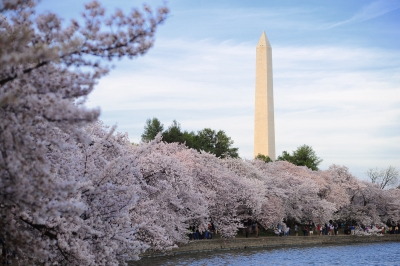
first photograph: Cherry Blossom at Washington Memorial by porbital

second photograph: A Study in Pink by Maggie Smith

copyright Dia Osborn 2012

Poll: Immortality. If you could, would you?

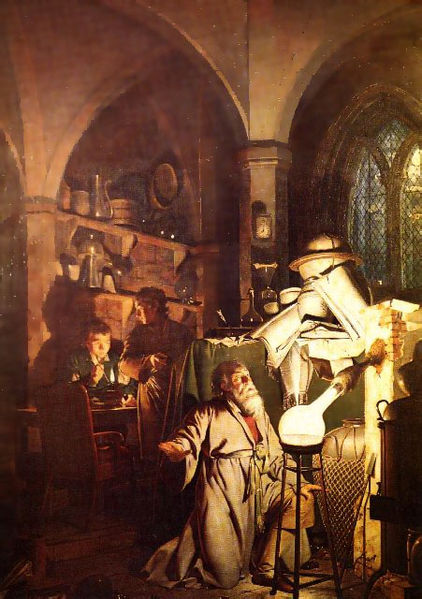
The Alchemist In Search of the Philosopher’s Stone

This past weekend a friend and I had a brief discussion about the pursuit of immortality down through the ages (Fountain of Youth, Holy Grail, alchemy, etc.) at the conclusion of which we both exclaimed that, even if living forever someday became possible, we wouldn’t want it.  Passionately.  In fact, the idea of living forever (or even a lot, LOT longer) was kind of repulsive.

My personal aversion stems from two separate issues.  The first is the fact that life is riddled with tough spots, occasionally becoming harsh to the point of undesirability.  The cumulative injury of those traumas over not just an average lifespan, but an eternity, would have to become unendurable at some point.

Pooh on that.

My second objection is that seizing that much life for myself feels unethical.  We live in a finite universe full of limited resources that can only support so many biologically functioning human beings.  So if I don’t die, then a fair number of future children won’t be born.  I would, for all intents and purposes, be stealing their lives in order to lengthen my own and…well…isn’t that a vampire thing?

Ick.

Although…the question of ethics and immortality gives rise to all kinds of possible plot scenarios for a novel or sic-fi movie.  Which is pretty fun.  Here’s one:

Opening scene: New York City, 150 years in the future.  A mysterious wave of miscarriages has been sweeping across the world for fifteen years and the pace is increasing geometrically, potentially threatening the future of the human race.  A concerned official from the World Health Organization comes knocking at the door of two, world-reknowned, research scientists who specialize in fertility studies.  They’re married and (surprise, surprise) she’s nine weeks pregnant.  The WHO official finds that enrolling them to look for a solution is pretty easy.

Break to next scene:  New York City, present day.  A small group of Swedish scientists reveal a startling anti-aging discovery to a secret committee of the World Economic Forum.  They propose The Methuselah Project, a campaign to lengthen the human life-span by a couple thousand years, and the proposal is instantly and enthusiastically adopted.  (It begins, of course, with the inoculation of power brokers, mega-wealthy, and top government officials.)  Over the next hundred years, trials are run and all of the now-virtually-immortal insiders on the project consolidate their power over just about everything.  Things are finally ready for the second stage where inoculation will be offered to pre-selected people at a hefty price.

Back to the future:  As the two research scientists probe deeper into the growing problem, they uncover a secret network of wealthy, powerful, reclusive people who all seem to be unusually old, although their pasts are cloaked in mystery.  As they start to question individual members of the network, all the usual, life-threatening car, plane, and other accidents quickly begin to happen to them.  The couple survive everything thrown at them and eventually track down one of the original Swedish scientists who now works among the Inuit people in a remote region of the Canadian Northwest Territories.  He reveals that he’s actually 193 years old, and then explains how the original vision of The Methuselah Project was corrupted for the purpose of establishing a two-tier world order; those who live for thousands of years served by those who die by their sixties.  Part of the project involves drastically reducing the world population to a number more easily controlled, and the tool employed is a simple pennyroyal compound leaked into the water supplies of the world (all owned and controlled by Immortals BTW) to induce widespread miscarriages.

Conclusion: This will depend on whether the movie is a feel-gooder or a horror film.

Feel-gooder conclusion: the scientist couple manage to get the word out to the media and expose the scheme to the world, after which all the people rise en-masse to destroy the Immortals and return the world to it’s natural order.

or…

The scientist couple re-engineer the anti-aging serum to bestow not only longevity but wisdom.  The evil Immortals are transformed into kind, benevolent, enlightened teachers who then work to change the world into a better place for everyone.  All are eventually inoculated with the new serum and the scientist couple’s baby grows up to be President of the New World Utopia.  (This ending could be a tough sell.)

or…

The horror film: the scientist-pair are killed before they can expose the plot, but not before their own baby is born and taken away to be raised by an Immortal couple who can’t have children of their own.

or….

The bad Immortals are killed after which the original Methuselah Project is reinstated and everyone in the world is inoculated with the anti-aging serum.  The widespread miscarriages are then replaced by a new set of sterilization, abortion, and lottery-pregnancy laws.  (This movie obviously gives rise to the sequel where desperate women start becoming pregnant illegally only to be hunted down and treated badly when they’re caught.  Or has that movie already been made?  It sounds familiar.)

ANYWAY!!!  This was fun but I really have to get on with my day now.  I’m curious though.  How many of you are intrigued by the idea of immortality (as versus just-not-dying, which is a completely different issue.)  Here’s a quick poll to get an idea of where people stand on the subject and, if you need more room for nuance, by all means feel free to use the comment section.

Last Week’s Poll and Do Children Know When They’re Dying?

First of all, the answer to the question posed in the previous post’s poll is Shit.  Feels a little anti-climactic now, no?  Although I assure you, at the time when I first spoke it aloud, the word was volcanic.  As the most forbidden term in my universe, lettin’ her rip like that tore a hole in the time/space continuum of my life that has never entirely closed again.

Such is the power of language.

And now, for a dramatic subject change (place hands firmly on each side and hold onto heads please) I ran across an interesting article after Googling the search term “do children know when they’re going to die.”  The title of the piece is When A Child Is Dying and it’s written by a couple of M.D.’s working in children’s palliative care over at the Children’s Hospital of Wisconsin.

As one would expect with this topic, it’s a powerful, heartbreaking, and inspiring article, discussing both the keen awareness children tend to have of what’s really going on, as well as the higher stakes and corresponding desperation that so often comes to bear on adult decision making in these situations.  Obviously, the two doctors who wrote the article are strong advocates for delivering better palliative care in cases where children are at end-stage, but evidently it can be an uphill battle as quality-of-life issues for the child vie with the powerful parental instinct to fight for life.

Read it if you dare.  It highlights yet another area where 1) our collective commitment to denial about death can wreak some serious havoc if we don’t get out in front of it early, and 2) the huge and beautiful difference it can make for those we love most if we only screw up our courage and face it anyway.

One of the most helpful insights I gained while working with hospice had to do with a rather large, unexamined assumption I’d been laboring under most of my life; namely, that dying = something going wrong.  (Not surprising considering that most of our medical language reinforces the perspective.  Heart failure.  Organ collapse.  Failure to thrive.  Losing the battle.  Disease is the enemy.  War on cancer, etc.)

However, after hanging around with the dying for a while and studying the dynamics first hand, a new and startling perspective presented itself and knocked my world off-tilt.  I’m not entirely sure how it happened but as I watched one person after another…one circle of loved ones after another…migrate across the sweeping terrain of the dying season, the basic, cyclical nature of life began to show itself more clearly, and as it did the word “wrong” was gradually replaced with something else.

What was happening to these people wasn’t wrong so much as it was just time.  Their time.  Like someday it will be my time.  And your time.  And everyone’s time.  (And every thing’s time for that matter.  Nothing lasts forever in a physical world.)   And as this new awareness grew on me I turned to the obvious, bewildering question: why in the world had I been believing, however subconsciously, that people shouldn’t die?  Or that there was something wrong happening when they did?  Where did that expectation come from anyway?

I quickly realized it’s because of how it feels–because of the huge losses involved and the devastating hole it tends to leave behind.  Nine times out of ten, dying is a seriously hard physiological process to go through, and trying to recover after losing someone you love isn’t much better.  The whole thing feels bad.  Really bad.  And because nobody wants to feel that way, it’s easy to mistake the badness of the feeling for something going wrong.

I admit, it sounds really strange to say that Yes, absolutely, dying is horrible and undignified and primal and full of suffering and loss and destruction…but hey!  At least nothing’s going wrong.  

It sounds insane and yet it’s true.  Life is so weird sometimes.

But even accepting all that, it feels most wrong when a child dies.  It just does.  That magnitude of loss violates every screaming, primal, dangerous, protective, cornered instinct lacing our genes and honestly, I’m not sure if a rational perspective has any value at that point.  Does it?  I’m pretty sure I’d rip the throat out of anyone who tried to tell me nothing was going wrong if it was my child dying.

And yet…and yet.  That doesn’t mean it’s not still true.  Hmmm.  Y’know, I think ultimately…if I was going through the loss of a child myself…I would rather be surrounded by people who accepted the inevitability of dying, were no longer afraid of it, and had learned how to navigate it gracefully.  It seems like they’d be the ones most likely to offer the compassion, strength, and acceptance needed, rather than feeling conflicted, not knowing what to do, and turning their faces away in horror or outrage instead.

I guess that’s why stories like the one in When A Child Is Dying move me the way they do.  I LOVE that these people are out there; the doctors and nurses and volunteers and social workers and chaplains and counselors and all the other staff working in palliative and hospice care, all trying to oh-so-gingerly raise our awareness in order to try and lift some of our burden.  I’m grateful that they continue to wade willingly and skillfully into the darker waters of our lives every day.

They know that dying can be something better than most people currently believe.

copyright Dia Osborn 2012
Name That Swear Word: A Poll

A group of British scientists conducted a study on the pain-killing effects of swearing a while back.  I read about it in an msnbc.com article titled Stub your toe? Say ‘Sh#!’ You’ll feel better back in…oh…wow.  2009.

Okay. A way while back.

Anyway, the scientists expected to find that swearing increased pain because of intensified focus on the sensation, but they discovered exactly the opposite.  The obscene participants not only reported lower levels of pain than their non-swearing counterparts, they were able to endure the painful sensation…freezing cold water on their hand…substantially longer.  Women even more so than men.

For those (like me) who wonder, the most popular obscenities fell primarily into the F and S categories.  But because it was a British experiment bullocks was evidently well represented as well.  

(Editor’s note:  Bullocks?  Is that like buttocks?  Like an American shouting “Cheeks!  Cheeks that hurts!”  Any Brits out there who could clarify?  John Gray?  You’re good at this particular aspect of language.)

The researchers were reportedly surprised by their results but I wasn’t.  Not at all.  I still vividly remember the first swear word I ever spoke.

It was in sixth grade on the grounds of the elementary school I attended, although not during school hours.  I was exploring, happily and alone, the construction site of a new, half-built cafeteria when a neighborhood kid…a male classmate I loathed…showed up and did something to enrage me.  I don’t remember what it was now, but I do remember how belligerent I felt.  (A common state of affairs at that age.)

I really disliked the boy.  I remember him as rude and aggressive and…like me…probably inundated in a hormonal flood.  Who knows?  Maybe he was actually flirting with me in that confused, taunting/hopeful way young boys so often adopt in the early stages?  If he was, it was unfortunate.  The nuclear reaction it triggered was not the pubescent heat that ever leads to a first, exploratory kiss.

The excessive internal pressure meant that something had to give, and the weakest link in the system turned out to be the long years of parental training devoted to teaching me to control my emotions and my mouth.

The forbidden word rose from the heart of the blast and I watched it come out of my mouth, shining, brilliant red, all caps, each molten letter aimed at the shocked face in front of me.

And then?  Well, to be honest I don’t remember him anymore because I was immediately swept away by the narcotic effect saying it had on me.  Seriously.  My body’s response was visceral.

It felt like descriptions I’ve heard of heroin.  As the tidal wave of whatever-brain-chemicals-were-involved hit their waiting receptors, I felt first, a powerful physical release, and second, a sense of euphoria flowing out through my body along arterial pathways.  It was amazing.  Stunning.  I just stood there, enraptured, turning into light.

Needless to say, I fell in love with swearing ever after.  Positive feedback of that magnitude will do it.  I controlled it around my parents of course, until I got a little older, and I still muzzle it around it around children, elders, and most strangers.  But when I’m with those who know and love me and I get excited, I start swearing like a soldier.  It’s never felt as good as it did that first time, of course, but it still makes me happy.

Has anyone else ever noticed a physiological effect from swearing, positive or negative?  I’m kinda curious.

Anyway, I need practice with the polling capabilities of this theme so here’s a little game.  Let’s play, name that obscenity:

If this works you should be able to click the RESULTS button to see what others are thinking.  I’ll post the answer next time.

copyright Dia Osborn 2012

The Fisher King Goes Fishing

A friend of mine was once a vital, physically dynamic. backpacking, canoeing, outdoors enthusiast and passionate, social worker powerhouse.  Then she contracted West Nile virus during one of its earliest appearances in the West, collapsed overnight, and almost died from the severe neurological complications.  It was sobering, how a tiny virus can take down a strapping, healthy, wildly intelligent woman in her prime like that.  Somehow I had thought that only the young, old, and already compromised were vulnerable.

Fortunately, she survived and has been industriously working to rebuild a new life out of the ashes of devastating illness.  One of the biggest challenges has been trying to get to know who she is now as a result of all the neurological damage that took place.   Her mind is still as keen, curious, and active as ever, but tends to quickly overload and go smoky with any kind of strain.  And while she still loves the outdoors and continues to camp and hike a little, she walks a razors edge in terms of how much physical exertion she can pursue before her brain short circuits from the flood of brain chemicals released by fatigue and stress.

For a woman who largely defined herself by her independence, extraordinary mental acuity, and physical dynamism, the loss of self she’s experienced through illness has been profound and the continuing effort to redefine herself, grueling.  But she does it anyway…and inspires me  in the process.

We used to talk a lot about how hard it is to let go of who you once were, then try to rebuild a new life according to this other, lesser version you’ve turned into.  (At least that’s what it feels like in the beginning.)  I experienced something similar during my rapid descent into a long and severe depressive episode twenty years ago, an illness that effectively blew my old life to smithereens.  Like most people in our situation I, too, spent the first few years trying to first recover, then return to the old life I’d known.  It was only after it grew apparent that could never happen that I finally got on with the job of crafting a new life and a new identity to go along with it.

Any kind of major illness or injury can create this cycle of course, but there was a unique challenge we both faced in that we still looked the same from the outside.  All of our injuries are invisible at first glance, which makes our inability to perform certain, standard tasks very confusing for others.  And when we frequently failed to meet the seemingly normal, reasonable expectations of people it wound up creating friction in our relationships with them, a fact that then made it even harder to figure out and accept who we had become.

But time is a great healer and has been slowly revealing that we didn’t actually become lesser people after all, just different ones.  Our identities have changed substantially–who we are and what we can do in relation to the world around us–but it turns out our essential selves haven’t really changed at all.  We still love the same things we’ve always loved, with the same depth.  We still strive to give, serve, behave, and belong in a way that nourishes the greater world.  We’re still just as committed to the happiness and welfare of our children and husbands, doing whatever we can to support them.  And we continue to try and pass along the little tidbits of light, inspiration, and meaning we uncover while sorting through the various piles of debris that now litter our lives.

Today, she sent me the following three minute video and it reminded me again of what an extraordinary gift and accomplishment it is to survive in this world at all.  Its many and formidable hardships aside, life is still pretty magnificent and I do so love getting to participate in it, for however long it lasts.

This is footage of an osprey fishing from the BBC archives.  First sequence: he catches half a dozen fish in one strike.  Second sequence: he dives underwater and plunges talons into a flat fish resting on the bottom.  Third sequence: he captures a huge fish that looks as if it weighs more than he does.  (How they get this kind of footage is beyond me but they do.  Pretty brilliant.)

http://youtu.be/nA3LtXnNIto

copyright Dia Osborn 2012

Of Birthdays, Mouth Control, And The Risk of Living

My birthday just passed and the hubster and I headed outdoors to spend the day kayaking and hiking.  We always go outside for my birthday because if I were a compass, the natural world would lie at magnetic north.  This year was particularly inviting because it’s been so radically warm that it already felt like spring.  Everyone was outdoors in fact, not just us.  The young, strong, and nubile were hitting the river in wetsuits, while a caravan of towed motorboats wound its way out to the reservoirs with beach chairs and coolers of beer carefully tucked among the fishing gear.  (We lie somewhere around the middle of this spectrum.)

We’re just starting to kayak…our adventurous spirit is reviving from a near death experience as we finally shed some of this horrible weight…and we spent about an hour on a calm pond next to the river in town trying out different kinds and sizes of boats.  (Or, in the vernacular, “yaks.”)  Afterward we decided to drive up into the reservoir system northeast of Boise to scout for more exciting places to paddle once we spread our wings.

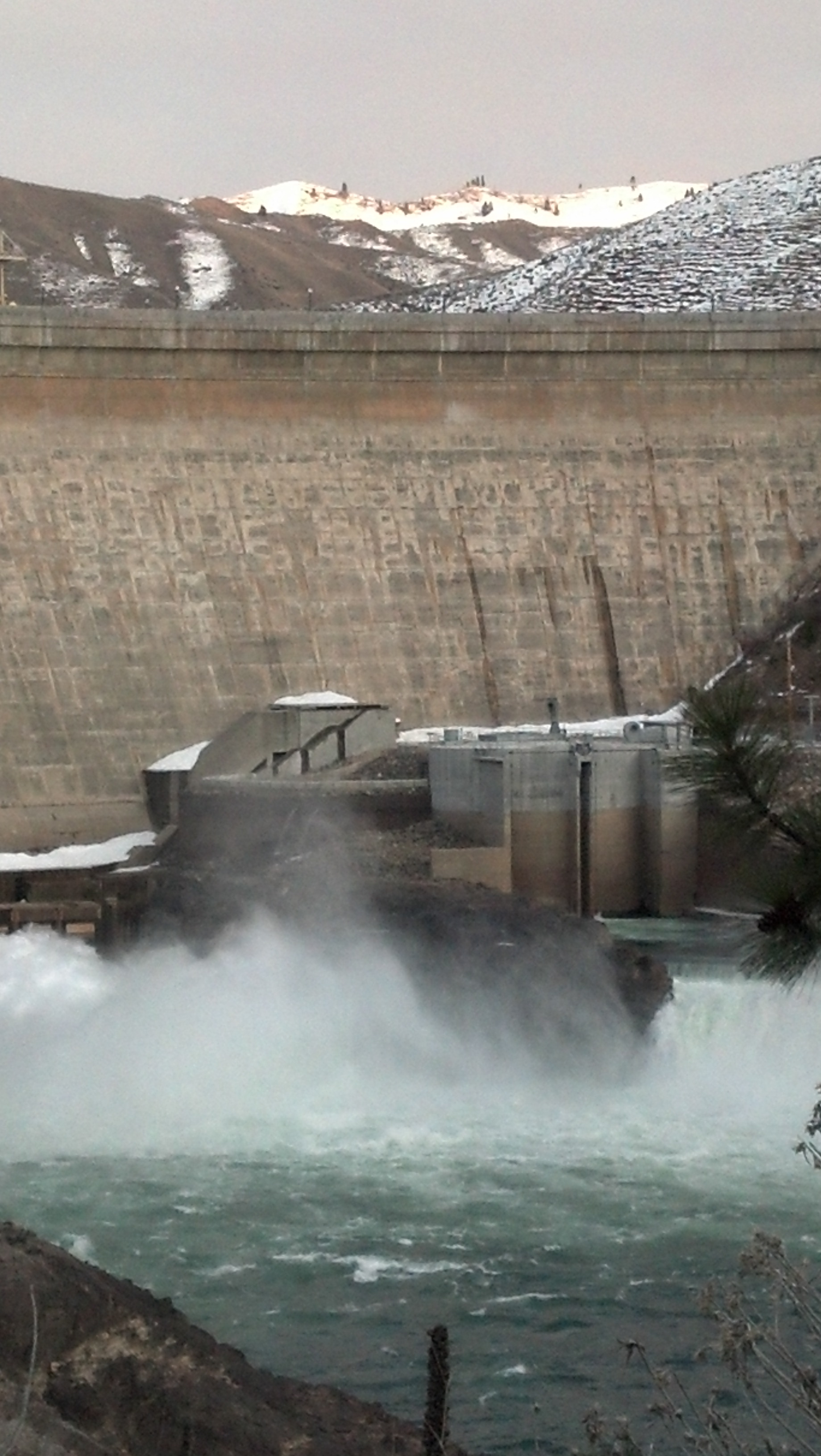
There are three dams on the middle and south forks of the Boise River…Lucky Peak, Arrowrock, and Anderson Ranch…and the reservoirs they create stretch for miles back into the mountains.  Below is a photo of Arrowrock dam with spring flows already being released due to the early snow melt.  Note the sparse snow cover on the mountains back behind.

The lack of snow bodes ill for future irrigation but it was terrific for hiking.  Normally we wouldn’t be able to access the ravine pictured below this time of year…at least without snowshoes…but we caught a great day.  The creek that runs along the bottom was low enough for us to cross since most of the lower snow had already melted and run off.  (The hubster missed one jump and got a shoe wet though.  Fortunately, he survived as seen with Dane the mangy rescue mutt below.)

It was spectacular back there, with snowy peaks capping both ends of the valley.  We had views both coming and going.  This is what it looked like hiking in:

And this is what it looked like coming out again:

As we began our hike we met a couple waiting next to a truck near the trailhead.  The woman, a pair of binoculars in hand, had just slid down a side hill and was engaged in serious consultation with the man.  They explained they were waiting for their three teenage sons who had hiked off along a high ridge running above the ravine some time earlier.  They seemed uneasy as the boys were late returning to the truck.  I got the impression the two weren’t married and that the mother was a lot more worried about her son(s) than the father, a hunting man, was about his.

She asked us to watch out for them and to deliver the message that they were waiting if we saw them, and I assured her we would.  But not before the hubster joked that the word “mother” is embedded in the word “smother.” (Sigh)  He realized from the ensuing awkward silence that it was a glaring faux pas, but couldn’t unsay it at that point.  Really, he’s come so far over the years in terms of filtering the thoughts in his head before they spill out of his mouth, but every once in a while he still just takes a hard right like that and sails over the cliff.

As a mother, I could relate to her worry because…well…that’s just what we do.  We know what can happen.  But at the same time I didn’t take her fears seriously because I was picturing boys in the sixteen to seventeen year range.  Around here, boys of that age with a hunting father are already experienced in wild terrain, so a simple hike on a clear afternoon wouldn’t usually pose any kind of meaningful risk.

We were only about a half-mile in when we sighted them up the trail and I immediately realized her worry was based on something more substantial.  The boys were younger than I thought…more in the twelve to fifteen year range…and her son, a pale, slight boy with glasses, looked to be the youngest.  By the time we met we could see that all three of them were agitated, a little scratched up and dirty, and they pounced on us wanting to know how much farther it was back to the trailhead.

They told us they’d been hiking along the ridge on the other side of the ravine when…for a boyish lark I suppose…they decided to climb down the mountainside, cross the creek, and climb back up to the trail we were on.  They pointed out the spot where they chose to make their descent and my blood went cold.  You can’t really tell from the photos but the sides of that ravine are quite steep and the boys had not only picked one of the steepest spots of all to climb down, it was a rocky, north facing slope that still held a thin layer of snow.  The descent was far more slippery and treacherous than they realized and they all exclaimed that they’d wound up slipping a few times.  If one of them had lost control of their fall, it would have meant tumbling wildly down a thousand feet of hillside, battered against jagged granite outcroppings the whole way.  Even the oldest boy (who seemed to be the son of the hunter) was visibly shaken by the experience.

We gave them the mother’s message and sent them on their way (although not before the hubster…imploding under the pressure of a stern admonition not to…helplessly blurted out to hurry because their mom was crying, which only made her son even more upset.  He then tried to backtrack by calling after their swiftly receding backs, no, no, no, it was their dad crying, not their mom, but both the intended humor and the correction sailed right over their heads.  I was just grateful she’d be gone by the time we got back.)

We talked for a while about boys of that age and how unpredictable they can be, how an older child can so easily lead younger ones into situations that escalate like that one did, and how all three of them now have a great story to add to their growing cache of adventures.   We shook our heads and reminisced about our own early scrapes, marveling yet again that kids ever survive to adulthood at all, and it made me think about the growing trend these days of trying to protect them from more…and more and more…of the perennial dangers that always lurk in the world.

To my eyes, some of these efforts lean towards the irrational, to the point where some regulatory attempts (not to mention some of the things parents are being prosecuted for) can not only interfere with basic parenting but a child’s ability to explore their world as well.  I sometimes wonder what kind of people our children will turn into under so much legislated fear, and what kind of society it might lead them to create in their turn.  Hopefully, the pendulum will eventually swing back to an attitude that’s more balanced…something that moderates the current hyper-vigilance with at least some acceptance of the fact that the very nature of life is, and always will be, unpredictable.

We stayed out for a couple hours and, as we headed back, the setting sun broke through the clouds turning the whole valley golden behind us.  A parting gift from the weather gods.

We ended the day by impulsively stopping by Mon Pere’s house on the way home and catching an impromptu dinner with him, his girlfriend of twenty-five years, and her daughter and grandson.

By the end of the day I was a very happy camper; relaxed and supremely content.  It was a most excellent birthday, to be sure.

copyright Dia Osborn 2012

Part IX: Out Of Town And Back Again (With Advance Directives In Tow)

(Continued from Part VIII: Advance Directives: Dying Inside Our Big, Hairy Healthcare System)

The hubster and I just spent five glorious day up in the Sawtooth Mountains.

Snowshoeing.  With heavy packs.  Uphill.  Both ways.

Kidding.

It sure seemed like it though.  The snowshoe into the family cabin at the beginning of any trip is always a bitch and this was no exception–a two mile trek from the highway to the cabin, uphill with fully loaded packs, after a four and a half hour drive to get there. The bad news was that the trail wasn’t groomed like we were expecting so Dane the Mangy Rescue Mutt (with bad knee and brace) started really struggling in the deeper powder.  (He made it though, and we’re more confident about his knee now than we have been in a while.)

The good news was that we got a late start leaving home so we didn’t actually strap the snowshoes on and start up the hill until about 8:00 pm.  It was already dark and the stars that night…the stars my friends…were outrageous.  It was one of the clearest nights we’ve ever seen and that’s saying a lot.  We rarely use flashlights because 1) you really don’t need them once your eyes adjust and 2) the electric light is so bright it dims the night sky.

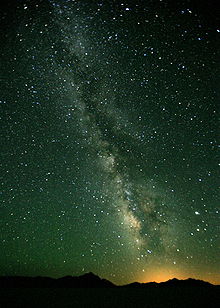
As you may have heard, there was a spectacular crescent Moon/Venus/Jupiter conjunction going on last weekend and, sure enough, that trinity was hanging just over the silhouette of snow capped mountains as we got started.   However, the moon set after only twenty minutes so we had to content ourselves with a radiant swathe of Milky Way arcing over our heads from horizon to horizon while thousands of other constellations and stars filled the rest of the sky bowl curving down to the ground on either side of it.  (We made do.)  Meanwhile, the snow reflected all that diffuse light back into the air so that after a while it felt almost like we were trudging through a softly glowing snow globe.  I couldn’t get enough of it.  I just couldn’t.  I’m sure my face would have gotten frostbite from staring up through the bitter wind for almost two hours, except that my skin was too hot to freeze.  The heavy exertion was making me huff and puff and sweat like a pig.  (The hubster loved the stars too but was more preoccupied with trying to recall what were the exact symptoms of a heart attack.)

(Photo courtesy of Steve Jurvetson)

We’re getting older.  There’s no denying it.  And we’re not sure how many more times we’ll get to have these kinds of adventures.  Physical limits are getting harder to ignore.  But so far we’ve pushed on anyway because when you think about it, there are far worse ways to die than collapsing cradled in the wild beauty of high mountains while gazing up into pure, celestial wonder for the last time.

But not until we’ve finished our advance directives of course.

We packed these documents in along with everything else and spent one of our days at the cabin, pens in hand with a snowstorm raging outside, finally filling the things out.  It was surprisingly emotional.  We found it was one thing to sit and diligently read through them over the course of a few weekends, and something else entirely to actually write in our various notations, initial the desired boxes, and sign on the dotted line with each other as witnesses.

Everything suddenly got very final and real, and I kept hearing a heavy door swing shut with a key turning in the lock.  At first I struggled with the feeling that, by signing the thing, I was somehow giving up all my rights and instinctively, I started backing away and questioning the wisdom of the whole project.  I was surprised at how powerful…how primal…the wave of fear was.

But then I remembered something we’d read earlier, that if worst ever comes to worst and I’m finally lying unconscious and helpless and vulnerable somewhere, Somebody is going to step in and start making decisions for me. Whether I’ve filled out an advance directive or not.  Whether I’ve picked them to be the person or not.  Whether they know what I want or not.  And I suddenly got it…on a deep, gut level…that my advance directive is not the thing that will strip me of control and make me silent and helpless, it’s the thing that will help protect me in case I ever am.

That helped my resolve firm again and I was able to continue.

The hubster told me later that the fear he faced arose from a sudden and overwhelming realization that he will, absolutely, someday just cease to exist.  Poof.  Evidently, it was a huge moment for him but I never would have guessed it.  He didn’t look like he was sitting there reeling from the blinding, existential awareness of total, inescapable, physical annihilation to come.  From the outside he just looked absorbed.  Studying the paper in his hands, reading glasses perched on the end of his nose.  It’s not that he was trying to hide his fear from me, that’s just the way he is.  His courage is so unconscious most of the time that he usually doesn’t even realize that’s what’s going on.

We read and scribbled and talked about things for hours.  Sometimes we laughed, I cried some, but mostly we took turns trying to explain what we were afraid of, what we longed for, and how much we loved.  The process flushed out things that had been hidden and dormant for a long time.  Tenuous hopes and secret dreads, things to be examined, cradled in tender hands, and then placed into each others’ keeping in a final gesture of deep trust.

I’ve been really surprised throughout this whole process at the huge relationship component involved in filling out these forms.  Maybe because it was also a research project for me and we took so much time with it, maybe because we did it together as partners, I don’t really know but I tell you, it’s added a whole new level of meaning to Till death do us part. Overall it’s been a healing journey full of deepening intimacy for the hubster and I.  We’ve shared things we didn’t know we hadn’t shared, and revealed things we didn’t even know ourselves until now.

I guess if there was any advice I could give out of everything we’ve learned so far it would be this:

Do your advance directives together.  Find someone else who hasn’t done their’s yet, or who hasn’t looked at it in a long time if they have, and hold hands as you walk through it.  The person you pick doesn’t have to be the same person who will be your medical proxy.  (Although, if experience is any guide, you may want them to be by the time you’re done.)  And it doesn’t have to be only one other person either.  It could be a group…if you could find that many people brave enough.  I strongly suspect that this is one area of life where the maxim There’s strength in numbers holds especially true.  If you can possibly help it, don’t try to take this journey alone.

And take your time with it.  Break the process down over a few days or weeks.  If you let yourself sit with the questions for a while, you may be surprised by some of the answers that come up.  I know we were.

Y’know, it’s kind of funny.  In walking through our advance directives, it almost felt like an opportunity to practice for the real thing…for dying…from a safe distance. Emotionally speaking I mean.  In our imaginations the hubster and I got to slip on the experience of profound vulnerability and dependence that goes with dying temporarily, while we’re still healthy and vital and strong.  It was scary in some ways, but far less so than what I’d imagine it would be like facing it for the very first time in extremis.

And we got the chance to start honing a couple of the emotional skills that are essential to have during dying…things like the ability to surrender to the inevitable, to be openly vulnerable and reveal our needs to one another, to gratefully accept the help that’s offered and to be dependent gracefully.  Things that, in our culture anyway, we tend to think of as weaknesses or failings, and yet they’re not.  Those are things that actually require tremendous courage and strength.  I didn’t realize how much before.  To openly accept the willingness of another human being to step up and care for us isn’t easy, and accepting it with dignity is rare.  (Especially for somebody as controlling as I am.)  And yet the hubster confided a couple days ago that, during this whole process, he’s felt increasingly overwhelmed and touched by the depth of my trust.  Our willingness to open up and be vulnerable with each other turned out to be, not a burden, but a gift.

So anyway, these are just a couple of the things we discovered while filling out our advance directives.  It’s been a beautiful, frightening, surprising, hard, uplifting, sorrowful, strengthening, sobering, illuminating and profoundly intimate journey for us both.

And it’s still not over!  Next, we’ve set up an evening to meet with the people whom we’ve selected as our alternative medical proxies, to get their consent and share our advance directives with them. Then we need to get the forms notarized, witnessed, copied, distributed and filed. (Note: Because Idaho’s laws place unusually high hurdles to a simple, low intervention dying process, we’re taking precautionary legal steps with our advance directives that wouldn’t be necessary in most other states.  It’s extra insurance against something that probably won’t happen but still…better safe than sorry.)

And then, after we get ours taken care of, I’ve got the kids in my sights for theirs.

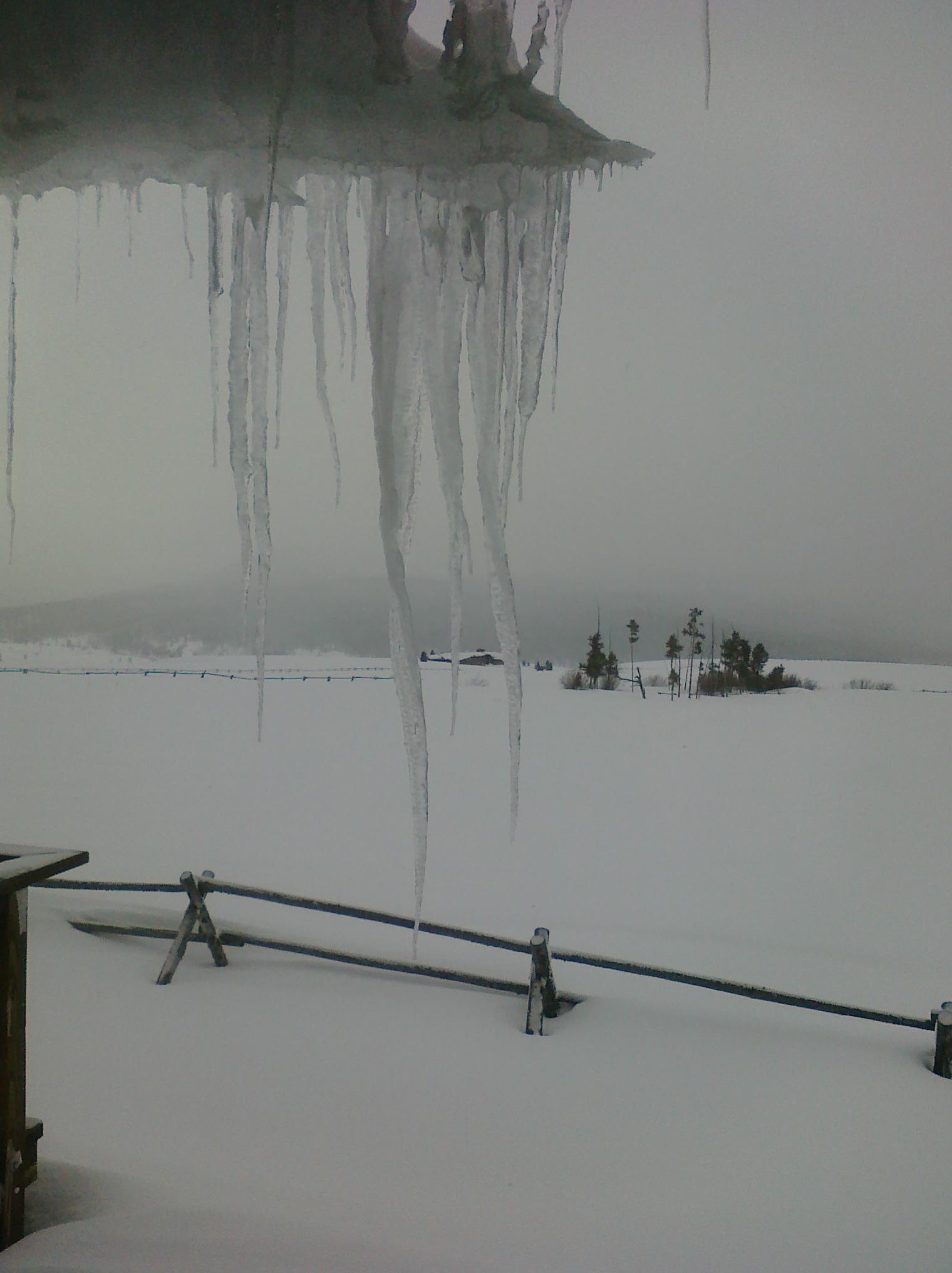
To wind this up, here are a series of photographs taken of some icicles hanging outside the cabin window during our recent stay.  The changes they went through over the days we were there feel similar to the changes the hubster and I have gone through on this whole journey with advance directives.

Stage One:  Glowing and happy from the previous night’s starlit adventure.  Delicate, sparkly and naive:

Stage 2.  Advance Directives Day–blasted by the elements, bewildered, and storm bent.  Not so sparkly anymore, but still…multiplying and stronger:

 Stage 3.  Skies are clearing, brunt of the work is done.  The amount of growth that happened during the storm is kind of surprising.  Thicker, longer, and a lot more:

Stage 4.  Older, calmer, wiser, stronger.  Not so much sparkling as glowing. We’re a lot more confident now that we can weather the storm. 

copyright Dia Osborn 2012

Part VIII: Advance Directives: Dying Inside Our Big, Hairy Healthcare System

(Continued from Part VII: Advance Directives: Ours.)

Giants and Freia by Arthur Rackham

Turns out there’s a huge, third party squatting in the room with us, as we wade through our advance directives.  It’s our healthcare system.  We didn’t realize until now what a disproportionate influence it wields on our choices about dying and I’m struggling with some real sadness about it.

We discovered that the choices we’re making today are different than the ones we’d be making if we were either very wealthy or had access to universal health care.  

The unsettling truth is that we’re both opting to die a little earlier for reasons of cost and care burdens.  In our current healthcare system, dying could cost so much for medical intervention and help with day-to-day care, that it could easily leave whichever of us was left destitute and/or with broken health.  It’s happening every day to people just like us…middle class with decent insurance (I saw a couple of tragic examples when I worked with hospice)…and the hubster and I simply refuse to do that to one another.

I had a very hard moment the other night when I suddenly realized I wouldn’t mind so much, lying in bed for months or maybe even years, slowly declining while looking out the window at my beautiful garden, as long as I could still write and visit, study and learn, meditate and muse.  It surprised me.  I’d always thought if I couldn’t hike, escape to the mountains, garden and swim anymore, that I’d be done.  I had no idea that I could still be happy without those things…if only the burden of care was spread across the shoulders of enough people to protect them all and care for me well.  If only we were wealthy and could afford to hire them.  If only our healthcare system was universal…and actually helped with home care to begin with (which it doesn’t.)

For the first time I realized I’m not so much afraid of being disabled as I am of destroying the people I love with the burdens of my care, or of being cared for negligently in an institution somewhere (I saw too many tragic examples of this), and I experienced an unexpected and poignant wave of love and deep longing for my life.

On the one hand, I’m irrationally wishing we were born in Canada, or England, or Cuba instead…some country with universal healthcare that cares about all its people equally.

On the other hand, I say irrationally because I know that if I turned Fate loose for a do-over like that, we might just as easily have been born in Bangladesh or Somalia.  Some other country where dying can happen even faster.

I suppose there’s no useful purpose to be had in bemoaning destiny.  The hubster and I were born in this country, we’ve lived here all our lives, and this is where we’ll die.  And to tell you the truth, we don’t really want to die in another country with better healthcare anyway, even if dying here could come earlier and suck more.  We’ve loved our lives here.  This is our home and no country is perfect…a corrupted healthcare system just happens to be our particular Achilles heel.

So yes, all things considered, it’ll be okay if we wind up dying a little earlier here than we would if we were living in an ideal world.  I guess comparing our situation to perfection isn’t the best idea.

(Next the conclusion: Part IX: Out of Town And Back Again (With Advance Directives In Tow)

copyright Dia Osborn 2011

Another Break: Delightful Snowflakes

Okay.  I needed a break from advance directives and just found a good one:

A friend sent me a link to Have A Beauty Filled Day, a blog full of photographs and insights…two of my favorite things.  Christine Young, the author/photographer, takes her inspiration not only from the natural world, but often from the tiny natural world…which I particularly adore.

Here are a couple pics taken (with permission and a link) from a post entitled Flaky:

There are more photos.  This is only an appetite whetter.

(Also, for anyone wondering, this is what magic used to look like before it was roped and domesticated by Merlin, Houdini, Penn and Teller, and the rest of those guys.  Hard to recognize, no?  I think it’s the simplicity of it that fools most people.  There was often simple magic happening around dying people, too, which is perhaps why I recognize it.)

Check out the blog if you get a chance.  It’s a delight.

copyright Dia Osborn 2011