Someone Else Wrote My Book. What Now?

I’ve been working on a book about my time with hospice for about five years now–or rather working on it for two years and then procrastinating for three.  On the advice of an agent, I originally started this blog to build an author platform and then got hijacked.  Publishing blog posts is a lot more fun and immediate than slogging away for years on a book that may or may not ever see the light of day.

But while I was thusly blog-distracted, some upstart hospice nurse back east snuck under the police tape and wrote my book before I could finish.  It’s called Transitions by Becki Hawkins and, while I haven’t read the book yet, I did read the press release:

For the most part modern western culture has distanced itself from the celebratory and positive aspects of the dying process, instead either ignoring it, or focusing on only the negative aspects of death…Becki felt there was another more joyous and beautiful side that she was learning from her patients that she wanted to share with others.

That’s exactly what I was going to say.  Shit.

Now don’t get me wrong here.  There does lurk an altruistic/decent person inside me who says thank god and good on her for getting the word out when I was too lazy and undisciplined to get it done.  Ms. Hawkins’s accomplishment is everything good and noble and generous, and Transitions is a wonderful boon to the world and thank you a million times over for writing it.  There.

But I’d be lying if I said there isn’t also a poisonous/jealous writer in a dark corner of my soul, nursing a double and hissing a pox on her for stealing my idea.  (Inner writers are all neurotic, not just mine. Hold the stones please.)

So what now?  Do I shoot my languishing book in the head and put it out of its misery once and for all?  Or do I buck up and take the immortal words (and graphics) of Chuck Wendig over at Terrible Minds to heart?

Well, I’m either a writer or a masochist because I printed this puppy off and taped it up on half the cupboards and all the mirrors in the house.  Guess I’m still in.

The other voice haunting me belongs to the ever wise and balanced Linda over at Rangewriter, and in its own way, is both finer and more compelling.  After being informed that my book was already written, she thought about it for a second then gently asked:

“Do you think one book on this topic is really enough?”

That sobered me.  I looked up from my whiskey and suddenly recalled this one basic truth I heard about writing once that I’d somehow forgotten:

Everything under the sun has already been written about before.  There is no…NO…such thing as a new topic.  Ever.  There are only new voices to express them in different ways, and each one of those voices is important because there’s at least one reader waiting out there that only that voice can reach.

So, do I really think that one book about the joyous and beautiful side of dying is enough?  That Ms. Hawkins and Transitions can (or should) carry the entire burden alone from here?  That all the mindless terror of dying out there in the world has now been forever eased?

Probably not.

But truly, even if her book WAS enough–even if that one truth I know about writing turned out to be sheer self-delusion and there wasn’t really a lonely reader waiting anywhere out there for my unique voice to reach –I could still fall back on this completely selfish reason and finish my book anyway.  It’s from Mr. Wendig again, from his post 25 Things I Want To Say To So-Called “Aspiring” Writersand comes in at #24:

“As a writer, the world you create is yours and yours alone. Someone will always be there to tell you what you can’t do, but they’re nearly always wrong. You’re a writer. You can make anything up that you want. It may not be lucrative. It may not pay your mortgage. But we’re not talking about that. We’re talking about what’s going on between you and the blank page before you. It’s just you and the story. If you love it and you want to write it, then wire your trap shut and write it. And write it well. Expect nothing beyond this — expect no reward, expect no victory parade — but embrace the satisfaction it gives you to do your thing.”

Amen to that Chuck.  Back to the keyboard.

copyright 2012 Dia Osborn

It’s Too Early Until It’s Too Late

Has anyone finished their advance directive yet?

(This post sponsored by Niggling Reminders.  “When you can’t remember for yourself, we’ll remember for you.”)

My Son Is Too Old To Colonize Mars

Just when you think you know somebody, they can still surprise you.

I was chatting with my twenty-nine year old son on the phone the other night and discovered two things about him that I didn’t know before.

1)  He’s leaning towards atheism. (Which is both disconcerting and kind of cool.  We don’t have one of those in the family yet.)  And

2)  If he had the chance to be among the first to colonize Mars, he’d jump.  No questions asked.

Of course, as his mother, I went straight to neediness when he confided the latter piece of information. “But…what if you could never come back to earth? Would you still want to go?”  My fear of abandonment in old age was showing.

He didn’t hesitate.  “You bet.”

I clutched at my heart for a second then sighed.  I suppose it’s my own fault for teaching him to be truthful.

In case anyone is thinking that this is a ridiculous conversation, it’s really not.  There are actually a number of plans on the table for colonizing Mars.  In a brief article on The Norwegian Space Centre website (for the government agency under the Ministry of Trade and Industry) it says that the earliest date mentioned for moving to Mars in official papers is 2019.

In another article on The Daily Galaxy, the author sites evidence of Mars colonization becoming an imperative of the new U.S. space strategy taking shape under Obama.

And Stephen Hawking, the renowned British physicist and author of A Brief History of Time (among many, many other books), is a strong supporter of space colonization in general.  In fact he believes that, with the poor resource management so far displayed on Earth, human life simply won’t exist long-term without it.

 “Life on Earth,” Hawking has said, “is at the ever-increasing risk of being wiped out by a disaster such as sudden global warming, nuclear war, a genetically engineered virus or other dangers … I think the human race has no future if it doesn’t go into space.”

But keep in mind he also said, while talking about the possibility of other intelligent life in the universe:

“Personally, I favour the second possibility – that primitive life is relatively common, but that intelligent life is very rare…Some would say it has yet to occur on Earth.”

Which kind of begs the question of why save us at all, but I guess there’s no explaining species loyalty, which is an instinct-thing.  (Which then loops us back to the question of intelligence, which is a mental hamster-wheel thing.)

The project that got my son dreaming about all this in the first place involves a Dutch start-up called Mars One that’s planning to fund the first colony on Mars in 2023 with the proceeds from a reality show documenting the whole thing.  Before you laugh (which was admittedly my first reaction when he brought it up) check out their website.  A realistic Mars shot is evidently a lot closer than I understood.

Luckily, before I donned the black veil and started throwing ashes on my head, my son sadly explained that he was already too old to participate in any of these projects.  Turns out that, while he may be as scary smart, technologically astute, and space visionary as the best of them, it’s not enough.  Thankfully nubile youth is also required.  Which means it will be some other unfortunate mother standing at the dock in 2023 waving her crumpled little handkerchief good-bye.

My son will be stranded to die right here on Earth with me.

Oh for godsakes…what a horrible thing to write.  (In case anyone was wondering where he gets his deplorable truthfulness from.)

On a brighter note, evidently Virgin Galactic (that Richard Branson, I tell ya…) is actually booking seats for space flights now and my son feels that this is an adventure within his reach. I have to admit, if I had a spare $200,000 sitting around I’d be tempted to join him and book a flight myself.

Now, for the record, I adore, a-d-o-r-e, this planet and would never, ever leave her, even if a gigantic asteroid was about to annihilate us all and I was offered the last remaining seat on the only spaceship out of here.

I’m really not kidding when I say I want to die at home.

But to be able to go up and just orbit around her a few times?  To see with my very own eyes the Blue Planet, this exquisitely beautiful, miraculous place that we all get to share in, live on, suckle from, contribute to, and be a part of for however long it lasts?

Now that would be something.

copyright Dia Osborn 2011

The Little Gosling That Couldn’t and How The Kayak Got Her Name

This one falls under the heading of “strange and magical things experienced while kayaking.”  My twin interests of paddling and dying paired up for a brief dance last weekend.

On Saturday we strapped the kayaks to the car and drove out to a canyon area that…long, long ago and far, far away…had a creek running along the bottom of it.  But one day the Army Corps of Engineers came along and built Lucky Peak dam and, lo and behold, the canyon became a long finger of the resulting reservoir instead.  (A change that unquestionably sucked for everything that lived down there at the time, but turned out to be a boon for municipal water storage and boating of all kinds.)

We got up at 5:30 to beat the power boats and water skiers and were rewarded with the stillness and solitude that only goes to the early risers. (Which I normally am not.)  We started at the tip of the long finger and paddled along for an hour and a half, gazing up at basalt cliffs and the clouds of wheeling, flitting birds that make their homes there.  Later we discovered a small but breathtaking cove with lichen covered cliffs rising straight from the water and a couple of tinkling, tiered waterfalls cooling the already hot day.

And then, as we finally neared the end of the narrow canyon and prepared to enter the main body of the reservoir itself, we sighted a pair of Canadian geese shepherding twenty-three, brand new goslings in a tight bunch between them (count them! twenty-three!!) and we immediately swung the kayaks out into deeper water, giving them as wide a berth as possible out of concern for those unpredictable, wide-eyed, bits of fluff.

By that time the power boat traffic had picked up in the main reservoir and a few of them were turning into the canyon, roaring and dragging their bouncing, scooting loads back up what we’d just paddled silently down.  The clash of water-recreational cultures had begun and it was now time to share.

The hubster and I had gotten separated somewhere along the line, with him paddling along one side of the widening channel heading for the main marina, while I followed the line of cliffs on the other side, gazing up and studying the geology.  Deep down I knew I was going to have to cross eventually, to join him, and navigate the boat traffic in the process.

But I didn’t want to….I just didn’t…and some deep, stubborn thing inside me dug in and grabbed on with it’s toes.  I didn’t want to go to the marina.  I didn’t want to deal with the boats.  I didn’t want anything to do with the human world at all because I knew it would break the spell I’d fallen under earlier in the canyon…of water and wings, rhythm and rock.

So I ignored his lead and kept to my own side until, just up ahead, I was distracted by something strange floating on the water.  It wasn’t the occasional driftwood or flotsam or jetsam bumping past my boat.  It was soft brown and upright and I soon realized that 1) it was a lone gosling drifting perilously close to the wakes from the main boat lane and, 2) that it belonged to the gaggle of other goslings we’d passed earlier, back up the canyon, but had somehow gotten separated.

I never really decided to do it.  On the contrary.  It happened with no reflection whatsoever and entirely without my consent.  My arms simply paddled the kayak around behind the gosling, turned the bow back up the canyon, and started to patiently, relentlessly herd him along the base of the cliffs after his family.  Just like that.

Looking back now it’s amazing to me, how my perception could change that much in a single breath.  How a world as populated and noisy as the reservoir was, could suddenly telescope down to a single, tiny, bobbing life like that.  My vision went tunneled and everything else ceased to exist…the power boats, the hubster, time.  It’s funny.  Over the years and on into menopause, I’d forgotten what a fierce thing the maternal instinct can be and what odd things can invoke it.  But in an instant there she was again, up on her hind legs with claws spread, just like old times.

It’s nice to know the hormones still work.

The spell deepened.  As I paddled slowly…s-l-o-w-l-y…along, nudging, urging, heading off, backing up, turning, resting, then urging the little gosling on again, I started to feel a strange kinship with all the Canadian goose mothers I’ve watched over the years as they guided their own babies along.  It was like there was a second, phantom world gradually superimposing over the first, one where the yak was turning into a plump, feathered body and the paddle, a long, stretching neck.  It was an odd sensation, that tactile feeling of goose-ness settling over me, but I welcomed it anyway for the additional skill and information it lent me.

The gosling wasn’t doing well…at all…and I soon realized why he had been abandoned.  He was weak and getting weaker.  The effort required for him to swim ahead of my kayak was clearly a lot and he also suffered occasional spasms of some kind of palsy.  I wondered if he was born with neurological damage or if he’d been caught in the wake of a boat right out of the egg, maybe dashed against some rocks or injured in some other way.

At some point it dawned on me that the little guy wasn’t going to survive, and my mission changed from saving his life to reuniting him with the family so he wouldn’t have to die alone.  By this time the hubster had noticed my preoccupation and come over to check out what I was doing.  As soon as he saw the gosling he joined my efforts without a word and together we urged the tiring baby forward as gently as we could.  But the gosling was so weak…and the going so achingly slow…that eventually the hubster decided to paddle up the shoreline to try and find the family.  To perhaps herd them back down towards us if he could.

I began crooning encouragement to the gosling, who was pausing to rest with increasing frequency, and he seemed to respond to the soft, loving sounds.  He stopped and looked up at me a few times, relaxing a little, and started trying to follow the edge of the bow as I held the careful distance between us that I’d maintained the whole way.

And then something happened that took me entirely off guard.  A spasm of palsy struck the gosling that was so strong his bowels emptied into the water.  And as I sat there waiting for it to pass, watching the small patch of white refuse sink and disperse beneath the surface, the baby suddenly turned towards me…disoriented, overwhelmed, and unable to continue…and swam straight for the hand that I instinctively lowered into the water.

He never hesitated but climbed right in, balancing there among my careful fingers as I lifted him up and nestled him protectively in my lap.  And as he sat there quietly, exhausted, I started paddling in earnest, heading for an inlet about a quarter mile up the canyon where the hubster was signaling that he’d found the rest of the goose family.

I honestly don’t know how to describe the strange mixture of emotions and instincts that had taken possession of me by that time.  I don’t really understand it myself.  There were flashes of stories going through my mind, stories I’d heard of other mothers from other species who had done the same thing I was doing.  There was a female gorilla in a zoo somewhere.  The one that picked up an injured human child who had accidentally fallen into her enclosure and cradled it against her, protecting it from an aggressive male gorilla that could have done further harm.  There was a Labrador Retriever bitch that a friend of mine once owned, who patiently, lovingly nursed a litter of orphaned kittens to term, taking them on as her own when the mother cat had been killed.

There are other stories, too, of this particular phenomenon—of surprising cross-species interactions filled with tenderness and generosity–and these stories tend to both puzzle and delight all of us who hear them.  I wonder if it’s because maybe, each time, they hint that we’re not quite as different from each other as we thought.  Or that we’re not quite as alone as we feared.

What I do know is that sitting there in the kayak that morning with a beautiful, dying gosling across my thighs, I suddenly understood with crystal clarity how those other animal mothers could behave the way they did.  I got it, how an innocent life falling from the sky, however damaged or brief, can instantly become the only thing that matters.  How the kind of terrible vulnerability they present can trigger the most primal of instincts…and what a good and sacred thing that is.

By the time I reached the hubster in the inlet where the family was resting, the gosling was sinking into permanent disorientation.  He was actively dying and, as I cupped him in both hands and placed him back into the water, he kept trying to swim the wrong way.  He didn’t seem to see or hear the other geese as they clacked and shifted uneasily at the end of the inlet, and we weren’t quite sure what to do.  We didn’t want to get any closer out of concern for the other goslings, but at the same time we wanted to guide our own little guy near enough to the others to have a chance to see and join them.

Finally, the two adult geese seemed to notice the gosling swimming near us and one of them raised its wings a little, making alert and angry goose noises and moving aggressively in our direction.  At this our little guy seemed to clear the fog for second and see them and he turned to swim down the inlet in their direction.

For a brief and dazzling moment, I thought everything would be okay.

But it wasn’t.  Everything started going wrong.  Instead of crossing the water towards the family on the right bank, the dying gosling hugged the opposite shore.  His head wobbled with palsy, his swimming grew increasingly erratic and aimless, and with a sigh I recognized all the signs.  He was losing awareness of the physical environment around him as he commenced the final stage of dying.  He was going light…entering that luminous border world around life that has to be crossed on the way out.

I’d also made a classic mistake with the adult geese.  Forgetting everything I know, I’d projected all my human emotions onto them and childishly expected them to welcome the gosling–which they’d already abandoned once–back into the fold.  Far from the joyful reunion I’d imagined, the parents herded the other babies as far away from the injured gosling as possible, actually moving them down the inlet towards us.  I realized they were willing to risk a dangerous level of closeness with humans rather than get anywhere near the dying gosling and, too late, I remembered about that other, harsher instinct that also lurks inside us all.  The one that whispers mistrust of all things sick, misshapen, or dying.

It’s the one that always errs on the side of caution in order to avoid contagion and preserve life.

Strangely, I accepted the unexpected turn of events with no more rational thought than I’d given to anything else that had happened.  That deep, clawed thing inside me simply fell to all fours and ambled off.  Nothing felt wrong or sad to me, still sitting under the spell of primal things as I was.  It just felt done.

I watched for one lingering moment as the blinded gosling bumped his way up the inlet and then, when the hubster suggested we get going, I turned my kayak without a word and followed him.  We needed to get out of the way of the way of the other geese and besides, I couldn’t chase the gosling down to try and cradle him at the last.  It would only have frightened and traumatized him as he died and that wasn’t allowed.

There’s an instinct for that one, too.

I’ve been haunted by that morning ever since, by the image of that strange, breathless moment when a mortally wounded gosling turned and, against every instinct, swam straight into my hand.  The memory of it fills me with both wonder and questions.  I don’t understand why he did it.  I don’t know whether it was a gesture of desperation and disorientation, or a moment of recognition and trust.  And there’s no way I can ever know, because I think there are some things we’re only supposed to ponder, not solve.

But even though I can never know for him, I can know for me…from my side…and I know this much:

That in his brief and tiny time here, the miracle is that I found him at all.  He was so infinitely small floating alone there in that vast body of water, and a later start, a different trajectory or speed, something as simple as a longer gaze up at the cliffs, would have made me miss him completely.  I’ll never know whether the crossing of our paths turned out to be a better thing for him or not, whether my efforts ultimately eased or increased his suffering.  I can only hope that I did more good than harm.

But whatever it was for him, it was most certainly a gift for me, one of the rarest in fact, to be placed in my secret treasure box full of sparkling things.  It was an encounter full of the dizzying reminder that life is beautiful, yes.  Without doubt.  But it’s only in opening up to let all the world’s shadows and all the world’s light pour inside to fill me, that life transforms from the merely beautiful into an enchanted, shimmering place of wonder, seen with ever widening eyes.

Epilogue: I’ve been secretly chafing ever since our first kayaking adventure when the hubster bravely towed that fishing boat back to shore and earned his kayak its name–Tug Boat.  I wanted a good name for my kayak, too, but after his naming adventure, everything I came up with sounded made-up and lame.  Unearned.

But there was a moment in the middle of shepherding the gosling, when he was still in the water and my yak and I were jockeying around him, trying to guide and protect him both, when the name came to me out of the blue, like it had been whispered in my ear.  

“Mother Goose.”

And that was how the kayak got her name.

copyright Dia Osborn 2012

Gosling image above is from Wikipedia

When Vacations Turn Hard Left: Kayaks and Snow

We hauled the boats up to our usual haunt…the family cabin next to the Sawtooth National Recreation Area…to paddle the various glacier carved lakes over Memorial Day weekend.  We woke up the first morning to a perfect day for kayaking.

Absurd, no?  We laughed and laughed at this joke on ourselves.  We later learned that out of the last twenty-five Memorial Days in Stanley, Idaho, only two have been warm and sunny.

The morning snowfall turned to spitting rain for most of the day and then, in early evening, we got a surprise window of clear skies.  The air temperature shot up into the low fifties and, after some nervous waffling over warm soup, our impulses got the better of us and we decided to go for it.  We learned we could strap the kayaks on the car, load all of our gear, and suit up in exactly twenty-three minutes.

This was our reward:

Not bad, eh?  That’s the view looking down to the very end of Redfish Lake which is about five miles long.  Here’s one more shot of it with the hubster and Tug:

That was as far as we dared go that day.  The sun had just set behind the mountains and we still had to paddle an hour back to our launch site.  Neither of us were excited about trying to load the boats in the dark.  Nevertheless, we both secretly dreamed of coming back and going all the way to the end of the lake, if for no other reason than to sit at the foot of those gorgeous peaks and gaze up in slack-jawed wonder.

But the next day was a total bust weather-wise.  Rain all day…ALL day…turning to another four inches of snow overnight.  No surprise windows for us, I’m afraid.

Our worry started to shift from a concern that we might not get to paddle again to a fear that we might not be able to drive from the cabin back out to the highway.  The winding, steep dirt road that connects the two can get irritable and uncooperative when saturated.

The last, full day of our vacation dawned to (wait for it…wait for it) more rain and spitting snow.  We watched as the heavy, gray squalls entered the long valley from the north then rolled on down, engulfing the mountain ranges on both sides and dumping everything on us as they passed.  This went on over and over and over again, all day long.

But then, in late afternoon, there was a…well, not a window exactly.  More like a brief pause.  A slightly longer gap.  Hardly noticeable in fact, but we decided to load everything up and go down to the lake to watch and wait anyway.  You know.  Just in case.  The hubster especially wanted to go and it seemed better than giving up for good.

The hubster later confided that he knew if he could just get me down onto the water, my own impulsive side would take over from there.  There’s a little dance we always do in situations like this…when he wants to jump in and take a risk, but I’m not convinced that it’s safe.  He’s really kind of brilliant about it.  Rather than trying to get me to “go for it,” his strategy is to nudge me along in incremental baby steps.

At home:  Come on, sweetheart.  We’ll just drive down to the lake and see.  We can always turn around and come back home.

At the lake:  Come on, sweetheart.  We can just sit here a little bit longer.  And by the way, I really don’t mind if you don’t want to do it.

Rolling down the window:  Look, sweetheart!  It stopped raining.  You want to just walk down to the beach and look around before we go home?  I promisewhatever happens, I’m fine with it.

He eventually got me down to the water’s edge but it was a young family staying at the lake lodge…also waiting hopefully for some kind of break in the weather…that tipped me into the boat.  They were on the dock near the rental station, the kids begging Mom and Dad to go out on the paddle boat…clutching, pulling, pleeeeeeasing…and finally, after three long, sodden days of whining, the battle-weary parents caved.  The current squall passed and the next one hadn’t arrived yet, so they all clambered aboard.

The children were beyond ecstatic and the parents were clearly relieved to give up the fight.  Their happy, joyous voices carried across the water to where we stood and, as I watched them paddle and splash around the small, buoyed area surrounding the dock, a kind of stealth, emotional transfer traveled along on the back of the noise.  It was like a computer virus downloading, installing, and rebooting inside me, without my ever realizing what was going on.  The first I knew of it’s presence was when I suddenly looked at the hubster, grinned, and heard the words coming out of my mouth:

“Okay!  Let’s do it.”

Totally irrational, I know.  The happy family never got farther than twenty feet away from the dock. We, on the other hand, paddled the whole five miles down.  (The hubster was right again…getting me into the yak was the real hurdle.)  We pushed through successive squalls of rain and…once…sleet, and…once…snow, all the way down to the pristine and secret, holy bay of bays that we stumbled upon at the very end of the lake.

It blew our minds.  It was that beautiful.  Even the hubster had never seen it before and he grew up on that lake.  (Evidently, ten miles round trip was just too damn far for his father to paddle a canoe full of wiggling boys.)  We had of course been down to the almost-end a hundred times over the years, to the lonely dock where the shuttle boat from the lodge drops off/picks up backpackers and day hikers every few hours during the summer.  But we’d never continued on around the small and innocuous promontory of land that separates the big lake from the tiny bay.  We couldn’t.  We didn’t have boats.

Until now.

Those far off mountains in the photos above towered over us…rising up from the water for thousands of feet through a layer of steep pine forest…while the melting snow coming off their peaks fell back down again in cascading, musical, multi-tiered waterfalls.  The clouds and mist shifted constantly across the rocky crags and sheer cliffs above, while the silence of the place was so heavy that it eventually stilled our tired arms completely.

We just floated for a while, staring around in wonder while slowly, slowly filling back up again.  We hadn’t known we were that empty.  I think it’s hard to tell sometimes, just how much has been drained out of you into the busy activities of regular life, until you get a chance to sit still in a place like that and feel the outgoing flow reverse again.

I don’t know.  Maybe we were stupid and impulsive to paddle that far in weather that unstable.  I honestly don’t know.  I’m not experienced enough yet.  It was certainly cold and wet but we were prepared for that…wetsuits, wool, and rain jackets…so really, that part was not a problem.

Wind is what can pose a real danger with kayaking but the day’s squalls, for all their blowing around up high, never reached down into the bowl of that lake, never generated more than an occasional mild breeze rippling the water.  In fact, a few times when it stopped raining, it was like we were paddling over crystal clear glass.

I guess all I can really say is this:

If we were stupid to go out in those conditions then, clearly, sometimes luck goes to the idiots.  There wasn’t another boat out on the lake the whole time we were there.  No raucous voices drifting across disturbed waters.  No motoring, crisscrossing wakes to block our wondering view of the submerged, ghostly boulders and tree trunks that litter the entire coastline.  Nothing to scare off the otter that stopped it’s gliding play among the rocks to watch us float past, curious and unafraid.

And neither was there anything to jar the profound and surprising reverence we felt back there in the bay for those rare moments…when all the bad news and angry voices and scary, unfolding events of the world grew small and still and far enough away that we could finally relax and remember again.  That we’re okay.  That we were always okay.  That we will always be…in some hard to define but deeply reassuring way…totally and truly okay.

Yesterday…the day we returned to Boise for a resumption of our other, busier lives…dawned sunny, warm, and clear.  Perfect, perfect, paddling weather.

Of course.

We laughed and laughed at the great joke of it all again, then waved good-bye to the mountains and drove away.  Only the difference was that, this time, we felt like we were in on it.

copyright Dia Osborn 2012

Preventive Cancer Screenings: “Serpentine Shel! Serpentine!”

I talked about the terrible experience we had last year as the result of a false positive PSA test for the hubster in the post False Positives Are The Tenth Circle of Hell.  Since then, I’ve been following closely as the U.S. Preventive Services Task Force tackled the question of whether PSA tests do more help or harm and am am not surprised that, today, they announced the answer is harm.

There’s an opinion piece in CNN.Opinion today, by Otis W. Brawley, chief medical and scientific officer of the American Cancer Society and professor at Emory University, where he eviscerates the practice of mass screenings for PSA that has become the gold standard.  Particularly chilling is his memory of a discussion he had with the marketing executive of a major American hospital fifteen years ago who was explaining his lucrative “prostate cancer business plan.”

As he explained it, for every 1,000 men over age 50 who were screened at the mall, 145 would have an abnormal screen, and 135 would go to his hospital for evaluation. Fees collected from them would easily cover the cost of the free screening event. About 45 in that group would have cancer; the rest would be false positives.

The marketer had figured out how many men would be treated with surgery, radiation, and hormones. He had estimates of all the money the center would make from treating all 45 cancer cases. He knew how many men would be treated for urinary incontinence, and what his net profit for treating that would be. Amazingly, he even knew how many of the men would want penile prostheses surgically implanted to treat their impotence.

I asked him one question: “How many lives will you save if you screen a thousand men?” He looked at me as if I were a fool, and said, “Don’t you know? No one knows if this stuff saves lives. I can’t give you a number on that.”

I’m keenly aware and deeply grateful that the adverse effects of this test on our lives were relatively small.  An invasive and potentially dangerous biopsy is as far as it went.  There are a lot of men out there (about a million) who fared worse.  I’m also aware that with a family history of the disease, the hubster is at higher risk than the average man and a false positive on the last test doesn’t mean he’s now bullet proof.  Future PSA tests are by no means off the table but they’ll be approached with more caution and far better reasons in the future.

What makes me so angry is that the considerable risks involved were either not explained to us fully or glibly dismissed before the hubster obediently began the regimen of annual PSA testing.  Pretty much all we heard for two decades, in the media and in doctor’s offices, was the mantra-like assurance that it saves lives, this in spite of the fact that there was no direct clinical evidence to support that claim.  It blows my mind that the first clinical trial suggesting that PSA mass screening does save lives wasn’t published until 2010, and even then the trial had internal inconsistencies that make it suspect.  From Otis Brawley again:

 It showed screening saves lives in the Netherlands and Sweden, but not in five other European countries. Even the positive parts of that study did not show a considerable increase in lives saved.

It makes me wonder what really drove the push for mass screenings over the last twenty years?  The above mentioned hospital marketing executive springs to mind.

The good news is that everything we went through with the hubster’s PSA false positive broke trail for my own more considered, skeptical, research-laden approach to the mammogram alarm I received shortly thereafter.  Before the PSA fiasco I, too, would have obediently returned to the hospital for further scans and a probable biopsy (considering the incredibly vague nature of what was flagged on my original scan.)

But because we were already once burned, I dug in and started looking for more information.  I discovered that with all factors considered I’m actually in the lowest risk category for breast cancer, that an “architectural distortion density” is basically a last shotgun-scatter call for a radiologist practicing defensive medicine, that the rates of mammogram false positives range anywhere from fifty to eighty percent depending on who’s talking, and that no less than five different factors put me in the highest risk category for a false positive diagnosis.

I also learned that once a woman has one false positive, her mammograms are at much higher risk for being flagged again, and that women with false positives receive more diagnostic scans and resulting radiation exposure than women who actually have breast cancer.  Add to all that the fact that the rates of antibiotic resistance infections received in clinical settings are increasing at a clipping pace, and I decided that a biopsy should probably be avoided if at all possible.

Weighing everything I learned, I eventually realized that if I adopted a watchful waiting approach, the odds were in my favor for a good result.  I was right.  After waiting for eight months I finally went back for a follow-up mammogram that could be reasonably compared to the first one, and the new scan was deemed clean.  Nothing had changed indicating nothing was growing.  I was satisfied.

Granted, as a depressive, I still lost most of last year to the threat of slipping into another episode from all the stress and anxiety, but at least I managed to avoid most of the physically invasive fall-out.  And for last year at least, that was enough.  However, in the future I’ve decided not to pursue annual screenings unless I find a lump.  For me, the risks outweigh the benefits.

And that’s the main takeaway I’d like to offer with this post.  Each person is completely unique and there is no medical screening, procedure, or treatment out there that is a one-size-fits-all solution.  On the one hand, be skeptical.  Ask questions.  Do research.  Learn from past mistakes.  Make educated choices and, if your doctor doesn’t provide you with all the information, then go out and get it on your own.  Whether you’re confident in the continuing value of PSA tests and mammograms or not, make your own decisions based on what you feel is right for you.

But on the other hand, respect and support the directions that others are exploring, too, even if they’re different directions than you would take.  I felt mostly alone last year, trying to figure out what to do, because almost everyone I tried to talk to went straight to an expectation of the worst possible outcome.  I could see it in the back of their eyes, that dark flash of terror like they were looking at a woman who was about to be dead because she wasn’t doing what she was supposed to.

I’m not anti-preventive screening.  Far from it.  A pap smear in my twenties probably saved my life and, even with all the other chaos going on last year, the hubster and I both still got our colonoscopies.  But honestly, most of my preventive energy and attention goes into how I live because after working around the dying I finally got it, how little power we’re ever going to have where death is concerned.  I don’t want to waste the precious little time I have tilting at windmills.

I’d rather just live openly with death as my inevitable companion.  I’d prefer to amble around, and graze, and play, and explore the meadow of my life, relaxed and peaceful…and then die…rather than trying to zig zag back and forth across it (Serpentine Shel!! Serpentine!), bent over through the grass trying to hide from it all the time…and then die.

Because that’s exactly what I felt like last year; Alan Arkin trying to dodge bullets in the original The In-Laws.  And pooh on that.  I remember again the wisest thing my father…a grizzled, old warrior with a couple of gruesome wars under his belt and a vast experience of death…ever said to me:

Dia, if it’s your time to die then it’s your time to die, and nothing’s gonna save you.  But if it’s not your time to die, then it’s just not, and there’s nothing out there…nothing…that can kill you.

As a parting gift, here’s one of the funniest movie scenes of all time: the serpentine scene from The In-Laws.  Watch it and weep.

copyright Dia Osborn 2012

Looks like completed advance directives rates are low all over.

This just in from an Australian news outlet:

“The survey found that almost 90 per cent of respondents lacked an advance care plan, and 78 per cent did not know what an advance care plan was.”

In the U.S., approximately 70% don’t have an advance directive yet, which is better than 90% but…still.

Have you done yours yet?  Ours are all filled out but we still need to get them filed and distributed.

So, okay.  June is hereby declared “Finish it Up, Dammit” month.  For anyone else who started and then slacked off in the middle, feel free to join us!

A Cautionary Note Concerning Paper Toilet Seat Covers At Public Pools

I’m looking for ways to procrastinate on the transcription and thought another quick blog post could work.

I just wanted to warn people about this because, being not only unmentionable but embarassing, I doubt anyone else will:

Whatever you do, don’t ever, ever sit down on a paper toilet seat cover while you’re soaking wet.  Ever. It’s like instantly coating your backside with a layer of papier mache and it’s very, very difficult to remove.

Especially when you discover the problem as you stand up in a narrow, public, bathroom stall with your bathing suit hanging around your knees and you panic because it won’t peel off and your feet start spreading too far apart as you try to reach around and under and through to try and rub it off your cheeks and thighs but it just disintegrates turning into a thousand, million little wet paper balls falling down to the floor like gray snow for anyone in the stalls on either side to glimpse causing them to wonder what the hell is she doing over there anyway and…what IS that?

You can’t get it all off without washing, BTW.  You just can’t.  It’s that sticky.  The good news is that you, yourself, won’t be able to see all those ragged, little remnants of sanitary protection clinging to the back of your legs as you peek both ways before making a mad dash for the showers.  You’re spared that lingering mental image at least.

On the other hand, if you ever want to make a piñata shaped like a butt, this could be an excellent way to begin.

(Can you believe it?  You can find pictures of ANYTHING!!!!  These lovelies are for sale over at Bigass Pinatas).

Oh.  And P.S.  Wet turns a once-sanitary paper toilet seat cover into a veritable delivery system for virus and bacteria so humiliation could be the least of your problems.  It’s been two weeks and I’m still alive and wiggling so no harm done in my case.  But you be careful out there.  These things turn dangerous when cornered.

copyright Dia Osborn 2012

I hope everyone else has a nice day.

I haven’t written much here on the blog lately because I’ve been doing some transcription work.

Yesterday, I spent all my productive hours trying to finish the transcript for a ninety-minute writing class, but woke up this morning to find the Word document containing all the work had vanished.  It’s somewhere in the belly of this laptop.  I know it is…

…but I just can’t find it.  Fuck.

After an hour and a half of searching every which way but loose, I’ve finally given up and will start all over again.

This may be my only post for the week.

I love you all.  More than I can say.

Send prayers.

(the photo above is from the most excellent Device Magazine where they totally understand these things.)

Your Early Exposure to Death: Was It Scary Or Curious?

“Children do not respond to death as adults do. Their normal reactions are much more natural, curious and varied, until that is changed by the adult world”.  From Children and Pet Loss.

(This post follows Five Major Influences that help Shape Our Acceptance Or Fear of Dying and Death.)

Before I start, I want to say that every person is unique, so of course the relationship they forge with death over time will be unique, too.

It’s like a lifelong dance we do; each successive loss is a new partner that whirls us about the floor for however long it lasts, then drops us in our chair by the wall again.  Every encounter is different and our perspective on dying evolves with each one.  As John Gray over at Going Gently wisely reminds me from time to time, there is no right or wrong way to look at dying.  Each person’s experience just is what it is, and that makes it absolutely true for them and deserving of respect.

Having said all that, it’s also important to remember that both trauma and beauty are inherent in the dying process.  And with increased, gentle awareness, it’s possible to help ease the first and strengthen the latter.  (That’s actually one of the main goals of hospice and palliative care.)  In practice though, this shift happens a lot faster with a person who’s already open to the good.

I guess what I’m trying to say is that, while there really is no right or wrong way to look at dying, there are some perspectives that might be more helpful than others.  (Of course, anyone currently reeling with a loss is sacred and off-limits.  Period.  I’m not talking about you trying to change anything right now.  You have enough on your plate.)  But for the rest of us, it wouldn’t hurt to consider at least trying to tweak our view of dying before our next up on the dance floor.  It could make a difference.

So what shapes any given perspective?

Well, early impressions sure pack a punch and go a long way towards forming our view of dying thereafter.  There are a number of variables that feed into whether our first brush with death leans toward the strengthening or scary side, but the top three would probably include, 1) how big the loss is, 2) how the people around us respond, and 3) the manner of the death.

A friend of the hubster’s came for a visit a couple years ago, and when we ventured onto the topic of my work with hospice and my perspective about the beautiful side of dying, he disagreed that there was anything beautiful about it.  He related the story of his first experience with death and, truly, it was not a good one.  He lost his father to illness when he was in his teens, a time when he was particularly vulnerable and unprepared, and he was still, some forty odd years later, carrying a burden from that loss.  In his experience, dying really had been something bleak and terrible; there wasn’t anything good involved to help counter the pain.  Dying was a force that stripped him of the father he still desperately needed and then left him struggling alone in the vast hole it ripped in his life.

So when I spoke about the beautiful side of dying I encountered in my work, he looked at me like I was speaking Swahili.  Because beauty had played no part in his primary encounter with death, it was difficult for him to even consider it as a possibility.

My aunt had a similar devastating encounter with death when her husband died in his forties of colon cancer back in the eighties.  The battle for a cure beforehand had involved five years of grueling, toxic, and unproductive treatment and then, on top of it all, towards the end of the fight his pain was poorly managed (as happened more often than not, back then.)  His death was not pretty and the scars it left for my aunt were profound.   So when my grandmother, her mother, died a peaceful, easy death a little while later, my aunt declined to be in the room when she passed because her prior experience made her believe that dying, by nature, is gruesome and harsh.

I always wondered (privately of course, I never said anything to her) if being present at my grandmother’s benign death might have helped heal some of the earlier trauma but, of course, there was no way to know.

But then my mother, her sister and best friend, died a few years ago and my aunt wound up accidentally being in the room when she passed in spite of her intention not to.  The moment was profoundly beautiful for all of us assembled, a final gift of grace from a woman whose life had been all about love, and it provided me with a means of finally learning the answer to my question.  When I asked my aunt about it later she answered that, yes, witnessing my mother’s good death really did help ease the burden of horror she’d been carrying for so many years.  She felt a little more peaceful with it now.

It was a revelation for me…the realization that our initial perspective on death isn’t written in stone.  That, if the luck of the draw brought us a difficult first death, we’re not helplessly doomed to tremble at the thought forever after.  It is possible to ease some of the fear of dying and create a measure of peace.

Of course first brushes with death don’t always involve a primary relationship, in fact they usually don’t, and these milder, less threatening experiences can provide an opportunity to get one’s toes wet a little at a time.  One of the most common ways that children get a first look at death is through the loss of a family pet or other animal, and these encounters provide a golden opportunity for teaching them how to navigate the dying world with courage and strength.  Children take their cues on how to respond to death (and everything else for that matter) from the adults around them so it’s important what we model for them.

I found the following story on a forum where people were discussing the potential value or harm, for children, of holding funerals for a pet.  I thought I’d include it here because it’s such a great example of how a parent’s response can so profoundly shape a child’s perspective of not only death, but the value of life:

“My parents’ dog died at home when I was two and a half — they hadn’t wanted to put him down at the vet’s. I recall him quite vividly lying there on the kitchen floor on some sheets of newspaper, and I also remember the questions I asked my mom and dad as I grappled with what had happened. I asked if I could pet him, and they said that would be okay. They were quite attached to the dog, which they’d gotten before they were married and had been a fellow-traveler with them in their journey together, and so they both cried a little. I remember trying to comfort my mom, telling her it’d be okay. Later, I watched my dad dig a large hole out in the woods, carry Jonathan out in a fuzzy red blanket, bury him and mark the spot with a large piece of white quartz.

I was very clear on what was happening, for the most part, even at two and a half. I think your daughter would be fine with it at six.

Those events left a very strong impression on me, evidently: they’re my very first memories. Though sort of melancholy, they’re by no means bad memories. My dad still lives in the same house. Occasionally, when I go back home to visit, I notice that piece of quartz a little way out in the woods, half-buried in leaf litter. I think: that rock is a testament to a life not taken for granted.”posted by killdevil at 11:39 PM on May 24, 2007 [28 favorites]

For anyone looking to learn more about how to guide children through the loss of a pet (or anyone struggling with the loss of a pet themselves) The Association for Pet Loss and Bereavement has a really terrific website.  A lot of people deny that the loss of an animal relationship can be just as devastating as the loss of a human one.  Whoever runs this website is not one of them.

So our early exposure to death goes a long way towards shaping and sizing our lifetime fear of it, but that still doesn’t mean it can’t change.  I’d love to hear some accounts of other people’s first exposure to dying or death.  Did it influence you more towards acceptance or fear?  (Or no influence at all?)

In the next post I’d like to talk about the influence of the attitude of those who teach us about death.

copyright Dia Osborn 2012

Falling Into Enormity

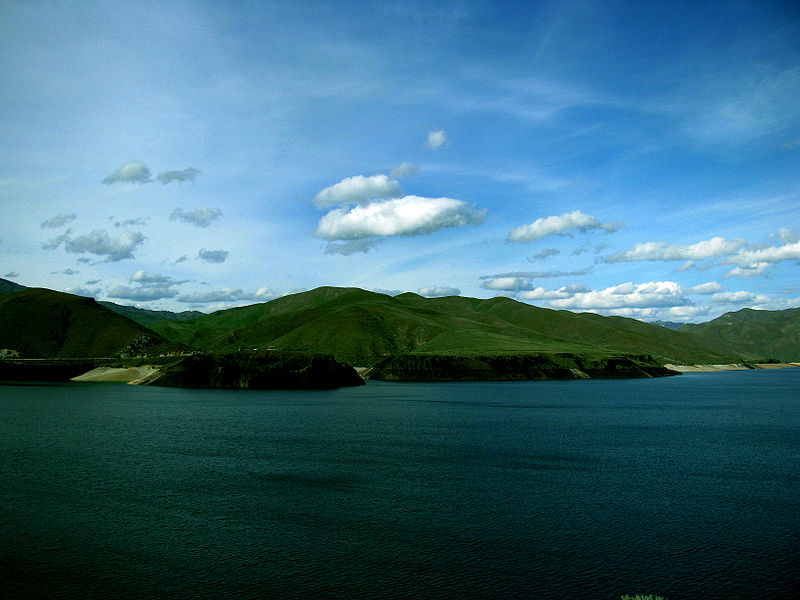
Lucky Peak Reservoir by Boise, Idaho.  Photo by Karthik Chinnathambi 

(Side track:  I’m still going to write about the first influence on our fear of death as I promised in the last post, but something came up and I wanted to write about it before I forgot. Editor.)  

Ever had one of those moments when the blinders peel back and you suddenly look at the world around you like it’s the first time you ever had eyes?

I had one yesterday.  We were out for our second adventure with the kayaks and, in spite of every reason for it not to, everything felt perfect.  The weather was supposed to be overcast, windy, and cold.  Water levels are low so the part of the reservoir where we’d initially planned to paddle was high and dry.  We got started late and then the scramble for an alternate place to launch made us even later.  And the launch site we did eventually find involved an awkward climb down to the water and broken glass on the shore to boot.

But somehow, none of it got to us.  We didn’t care.  Not because we were trying to stay positive or anything, but because that’s just how we woke up.  We were excited to hit the water again whatever the circumstances, so we brought extra layers of warm clothing, stayed flexible, stepped gingerly, and eventually found ourselves paddling along under much better conditions than we’d expected.  We were gazing up at sunshine and basalt cliffs, green mountainsides covered with wild, black-eyed Susans, and the sweet scent of blooming bitterbrush on a very, very mild breeze.

Turns out the Weather Man was wrong.  Go figure.

Towards the end of a long, lovely paddle we found ourselves a little way up the river that feeds the reservoir, and we finally beached near a grassy meadow to pee.  (Interesting activity in a wetsuit, BTW.)  It was an amazing spot, secluded and silent, surrounded by steep hillsides covered with Ponderosa pine and jutting rock spires.  Once we’d relieved ourselves we just stood there in the middle of the meadow staring, breathing in the heavy scent of pine, watching cumulus clouds blow across the narrow strip of sky above us while a bald eagle flew in and out of it’s nest in a towering, old growth pine.  It was something to behold.  It truly was.

And then, because I was so damn moved by it all, I started to sing, although it wasn’t even a song really.  Just a melody and some made-up sounds because I didn’t know a real song with words that came anywhere near doing justice to the place.  Maybe a hymn could have done it, but I didn’t know any.  Or better yet, a song from the Shoshone Paiute people who were on this land first and took better care of it, but I didn’t know any of those either.  So I made up my own half-song/half-prayer kind of thing, something that sounded more or less like how I felt, and while I was singing it everything around us seemed to get very quiet.  Kinda eerie.

But then I ran out of song so I stopped, and it was just a few seconds afterward that it happened.  That moment I mentioned earlier.  The one where I fell into enormity.

Everything sounded unnaturally still, the way things always do when you stop making noise in a really silent place.  I watched as the last of my song settled down to the grass like an old leaf falling, or a layer of dust.

And then, right after that, the wind started.

We heard it first like a low, sweet note that seemed to come from everywhere all at once, and when I looked up into the branches of a Ponderosa pine standing nearby, I suddenly remembered that what I was hearing was the sound air makes when it moves gently through pine needles.  It hit me in a flash; the mechanism of that sound, the wind through needles, was the exact same mechanism at play when I was singing.  It was the same air moving over my vocal cords and, coming out of left field the way it did, the thought kind of stunned me.  I felt a sudden and surprisingly profound kinship with that tree, a sense of shared beauty that instantly dwarfed my usual identity as a human being.

Please understand, it’s not that I didn’t know the facts before.  Of course I did.  I’ve heard the wind blowing through pines all my life and I learned the mechanics of sound in elementary school.  But that prior knowledge must have only penetrated as far as my head because I never felt the tactile, gut-level sense of sameness before, of what this tree and I were both doing.  Somehow, I’d always thought that because I was a human being, my sounds were different.  Higher.  I was singing, whereas the trees were just making noise.  It was a shock to suddenly realize that I was just making noise, too.  It was only because it was my noise that I knew it meant something.

Then the wind swelled through the canyon, catching the leaves of a copse of young cottonwood trees, making a higher, rustling sound that worked in exquisite counterpoint to the sweet note of the pines.  I felt my heart swell with it, too, and then noticed all the birdsong kicking up, various honks and calls and peeps and cries, and those sounds struck me as a kind of staccato punctation to the deeper melody laid down by the trees.  And after that…well…I pretty much just floated away in slack-jawed wonder, lost in the ebb and flow of the wind and water and the unearthly music they were making.  I was fighting back tears and retained just enough awareness of human world protocols to turn my face away from the hubster in embarrassment.  But other than that I fell deep and hard into another world that was a whole lot bigger.

I don’t know.  Standing there listening to the rich, tenor sound of wind through pines…for all the world like the french horn section at a premier symphony orchestra…I guess I finally just fell out of my head.  The sounds flowing through the canyon turned out to be the very song I’d been trying so hard to sing moments before, only times a thousand.  No.  A million.  It was like they’d all been standing around…the trees, the birds, the mountains, the wind…quietly amused, listening to me struggle to find the right music.  And then, when I couldn’t, they stepped in to play it for me.

It was such a gift, and I think I started crying because I felt…just a little bit…like I didn’t really deserve it.  Like there I’d been standing, subconsciously believing that I was all that.  More evolved than any of them, with a song that was more complex and meaningful because I was human.

Fortunately, none of them seemed to care.  They just circled me up and sang me into their bigger world anyway, and I got to realize where I was wrong without feeling shamed for it.  Which actually, when you think about it, is quite a trick.  I wonder if I could learn how to do that?

This canyon is actually in China, but it sure FELT like this.

copyright Dia Osborn 2012

Five Major Influences That Help Determine Our Acceptance Or Fear Of Dying and Death

Vitruvian Macrocosm

Anyone who’s been following this blog for a while knows that I don’t believe dying and death need to look as terrifying, crippling, or hopeless as they’re so often portrayed in American media and culture.  (Dying and death are two completely different things by the way. I wrote about the difference in the post Dying Is Still Alive a while back but it’s important enough to mention again here.)  In the U.S. we live in a profoundly death-averse culture that has not only stripped out most of the beauty, grace, and strength involved, it’s taken the innate sadness, loss, and suffering of the dying process and blown them up a hundred times bigger than they already were.

Which is a common function of denial.

I’m deeply concerned by the pervasiveness of this bloated kind of fear.  Partly because of the driving role it plays in the unsustainable costs of our health care system, but more because of how much harm it does to people in their everyday lives, a harm that a lot of people don’t even realize is there.  Living with the kind of chronic, low grade terror that comes when one doubts they’ll be able to handle dying when it arrives, is very hard on a person’s basic sense of security in life.  It’s like trying to enjoy a journey down a magnificent river when you know there’s a Class 5 rapids up ahead somewhere (nobody knows the exact location) that’s gonna beat the shit out of you when you get there because you lack the knowledge and skills to navigate it successfully.  Under those circumstances who can relax for very long?

Part of what I’ve wanted to do with this blog is to try and counter some of the negative effects of this pervasive, cultural aversion we have.  To try and rebuild…by talking about the particulars of dying in a normal, unafraid kind of way…some awareness of, and confidence in, the native abilities we were all born with that help when the time comes.  It’s never been my intention to try and eliminate the fear of dying completely because, frankly, I don’t think that’s wise.  Some fear of dying is actually helpful and necessary if we plan to survive for very long as a species.

But I do want to try and ease some of the excess, buried terror I so often glimpse in the back of people’s eyes, to see if I can’t offer something that might help shrink that part of it back down to a size they can live with.  Happily.  Safely.  Confidently.  With an abundance of hope and optimism about their own dying time, whenever it comes.

Pipe dream?  I honestly don’t think so.  There are some practical steps people can take to ease their fear, if they ever want to.  What I’d like to do with the next few posts is talk about five of the things that have a big influence on whether a person is more likely to accept or fear dying, and then identify which ones we have some control over, and what we can do to try and change them if need be.

Five Major Influences That Determine Whether We Accept or Fear Dying and Death:

Influence Number One:  The quality of our first exposures to dying and death.  This includes things like, a) How old we were when we first encountered it, b) How old the person dying was when we lost them, c) How close our relationship was with the person dying, and d) The nature and graphic details of the dying and/or deaths that we witnessed.

Influence Number Two: The attitude towards dying and death of those who taught us about it.  If they were afraid of it, we probably learned to fear it, too.  If they couldn’t, wouldn’t, or didn’t know how to talk about it, we probably learned that it’s a taboo topic to be feared and avoided.  If they were unfamiliar with, but curious about it, we were more likely to feel safe thinking about it and exploring it ourselves.  And if they were familiar and at peace with it, then chances are higher that we’d become familiar with it and learn to accept it, too.

Influence Number Three: How much and what kind of knowledge we have about the details of dying and death.  The less we know about it, the greater the likelihood of fear due to the unknown factor.  However, partial knowledge can be even worse. If we know a lot about the difficult aspects of dying but nothing about the beautiful side, there’s likely to be some additional irrational terror on top of our fear of the remaining unknown.  But if we know both the difficult and beautiful details about it, we’re far more likely to harness a courageous view of dying, as well as make a plan for navigating our own when the time comes.

Influence Number Four:  Our level of practical familiarity with dying and death.  I’m talking about hands-on, in-the-room experience here as versus just philosophical knowledge.  An increased familiarity with, and tolerance of, the nitty gritty, physical details involved is usually helpful where easing fear is concerned.  But only as long as the quality of the dying and death being experienced is good.  When the dying process swings the other way and is out of control, hopeless, violent, or otherwise horrible, then it’s more likely to just confirm our worst fears.  A bad death is not a great situation for novices, but of course sometimes that just can’t be helped.  See Number One above.

Influence Number Five:  What meaning we assign to dying and death.  This influence is perhaps the greatest of them all.  The meanings we weave are completely unique to each person and will usually be a product of the accumulated experience from the previous four influences.  It’s important to remember that this one is constantly evolving, and that it can (and probably will) swing back and forth between a negative and positive view over time.  It’s very heavily influenced by the quality of the deaths it’s exposed to (including movie deaths, news stories of deaths, etc.) The greater the frequency of good deaths that we hear about, witness, or participate in, the more positive our meaning about death is likely to become.  And vice versa.  I believe a person’s aggregate exposure to good deaths vs. bad deaths is the strongest indicator of whether a person will view dying and death in a positive or negative light.  I believe this exposure is an even stronger indicator than a person’s religious or philosophical beliefs.

(This is why I feel that striving for a good death might almost be considered a social responsibility.  Not only because it’s absolutely in our own best interests to die a good death, but because the legacy of a bad death is so powerful and lingering that it can sometimes harm, cripple, or even destroy the individual lives left in its wake.  I’ve seen the influence of both good and bad deaths first hand and I assure you, the difference for survivors is profound.)

In the next post I’d like to discuss how our early exposure to dying and death plays a big role in shaping our view (for better or worse), but how a subsequent brush can shift or change it again.  I’ll share a few stories that I think might be interesting.

copyright Dia Osborn 2012

Dead Bodies Need Love, Too

…only I think more for our sake than theirs. 

In the last week I had two different friends tell me stories about the death of a close family member and the extraordinary experience they had with the body afterwards.  In both cases the body was handled in a way that’s unusual by American standards, yet both women told me (with deep conviction) that it made all the difference in helping them cope with the loss.

The first is a friend who’s older brother died last year of a sudden heart attack in his early sixties.  He lived and died in a different kind of community in the midwest where a lot of people practice a spiritual discipline with deep roots in the Indian Vedic tradition. Naturally, his cremation was attended with some of the chanting and ritual derived from that part of the world.  It involved an open casket viewing in a small room within the crematorium following the funeral itself.

The ceremony was beautiful, heart wrenching, and mesmerizing to watch.  My friend had a small video that was given to family members, and she shared it with me.

Only the most intimate friends and family members were allowed to attend.  Once everyone was seated a woman, who’d evidently spent a number of years in India learning how to do it, gave a brief explanation of the ceremony and then began singing what had to be one of the most beautiful, soothing, dynamic songs I’ve ever heard.  The words were in Sanskrit so I couldn’t understand any of it, but the melody, repetition, and deep resonance of the woman’s voice was like being cradled in strong arms.

All of the (many, many, many) flowers from the funeral had been brought into the room and two women were busy in a corner stripping all the petals and placing them into a basket near the head of the casket.  As the main woman sang that unearthly song, everyone in the room stood up and began to file past the body in a circle, picking up a handful of petals out of the basket each time they passed and sprinkling them over him as they whispered their final good-byes.  

At first I was just struck by the surprising beauty of the whole idea.  But then, as I watched his white face…his entire body…. vanishing beneath the deepening layers of soft, tender flower petals, I got it.  How much kinder and gentler this was, how much truer to both the profound love and profound loss of the people in that room, to bury him in flowers rather than dirt.  It took my breath away.

His mother nearly collapsed her first time around, under the unbearable weight of her grief.  But it seemed to get easier for her after that.  My friend told me that more than anyone else, the ceremony helped her mother come to grips with the loss.  Neither Friend nor any of her other family members actually lived in that community.  They’d all dropped their lives to travel from across the country, stunned and stricken.  Friend confided that initially she, herself, was reluctant to view his body, to see him like that.  She wanted to remember him as he was.  But then somehow as she watched him disappear beneath the flowers, the pain and shock of his death was transformed into something else.  Something more manageable.  Closure, she said, and her eyes looked unutterably grateful and sad.

Eventually, they all went down to the furnace and, together, rolled his body in.  But by then they were ready to let him go…which I realized was the ceremony’s intended gift.

My other friend’s loss happened at the other extreme.  She lost her elderly mother after a decade of slow, horrendous decline.  In fact, her slide had taken so long that when she finally…finally!…began actively dying it was hard to get her doctor to believe it.  In the end she was only transferred over to hospice care a scant three days before she died and this made my other friend sad.  She would have liked the extra time necessary for everyone to gather and say their good-byes, to turn their familial head downward toward the birthing canal, preparing for their transition into the next world without her.

Then she told me how they didn’t call the funeral home right away, to come and collect her mother’s body afterwards.  Instead they kept her at home for a night so she and her daughter could sleep beside the bed, one on each side, loving it through the first long, dark hours of its new state.  They called in the morning and watched her taken away in the brighter light of day.  My friend shared that, by then, she was ready to let her go and I recognized that closure thing again.  That elusive, emotional line we all have to track down inside ourselves and cross before we get to begin our ascent back up the other side.

In both these stories I was struck by the double loss we experience with the death of a loved one…how we lose both their them-ness AND their body…and how important it can be to separate the two and honor them both.  Not only as a final gesture of respect for our departed, but for our own healing as well.

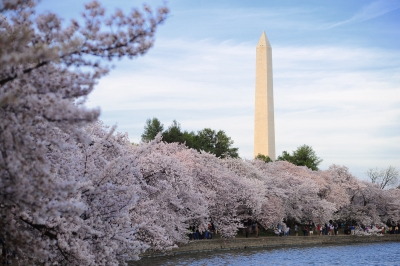
first photograph: Cherry Blossom at Washington Memorial by porbital

second photograph: A Study in Pink by Maggie Smith

copyright Dia Osborn 2012

Poll: Immortality. If you could, would you?

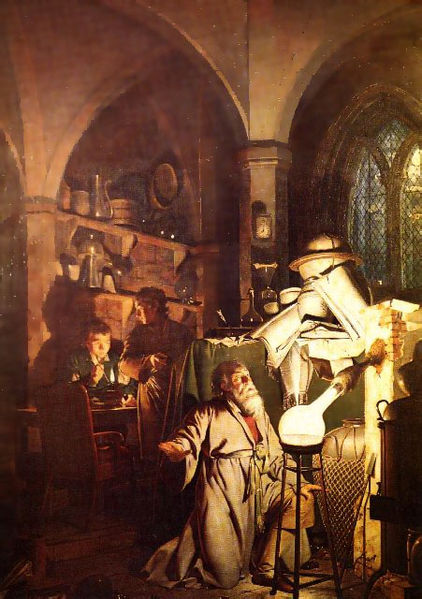
The Alchemist In Search of the Philosopher’s Stone

This past weekend a friend and I had a brief discussion about the pursuit of immortality down through the ages (Fountain of Youth, Holy Grail, alchemy, etc.) at the conclusion of which we both exclaimed that, even if living forever someday became possible, we wouldn’t want it.  Passionately.  In fact, the idea of living forever (or even a lot, LOT longer) was kind of repulsive.

My personal aversion stems from two separate issues.  The first is the fact that life is riddled with tough spots, occasionally becoming harsh to the point of undesirability.  The cumulative injury of those traumas over not just an average lifespan, but an eternity, would have to become unendurable at some point.

Pooh on that.

My second objection is that seizing that much life for myself feels unethical.  We live in a finite universe full of limited resources that can only support so many biologically functioning human beings.  So if I don’t die, then a fair number of future children won’t be born.  I would, for all intents and purposes, be stealing their lives in order to lengthen my own and…well…isn’t that a vampire thing?

Ick.

Although…the question of ethics and immortality gives rise to all kinds of possible plot scenarios for a novel or sic-fi movie.  Which is pretty fun.  Here’s one:

Opening scene: New York City, 150 years in the future.  A mysterious wave of miscarriages has been sweeping across the world for fifteen years and the pace is increasing geometrically, potentially threatening the future of the human race.  A concerned official from the World Health Organization comes knocking at the door of two, world-reknowned, research scientists who specialize in fertility studies.  They’re married and (surprise, surprise) she’s nine weeks pregnant.  The WHO official finds that enrolling them to look for a solution is pretty easy.

Break to next scene:  New York City, present day.  A small group of Swedish scientists reveal a startling anti-aging discovery to a secret committee of the World Economic Forum.  They propose The Methuselah Project, a campaign to lengthen the human life-span by a couple thousand years, and the proposal is instantly and enthusiastically adopted.  (It begins, of course, with the inoculation of power brokers, mega-wealthy, and top government officials.)  Over the next hundred years, trials are run and all of the now-virtually-immortal insiders on the project consolidate their power over just about everything.  Things are finally ready for the second stage where inoculation will be offered to pre-selected people at a hefty price.

Back to the future:  As the two research scientists probe deeper into the growing problem, they uncover a secret network of wealthy, powerful, reclusive people who all seem to be unusually old, although their pasts are cloaked in mystery.  As they start to question individual members of the network, all the usual, life-threatening car, plane, and other accidents quickly begin to happen to them.  The couple survive everything thrown at them and eventually track down one of the original Swedish scientists who now works among the Inuit people in a remote region of the Canadian Northwest Territories.  He reveals that he’s actually 193 years old, and then explains how the original vision of The Methuselah Project was corrupted for the purpose of establishing a two-tier world order; those who live for thousands of years served by those who die by their sixties.  Part of the project involves drastically reducing the world population to a number more easily controlled, and the tool employed is a simple pennyroyal compound leaked into the water supplies of the world (all owned and controlled by Immortals BTW) to induce widespread miscarriages.

Conclusion: This will depend on whether the movie is a feel-gooder or a horror film.

Feel-gooder conclusion: the scientist couple manage to get the word out to the media and expose the scheme to the world, after which all the people rise en-masse to destroy the Immortals and return the world to it’s natural order.

or…

The scientist couple re-engineer the anti-aging serum to bestow not only longevity but wisdom.  The evil Immortals are transformed into kind, benevolent, enlightened teachers who then work to change the world into a better place for everyone.  All are eventually inoculated with the new serum and the scientist couple’s baby grows up to be President of the New World Utopia.  (This ending could be a tough sell.)

or…

The horror film: the scientist-pair are killed before they can expose the plot, but not before their own baby is born and taken away to be raised by an Immortal couple who can’t have children of their own.

or….

The bad Immortals are killed after which the original Methuselah Project is reinstated and everyone in the world is inoculated with the anti-aging serum.  The widespread miscarriages are then replaced by a new set of sterilization, abortion, and lottery-pregnancy laws.  (This movie obviously gives rise to the sequel where desperate women start becoming pregnant illegally only to be hunted down and treated badly when they’re caught.  Or has that movie already been made?  It sounds familiar.)

ANYWAY!!!  This was fun but I really have to get on with my day now.  I’m curious though.  How many of you are intrigued by the idea of immortality (as versus just-not-dying, which is a completely different issue.)  Here’s a quick poll to get an idea of where people stand on the subject and, if you need more room for nuance, by all means feel free to use the comment section.

Last Week’s Poll and Do Children Know When They’re Dying?

First of all, the answer to the question posed in the previous post’s poll is Shit.  Feels a little anti-climactic now, no?  Although I assure you, at the time when I first spoke it aloud, the word was volcanic.  As the most forbidden term in my universe, lettin’ her rip like that tore a hole in the time/space continuum of my life that has never entirely closed again.

Such is the power of language.

And now, for a dramatic subject change (place hands firmly on each side and hold onto heads please) I ran across an interesting article after Googling the search term “do children know when they’re going to die.”  The title of the piece is When A Child Is Dying and it’s written by a couple of M.D.’s working in children’s palliative care over at the Children’s Hospital of Wisconsin.

As one would expect with this topic, it’s a powerful, heartbreaking, and inspiring article, discussing both the keen awareness children tend to have of what’s really going on, as well as the higher stakes and corresponding desperation that so often comes to bear on adult decision making in these situations.  Obviously, the two doctors who wrote the article are strong advocates for delivering better palliative care in cases where children are at end-stage, but evidently it can be an uphill battle as quality-of-life issues for the child vie with the powerful parental instinct to fight for life.

Read it if you dare.  It highlights yet another area where 1) our collective commitment to denial about death can wreak some serious havoc if we don’t get out in front of it early, and 2) the huge and beautiful difference it can make for those we love most if we only screw up our courage and face it anyway.

One of the most helpful insights I gained while working with hospice had to do with a rather large, unexamined assumption I’d been laboring under most of my life; namely, that dying = something going wrong.  (Not surprising considering that most of our medical language reinforces the perspective.  Heart failure.  Organ collapse.  Failure to thrive.  Losing the battle.  Disease is the enemy.  War on cancer, etc.)

However, after hanging around with the dying for a while and studying the dynamics first hand, a new and startling perspective presented itself and knocked my world off-tilt.  I’m not entirely sure how it happened but as I watched one person after another…one circle of loved ones after another…migrate across the sweeping terrain of the dying season, the basic, cyclical nature of life began to show itself more clearly, and as it did the word “wrong” was gradually replaced with something else.

What was happening to these people wasn’t wrong so much as it was just time.  Their time.  Like someday it will be my time.  And your time.  And everyone’s time.  (And every thing’s time for that matter.  Nothing lasts forever in a physical world.)   And as this new awareness grew on me I turned to the obvious, bewildering question: why in the world had I been believing, however subconsciously, that people shouldn’t die?  Or that there was something wrong happening when they did?  Where did that expectation come from anyway?

I quickly realized it’s because of how it feels–because of the huge losses involved and the devastating hole it tends to leave behind.  Nine times out of ten, dying is a seriously hard physiological process to go through, and trying to recover after losing someone you love isn’t much better.  The whole thing feels bad.  Really bad.  And because nobody wants to feel that way, it’s easy to mistake the badness of the feeling for something going wrong.

I admit, it sounds really strange to say that Yes, absolutely, dying is horrible and undignified and primal and full of suffering and loss and destruction…but hey!  At least nothing’s going wrong.  

It sounds insane and yet it’s true.  Life is so weird sometimes.

But even accepting all that, it feels most wrong when a child dies.  It just does.  That magnitude of loss violates every screaming, primal, dangerous, protective, cornered instinct lacing our genes and honestly, I’m not sure if a rational perspective has any value at that point.  Does it?  I’m pretty sure I’d rip the throat out of anyone who tried to tell me nothing was going wrong if it was my child dying.

And yet…and yet.  That doesn’t mean it’s not still true.  Hmmm.  Y’know, I think ultimately…if I was going through the loss of a child myself…I would rather be surrounded by people who accepted the inevitability of dying, were no longer afraid of it, and had learned how to navigate it gracefully.  It seems like they’d be the ones most likely to offer the compassion, strength, and acceptance needed, rather than feeling conflicted, not knowing what to do, and turning their faces away in horror or outrage instead.

I guess that’s why stories like the one in When A Child Is Dying move me the way they do.  I LOVE that these people are out there; the doctors and nurses and volunteers and social workers and chaplains and counselors and all the other staff working in palliative and hospice care, all trying to oh-so-gingerly raise our awareness in order to try and lift some of our burden.  I’m grateful that they continue to wade willingly and skillfully into the darker waters of our lives every day.

They know that dying can be something better than most people currently believe.

copyright Dia Osborn 2012