Part IV: Advance Directives: Will They Be There When We Need ‘Em?

Continued from Part III: Advance Directives: Forms and Where To Find Them.

If you’ve followed my little journey through the advance directive maze, you might be feeling a little overwhelmed by now.  Linda over at Rangewriter mentioned in a comment that she is.  I admit, I am.  This stuff is even more confusing and uncoordinated than I thought.  (But I’m also relieved.  At least now I know why I’ve procrastinated for eleven years.)

I felt a twinge of resentment this morning because it doesn’t seem like completing an advance directive should be this hard.  But then it hit me that one of the reasons it’s so complicated is because we’re living (and dying) in the medical wild, wild west…a vast unexplored, exciting territory with new discoveries happening every day.
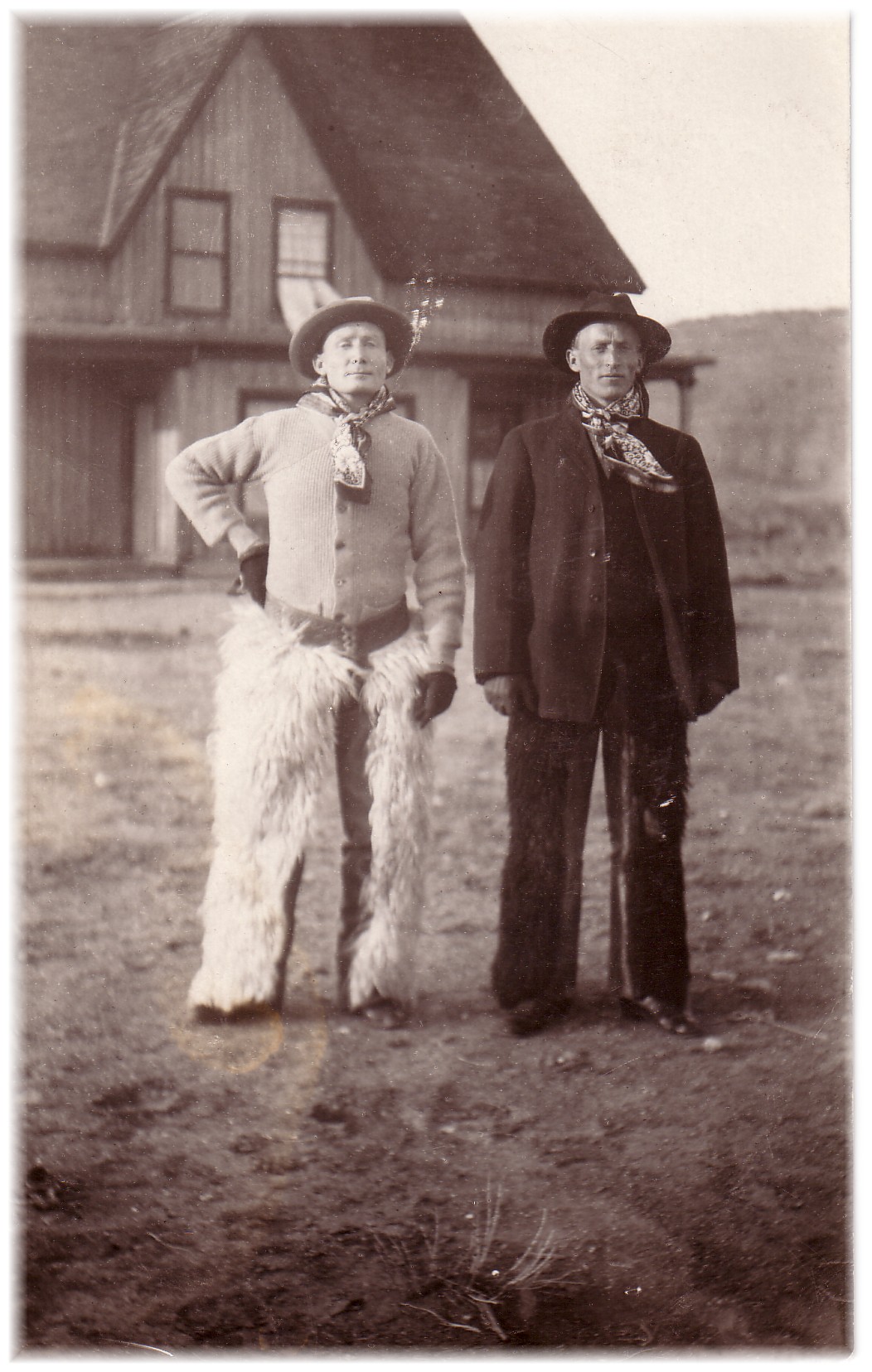
A couple of pioneering ancestors of mine.

So of course the learning curve is steep.  Pioneering always involves hard work.  But it also means there aren’t any right or wrong choices yet. Just lots and lots of new ones.

The other reason this is so hard is because, to figure out what I want, I first have to know who I am, what I value most, what I (suspect I) can and can’t bear, and what kind of legacy I want to leave behind for those I love.  Then…I have to put it all into words.  That’s some heavy lifting.  Especially in a society that’s as committed to never, ever, ever thinking about this stuff as ours is.  (Talk about starting with an understanding deficit.)

Enough.  Now that I’ve identified the hurdles, onward and upward over them.

ONLINE REGISTRIES FOR ADVANCE DIRECTIVES

In the last post I researched some of the advance directive forms we can choose from.  The next step is figuring out the ideal way to get our completed forms into the hands of those who will need them.  There are a few ways to do this:

1)  Make hard copies and hand them out.

2)  File them with an online registry, and

3)  Some blend of the above two.

In figuring out which way is best for us, here are some things we need to consider:

1)  Privacy issues.  This information is intimate stuff.  Who/how many do we really want to share it with?

2)  Security issues.  Who can we trust with this information?

3)  Confusion issues.  We need to update this information once a year or when it changes.  How do we make sure every copy out there is also updated?

4)  Accessibility issues.  How can we best ensure that the people who need this information will have it if necessary?

Hard Copies Vs. Online Registries

Privacy and Security:  Everyone’s going to have their own preferences for privacy concerning their advance directive.  Personally, while I want my specific personal information protected, I’d just as soon as many people as possible know what my wishes are.  I feel like the more people who know, the less likely it is that mistaken choices could be made.

In fact, I’m planning to include pertinent information from my advance directive in February’s posts, partly as a possible example of one way to do it, partly to stimulate some conversation, but mostly just to get the word out.  I feel pretty strongly that this is an area where secrecy is more likely to harm than help me.

Now, comparing hard copies to online registries in terms of privacy and security:  hard copies let us control how many copies and who gets them.  We can pick only the people we trust to take care of them, so there will be less likelihood of “leaks.”  These will also be the people we already have relationships with, and therefore people whom it will be easiest (and most necessary) to have ongoing conversations with.

On the other hand, every online registry has security protocols in place. (I suspect that private registries might provide better security than state registries at this point.  The current attempts to develop Health Information Exchanges are evidently creating some chaos.)

Confusion:  On the one hand, it’s harder to update hard copies, much less all the hard copies out there, as often as they might need it.  However, putting an advance directive online with a state registry now could also lead to confusion.  (Chaos link again.)  I’m rethinking my original intention to use our state registry for this reason.  At least for now.

Accessibility:  Hard copies have definite limits in the accessibility category.  Even if we’ve handed out copies to the right people, will they remember to pull them out of the file and bring them along to the hospital when they’re actually needed?  Online access promises to make our documents far more accessible in that hour of need…unless of course the computers are down.  (I don’t consider that risk unimaginable…and evidently neither do any of the online registries.  They all have disclaimers to sign stating that they’re not responsible in such an event.)

So, there are pros and cons to both hard copies and online registries, which is why I think we personally will use a blend of the two.  We’ll get a limited number of hard copies into the hands of kids and parents, and then register our documents with one of the private online registries where our other loved ones will be able to view them with the use of a private link.

Here are the web links for three different online registry services (you’re gonna have to do a little digging on your own to find your state’s registry, if that applies):

State online registries:  Only a few states have these so far.  Here’s the most recent list I could find from FierceHealthIT. 

Several states have created online advance directive registries with the intent of connecting them to statewide health information exchanges (HIEs), according to an article in American Medical News. Recently, Virginia became the latest state to take this action, joining Idaho, Montana, and West Virginia. Washington state also planned to start an advance directive registry, but had to drop that plan because of budget cuts.

U.S. Living Will Registry: Provides access to documents 24 hours per day, anywhere in the world.  Also provides a wallet ID card, labels to attach to drivers license and insurance cards, and yearly reminders to update your directive if necessary.  Also provides document access to medical personnel (of course) as well as online personal  access to registrants for viewing and updating documents.  Any advance directive form is compatible with this registry.  There are fees.

(The U.S. Living Will Registry is also planning to coordinate with the state registries of Vermont and Washington.)

America Living Will Registry:  Provides access to documents 24 hours per day, anywhere in the world.  Provides an ID card with a toll-free emergency number and web address.  Emergency medical personnel may obtain copies of your directives either on-line or via fax.   Any advance directive form is compatible with this registry, including Canadian.  There are fees.

MyDirectives.com:  Provides both medical and personal access to documents 24 hours per day, anywhere in the world.  They don’t provide an ID card to protect registrants’ security.  As I mentioned in an earlier post, MyDirectives.com is a new approach that provides a completely web-based form and registration process which promises to be a lot more user-friendly than anything so far.  They provide their own advance directive to fill out with helpful prompts and conversation starters.  Other advance directive forms cannot be used with this registry.  Their service is free.

Well, today’s the last day of January so I guess this concludes the research leg of the journey.  Time to roll up our sleeves and take the first real step.

Next post: Part V:  Advance Directives: Best To Wish Carefully With A Genie.

copyright Dia Osborn 2011

Quick Note: Another Great Resource for Advance Directives

New resource! Thanks to Loretta over at Chrysalis who left the link in a comment on my last post about Forms and Where To Find Them.

Turns out something like a National Advance Directive Month already exists.  Only it’s a day not a month, and it’s called National Healthcare Decision Day.  You can find out more about it here.  The site is worthy of a look as it has a more comprehensive list of advance directive forms and websites than the one I compiled.  (Including a Psychiatric Advance Directive designed specifically for people dealing with a mental illness. I know, I know.  Who wants more choices!?  But there it is.)

BTW, Loretta has been working with the dying for about twenty-five years and does a great job describing some of the gifts that are also available-but-usually-overlooked at the end of life.  If you’ve got the time and interest, her website is worth a look, too.

Part III: Advance Directives: Forms and Where to Find Them

Research!

Continued from Part II: What is an Advance Directive? (Or Why I’ve Been So Confused.)

In this post I plan to go over some of the different kinds of advance directive forms that are out there, a few different options for filing them, and some of the pros and cons of each. However, before I go into the details, here are a couple insights I’ve gained during my research that help keep the the whole idea of advance directives in perspective:

1)  The majority of end-of-life decisions actually take place as a collaboration between doctor, patient, and loved ones without the use of advance care planning tools.  In other words, most of the time doctors, patients and families will work it out themselves, without the need for legal documents or government agencies.  Advance directives should be thought of more as an insurance policy against worst case scenarios, rather than the primary tool to be used for communicating with loved ones and doctors.

The situations that spring to mind where advance directives are most likely to come in handy are: 1) in accidents or other emergency situations where loved ones can’t be immediately located, 2) in cases involving younger people or the disabled, 3) in situations where the elderly don’t have any close family or friends to look after them, 4) when family is confused or in disagreement about our wishes, and 5) in nursing homes and assisted living facilities where staff members can play a role in immediate medical decisions.

Also, it bears noting there are a few sticky situations where state laws are more likely to come into play.  Assisted suicide is at top of the list of course, but a couple of states are also nervous about withholding/withdrawing artificial hydration and nutrition.  Here in Idaho for instance, the legislature recently passed a bill stating that some medical providers do not have to provide any kind of end-of-life care that violates their conscience, and it’s created a fair degree of uneasiness amongst our elders, let me tell you.  However, these cases are the exception, not the rule.  Choice at the end of life is usually an area where official agencies are loathe to meddle in family affairs.

2)  The legal forms, no matter how well written, legally binding, or universally available, aren’t of much use without having accompanying conversations with loved ones and doctors.  The best legal form in the world will never, ever, ever be an adequate substitute for talking about our wishes with our loved ones and doctors.  Ever.

I’m surprised at the number of people I’m talking to who filled out forms once upon time, somewhere, somehow, but are now not sure where they are or even what they say.  I think I understand how it happened.  Early on it was thought that just filling out the legal forms was enough.  If it’s stated and signed, then they have to, right?  Turns out not so much. Because of the complex, living, breathing, constantly changing nature of…well…life itself, we’ve learned that a lot of additional communication is actually required.  That’s where conversations with our medical proxies in particular come in.

NOTE TO SELF:  When choosing who will have my medical power of attorney, don’t just write their name down on the form and file it in a drawer.  Let them know: 1) that I picked them and 2) what I want them to do. Otherwise, they’ll be as clueless as everyone else and look foolish into the bargain.

Really.  Let’s all agree not do that to someone we love, okay?

NOW ONTO THE ADVANCE DIRECTIVES FORMS.

1)  The State Forms. 

Pros:  State forms are legally recognized by their own state and easily accessible.  In addition, here in Idaho, if we file our advanced directive with the online state registry it will be easily accessible to state-wide medical providers in an emergency because that’s the first place they’ll look for it here.  There’s are also online national registries where these forms can be registered.  (I’ll talk about registries in the next post.)

Cons:  Since the hubster travels a lot, accessibility out of state is a bigger issue for him.  We would definitely need to register him on a national database.  And if his choices include a treatment/refusal of treatment that is controversial in another state, his advanced directive is less likely to be respected. (Although that’s true for any A.D.)  Also, state forms in general tend to be less user-friendly, written more to address the concerns of the political, medical, and legal communities than the patients they’re supposed to serve.  I know on our Idaho forms, we would definitely have to write any additional thoughts and wishes we have separately and then attach them to the file.

WHERE TO FIND THEM:  There are 51 of these suckers out there. (Yep. The District of Columbia has one, too.)  A great place to find your state form is at Caring Connections, a program of the National Hospice and Palliative Care Organization (NHPCO).  When I went to the website myself, along with our Idaho forms I also found helpful tips on how to fill them out as well as a link to our state registry.  The rest of the website is loaded with valuable information and resource links if you want to look around.

2)  FIVE WISHES by Aging With Dignity

This is probably the best known, privately developed advance directive.  It’s most famous for having been endorsed by Mother Teresa of Calcutta.

Pros:  Five Wishes was an early, brave effort at creating an advance directive geared towards addressing what matters to the individual rather than the state, and it provides questions for personal and spiritual issues as well as medical ones.  I actually used Five Wishes as a guide when I had a conversation with my father and his wife about their end-of-life choices a few years back and it was enormously helpful.  We all learned a lot about each other and ourselves.  It currently “substantially meets” the statutory requirements of 42 states including Idaho, so this form is another option for us.  The form is viewable online and is available in 26 languages.  They also offer a pediatric form.

Cons:  This form doesn’t meet the statutory requirements of eight states.  We also discussed this one at a hospice inservice once (eight years ago now) and the general consensus was that it would probably be best to use Five Wishes to communicate more nuanced choices with loved ones, and then fill out the state forms to satisfy the legal entities.  The form costs $5.00 but, as I mentioned above, it’s viewable online so you can look it over before you have to decide.  Also, the proceeds go to support Aging with Dignity, a non-profit (and very worthy) organization.

Editor’s note:  Paul Malley from Aging With Dignity was kind enough to contact me with important information regarding the above-mentioned recalcitrant eight states:

You mention in the pro-con section that Five Wishes does not meet the legal requirements of 8 states, which is true. I should point out that these are states that require its residents to jump through additional hoops, such as using a specific form, a mandatory disclosure notice, etc. We have many users in non-Five Wishes states and we know of no health care provider anywhere who has refused to honor Five Wishes. You should also know, if you don’t, that the federal law requires health care providers to honor ANY expression of your wishes.

I would also add that since writing this post I’ve learns things that changed my mind, and I now think Five Wishes would be a better choice than a state’s advanced directive.

I haven’t heard back yet whether or not the Five Wishes form can be registered with one of the online registries.  I’ll update this as soon as I get an answer.

UPDATE:  This form can be used with at least one national online registry.

WHERE TO FIND IT:  the Five Wishes website.

3)  Lifecare Advance Directives

This advance directive was conceived back in 1995 when a loose group of doctors/nurses/lawyers/social workers/chaplains/bioethicists/lay people started researching what, if anything, could truly and best communicate our wishes. The research involved in this project is staggering.  It’s comprehensive with a capital “C”.  Then, once they’d gathered all the information, it was assembled into an advance directive that was test-driven in a sample study.

Pros:  It works. In a study with 1000 subjects it proved more accurate in communicating what people really wanted than any of the other forms available at that time.  Lifecare also provides specific advance directives for active military personnel, citizens of the four U.S. territories, and those in federal prisons, all of whom are subject to slightly different regulations.  There’s an A.D. for those who travel internationally, too. The website also offers a wealth of guides to help in understanding the labyrinth of medical and legal choices out there (for those who love footnotes, prepare to be thrilled) and there’s just nothing else out there that compares in terms of comprehensiveness.  The researcher in me is hopelessly…hopelessly…smitten with this form. They can be downloaded online or ordered in print.  (The print versions are more expensive.)

Cons:  It’s l.o.o.o.o.n.g.  The main form is 30 pages.  It’s also more expensive than any other form.  Each directive and guide is priced separately ranging from $3.99 to $16.99, although the main form that most people would use is $7.99.

Humorous side note: The Should I Use a Shorter Advance Directive? guide alone is 32 pages long with 199 footnotes.  (If you were wondering, their answer is no.)

I haven’t heard back yet whether or not the Lifecare form can be registered with one of the online registries.  I’ll update this as soon as I get an answer.

UPDATE:  This form can be used with at least one national online registry.

4)  The Protective Medical Decisions Document (PMDD) by Patients Rights Council

While some people worry most about late-stage medical overtreatment and the profound, unnecessary, and unwanted indignities it can cause, others are more concerned with the somewhat cavalier attitude toward the value of end-stage life currently making inroads in the general awareness.  I, personally, have seen tragic examples of both dynamics play out in real life and therefore share both concerns. The PMDD is specifically designed for those who are more worried about the latter problem.  It eliminates the living will entirely and offers only a Durable Power of Attorney for Health Care that is limited in one important respect: the “agent may not authorize that you be given a lethal injection or an intentional lethal drug overdose. Further, your agent may not direct that you be denied food or fluids for the purpose of causing your death by starvation or dehydration.”

Pros: This form gives someone who is strongly pro-life additional protection against the possibility of either having life-sustaining treatment withdrawn prematurely or being overdosed against their wishes.  (The latter happens more frequently than I think most people understand.)  There’s a multi-state PMDD as well as state-specific forms for those with specific statutory requirements. This form is free (a donation of $10 is requested but not required.)

Cons:  The PMDD is not available online for either viewing or ordering.  It has to be ordered by phone and delivered snail mail.  Photocopies of this form are not considered legally binding (which actually has some pros, too, see the explanation.) This means it probably wouldn’t work with an online registry, if that was even possible to begin with, which I’m still looking into.

WHERE TO FIND IT:  To obtain a PMDD packet, phone the Patients Rights Council (800-958-5678 or 740-282-3810) between 8:30am and 4:30pm (eastern time).  Be sure to designate which version of the PMDD…Multi-state or AK, AL, CA, CT, DE, FL, HI, IN, MI, MN, MO, NC, ND, NE, NH, NV, OH, OK, OR, SC, TX, VT, WV or WI…you want.  For more information about the PMDD visit the Patients Rights Council website.

5)  MyDirectives.com

MyDirectives.com is brand spanking new (just launched this month) and is a private company’s effort to overcome some of the main hurdles that keep people from completing effective advance directives.

Pros:  They’re a one-stop shop where a person can access and fill out an advance directive, and then file it with an online registry all in one place.  Judging from the informational videos on the site it looks like the A.D. itself is user-friendly and fairly complete but I couldn’t actually access any of the specific sections for a closer look without signing up first.  There’s the unique opportunity to include audio/video recordings with the advance directive, which I think is a particularly nice touch.  The website has a lot of good information (including a section on autopsy choices…I didn’t even know that was necessary.)  Probably the greatest advantage MyDirectives offers is as a central source of information.  The form is simple to fill out and keep updated online (updates are critically important) and then a personal link to the records can be provided to loved ones so they can also view the document and any changes immediately.  The registry is also available to necessary medical providers of course.  And best of all, everything is free to the consumer…the advance directive and the online registry. (the company makes its money on the back end from insurers/government agencies.)  This is a great savings.  The cost of the other two registries I looked at average about $60 for five years.

Cons:  Not only is the website new, so is the whole concept.  There are bound to be some kinks to work out along the way.  Also, since everything is done online, there is no traditional “form” that one can download and fill out by hand.  This creates a significant hurdle for elders and others who lack either computer skills or access.  And as I mentioned, there was no way to preview the document before signing up for the service.  Also, this website is brand exclusive.  You have to use their advance directive which can then only be registered with their online registry.  None of the other advance directives mentioned above will work with MyDirectives.com.

Overall, this concept is absolutely brilliant and, I believe, the wave of the future.  I’m very excited about it.  I’ll be following it to see how the website itself does in practical reality.

WHERE TO FIND IT:  At MyDirectives.com.

So far I’d say that, developmentally speaking, if the whole field of advance directives was computer technology, right now it’s at the stage where we’d just be launching the internet.  Lots and lots of different advance directives out there but very little inter-connectedness.  The good news is I think that’s about to change as tools in this field start becoming more user-friendly, connected, and efficient.

A couple years from now I’m sure I’ll look back at this post and shake my head in wonder.

Enough.  Originally, I was planning to cover online registries in this post, too, but ha ha ha.  This monster is already over 2,000 words.  So that will have to do for now.

Next time:  Part IV:  Advance Directives: Will They Be There When We Need ‘Em?

Break for Laughter: Is There Sex After Death?

image from Wikipedia

And now a small respite from advance directives…which I need.  Here’s a cute joke a friend sent me:

A couple made a deal that whoever died first would come back and inform the other if there is sex after death. 

After a long life together, the husband was the first to die.  True to his word, he made the first contact:

“Marion?  Marion?”

“Is that you, Bob?”

“Yes!  I’ve come back like we agreed.”

“That’s wonderful!  What’s it like?”

“Well, I get up in the morning, have sex, then breakfast and I’m off to the golf course.  While there I have sex again, bathe in the warm sun for a while, then have sex a couple more times.

“After that I have lunch (you’d be proud honey…lots of greens) followed by another romp around the golf course.  Then it’s pretty much sex again for the rest of the afternoon.  I have a little supper followed by more of the golf course.

“Then it’s more sex until late into the night after which I catch some much needed sleep before starting all over again the next day.”

“Oh, Bob…are you in Heaven?”

“No sweetheart.  I’m a rabbit in Saskatchewan.”

I love the play on the wide differences in afterlife beliefs here. There have been quite a few possibilities posited over the ages of course; Hades, ancestral worship, heaven/hell, reincarnation…and nothing at all… to name a tiny handful.

The belief that one can recycle back into other life forms as this joke suggests falls under the general heading of transmigration of the soul, or metempsychosis.  Kind of an interesting idea actually.  One can only imagine that a widespread belief in this idea might inspire a more enlightened stewardship of our natural world.  Self interest is always such a strong motivator.

Enough.  The next post will be about the blizzard of advance directives forms available out there, as promised.

copyright Dia Osborn 2011

Part II: What Is An Advance Directive? (Or Why I’ve Been So Confused.)

Continued from: Part I: February Is Hereby Declared Advance Directive Month.  Join Us!

I had a lot of questions.

As I mentioned in my last post, the hubster and I are finally determined to get this albatross of planning out of our hair.  I know from my years working with hospice how complicated and overwhelming end-of-life scenarios can be and I realize that planning for it beforehand can make all the difference in the world.  So time to get it done.

First, the research:

Question:  WHAT IS AN ADVANCE DIRECTIVE?  Well, it’s even more complicated than I thought.  I’ve identified three different parts to the process so far: There are FORMS, what I call THE LETTER, and then the FOLLOW-UP.

THE FORMS

IN SPIRIT, an advance directive is a way of letting loved ones and medical personnel know what kind of medical treatment you would or wouldn’t want if you were unable to communicate those wishes for yourself.  The idea is to try and avoid confusion, mistakes, and extra suffering for everyone involved in either an emergency or end-of-life situation.

It’s a worthy ideal with almost universal backing.

IN PRACTICE, an advance directive is a set of actual, legal forms to fill out and this is where things start to get very confusing.

Turns out the whole concept of an advance directive is a work in progress.  The idea was originally conceived back in the 1960s as a result of the growing number of nightmarish dying scenarios taking place, but it didn’t start to take off in public awareness until the Patient Self Determination Act of 1990.  There have actually been three generations of advance directive forms developed over the years as our understanding of the need for them has evolved.  Wikipedia has an interesting article on the history, with specific references to the main forms created and what they were designed to address.  Reading it helped me understand why I’ve had so much trouble determining what paperwork we should use.

Basically, there’s a freaking cornucopia of advance directive forms to choose from out there.  Laws governing medical treatment for emergency and end-of-life care are actually generated state by state with a profound lack of coordination at the national level, so even if you fill out your own state’s advance directive, it’s kind of a crap shoot whether it’ll be honored if you get into trouble somewhere else.  Then there’s the other problem that most state directives (crafted by state bureaucrats) are too limited in scope to accomplish what we want them for in the first place.

In an attempt to address the latter issue, there have been even more advance directive forms created by national organizations that are more suited to deal with the subtler nuances involved, and while these other forms do a much better job of allowing us to communicate what we actually want, (and some of them have even been approved by some states) their legal strength has yet to be definitively proved in court. They’ll probably be honored, but there’s no guarantee.  And if you’re asking for any kind of treatment contrary to the state laws where you get into trouble, you’re shit out of luck.

Like I said, this stuff isn’t just scary, it’s confusing.

So what are WE personally going to do? 

Well, we’re going to fill out two kinds of advance directives: 1) our state form to cover our legal butts here at home and, 2) one of the other national forms that will help us better express the complexity of our wishes to our loved ones.  (We haven’t decided yet which one.  Needs more research.)  That second form is also necessary for us because the hubster travels extensively between states and there’s no way he’s going to fill out a separate advance directive for each one.  We’re hopeful that, in the particular states he visits, one of these other forms would almost certainly be respected.

(Panicking yet?  Don’t.  Whatever state you’re in and whatever forms you choose, the most important choice you’ll make is who you pick for your medical proxy; the person who communicates your wishes when you can’t.  Remember, the best paperwork in the world can be missed, misunderstood, and/or disregarded without your proxy there to back it up.  So don’t fixate on the form.  Fixate on the multiple, ongoing conversations you’re going to have with your proxy.)

To conclude this section on forms, the individual documents included in an advance directive can include a mixture of the following:

1)  Living Will* (name your treatments)

2)  Durable Power of Attorney for Health Care* (pick your proxy)

3)  Do Not Resuscitate Order** (please, please don’t)

4)  Choices for organ donation**

5)  POLST** (Physicians orders for life sustaining treatment) in states where it’s available.

*  always

** sometimes

NEXT, THE LETTER.

Even if somebody was to procrastinate and never get around to filling out the legal paperwork, they should at least craft their Letter and give it to their loved ones.  What is The Letter?  At it’s heart it’s something like a profession of faith; a declaration of belief about what makes life valuable to you.  It will lay out what you live for, believe in, and love; the particular things or circumstances that make your life worth living to you.

The medical choices we’re likely to face in catastrophic circumstances are impossible to predict, which makes it difficult to write down instructions for detailed treatment preferences. The purpose of The Letter is to instead provide a set of overarching principles that can help guide our proxy’s decision making.

For instance, one person might write as part of their Letter, I believe that my ability to think and communicate, to interact consciously with the world around me in a meaningful, nourishing way, defines who I am.  It’s what makes my life worthwhile to me.  Another might say I believe that I’m more than just my thoughts, actions, and will, that my life is valuable, sacred, and worth preserving simply because I exist.  While a third person might simply state Hey…if I can still talk and eat Chinese food then hook me up.  In any case, the Letter gives whoever has our medical power of attorney an idea of what’s most important to us, what the unique values and beliefs are that they need to consider when deciding on any given medical treatment.

Now FYI, there’s usually a place on most advanced directives where you can include something to this effect, but I personally would write it first as a separate document for two reasons:

1)  The space on the forms is really cramped, and

2)  You may want to communicate something of an intimate nature that you don’t want a bunch of strangers reading.

AND THEN LAST BUT NOT LEAST, THERE’S THE FOLLOW-UP.

So, I’ve now filled out both the legal documents and written the Letter.  Is that enough?  Am I now done?  Nope.  Not hardly.  Because…

1)  THESE FORMS AND WRITTEN STATEMENTS ARE UTTERLY USELESS IF THEY’RE NOT PUT INTO THE HANDS OF THOSE WHO WILL NEED THEM.  This seems kind of obvious but it’s surprising how many people miss this step, partially or completely.  The people who should have access to a copy include:

First and most importantly, whoever has our medical power of attorney!!

Second, our doctor and the hospital (if we’re in for some kind of procedure.)

Third, any loved ones and/or close friends who are likely to be involved.

Fourth, I’ll be keeping a copy with all our other important and legal documents.

We can hand out hard copies, let people know how to access the information through an online registry, or some mixture of the two.  There are pros and cons to each approach which I’ll cover in a later post. 

2)  ADVANCE DIRECTIVES NEED TO BE PERIODICALLY REVIEWED AND UPDATED.  Life goes on, circumstances change, people move or die, and our wishes for what we want evolve as we age.  It’s vitally important to make sure our documents reflect the changes.

3)  And last but not least, WE NEED TO TALK ABOUT IT WITH OUR LOVED ONES AND DOCTORS!!!

Personally, I think this task is probably the hardest one.  But folks, writing it down alone will never be enough.  We have to answer any questions and make sure everything’s clear, for both our sake and the ones we care about most. 

These are the people who will be our advocates when we can no longer advocate for ourselves, and if they don’t know what we want, or if they can’t prove that they know what we want, or if they can’t agree on what we want, then the risk rises we’ll be dying the way somebody else thinks we should.

And, man, would that suck.

These are also the people who will be shouldering a breathtaking burden of responsibility for our sakes, so we have a duty to protect them from any last, lingering doubts; from the painful question of wondering whether or not they did the right thing.

Next post: Advance Directives: Forms and Where To Find Them.

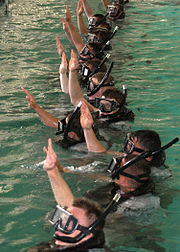
(The above photo is of U.S. Navy search and rescue students.)

copyright Dia Osborn 2011

Part I: February Is Hereby Declared Advance Directive Month. Join Us!

It’s better when we do it together.

Confession: I haven’t done my advance directive yet.

I’m embarrassed to admit it, but there it is.  In spite of my harping and spouting I haven’t walked my own talk.  (Not entirely sure why but probably because this shit is not only scary, it’s confusing.)

Well, it’s time to climb off the soapbox and dive into those cold waters like I keep telling everyone else to do.  I’ve done one thing at least…talked to the people most likely to make decisions for me if worst comes to worst…but that’s not enough.  No…ho…ho.  They’ll also need legal paperwork to prove that I mean what they say, so I need to do the deed itself.  Put pen to paper.  Download the state forms, sign on the dotted line, and give them copies.

It’s Time to Legalize And Let It Go.

The hubster is doing this with me and while we’re at it, I wanted to invite everyone else who hasn’t done their advance directive yet, but wants to (or not) to join us on our little adventure.  I’m going to try and enroll my kids and siblings and their families in the process, too, because I really want to know what they want in case (God forbid!) I wind up having to make decisions for any of them. 

IMPORTANT SAFETY TIP:  The need for an advance directive knows no age limit, anyone can wind up incapacitated and unable to make decisions at any time.  If you’re 18 or over, this sucker is a good thing to have. 

I’m assuming this process will bring up questions, fears, and insights along the way that we can all help each other with and learn from so IMHO, the more the merrier.

Are you ready to rumble?!!!

In the next couple of weeks I’ll be researching and posting about the who’s, why’s, what’s, where’s, when’s, and how’s of the process, and then in February the hubster and I will take the plunge and do all the concrete steps necessary to make sure that everyone from intimate family members to state agencies are clear on what-we-would-and-would-not-want in the event.

So if you haven’t filled out your advanced directive yet either, feel free to join us.  I figure there’s strength in numbers.

Next post:  Part II: What Is An Advance Directive? (Or Why I’ve Been So Confused.)

copyright Dia Osborn 2011

Unthinkable? No, Dying Is Perfectly Thinkable.

living will

The Los Angeles Times posted an excellent article by Steve Lopez last month discussing the urgent need we all have to not only discuss our wishes with those who are likely to make them, but codify those wishes in written and legal form.  For anyone who’s been thinking about doing so but is unsure how to proceed, please take a look.  It has links to some great resources that might help.

There’s only one thing about the article I took issue with; the title.  Having To Think About The Unthinkable.  Because it reinforces the wrong but tenacious belief in our oh-so-death-averse culture that dying is an unthinkable (not to mention unspeakable) topic.

That’s just not true.  Dying is totally thinkable.  In fact, collectively, we do it all the time.  I do it.  So does everyone who works with hospice and palliative care.  So does everyone who’s currently dying, and all the people that love them.  So do elders who are fast approaching, people who get questionable results on scans, and those who experience a close call in a plane, on a highway, or in a hospital.  Anyone who follows the news is exposed to reports about dying every day, and a movie about dying called Final Destination was seen by so many people, so many times, that it spawned three sequels and made its makers hundreds of millions of dollars.

In fact, our tendency to secretly think about dying a lot is at the heart of our entire preventive health care system. No one in their right mind would consent to (much less insist on) the discomfort, indignity, potential danger, and expense of so may foreign objects poking our veins, irradiating our tissue, and probing our various holes without the thought of dying as a strong motivation.  So, no.  The idea that dying is unthinkable is a total myth.  Not only is it perfectly thinkable, there’s a respectable portion of the population secretly doing it at any given moment.

What I’d like to do is encourage everyone to think about it more openly.  Because keeping all those thoughts and fears chained naked to the floor down in your seriously clenched gut only serves to make the prospect of dying more frightening, not less.  Trust me on this one.  Dragging the monster out from under the bed where you can negotiate with it and set up some ground rules is a very, very good thing to do. 

Okay, yeah.  I’m gonna die.  You win there.  But this is how I want to do it; no tubes, no persistent vegetative states, no bankrupting the family and leaving them destitute.  However and whenever you decide do this buddy, I want to minimize my own suffering as well as the suffering of my loved ones.  This is important to me.

I think a lot of people don’t realize that death is absolutely fine with that.  Contrary to how it’s portrayed in Final Destination, death is a neutral force, not a malevolent one.  It doesn’t want us to suffer and it doesn’t care if we take steps to prevent that from happening.  It leaves full control for how we navigate the process to us.  It’s like kayaking.  We can either take time to study the river beforehand and craft an intelligent plan for those class 5 rapids with a forty-foot waterfall at the end, or we can fall into the boat backwards and wing it.

Which ride would you rather be on?

Death is like the river.  It doesn’t care about the quality of our ride, it’s only job is to sweep us downstream.  The rest is up to us.  And if we decide we’d rather do it with foresight, skill, and courage?  Then our relationship with the dying process is transformed from a catastrophe into a partnership and the gifts of that–the power, dignity, strength, love, sacrifice, generosity, and surrender it generates–remain long after we’re gone to help those we love recover and return to a full life.

Thinking and talking about dying, long before it happens, is well worth it.

Here’s a link from the article that has an excellent guide on how to have a conversation about end-of-life-care wishes with your loved ones. (You can use it as a starting point to have a conversation about it with yourself, too.)  And to download a copy of your state’s Advanced Directive, here’s a link to a website called Caring Connections which has a wealth of other information as well.

And because I mentioned kayaking, here’s the trailer for The Halo EffectIt includes some unreal footage of kayaking elite and waterfalls.  The opening narration tries to explain why these guys do what they do and is worth a listen, but if you just want kayaking footage, it starts at 1:00 into the trailer.  It’ll knock your socks off.

copyright Dia Osborn 2012

Elders and the Strange Gravitational Effect of Final Mystery

image by chrisroll

My elderly father-in-law (I’ll call him Mon Pere) is living in the light of two very different worlds right now.  In the first, he pursues everything he enjoys with great flair.  He goes out dancing with his ladylove, attends continuing education classes at the University, tells his same beloved, off-color jokes over and over again, and takes long, contemplative walks by the river every afternoon.  In the second, he lives with metastatic cancer.  Mon Pere is what’s known as a character, and he navigates both worlds with the same idiosyncratic grace.

His cancer is slow growing and if it weren’t for a preventive screening test some time ago, he wouldn’t have even known it was there until recently.  Because of his age at the time of discovery, and because the likeliest outcome of treatment would have been to erode his treasured quality of life, he declined anything aggressive and has instead lived pretty much the same life he lived before, only with the uncomfortable knowledge that a force he could neither see, feel, nor resist was relentlessly growing inside him.

This burden of helpless knowing strikes me as unnecessary and a little cruel but, as far as I can tell, Mon Pere has no regrets.  All our conversations eventually drift to the topic of how grateful he is for the life he’s led and the deep pleasure he now takes in his daily routines.  For all I know, without the useless knowledge of his cancer over the years, he might not be feeling this heightened sense of gratitude and pleasure.  Perhaps that’s what makes the added burden of fear he’s also had to live with worthwhile.

Mon Pere has been, all his life, every year, an avid traveler but that, too, is changing.  This morning he refused an invitation from the hubster to go on a fishing trip to Maine, emotionally disclosing that, these days, he longs more for the simple charms of home.  There’s a creeping pain to be dealt with and instinct is whispering it’s time to rein in the adventures.

I’m moved and fascinated by the unconscious courage he displays.  He’s unusual in that he’s always been willing to talk about his own death as well as the life he’s determined to live on the last leg of his journey there.  He’s been clear with us all that, for him, living fully is more important than living longer.  While he’s prepared to surrender to the naturally occurring indignities of dying, he’s determined to avoid any additional medically inspired ones, and so far he’s shown an uncanny instinct for sniffing out and avoiding most of the interventions that might extend-but-strip his life simultaneously.

I admit I’ve been tracking his choices closely over the years, and I’ve learned a lot from him. The truth is that, like him, we all dream of living fully until it’s time to die.  The problem is our healthcare system isn’t designed for that.  It’s not designed to allow dying at all.  It’s designed to keep everyone alive as long as medically possible and, while that’s a decided boon during the healthy years, its lopsided effort at the end is now churning up so much turbulence that a simple death has become a rare event indeed.  I’ve looked into the haunted eyes of too many surviving loved ones and seen the same regret there; They never wanted to die like that. 

Everyone agrees there’s a problem, and there are many good efforts afoot to change it, but in the meantime passing through the medical system during aging is a lot like swimming downriver into ever-increasing amounts of flotsam and jetsam.  There’s so much to get snagged on that it requires an almost impossible degree of knowledge and native cunning to navigate through it all unscathed.

But Mon Pere is doing surprisingly well.  He’s like an old trout, refusing to rise to the fluttering lures cast over him, sinking lower into the water instead.  He’s not susceptible to the whispered promise of extra time because, as he so often says, Been there, done that, bought the t-shirt.  He doesn’t have a bucket list left of things still to do because he already lived his whole life doing them.  What he craves now are the infinitely dear, small pleasures of life.  To walk and learn, laugh and dance, savoring the wonder of each new day.

This gradual slowing reminds me of the other elders I worked with and how they, too, started to bend and change under the weight of this approaching mystery.  It often seemed like they were nearing something I couldn’t see, something with an immense gravitational pull to it, as though the closer they circled in, the denser and heavier they became.

I used to think of death itself as a null and empty void…a dark nothingness, an absence-of…with physical life perched on one side and, hopefully, some kind of spiritual life on the other.  But that was before I spent time working around its edges, before I discovered the strange, luminous field this final Unknown generates.  Some have called it the light of dying, which I’ve also glimpsed, but at the very end, in those last hours before a person dies, it took on an additional dimension.  It felt like an immense current flowing through the home, as if some subtler kind of electromagnetic field was in motion.  I noticed everyone’s emotions, muscle contractions, and breath seemed to unconsciously synchronize with it, and my own response was the same each time.  My skin would tingle and hair rise, my heart would first fill with a vast ache and then suddenly contract and break in one sharp blow.  And out of the pain it would delicately unfold again like some kind of pulsing sea anemone, opening up its thousand waving tentacles to grope the passing current…for what, I still don’t know.

The experience was reassuring but disorienting, too. There were a few times after returning to my car when I had to just sit and grip the steering wheel for a while, dazed and bemused by how sharp and crystalline everything looked, as if I was gazing out through a long-smeared window that had finally been cleaned, before the strange afterglow would fade enough for me to drive safely away.

I don’t think of death as an empty void so much anymore.  I’m not sure what I think instead, I can’t make make sense out of something I’ve only glimpsed, but the thought of it makes me feel curious, calm but a little nervous, and breathless.

Mon Pere is hardly dying yet, he may not for years, but he’s slowing.  Turning.  Caught in the outermost edges of that pull now and commencing its widest spiral.  He’s a little sad sometimes, a little scared, but mostly he’s head over heels in love with his life, as he should be.  As we all should be.

This is the most amazing ride.

copyright Dia Osborn 2011

Welcome 2012!

Happy New Year everyone!  It’s sunny, clear, and quiet today.

A perfect beginning.

Here’s a fabulous photo taken live last night from a boat in San Francisco Bay, by friend-more-like-a-daughter-really, Kit Prud’homme, who lives out in the Bay Area.  She took a series of shots that are pretty spectacular and well worth a peek if you get a chance.  (They’re a lot bigger on her site.)

Whatever “success” may mean to each, here’s wishing us all a successful next year!

copyright Dia Osborn 2011