The Linda Series

Image from Wikpedia

As I roll on into the Christmas season my time to blog is shrinking.  The extra demands are growing exponentially and the juggling is getting hairy.

But that’s okay.  I don’t really mind.  The stress is worth it to me because I adore the holidays.  (Well, mostly.  There have been tough years.) My love of Christmas is a legacy from my childhood, the gift of parents who bent over backwards to create as much magic, wonder, and joy for my four siblings and I as they possibly could.  They loved Christmas, and therefore I learned to love it from them.

It’s funny how, every once in a while, life really is that simple.

Anyway, this is all just preamble for what I really wanted to tell you:  For the rest of December I’ll (probably) only be posting on Fridays.  At least about dying.  (During the rest of the week I reserve the right to succumb to moments of yuletide exuberance and post snippets about holiday moments.)

There.  Notice served.  Now, on to the real topic.

In a recent post, “Dying” Is Still Alive”, I talked about the mistake a lot of people make in assuming that dying and death are parallel or even, in some people’s minds, the same.  In the following comments, Linda said something that, in my opinion, really helps shed light on the reason why this mistake gets made.  Here’s most of it (the emphasis is mine):

Death & dying…yes, I think I’ve probably considered these two words/ideas as synonyms. Given the choice between the two this very moment I would strongly resist BOTH. To be honest, I think I’d prefer to be dead than to be dying. Like most people, I think I fear the process far more than the fact. I subscribe to the notion that the best way to dye would be blindingly fast like a stroke or heart attack during the night from which I never woke. (My ex-husband went this way, and while the abruptness makes the loss very difficult for those left behind, we all agreed that he was the lucky one because he never saw it coming.)

But I see your point about the tendency to go from fighting death to dead without having had the opportunity to embrace the process, thereby, leaving with unfinished business: sentiments not shared, history not shared, apologies unsaid, ….

But where, I wonder, do we draw the line between fighting illness and accepting impending death? Certainly the will to live is what propels many people through God-awful illnesses and injuries. Sometimes they come out at the other end in-tact, or nearly in-tact. I’m curious how you feel about this aspect of dying. Is it possible to embrace dying to soon, too forfeit the opportunity to rise above it and live longer?

Linda’s last question is an important one that, I suspect, is on the minds of a lot of people these days, and therefore bears exploring.  She also suggests a couple other areas of consideration that I think are equally important.  (I’ve chewed on them a lot, anyway.)   I’d like to address them all but, since it’s way too much ground to cover in one post, I thought I’d break it down into four separate questions and handle them in a series.

These are the specific questions I’d like to explore:

1)  Will accepting that I’m dying interfere with my will to live? (I may actually have to break this question down into a few sections of its own because…well…its that big.  I’d like to cover whether love of life or fear of death is a better motivation during treatment, how most of us will have to consciously choose when to die as a side effect of today’s successful medical interventions, what the real value of positive thinking is when fighting an illness, Hint: it’s not for survival as many currently think, and how it’s never really a question of whether we’re going to live or not anyway.  Of course we won’t.  The only truly meaningful question is about how best to use the time we have.)

2)  Which is scarier, dying or being dead?

3)  Is there anything about dying that might be worth living for?

And the last thing I’d like to cover isn’t  necessarily something Linda brought up, but it’s a related and vitally important point.  It involves a question of context, or how we choose to look at dying:

4)  What are some possible metaphors we can use for dying and how does each one help or hurt our ability to navigate the process?

I figured I’d start next Friday with Linda’s main question:  Will accepting that I’m dying interfere with my will to live?

copyright 2010 Dia Osborn

Stray Thought

I was just thinking about whether it’s possible for anyone to really know what happens after we die and this is my personal conclusion:

1)  I think the people who say they don’t know, really don’t.

2)  I think the majority of people who say they do know, actually don’t.  They just believe they know.  Really, really hard.

And 3) I think there are probably a few people out there who really do know.  I don’t know how they know it, but I still think they do.

However, 4) Their knowledge will never be of any use to me since there’s no way I can ever, with rigorous certainty, distinguish them from the majority of people who believe they know, but really don’t.

At first glance that seems like a bummer.  But is it?

Hmmmm…

Nope.  I don’t think so.  It doesn’t feel like it anyway.  In fact, I’m a little relieved.  I don’t want anyone telling me what will happen when I die because  then it wouldn’t be a surprise and, to be honest, I’m kind of looking forward to the adventure aspect of the whole thing.

copyright Dia Osborn 2010

“Dying” is Still Alive

I’m starting to suspect a lot of people use the terms dying and death interchangeably, or link them so closely together in their minds that they can’t easily discriminate between the two.  At least subconsciously.  I suppose that’s to be expected, considering neither of them are things we talk about much.  Let’s face it, anything unfortunate enough to tumble into the closed pit of taboo topics is destined to collect a lot of misunderstanding.

But this particular area of confusion intrigues me more than most because it’s hard to find two things more different than dying and death.  Exactly how different are they?  Polar opposite different.  World’s apart different.  Different as in “If you had a choice of which one you wanted to be at this very moment, which would you pick?” different.

Death is dead.  Dying is still very, very much alive.

In fact, it may well be one of the most alive periods we get over an entire lifetime of being alive.  I think this is a very, very important point to remember because, startling though it may seem, dying can be easy to miss. 

(Not dead…dead is unmistakable.  Dying can be easy to miss.  See what your mind did there?)

With the current medical paradigm focused primarily on cure, we can spend so much time fighting not to die that we wind up going straight from being sick to being dead, thereby missing the peculiar and healing light of the world of dying that lies in between those two.  We can miss both the chance to realize Oh wow…this is it.  I’m dying now….as well as the gift that comes from spending the rest of our days in that final place where life first collapses, and then supernovas into Life itself.

So if there was only one piece of advice I could pass along it would be this:  Don’t close your eyes. Don’t condition yourself to denial and blindness.  Because, for all their power to transform and heal, the miracles at the end of life are delicate, twinkling, and brief and, if you’re not alert enough to look for them, they can be very, very easy to miss.

copyright Dia Osborn 2010

Agoraphobia, Sea Legs, and Life with the Red Pill

Taken by the hubster on the Maine coast

Intense cold is scary to me, but then so many things are.  Over the last couple of decades, one of agoraphobia’s many little gifts has been to heighten my awareness of much of the danger out there that I never would have noticed before.

It’s made me conscious (sometimes paralyzingly so) of how unbelievably fragile all this is.

Before the fear came I used to live in a luxurious world where I could still take what I have and love for granted by just assuming that everything would last.  But that sense of safety is long gone.  In it’s place came the (existential and largely useless) knowledge that every breath, every desire, every heartbeat, every moment of touch or warmth or joy is actually teetering on a razor’s edge above a chasm of eventual loss, and the sheer size of the realization started causing a kind of perpetual, emotional vertigo.

On the inside I started dropping to the ground, squeezing my eyes shut, and white-knuckling onto anything that felt even remotely stable.  On the outside it became increasingly difficult to leave the house.  Needless to say, the change wreaked some widespread havoc on my daily routines and commitments, but life has a way of incorporating even the more difficult things and, with enough time and practice, I eventually began to get the hang of the swings.

On our recent trip up to the cabin during a winter storm and cold snap, as usual, I was obsessively clear on how vulnerable we were.  There the hubster and I were, driving along through the mountains, nothing but the thin walls of the car and a working engine standing between us and exposure, hypothermia, or worse.  I was acutely aware of what a flimsy, fragile bubble it was, carrying us along through a hundred miles of frigid landscape, and in all honesty even once we got up to the cabin I didn’t feel that much more secure.

All the necessities were laid in of course (because being afraid all the time makes one a stellar planner.)  We had water, food, firewood, tools and supplies, warm clothing, everything we needed to secure our survival.  But even so I knew that if something went wrong, something as simple as a power outage coupled with a broken window during a storm, a whoops! moment with the axe, a snowshoeing misstep, or some bad food, things could get complicated in a hurry.

Ordinarily, there’s a fantastic and really helpful illusion that says, given enough effort and planning and control, life can somehow be made secure.  Unfortunately, I can’t access that illusion any more. 

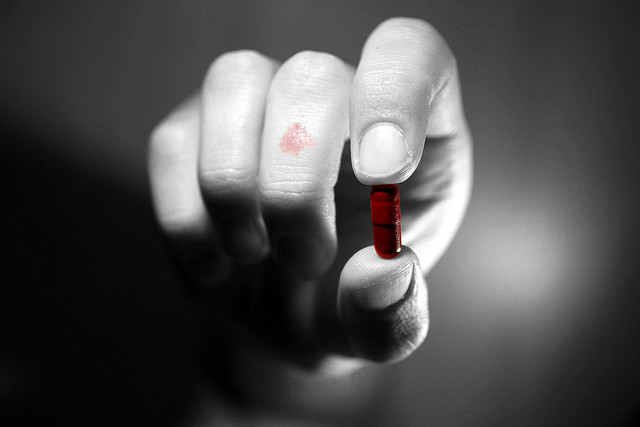
(Why oh why didn’t I take the blue pill?)


While even I know that some activities are less dangerous than others, still, I can’t shake the reality that there will never be such a thing as completely harm-proof or hurt-proof or loss-proof or safe.

Knowing this mostly scares the bejeezus out of me and make me want to withdraw.  But then I remember this quote from Helen Keller:

Security is mostly a superstition. It does not exist in nature…Avoiding danger is not safer in the long run than outright exposure. Life is either a daring adventure, or nothing.

Life is either a daring adventure, or nothing.  I love that.  I love that Helen Keller said it, this other woman who also lived with a challenge that made it harder to navigate life.  It’s like a mantra that helps me find a way out of the holes I fall into, a rope tied around my waist so I can never completely disappear.  Living with the perennial tug of agoraphobia as I do, it’s so easy to get sucked down into the creeping paralysis of chronic fear again, to wind up curled in a ball back in the bedroom, or frozen for hours at the front door just staring at the handle.

It just seems so weird sometimes, how somebody as naturally adventurous as I am could wind up grappling with such an odd and opposite kind of illness.

For me, learning how to live with chronic fear has felt like learning how to live on a schooner.  It’s different from living on land.  The surface beneath my feet heaves and plunges and rolls now in a way it never did before, and I’ve had to develop my sea legs in order to keep from being tossed off and battered and drowned.  But over time I’ve gotten better at the shifting balance, learned how to read a horizon that’s constantly rising and falling, rhythmic and grinding, as the level of my daily fear ebbs and flows.  Gotten better at reminding myself every day, every hour…every minute sometimes…to try to relax and just roll with it.  To take a deep breath, then stand up next to my fear and hang onto it’s hand for dear life, rather than letting it run around crazy consuming everything I love.

I’ve gotten better (while I’m oh-so busily preparing for the the end of the world) at remembering, oh yeah!  Of course it’s terrifying.  Life is a daring adventure or nothing.

Which makes it a little easier, each time, to face forward, lean into the wind, and let myself either fall or fly.

copyright 2010 Dia Osborn

There and Back Again

Hi!  We’re back from our Thanksgiving adventure up in the Sawtooth Mountain range and I wanted to do a quick pictorial tour of our journey there and back again.  John of Going Gently once did a post with a pictorial tour of his village in Northern Wales, and it was such a great idea it inspired other bloggers to explore their towns, take photographs, and set up virtual tours of their own.  It was fascinating to me, exploring different geographical regions with their histories, through the eyes of the people who live there and love them.  While the town that I live in is as rich and worthy of exploration as any, I’m afraid my deepest affection is reserved for the natural world.  So I thought I’d put together a little photo tour of our journey up to the family cabin and back instead.

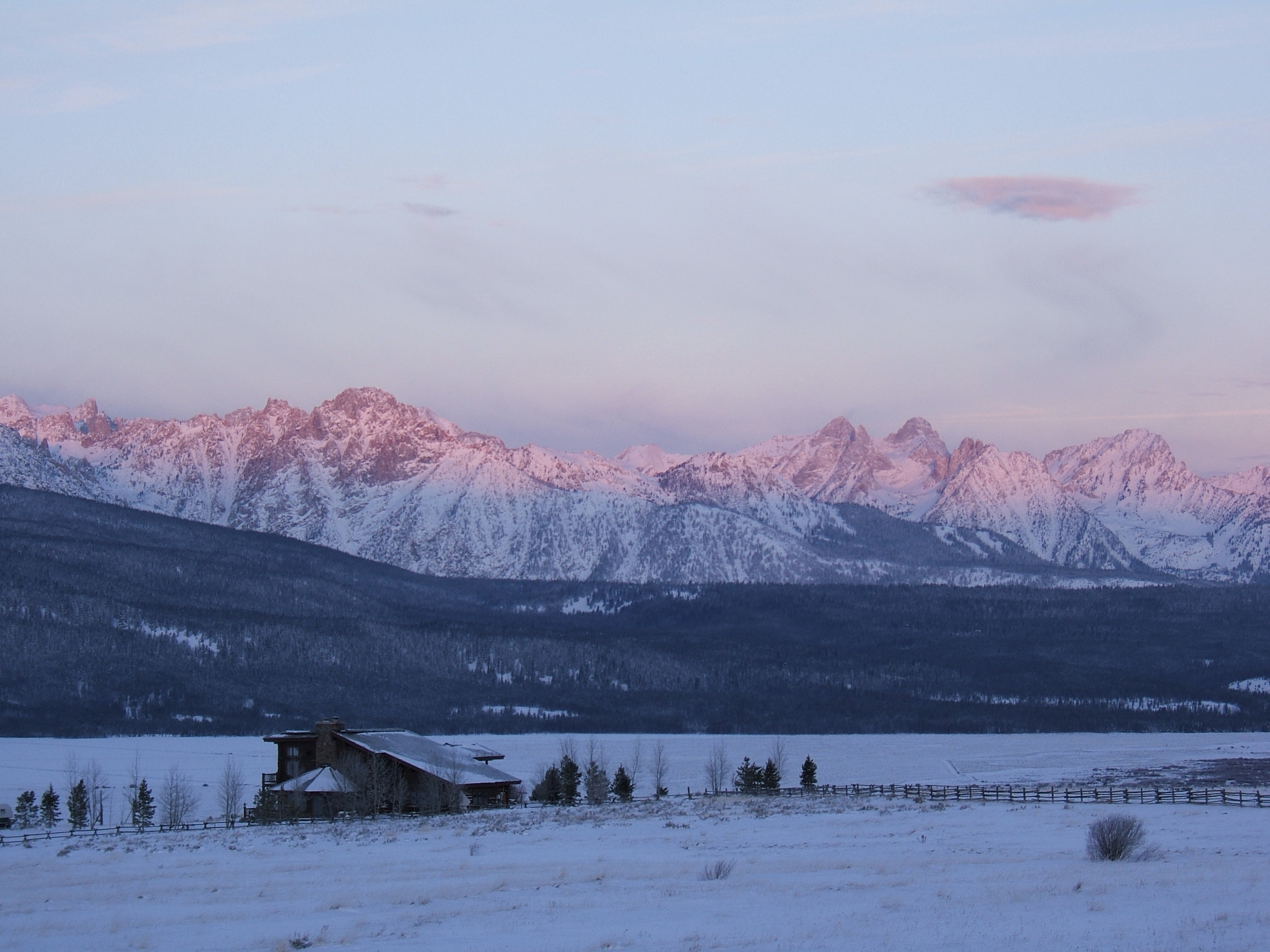
Here are some winter photos of the Sawtooth Mountains, Highway 21, the Lowman to Banks highway, and Highway 55 down into Boise, Idaho.

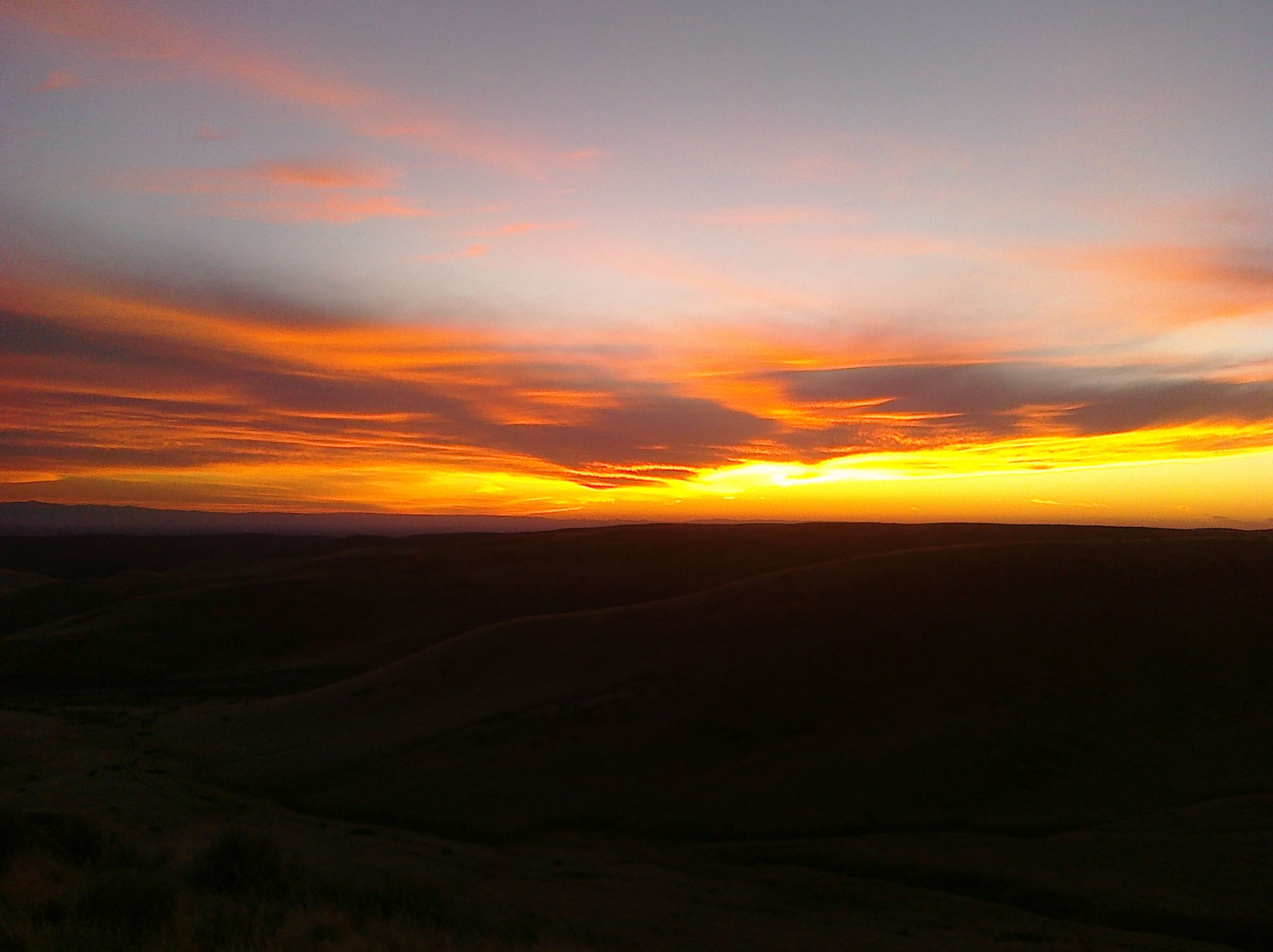
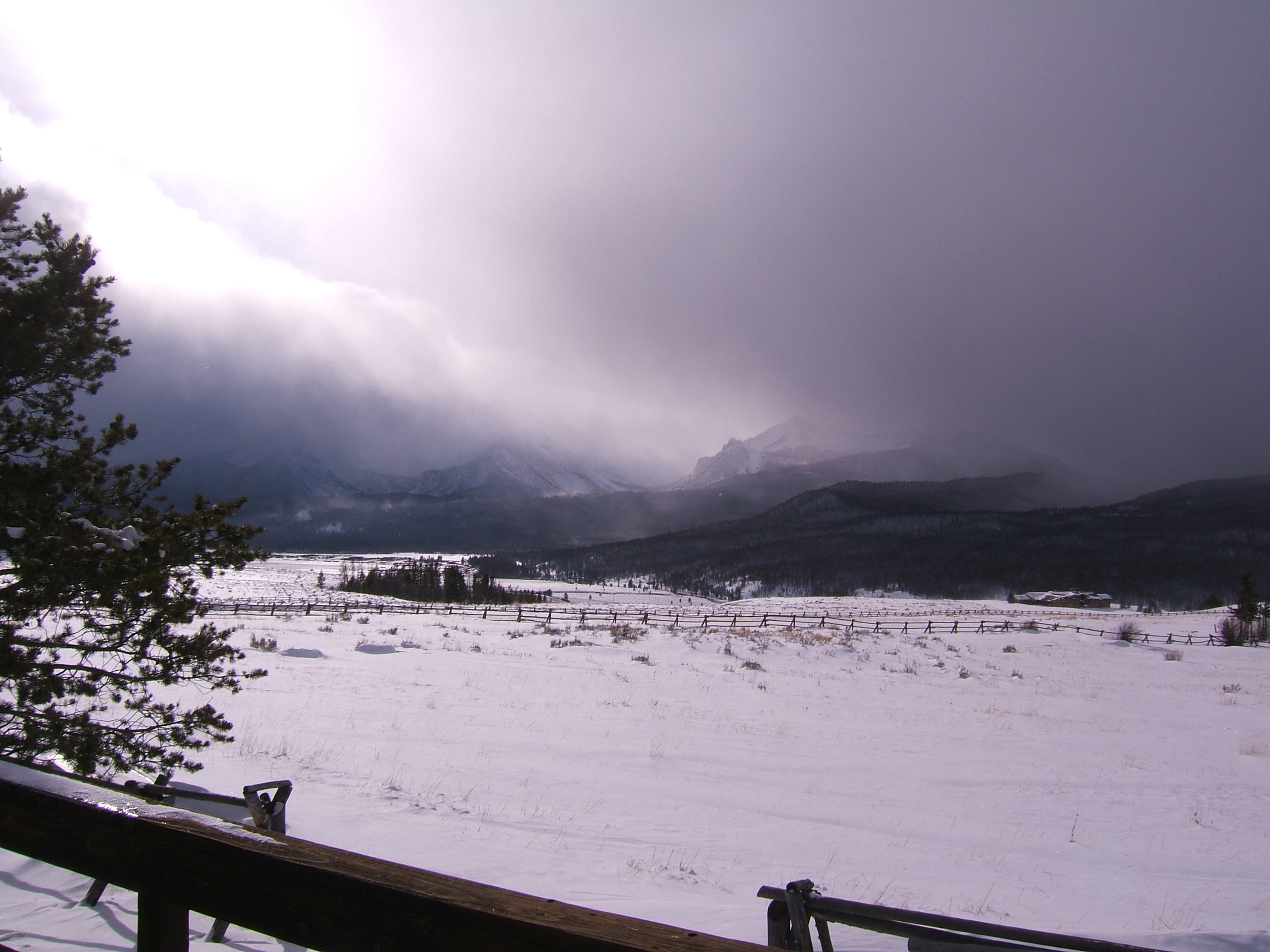
A succession of winter storms passing down the mountain range the day after we arrived.

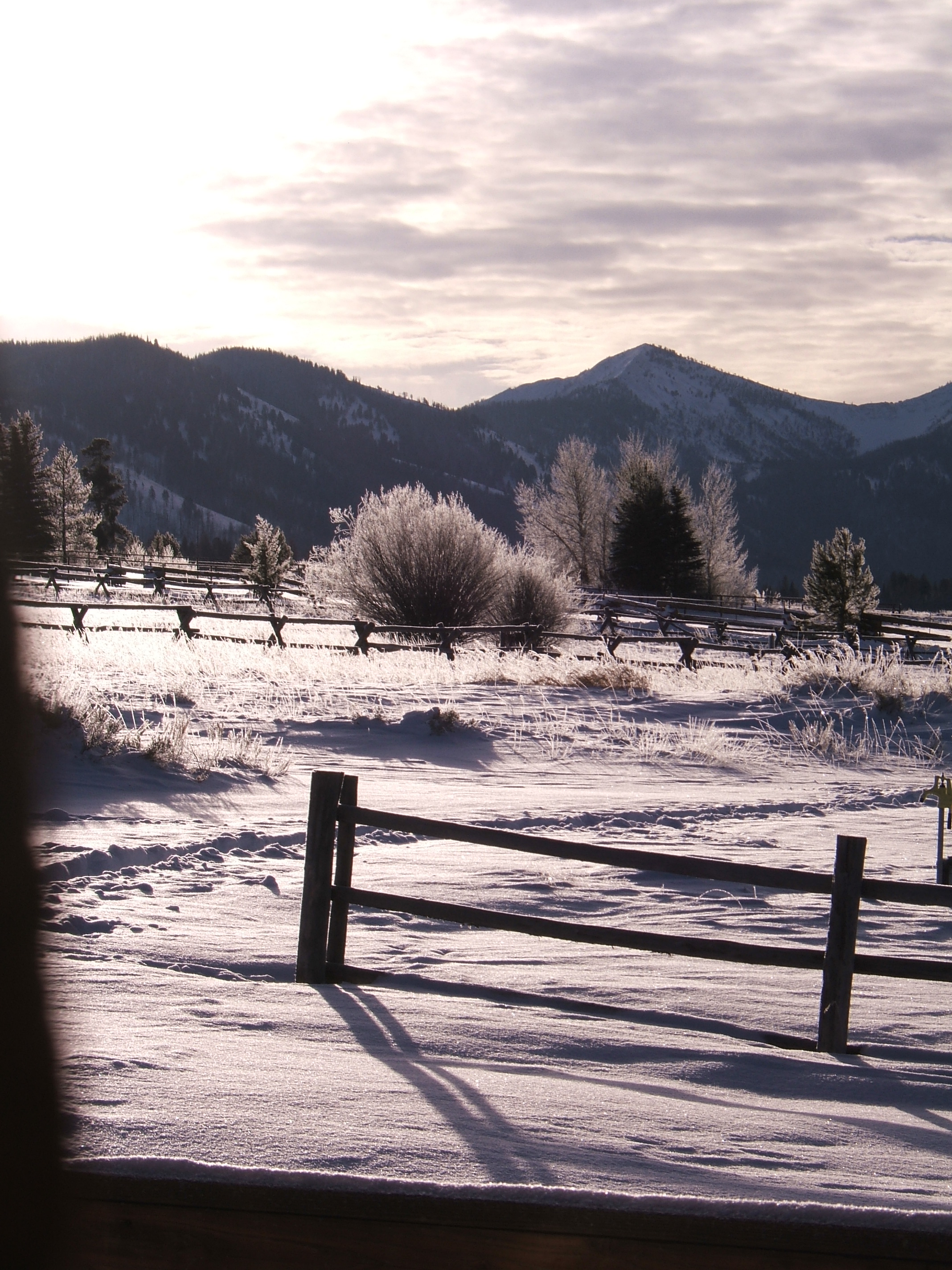
A shot through the window during the cold snap (-25 degrees Fahrenheit)

The first blush of dawn on the morning we were leaving.

…the blush deepening…

First rays of sunlight hitting the peaks.

And finally, morning has broken.

This is where I really wish I was a better photographer…as the rising sun hit the landscape, it’s reflection off the snow caused a brilliant, sparkling effect.  Everything looked like it was embedded with diamonds.  It was magical and breathtaking.  This photo falls sadly flat by comparison but at least it gives you an opportunity to exercise your imagination.

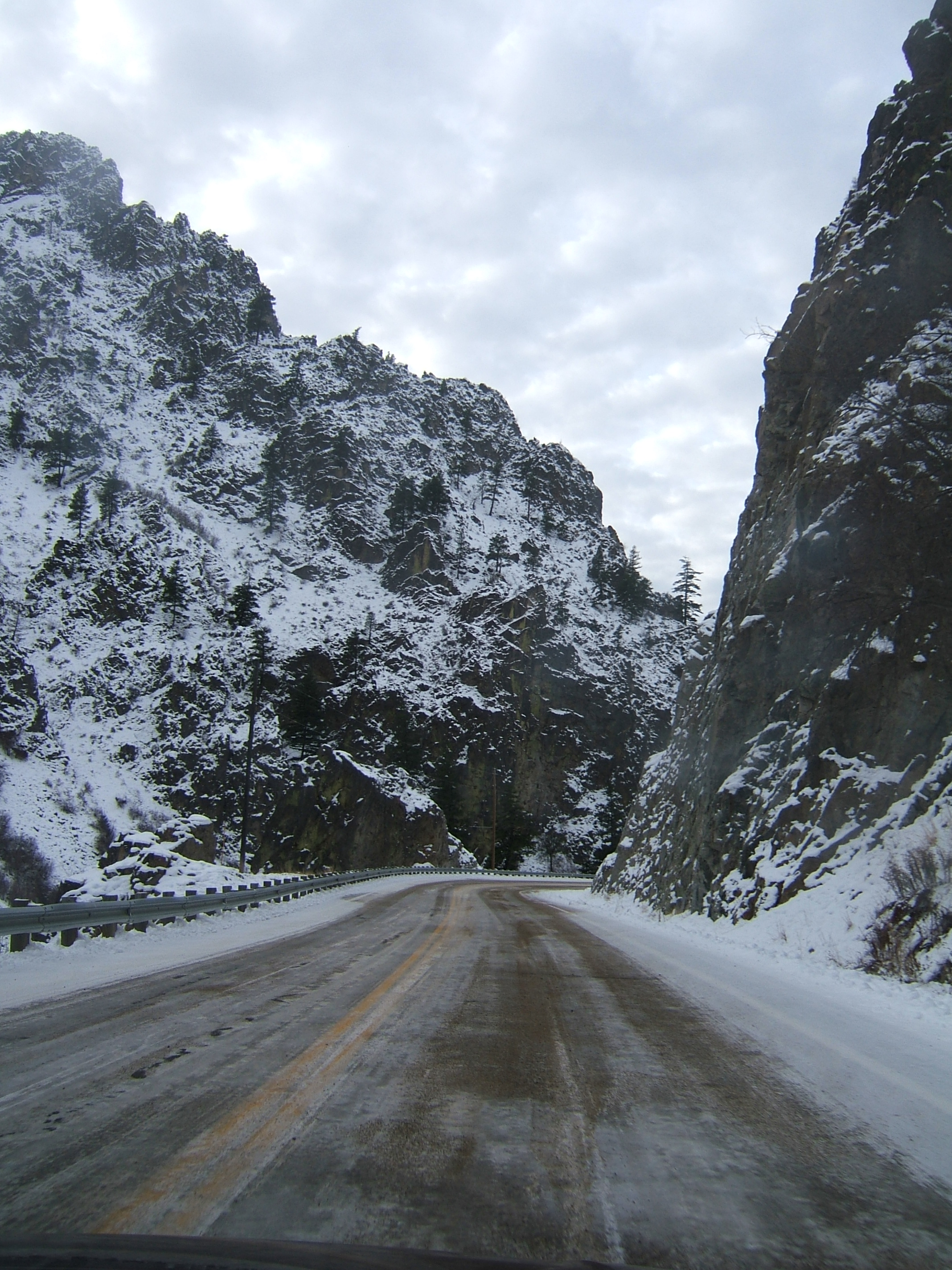
This is the beginning of the three hour drive home on winding mountain roads with patchy snow and ice.  We came home a day early to try and beat the next winter storm (which would have closed this pass completely.)  Here are some lovely winter scenes along the way.

The creek which flows along the highway and eventually feeds into the Payette River.

A waterfall which flash froze during the cold snap.

Most of the highways through the mountains around here were built over the original dirt logging roads.  Here’s a spot where, years ago, the road builders blasted away a huge part of the rock during construction.  It’s always amazing to me how nature takes these wounds and, over time, creates a new beauty.

There’s a significant amount of geothermal activity throughout the northern tier of mountain states and Kirkham Hot Springs, here, is just one of many, many hot springs to be found.  The heated water bubbles up out of the ground through springs on the mountainside above the river, then forms into small streams that eventually cascade down in numerous waterfalls here.  It’s a popular spot all year round.  If you look very closely you can see a couple of tiny, half-naked people in the far right of the photo.

The mountainside in the background was devastated by a major fire about seventeen years ago and the pine trees are just starting to grow back now.  The story of the fire is an interesting one.  We get a LOT of  big motor homes lumbering around on the two lane roads through the mountains and they’re generally pretty slow.  They’re supposed to pull over and let others pass if they get five or more vehicles following but sometimes the drivers can be stubborn.  In this case it was a retired man (with wife) from out of state who refused to pull over.  The line of cars behind him had gotten really long which inspired some honking and general annoyance but he steadfastly ignored them all.  Then, one of the double back tires blew on the fifth-wheel rig he was towing and the metal rim of the wheel started a stream of sparking as it rolled along the asphalt.  The driver however was somehow unaware of the problem.  (Perhaps he was so busy infuriating the people behind him he didn’t notice his rig was pulling heavily to the right.)  It was the height of summer and the sparks flew off into the dry brush along the roadway and started fires everywhere they fell.  The traffic behind him  went nuts, honking and yelling and trying to pass him on dangerous turns to get in front of him, but he just wouldn’t stop.  In the end he went for something like eight miles before they finally managed to pull him over.  The fires he set off were catastrophic and devastated hundreds of miles of forest.

I wanted to get a picture of the deep, river gorge that runs parallel to the road here but this is as close to the edge I dared get.  Right past the snow at the bottom of the photo is a cliff with a thousand foot tumble down into never-never land so I opted for caution over a fabulous photo op.

Coming up on the left is the Dragon’s Spine, a series of  rock formations coming down the mountainside that look like plates on the back of a gigantic stegosaurus.

Closer…

…and closer…

…and here’s the top of the Dragon’s head.

The cliff at the right is where the Dragon’s head comes down to meet the Payette River and you can see how the water has frozen over where the bend slows the flow.  (Not the greatest camera so not the greatest photos but it’s the best I could do.  Sorry!)

And lastly, here’s the Thunder Mountain train.  It’s running on tracks that are part of the old railway system the timber companies built through the mountains to export the felled trees.  There used to be accidents where trains would go off the rails and dump their loads into the river, creating massive log jams.  The only trains that run here anymore though belong to the Thunder Mountain Line, a tourist affair serving either dinner, or wine and cheese, depending on the time of day.

That’s it for today.  I hope you’re all having a fabulous weekend!

copyright Dia Osborn 2010

Battery Killer Cold

We’ve escaped.

We had an early pre-Thanksgiving dinner for family on Sunday and then the hubster and I loaded up the backpacks, threw the snowshoes in the car, and drove threw a winter storm up to the family cabin in the Sawtooth Wilderness Area.  (I’d post a link to a website with photos here but it’s a miracle we’ve got even patchy internet access.  I don’t want to push my luck.)

We literally drove up to the cabin, something unheard of this time of year, particularly during a snowstorm.  It’s on a dirt road that’s accessible during the summer but buried in winter and usually we park down on the highway when the snow hits and backpack from there.  But we’re both growing sadly fat and the idea of carrying fully loaded backpacks for two miles, uphill, made us both feel wheezy, desperate, and, perhaps, a little stupid.  We gambled and, this year at least, won.  We were able to rev the engine, spin the wheels, and fishtail all the way up to the door, unload everything, then slip and slide all the way back down (laughing insanely) to leave the car on the highway where it belongs.  Coming back up again on foot was easy after that.

And now the adventure begins.  This last snowstorm lasted for two days and next, within hours, we’re supposed to catch the leading edge of a front with a blast of arctic air behind it.  Temps, you ask?  Well, funny you should ask, I reply.  Tonight and tomorrow it’s supposed to get somewhere down around 25-35 degrees below zero and the high tomorrow will be -3.  It will be utterly fantastic (albeit very brief) star gazing conditions if the skies are clear.  You’ve never seen the Milky Way like how it looks on snowshoes at high altitude with frigid temps…like it’s close enough to pull down and wrap up in. It’s breathtaking and so totally worth frostbite.

(Kidding.)

Then it’s supposed to warm back up as another winter storm blows into the region with eight more inches or so of snow.

Now.  The big question I know all of you are just dying to ask is, After that kind of cold will the car actually start when you come back down on Saturday? Good question! Very astute.  This cold is so cold, it’s the kind where even jumper cables may not be enough.  These are electrical charge sucking temperatures. It’s Battery Killer cold.  The answer is of course, we don’t know.  Personally, I doubt it, but the hubster refuses to speculate because he knows I’ll freak out if he confirms my dark suspicions.

So…oh well.  I guess we’ll just find out on Saturday…something fun and surprising to look forward to all week.  In the meantime, we’ve got four solid days of spectacular, wild, isolated, snow covered, mountain-peak rimmed beauty to keep us occupied.  If internet access continues and I can do it, I’ll try and post some pictures.

The winter wildness of it all is really, really, something to behold.

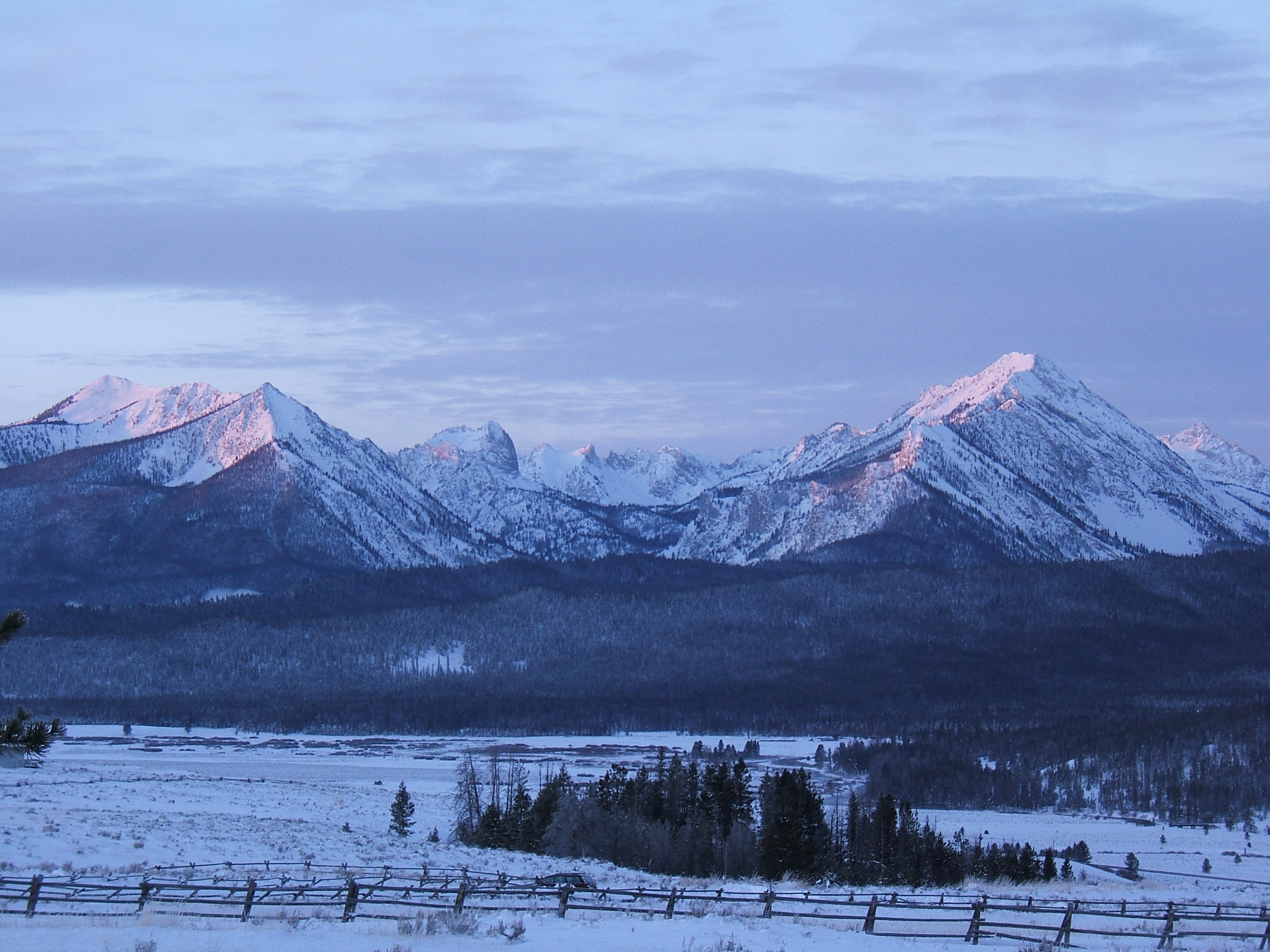
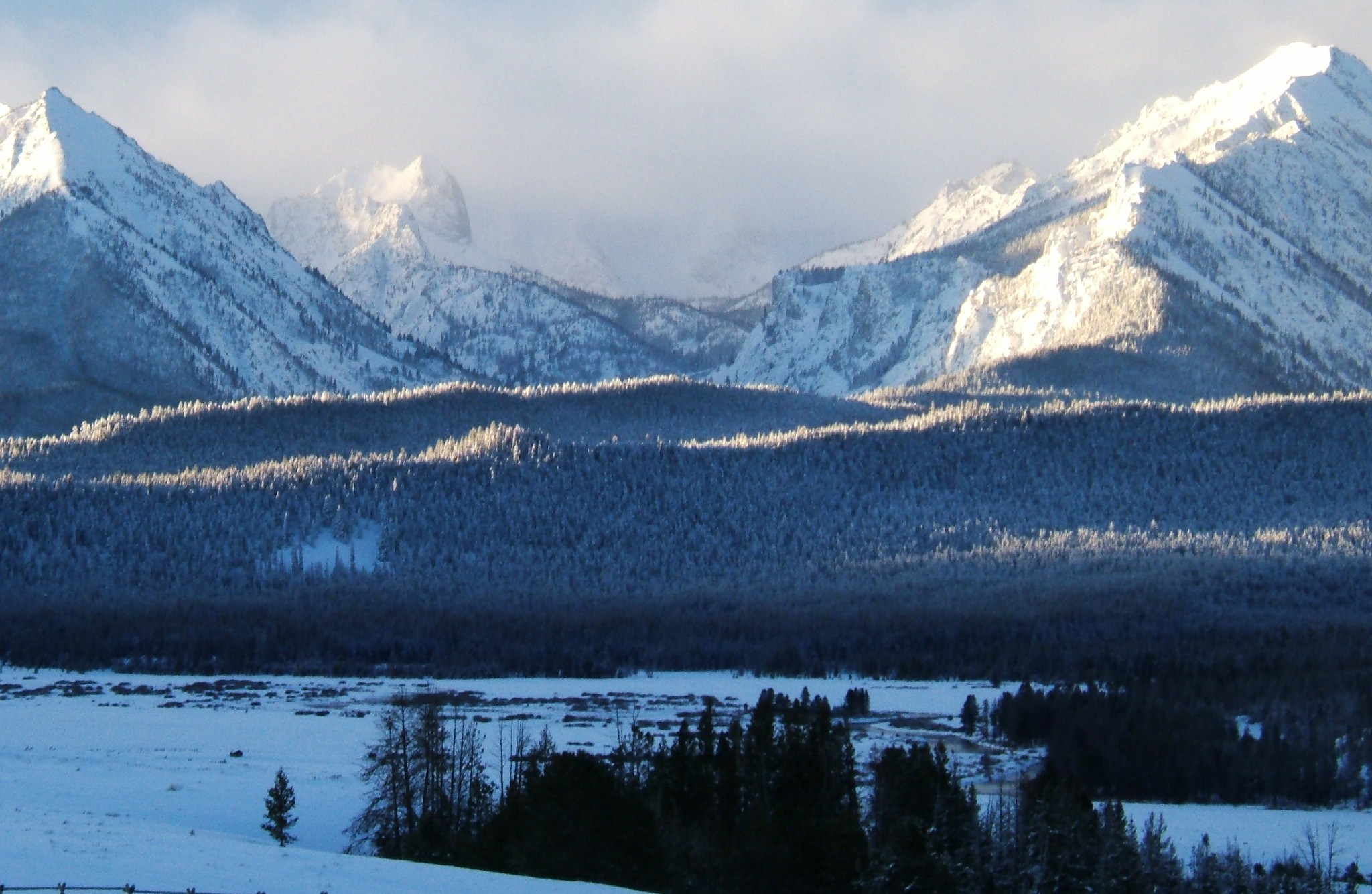
Update:  I just remembered I have a picture of the mountains outside the front window that I used in a post a couple weeks ago.  I’ll re-post it here.  This is what the mountains would look like from where I’m sitting right now if I could actually see them through the storm:

copyright Dia Osborn 2010

Right Up There With the Discovery of Fire

And now, a brief break from dying to tell you about a discovery I made last year that, in my humble opinion, was nothing less than a huge leap forward for mankind.  (Or at least for the part of mankind that gardens or cooks.)  But first a couple of garden-related shots:

I spent a glorious afternoon yesterday planting garlic, spreading compost, pulling up the bedraggled remains of marigolds and pepper plants, laying in some straw, and harvesting my first-ever crop of Brussels sprouts.  There were eight plants and this is what I got.

It wouldn’t feed a duck.

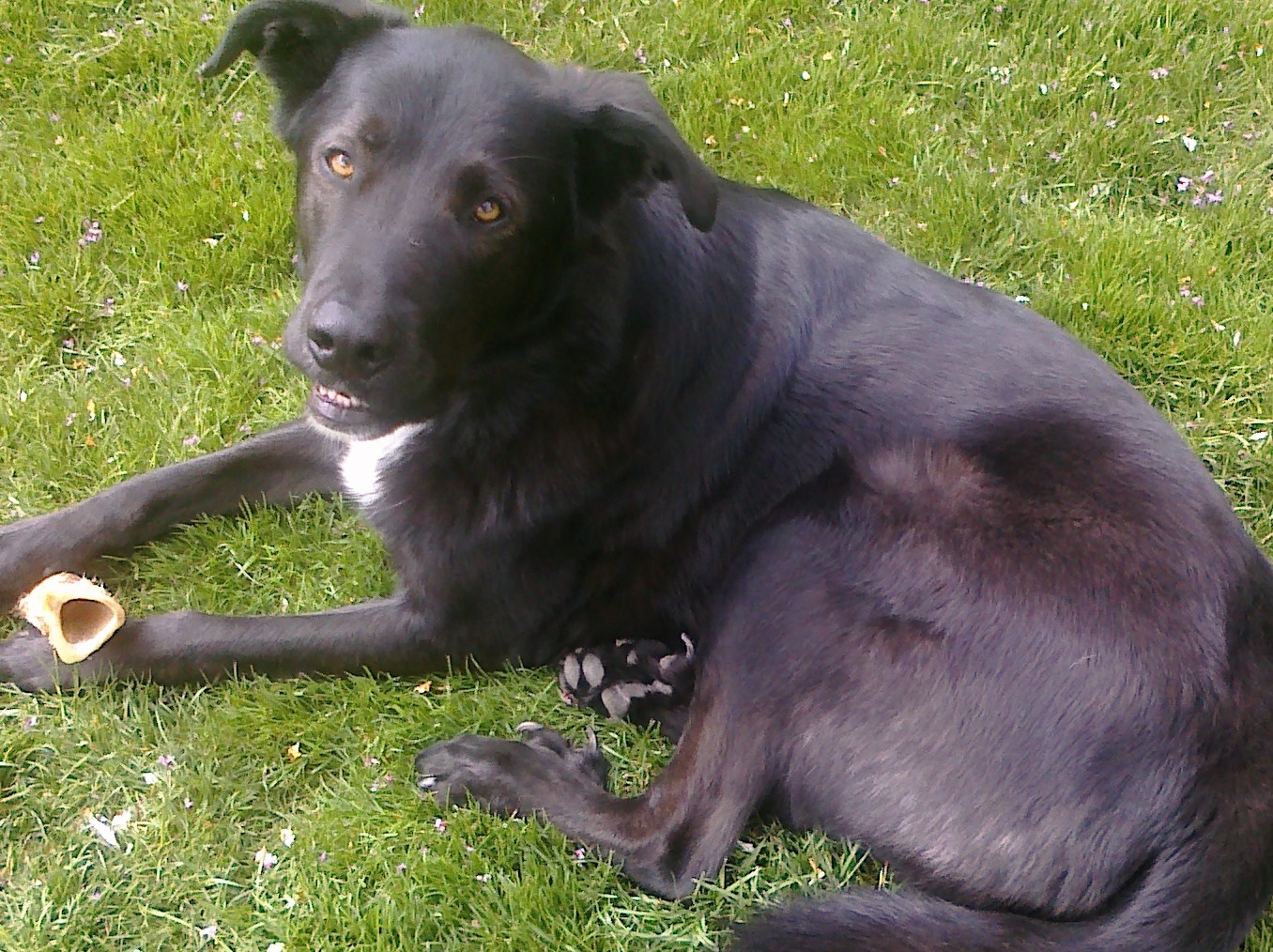
There should have been a bumper crop of carrots as well but Dane the mangy rescue mutt discovered where they were planted and that, as they say, was that.  He pretended to be sorry as I dragged him over to the scene of the crime, pointed at the ravaged soil, and yelled No!  Dammit, no!! but he wasn’t really.

Dane’s long established motto is, “Better to ask forgiveness than permission”, and secretly he was feeling smug.  He also showed great interest in the garlic I planted yesterday so that bed now has a top dressing of wire mesh across the top.

The cold frames are full of lettuce in readiness for colder weather and now all I have left to do is build a compost pile from the autumn debris.

There.  Enough of that.  Now for the meat.

What I really wanted to share here is no less than one of the greatest discoveries of my lifetime:

Powdered vegetables in baked goods.

That’s right, my friends.  I’ve found something that could change the world.  It may well rival the discovery of fire or the invention of the wheel.  You know all those baskets of extra cucumbers every year that you don’t know what to do with?  Or the zucchinis that get away from you and morph into baseball bats over night?  Well, I’ve discovered a way to turn them into something that’s not only edible and nutritious, it’s scrumptious.

Impossible, you say?  Too good to be true, you exclaim?  But au contraire, I waggle my finger in front of your face.  Please read on first, then decide.

I figured it out last year when I was struggling with the biblical flood of pickling cucumbers coming off the six (six!) vines I’d planted.  (Please, please, in the name of all that’s good and holy, don’t ever, ever plant six cucumber vines for two people.) Their yield thrilled me in the first month, daunted me in the second, and swept me out to sea by the third.  I had north of fifty jars of pickled products by the end of the summer and the little abominations were still coming on.  The neighbors refused to take anymore.  Even Dane wouldn’t eat them.  So I began desperately combing the internet searching for new ideas.

I came across a backpacker’s forum of all places, with numerous testimonials swearing to the edibility of cucumber chips.  Simply slice and dehydrate them for a light weight, refreshing, nutritious snack on the trail, they said.  Delicious! one backpacker claimed.  Better than potato chips! sang another.

A day’s effort later and I stood looking down at a large, plastic bowl full of the nasty little things.  One bite and I realized too late that these were backpackers for godsakes; hungry, dirty, tired people with no access to real food.

However, I was desperate.  While I had no idea what I’d eventually do with the things, dehydration at least preserved them.  It bought me time until I could figure out something else.  So dry them I did until the first freeze finally, finally! came and killed off the mother ships.  Then later, because the bags of dried chips took up so much frigging room, I decided to put them through a coffee grinder (beware of cucumber dust!) and store the resulting powder in jars for the sake of efficiency.  At the time I had vague thoughts of making salad dressing with the stuff, or flavoring vegetable dips or cold soups.  It actually took another month for the lightning bolt to strike.

It came to me on a night that I’d made soup for dinner and needed a fast bread.  I was too tired to make biscuits or cornbread, didn’t have time for muffins or a real loaf.  So I opened the cupboard searching for another option and there they were; a jar of freshly ground cucumber powder and a package of whole wheat pancake mix, sitting side by side.  Suddenly, a brilliant light shone down from above, angels burst into song, and I heard the voice of God:

Yo, He boomed.  Check it out…a flour alternative.

And that was that.  History officially began.  I made my first batch of pancakes substituting cucumber powder for a third of the mix.  I fried the batter in olive oil, we dipped the patties in our bowls of lentil soup, and they were…I kid you not…out of this world, drop dead, fantastic.

A year later and I’ve expanded the vegetable repertoire to include zucchini, yellow squash, potatoes, spinach, tomatoes, winter squash, and what would have been a lot more carrot powder had Dane not been such a successful root predator.  I’ve used the powders in pancakes, muffins, cornbread, the bread machine, biscuits, and I plan to try it out in pretzels, crackers, cake, and cookies as well.  (Cucumber and zucchini are quite sweet.)  The finished products are a little more dense than usual, and additional liquids are required as the powder sucks up moisture like a sponge, but the nutritional value is superior to canned goods and, for those seeking regularity, the fiber content is off the charts.  (Just sayin’.)

Final note:  I actually discovered a few months ago that I’m not the first human being to figure this out after all.  Bummer.  Long before coffee grinders were invented people used mortars and pestles to grind stuff.  In a fascinating book called The Essential Wild Food Survival Guide by Linda Runyan, she describes how during her years of homesteading she used to regularly grind up dried, wild plants and use the powder in breads and other dishes.  However, my disappointment in learning I was not the first was mitigated by the knowledge that there’s a whole helluva lot more edible stuff out there than just the fruit and veggies I grow in my garden.  You wouldn’t believe it!   The weeds growing in the lawn alone are a veritable buffet; clover, dandelions, crabgrass, and more are all edible. (Only those you haven’t first tried to kill with chemicals of course.)  So there’s plenty more experimentation available in the years ahead.

Bon apetit.


copyright Dia Osborn 2010

Sy the Stomach

I saw a stomach the size of an overstuffed sofa cushion lying by the side of the road the other day.  Literally.  And it wasn’t alone.  It had a partially eaten liver on one side of it and a long, flattened tube of intestinal tract trailing off towards the middle of the road like it was trying to crawl away.  Nothing else though.  No legs or body or head, hair, skin or anything.  Not even blood stains.  It looked so displaced.

I realized immediately that it was, to use the hunting vernacular, a gut pile.

I’ve heard of such a thing but, not being a hunter, never seen one.  It was the entrails of somebody’s freshly killed and dressed deer.  Usually these are left out in the field and I’m not sure why this one was plopped down on the side of a very public, albeit dirt, road.  But there it was, just sitting there.  Nonchalant and relaxed.  Looking for all the world like a great round, hairless hitchhiker slouching against the bank between rides.

I was upset.  At first, I thought it was because somebody might have shot the deer from their car.  This is an unfair practice and a big no no.  Then I thought it was because they left a gut pile right on the road which (I think but am not certain) may also be a no no.  (I’m very rule conscious and tend to ruffle and quiver when they’re not followed, especially where killing is concerned.)  But looking back now, I think I was mostly upset because a big, beautiful deer had just died and the evidence of its death was graphic and shocking.  It took me by surprise and knocked me off center.  I wasn’t prepared for it.

I was just out for a hike.

You’d think that in my preoccupation with all things dying, I couldn’t ask for a better topic than hunting, and it’s true.  It has everything to recommend it, from the complex, physiological processes involved, to the ethical considerations that so endlessly fascinate me, to its profound and shaping influence on each and every person engaging in it.  Even so, I don’t want to talk about hunting today.  People tend to react very strongly to that subject, one way or another, and right now I feel like the controversy would swamp me.

I just want to remember that stomach.

Two crows were on the pile when we were first drove around the bend but they flew away as soon as they saw the car.  I was with a friend and we stopped briefly while I got out to investigate.  Even upset I was mesmerized, because other than the displacement it looked absolutely perfect.  Round, intact, smooth as a baby’s skin.  There was an intricate web of capillaries tattooing the surface like some kind of primeval artwork.  It was still fresh.  There was no smell yet and aside from the liver, no evidence of wildlife depredation.  The stomach looked achingly exposed and yet…a little jaunty.  Like it was enjoying it’s day out.

I named it in my mind, Sy, then said sorry buddy and climbed back in the car to drive on to the hiking trail.

Hours later on our way back down the mountain we’d both forgotten about it so it took us by surprise all over again, when we drove around the bend and saw three or four crows and an eagle lifting off of it and flying into the trees.  Sy was fast turning into the Monday buffet and there was something really comforting about that.  The Cycle Of Things is always comforting to me.  We stopped again and I admired him one last time before we headed home.

And I’ve wondered ever since; why is it that the sight of a single stomach by the side of the road impacted me so much more than the sight of all the constant roadkill I see scattered along the highways and byways of this country?  I mean, it’s not like any of us are strangers to seeing gruesome, shocking examples of violent death on a regular basis.  With our national infatuation with the automobile, smeared animals are about as American as apple pie.

In fact, most of us who drive for any length of time will ourselves kill animals that way.  Perhaps, if it’s one that’s either meaningful to us (like a dog) or big enough (like a deer or a cow) we’ll have to stop and do something about it.  But otherwise we’ll just bump, thump, and  drive on, leaving it behind us fluttering or trembling or limp, helpless or suffering or dead.  Most of us will feel a little bit bad (none of us wants to hurt these critters) but essentially absolved.  These accidents are just part of the price we pay (excuse me…we?) for mobility, our own domestic type of widespread, collateral damage.

It’s not the fact of all this graphic, useless dying and death that eats at me.  It’s not.  I don’t have a problem with the fact that everything dies (although I’m forever interested in improving the quality of the experience.)

No.  What gets under my skin is our pervasive denial about it.  We argue over the ethics of hunting or vegetarianism or industrial farming or habitat loss like we really care, but then we watch a finch bounce off our fender or a raccoon lumber under our tires and barely slow down.  Or we pick up a package of ribs or ground beef, pop a chicken nugget or fish sandwich into our mouths, and don’t even think to connect it to the beautiful, sentient beings that gave up their lives so we could be nourished.

We don’t cast back in our minds for a moment, and remember them alive.  That makes me sad, even though I do it, too.

I wonder what the world would be like if we quit trying to hide, pretend, and compartmentalize about all the dying and killing so much, and just willingly received it instead.  Each time.  Opened our hands, bowed our heads, and said I’m so terribly sorry…and by the way thank you so much. I think it might change us all in big ways, and quickly, if we let ourselves recognize and care about every last, small death we’re personally involved in as much as we care about the big trends.

I wonder if we’d wake up, really see the world around us, and and maybe ache more but also fall a little more in love with life each time.

Here’s a blog post and comments from Going Gently with a beautiful example of compassionate culling.  John raises (and rescues!) a bewildering array of poultry and other animals for both farming purposes and pets.  And as anyone who does this for long quickly discovers, dying and killing are an inevitable part of the project.  A while back he rescued a few chickens that, in the process of being selectively bred for meat, had become so deformed they could no longer survive very long in a natural state.  He took them on as pets and let’s them free range and, not only have they survived longer than expected, they’ve even started laying eggs, something he hadn’t anticipated.  This post tells the story of one who finally succumbed to the inevitable fate of her breeding.         

copyright 2010 Dia Osborn

The Generosity of Dying

view from the family cabin

When I think about dying as some grim, black destiny waiting to reach up from the dirt, grab me, and drag me back under someday, it’s pretty scary.  How could it not be?  That perspective makes me feel small, helpless, and…frankly…screwed.   But there’s another way of looking at it that spares me the Freddie-Krueger’s-a-coming sensation and it goes something like this:

Inescapability aside, it’s also true that dying is the final gift I get to give back.

I discovered this perspective while hanging around out in the natural world.  Idaho has the largest total area of intact wilderness in the lower forty-eight and, like most people who live in this state, I love spending time outdoors.  The wilderness has long been the community where I experience my deepest sense of belonging.  The high lakes and rocky trails, swollen rivers, green canopies and night skies are the congregation and confessional I most naturally turn to—the places where, for whatever reason, it’s easiest for me to uncurl and unclench, drop my arms, and slowly look up in trust again.

They’re also the places that teach me the most about life’s cycles and seasons, its hardship, endurance, and resurrection, its silence, beauty, and hope.

And dying.  Of course, dying.  Sometimes, while wandering through a part of the forest that’s shadowed and damp, I’ll come across one of the old giants, an ancient tree lying broken and rotting, stretched across boulders and trails.  It can take the old Douglas firs and Ponderosa pines decades to decompose, years sometimes just to fall all the way to the forest floor because the surrounding trees catch and hold them in a slow, deep kind of tree-grief.

I sympathize with the forest’s unwillingness to let them go, these great old ones.  I feel the ache of loss, too, gazing up at their towering frames, suspended and creaking as the other trees supporting them slowly give way over the years in an unfolding ballet of grace, sorrow and ultimate collapse.

But they do eventually fall, they break, they settle and rest, where the busy (and far briefer) lives of the forest floor can set about their work of release.  Ants and beetles.  Fly larvae, bacteria, and a host of other microorganisms all nibbling away at the bonds that hold the mighty trees together until finally, at some mystical point where every bit of chemical bonding in the wood is broken down to a brittle point of perfection, the dead tree explodes in slow motion, spilling out across the ground in an aromatic blanket of rich, red compost.

It amazes me.  Every time.  It stops me dead in my tracks and I just stand there breathing in as deeply as I can, gulping the sweet smell of pine decay.  Or I kneel to run my fingers through the moist, rotted particles, gathering a handful to carry home to my garden as a gift from an ancient life that gave itself away, leaving its nourishment for all that follows.

It was there on my knees one time that it first occurred to me, how perhaps human dying doesn’t have to be entirely sad and clinging.  It’s not that I think it’ll be easy to give all this up.  I don’t.  I love this world, my life, and the thought of saying those final good-byes to the mountains and moonlight, to everyone I love, to everything I felt and learned, touched and became over the years, is heartbreaking.

And yet…and yet.  To think that I’m leaving room and resources for the others yet to come, helps.  The knowledge that by standing aside, I’ll leave space for someone else to step up and gaze at the stars or across the peaks and be stunned by their beauty like I was, makes my own loss easier.  More worthwhile.  My death will mean that someone else gets a chance to come forward and cradle a newborn in their trembling arms for the first time, or to search for new ways to heal and comfort the illnesses of the future, or to experience any of the thousand thousand other gifts that go along with just being alive and drawing breath.

When I think about it like this, the generosity of dying takes my breath away and I’m no longer as frightened or resentful.  Instead, I feel like everything will still be okay.  In the act of giving myself away like that, somehow I’ll still be okay.  In the deep place inside me, the old place, I know this now which is why I don’t really want to tear my hair or gnash my teeth anymore.

When my time comes I’d rather just say Today, I have taken enough.  It’s time to move aside and leave room for others to come and gaze and marvel, too. I leave the food I won’t eat, the warmth I won’t require, the resources I won’t take for myself, to others who still have their whole life before them. And here on the ground where I stood, I leave a pile of everything I’ve collected during my years, a pile of everything I was and learned and became.  I leave it as a gift for those that follow, and as a small token of my gratitude for everything.

Everything.

I think back now to the dying people who allowed me into their homes and intimate circles.  I remember the stories they gave me, the wisdom and secrets and pain they shared that fell like rich, moist particles of compost inside me.   I must have breathed in the swirling, escaping molecules of their vanishing bodies as I held them, dressed them, bathed them.  Breathed them deep down inside me like the sweet scent of pine and humus, breathed their memories and joy, their suffering and release, and been nourished by it.

Up in the mountains, walking the trails and witnessing the dying and decay that’s always and everywhere present up there, I’ve always felt renewed.  Surrounded and cradled in the generosity of the natural world, I eventually came to see that I, too, am an integral part of this sustaining circle.  Which is why, when it’s my turn to step aside and return the life that was loaned to me for this brief, miraculous, blessed, blessed ride, I want to do it with gratitude rather than regret, and with prayers of generosity in my heart for all who follow.

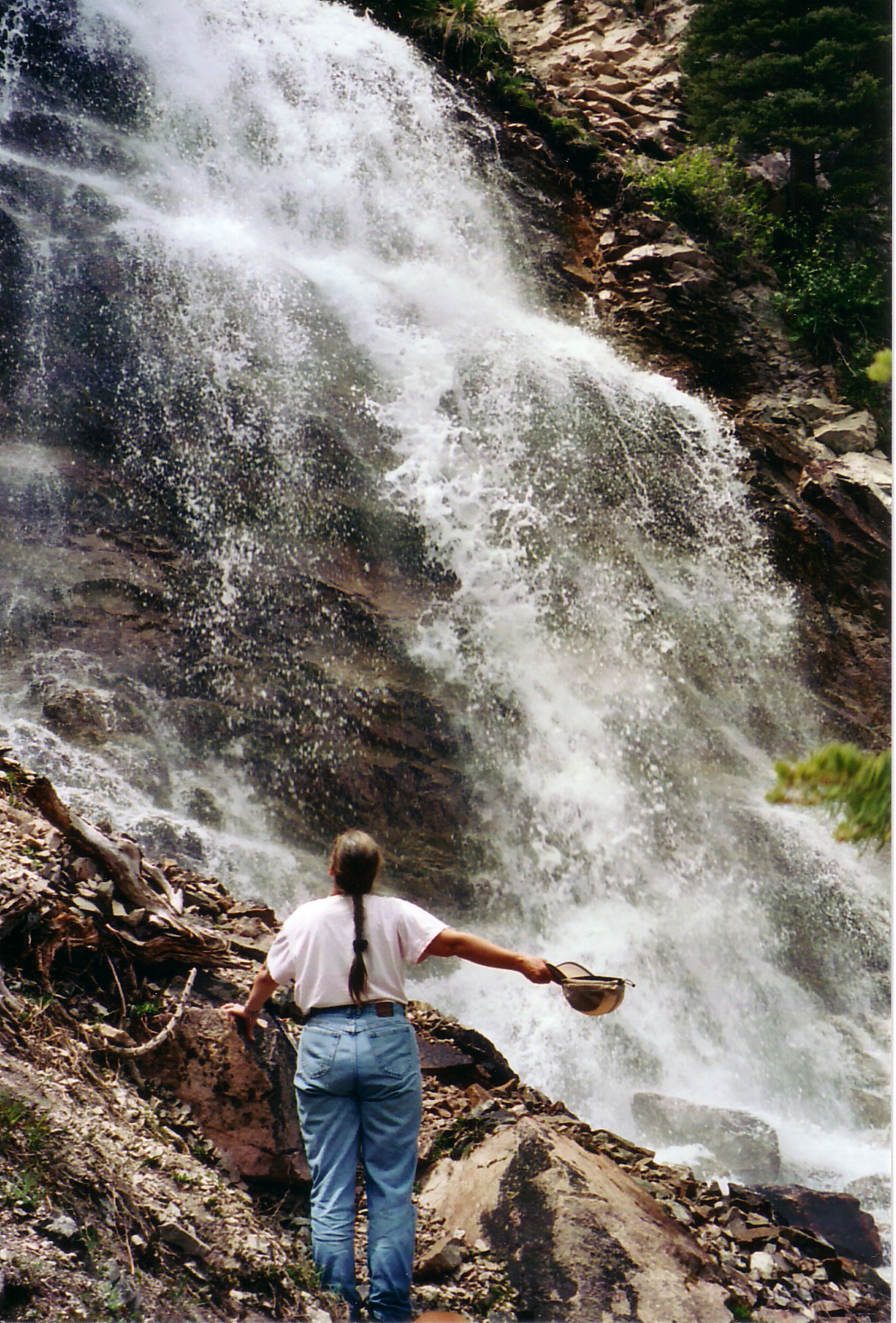
Bridalveil Falls

copyright 2010 Dia Osborn

My New Idol

Okay.  You have to see this.

For those who haven’t yet, here’s a photo of one little five-year old’s fantastic Halloween costume along with his mom’s commentary about what he was subjected to for choosing to wear it this year.  It’ll make you both gnash your teeth and cheer.  This cop’s wife at Nerdy Apple Bottom is my new idol, my hero, my role model for everything honorable, loving, and courageous.

And I adore her son.  He totally, totally rocks.

The story she tells is particularly insightful for the fact that she’s identifying and naming bullying at it’s very earliest stages.  And…surprise!  As always, it starts with the adults.  In her words:

“But it also was heartbreaking to me that my sweet, kind-hearted five year old was right to be worried. He knew that there were people like A, B, and C. [Editor’s note:  A, B, and C are other mothers at the preschool.]  And he, at 5, was concerned about how they would perceive him and what would happen to him.

Just as it was heartbreaking to those parents that have lost their children recently due to bullying. IT IS NOT OK TO BULLY. Even if you wrap it up in a bow and call it ‘concern.’  Those women were trying to bully me. And my son. MY son.”

I think this is what the source…the spring, the headwaters…of bullying looks like, how it appears right as it first starts seeping up out of the ground.  It’s well worth studying because it’s so much easier to stop it at this stage than it is after the kids pick it up.

And bravo Nerdy Apple Bottom!!  As you can tell by now, most of us out here are far more eager to celebrate your son than judge him in any way but the best.  I have no doubt that, with a mom like you behind him, the man he eventually grows into will be outstanding and a gift to us all.  Thanks for this!

copyright 2010 Dia Osborn

How Much Money Is A Dog’s Life Worth?

Well, Dane the rescue mutt’s digestive troubles mushroomed and Friday turned into an emotional day from hell.  He was off his feed on Thursday and by the following morning refused to eat at all.  This has never, ever happened.  Ever.

This dog has eaten grocery bags, sticks, and bread by the loaf.  He vacuums up windfall fruit, grazes on tomato bushes, and chewed an entire crop of carrots down as far as he could get into partially thawed soil.  He once frantically tried to swallow an entire fresh-caught mole without chewing when he saw me coming.  He eats grass like a cow, cow shit like a fly, and anything at all if it’s started decomposing.  He can down a huge, rawhide chew toy in under three minutes and goes through soft bones like taffy.

He’ll eat anything, gladly and at lightning speed.  We’ve exhaustively tried to train him not to and failed.  Short of a muzzle or strict house incarceration we can’t stop him.  So on Friday morning, when he refused to eat, I felt a flicker of real fear.

Then I discovered the brown, splattered stains of diarrhea all over the guest bedroom carpet.  (Visit? anyone? anyone?) Next I went out in the backyard and a quick survey of four days worth of dog excrement told me this problem had been developing for a while.  Dog flatulence was the least of our problems.  Dane had turned into a sick, little, hundred-pound puppy.

I finagled a vet appointment for 1:30 in the afternoon which left my mind roughly six hours to play in the field of worst case scenarios.  Bowel obstruction?  X-rays and surgery?  Another thousands-and-thousands-of-dollars vet bill?

Or euthanasia?

My mind leaped to these extremes for two reasons.  First, because I was still reeling from the $3400 cat bill last month.  And second, because the hubster (after I put in a worried call at work to let him know what was going on) informed me Dane spent some stolen time five days earlier feasting on rotting, bony, fish carcasses along the banks of the Salmon River.   The hubster and visiting friend had taken him with them on their fishing trip, and he sneaked off at one point and gorged himself on fish skeletons.  Fast forward to Friday and it was time to pay the piper.

Now, just to take you all off tenterhooks, the boy is fine.  The vet concluded the gastrointestinal upset was probably caused by a bacterial infection he picked up while scavenging all the crap.  He’s now dining on four, large, butter wrapped, antibiotic pills a day, along with moist cans of bland dog food.  He can’t believe his good luck and is touting the benefits of eating rotting fish to all who’ll listen.

What I really wanted to talk about here were some of the grim choices I considered during those six, hellacious hours of uncertainty, most of which revolved around the following question:  Financially speaking, just how much is a pet’s life actually worth?

Most pet owners eventually face a vet bill formidable enough to consider the question and feelings can run pretty high about what the answer should be.   There are, of course, the two extreme camps.

1)  People like this:

“Yeah, it is great when people have no money to care for their pet so they put it to sleep. They usually get another one too. Hope you are not that stupid. Pets are a luxury item and you need to be prepared for these type of problems.”

And 2)  the “it’s just a dog” people:

“I don’t know what the rest of you are smoking but its just a dog. I can see someone spending that kind of money to fix your child’s leg but not a pet!…In my opinion, you should let your dad take care of the problem, put it out of your mind, and pick up a new healthy dog at a shelter.”

But while both these views share the gift of moral simplicity, neither addresses the complex reality that an explosion of new, medical interventions has forced on us.

Once upon a time veterinary options were limited and, when it got serious, there was no choice at all.  It was just time to put Spot or Whiskers down.  But the evolution of veterinary medicine has catapulted us into a brave new world where, for those lucky enough to have deep pockets, there are now some real medical miracles available.  There are currently surgical and pharmaceutical treatments for animals that rival human ones, both in complexity and cost, but the majority of pet owners don’t have that kind of money.  In fact, these days most of us are struggling just to meet the demands of our own human, health care needs.

So if the first claim was true, that people who can’t afford new, higher vet bills shouldn’t have pets at all, it would eliminate a large number of potential pet owners.  Personally, I shudder to think what would happen at animal shelters across the country if this ever happened.  Adoptions would slow to a trickle and the number of animals being euthanized for non-medical reasons would balloon.

On the other hand, most people would (thankfully) disagree with the second opinion…that we should look at our pets as disposable possessions, like Bic lighters or paper plates.

So where does that leave the rest of us?  How are we supposed to navigate the conflicting requirements between taking in a beloved companion and not being able to afford catastrophic costs?

Well first of all, I think the original question, How much is a pet’s life worth?, is inherently flawed.  The life of an animal can no more be measured in monetary terms than the life of a human being can.  Life is life.  It’s sacred.  It’s one of the great Mysteries.  We can’t create it or even make it last all that long once its appeared, and it’s ridiculous to try to reduce something transcendent like that to a pile of cold, hard cash.

Yet, here’s the rub:  Even though ultimately we have no control over this thing called life, we’re still all assigned as stewards.  We’re each responsible for at least our own and, every time we drive a car, own a pet, have a child, or vote on a health care bill among a million other things, we’re also shouldering responsibility for the lives of others.  There’s no escape.  And while sometimes this responsibility is a beautiful, luminous gift, sometimes, like when we have to make a life and death choice for ourselves or another, it can morph into a near-unbearable burden.

I cried off and on all morning, waiting to take Dane to the vet.  His illness unexpectedly sucked me down to a place where I found myself considering The Choice.  There was a possibility that we might be facing yet another vet bill mounting into the thousands of dollars and we had to decide whether we could really afford it.  For whatever reason, Dane has been a disastrously expensive pet.  Over the course of the last five years, between health issues, accidents, special nutrition needs, and a strong predatory instinct, he’s cost us into the five digits.  We never dreamed a pet could cost this much.  His needs have eclipsed the expense and work required by every other animal we’ve owned combined, and yet we continue to adore him because he’s an affectionate, joyous, grateful dog who tries so very, very hard to make us happy.

But in the end, we’re not among the lucky few with unlimited financial resources.  At some point, because Dane is the wild, fragile, phobic, allergic, epileptic, boisterous, playful, smart dog that he is, the mounting costs are going to exceed what we can pay without jeopardizing other critical family needs.

And that, my friends, is where I think the real question lies.  Not How much money is a pet’s life worth? but How do I balance the financial needs of my pet with the financial needs of the rest of us? At what point exactly do my spending choices move me from being a caring, responsible pet owner into a negligent parent, spouse, offspring, or general member of society?  Our pets are a big responsibility but they’re by no means the only one.  This will always be a difficult question because there’s no firm answer, each case is unique, yet most of us will eventually have to answer it one way or another, either consciously or by default.

For us, because Dane is only one member of a larger family, someday we’ll probably have to make The Choice and it will probably be devastating and, yes, money will probably play a role.

But let’s be clear.  While finances may set the final parameters for what we can give him medically, money will never, ever define his worth to us.  It can’t.  It can never measure the depths of his big, beautiful, generous heart, or the love, joy, and adventures we’ve shared, or our unending gratitude at being chosen, for at least a little while, as the stewards of his life.

copyright 2010 Dia Osborn

Dog Fumes

I don’t know what he ate but his inability to digest it could kill us.  You could swim in this smell.  Carve holes in it.  You could sew it into a coat and wear it to attract lobbyists.  I think it’s tinting the upholstery.  It’s that bad.  If you don’t hear from me within three days, suspect the worst.

(Image: Wikipedia)

copyright 2010 Dia Osborn

Incurable Miracles

One of the most common responses I used to get from people when they found out I worked with hospice was, That must be depressing. I was never quite sure how to answer that.

Because it wasn’t depressing at all.  It was a whole lot of other things; hard, heartbreaking, inspiring, curious, overwhelming, humorous, wonderful, challenging, exhausting, transformative, and ultimately very, very uplifting.

But never depressing.  Not once.  And I’m a depressive.

I’ve been riding the cycles of major depressive episodes for almost two decades but, far from aggravating the symptoms, hanging around with dying people actually helped.  They showed me what it can look like, living in the world of no-cure.  How being incurable in no way limits the ability to make your miracles.

I’d always thought the dying were about-as-good-as-dead, so imagine my surprise to discover they’re actually still very much alive.  In some ways more than most people.  Dying didn’t suppress their ability to live, it enhanced it.  They still felt everything we all do, only times a million.  They were throbbing with life.  Writhing and radiant from it.  The fact that some of that life was transcendent love and some was sheer hell was incidental.

Life has always been a package deal.

So anyway, I’ve never been able to explain this beautiful side of dying with words.  But here’s a video called The Unseen Sea by Simon Christen that captures the essence of it.  This is how it felt during the hours I spent with them, turning and toileting, bathing and dressing, capturing all the last whispered, aching, illuminated stories of their lives.  It often felt like floating on an ocean, carried along by some timeless, perpetual current that ebbed and flowed, swirling around us, filmy and comforting and soft.

This is some stunning time lapse photography of the changing skies around San Francisco.  Just make sure you turn up the sound because the music is exquisite, too.

The Unseen Sea from Simon Christen on Vimeo.

You can find the original posting of this video at Simon Christen’s Vimeo site here.

copyright 2010 Dia Osborn

Facing the Coward Within

Bullying: Image from Wikipedia

I was raised military.  My father was a career warrior, my mother was a career warrior’s wife and, in our house, adherence to a code of honor was required.  The code went basically like this:  honorable people practice courage.  They stand up for what’s just and try to protect those who are more vulnerable than them.  It’s what my father was fighting to do for us every time he went off to risk his life, and it’s what we were expected to do back home while he was gone.

The opposite of honorable people, we were taught, were bullies because they target the vulnerable instead of protecting them.  An act of bullying was cowardly and dishonorable because it didn’t offer any kind of meaningful challenge.  It was weak, a sign that they didn’t think they could face somebody their own size.  That’s why men never hit women or children, women were the protectors of children, older kids didn’t lead younger kids into trouble, and nobody targeted old people, disadvantaged people, or animals.

It’s was okay to fight with equals though.  That’s how we honed our skills.

In the last month or so the disturbing number of boys and young men committing suicide because of bullying has finally hit the headlines.  The recent cases were all targeted because they were gay or perceived as gay and the bullying grew so vicious and sustained that it finally became unbearable.   This is hardly a new phenomenon.  Our gay, lesbian, bisexual, and transgender children have always been among our most vulnerable,  but far from receiving the additional support and understanding every vulnerable child needs, they’ve traditionally been scapegoated.  And they’re not the only children being driven to these kinds of extremes.  While those who seem different are always at highest risk, with the anonymity that cyberbullying provides, any child can now be targeted and potentially destroyed.   We’ll probably never know just how many of our children we’ve lost to the pain and despair this kind of treatment inspires, but the rates seem to be rising and I’m deeply grateful the issue is finally getting mainstream attention.

It’s not easy to manage the intense rage these incidents can invoke.  However I know that, while justice is necessary, we can’t just turn around and scapegoat right back in a blaze of self-righteous smiting.  Even though that provides a measure of relief in the short-term, in the long run it won’t change the dynamics of the bullying going on.  It’ll reinforce them.   Bullying the bullies is not a strategy for lasting change.

Like any kind of deep and meaningful change, it has to happen on the individual level first before the society as a whole can change.  We each have to look in the mirror and find the bully that’s lurking within.  Then we have to own it and challenge it, whenever and however it shows up.  We all have issues of cowardice and dishonor hiding down there.  It’s part of being human.

Look.  If we, as a society, genuinely valued honor and courage the way we claim to, this level of bullying would never have gotten a toehold.  But we haven’t valued those things.  We’ve valued their opposite.

Not only have we tolerated escalating levels of bullying for years, we’ve encouraged and rewarded it.  We’ve laughed at the comedians and gossips (conservative and liberal) whose jokes are harmful and belittling.  We’ve tuned into radio stations and analysts (conservative and liberal) that blast, rant, spew, and demean.  We’ve allowed ourselves to be swayed by the politicians (conservative and liberal) who turn us against one another.  We’ve divided our very communities, neighborhoods, and schools into those who are like us and those who are not, and then shunned, mistrusted, belittled, or even targeted, the latter.  We have all done these things to varying degrees.

And now we’re reaping the whirlwind that we’ve sown.

These shining, beautiful boys who are now lost belonged to every last one of us, and we’re all to blame for the fact that they took their own lives in order to escape the society that we created for them.  The gifts they carried and contained for the rest of us– their joy, determination, promise, insights, creativity, solutions, strength, courage, sacrifice, and love–is now gone.  Lost.  Forever.  We’ve not only flagrantly and stupidly wasted the greatest treasure that any nation has, its children, but we’ve also invited an epidemic of suicide into our midst.   While there were specific individuals involved in each case, that in no way absolves the rest of us from the thousand, thousand little ways we each helped to establish a culture of bullying in the first place.  Nor does it relieve us of the responsibility to do whatever is necessary to change it now.

Here’s a role model that’s helped me.  I’d like to leave this post with one of the most inspiring examples of courage and selflessness I’ve seen come out of all this.  If anyone is wondering what the kind of honor I’m talking about looks like in practice, please take the time to watch this.    It’s a video (about thirteen minutes long) of a city councilman in Fort Worth, Texas who is risking his career in order to reach out to those who might also be considering harming themselves.  He’s speaking specifically to gay children but the message goes far beyond that.

It’s one of endurance, love, and faith, and speaks to anyone who’s ever experienced the kind of despair that can lead to a journey down the dark road.

copyright 2010 Dia Osborn
Shhhhhh…..

image: Shhh by Str8UpSkills

Once again I’m reminded that most people don’t enjoy talking about dying the way I do.  Last night we had a guest.

A long-time friend of the hubster’s arrived yesterday evening after a lapse of at least fifteen years, and the three of us sat down to do some catch-up over platters of nachos, ginger snaps, and tea.  The conversation ranged back and forth between us, as good conversations are supposed to, until it tripped over the subject of my hospice work at which point my enthusiasm for the topic hijacked the next half hour or so.

Looking back now I can recall a few moments that should have cued me to our guest’s growing discomfort.   Initially he squirmed, but that wasn’t definitive.  It was always possible that our cozy, leather couch was making him uncomfortable.  Then he took a stab at changing the subject…twice…but I can be like a rat terrier when locked onto something that interests me.  The hubster finally stepped in to back him up on a third attempt but I deftly steered that topic back around to dying, too.  

Finally, I started hearing terms like “morbid” and “depressing” thrown into the mix at which point I realized I really, really needed to shut up, but it was too late.  I was having a Toyota moment.  My tongue was like a gas pedal pushed to the floor, resisting any and all attempts to disengage it, and I couldn’t for the life of me close my mouth.  I just couldn’t.  I watched our guest’s eyes dart around the room, looking for a path of escape as I came barreling down on him, but no matter how I pumped the brakes my mouth just wouldn’t stop.

The hubster finally seized on a millisecond of silence (supplied by my need for air) and stretched his arms, yawned, and claimed it was time for bed.  At 8:30.  Our guest seized the opportunity and made a break for his room, a polite good night trailing over his shoulder as he disappeared behind the door.

Needless to say, I woke up in the middle of the night feeling the peculiar kind of dismay and regret that only 3:00 a.m. can inspire.  Why do things always look so much worse at that time of night anyway?  The darkness and silence of those hours are like some kind of weird, mental magnifying glass, blowing up even harmless thoughts into looming, misshapen monsters, never mind an embarrassing, social faux pas.  I spent the next two hours tossing and turning, obsessively crafting a range of apologies (from dignified to humorous to prostrate) before finally dozing back off again from sheer exhaustion.

The hubster woke me up in the morning and the first thing I did was sit up, throw my arms around his neck, and tell him how sorry I was for being such a motor mouth.  He burst out laughing.

Tough night? He hugged me back.  You weren’t that bad.  Really.  I stopped it before it went too far.

And by god, I loved him for the effort….for trying to tell me it wasn’t as bad as it was, for laughing at my flaws instead of condemning them, and for shrinking the midnight monster back down to a more manageable size.  Whether what he said was true or not is beside the point.  (I’m pretty sure our guest paused and peered both ways before venturing out of his room this morning.)  The important thing is that he cared enough to say it.

I ended up not apologizing to the hubster’s friend.  Partly because I thought it would just embarrass him to bring it up, partly because I didn’t trust myself not to try and explain again why the topic of dying is so important to me.  He didn’t need to hear anymore about it.  Unlike me, his earliest experience with dying was traumatic and scarring, and no amount of sharing from my side was going to wipe away the long shadow it left in its wake.  I can’t believe I missed that.  I wish I would have talked less and listened more.

I’ll try and remember that next time.

copyright 2010 Dia Osborn