PARAPROSDOKIANS

I’m a language geek, which is why these kinds of word plays appeal to me so.  My brother forwarded the following to me in an email (my siblings are all language geeks, too) and I loved it so much I thought I’d post it here.

From the email: 

What in the world is a paraprosdokian? you ask.  Well.  It’s “a figure of speech in which the latter part of a sentence or phrase is surprising or unexpected; frequently used in a humorous situation.” 

For instance, “Where there’s a will, I want to be in it,” is a paraprosdokian.

OK, so now enjoy these:

1. Do not argue with an idiot. He will drag you down to his level and beat you with experience.

2. Light travels faster than sound, which is why some people appear bright until you hear them speak.

3. War does not determine who is right – only who is left.

4. Knowledge is knowing a tomato is a fruit. Wisdom is not putting it in a fruit salad.

5. You do not need a parachute to skydive. You only need a parachute to skydive twice.

6. There’s a fine line between cuddling and holding someone down so they can’t get away.

7. Hospitality is making your guests feel at home even when you wish they were.

8. When tempted to fight fire with fire, remember most people use water.

And then, because eight is simply not enough, I found some additional paraprosdokians in a Wikipedia article.  Here are some of those:

  • “If I am reading this graph correctly — I’d be very surprised.” —Stephen Colbert
  • “If all the girls who attended the Yale prom were laid end to end, I wouldn’t be a bit surprised.” —Dorothy Parker
  • “I’ve had a perfectly wonderful evening, but this wasn’t it.” —Groucho Marx
  • “I like going to the park and watching the children run around because they don’t know I’m using blanks.” —Emo Philips
  • “If I could just say a few words…I’d be a better public speaker.” —Homer Simpson
  • “I haven’t slept for ten days, because that would be too long.” —Mitch Hedberg

And here are two more I just found here:

  • “I don’t mean to sound bitter, cold, or cruel, but I am, so that’s how it comes out.” — Bill Hicks
  • “It’s too bad that whole families have to be torn apart by something as simple as wild dogs.” — Jack Handey

Enough!!  I dare you to Google paraprosdokians yourself…I just dare you.

copyright Dia Osborn 2011

A Blip From The Book and A Love Story That Feeds The Earth

I’m participating in a tele-writing workshop which runs through the middle of January so I’m transferring most of my writing attention over to the book for the next six weeks.  (A badly needed redirection I might add.  As most of you probably know, blogging can get a little addictive.)

What I thought I’d do to keep up here is post bits and pieces of whatever I’m currently working on for the book as well as (of course) any other odd and unrelated beauties I stumble over during one of my inevitable distracted periods.  Today, I have one of each:

Here’s a passage from the book that talks about what I went through after the first time I told someone they were dying:

“But even though that’s what I would have preferred, there was no time left for it.  To question slowly requires time, but what if Elsa wanted to know before it was too late?  What if she wanted me to tell her?  What if she said that to me because she saw me as a person who would be straight with her and deliver the news, bad as it was?  Someone who would help her understand what was happening and alleviate her growing confusion?  Help her back to the core and strength of who she was; a woman who preferred the truth.  Who preferred straight dealing.  Who didn’t want anyone to protect or pity her.  A woman who needed someone to respect her strength and treat her like a competent human being rather than an invalid.

There were other times, other days, when I offered slow questions.  Like the day I asked her if she knew that I worked for hospice, or the day I asked if she believed in an afterlife.  Those questions were my bait, asked with the hope of luring her into a conversation about what was happening to her, but on those days she clearly didn’t want to know.  She shrugged them off and changed the subject, letting me know she wasn’t willing to discuss it. 

And I respected that.  I wasn’t attached to her believing that she was dying.  I had no problem with her passing away in the midst of denial if that’s what she preferred.  I was a little uncomfortable when she talked about all the things she’d do when she got better, uncomfortable pretending…but not much.  If that’s what she felt like she needed then I was O.K. with it. 

After all, it was about her.  Not me.

But then that moment came and it blindsided me, when she finally wondered.  When she looked at her belly and stroked her long-fingered hands softly along the sides and said in that small, bewildered voice, “I don’t know why I’m not getting better this time.”  And for one brief, fraught moment she was clearly lost.  Vulnerable.  As if she’d thought she was traveling through familiar terrain and suddenly looked up to find herself in strange surroundings.  Pausing. Suddenly uncertain.  Puzzling softly.

“It’s never lasted this long before.”

It was a fork in the road.  A split second when she could have gone either way, back into denial or forward into truth.  For a heartbeat, a blink, a breath she was open.  Lined up.  In range.  Positioned to receive a message should one happen to come and in that brief moment the responsibility for making a choice of whether to send that message or not fell on my shoulders.

Fuck.

In the moment it seemed so simple…because I would have wanted the truth if it was me, because she had just told me how she preferred straight dealing, because that was how we had been with each other all along…I chose to tell her that it looked like it was her time to go.  That she was dying.  And because it was my choice, my responsibility, and my burden, I was required to look into her eyes and see what it means to strike a mortal blow.  To snuff out hope.  To feel her hand suddenly slip from mine and watch her fall silently away into a dark abyss, her eyes stricken, locked on mine as she grew smaller and smaller.

Is that my penance here?  Is that the asking price for dabbling around the brink of infinity?  Is it a stern reminder that I need to tread more carefully?  That grace is love, yes, but also incomprehensibly vast and unknown and terrifying?  Somewhere in the back of Elsa’s eyes I saw something looking back out at me and warning:  Be careful, Dia.  Always be careful with one another.

Was I wrong to say anything?  Should I have withheld the information and kept my mouth shut?  I don’t know.  I don’t know.

I don’t know.”

Breathe…don’t forget to breathe.

And then here is an oddly beautiful thing I found and just had to share.  It’s a video by Louis Schwartzberg called Wings of Life that “is inspired by the vanishing of one of nature’s primary pollinators, the honeybee.”  It’s absolutely breathtaking…slow motion cinematography of brief and tiny lives…and I highly recommend watching it if you’re feeling any heaviness after reading the above blip.  It’s really just all part of the same Life, y’know?

copyright Dia Osborn 2011

Terrible Best Buy Commercial(s): “Game on Santa”

(Update:  For those people wondering who the actress is in this commercial, she’s Jama Williamson who has a recurring guest role on Parks and Rec.)

Notice of change:  The holiday is now called Bestbuymas.  (Term comes from Paul in comment 289.  My thanks.)

What in the world was the management of Best Buy thinking here?  This offends me.  It offended the hubster.  It offended Beloved Daughter and her boyfriend.  It offended everyone in our extended family who had to sit and watch it during an otherwise fantastic college football game Thanksgiving night.  They’re actually dissing Santa Claus if you can believe it.  Here…you can watch for yourself:

What strikes me as wrong?

1) The message of the commercial seems to be that Santa Claus…Mr. Spirit of Christmas himself…is now not only inferior to a retail, big box electronics store, but pathetic and unnecessary.

2) It’s like a weirdly inverted Grinch Who Stole Christmas, only this time they’ve turned Mom into the Grinch. Mom. Now that’s twisted.

3)  The woman in the commercial is not only mean to Santa, she doesn’t even like her own dog enough to fill its stocking.  Evidently, only those members of the family who can consume electronics merchandise count in her home.

4)  Santa Claus is the mythical embodiment of generosity, tolerance, and good will to all.  His gifts are free.  Beating up on Santa is like beating up on charity.  Who’s next in the crosshairs?  Toys for Tots?  And worst of all, they’re doing this during an economic downturn when one out of every five children is living in poverty and more than a third of our population is struggling on a low income.  It’s tasteless.

5)  They seem to be championing materialism again.  Did they somehow miss the last three years?

6)  They’re running these commercials during prime time when little kids are watching TV.  I’m glad my kids are grown so I don’t have to explain to them both that I know you love Santa, honey.  Of course, I’ll still let him come to our house. 

Now don’t get me wrong here.  I think Best Buy is a great company.  I like their brand and our family has bought big ticket electronic items from them in the past, with no regrets.  We’d go again in the future, too…but not as long as they’re running this unfortunate ad.  I think they took a big risk here…which I respect, risks are necessary…but I think this time it was a big mistake.  That’s how it struck our family anyway.

Anybody else have an opinion on this one?  I’d be interested to hear what other people think.  (And for those who enjoy this style of humor and disagree with my take on the commercial, here’s an alternative post you’ll probably prefer.  Go and be happy there.  I don’t think any of you are soul-less.  I dislike the commercial, NOT you!)

(Update 2:  And here’s a head’s up from commenter Jen:  After a series of similar themed commercials, Best Buy has now come out with one that may be closer to what  they wanted to convey all along.  At least it seems that way to me.  There’s finally at least a little give and take going on between parties, which makes it look more like a gift giving competition that Mom is trying to win rather than a situation where she’s being intentionally cruel to someone who’s trying to do some good. It sounds a little more like teasing and less like abuse. The name calling still really turns me off, but I get that it’s part of the set up for Santa’s response.  I laughed at the end where she’s giggling.  It’s a big step up from the usual look of contempt. Thanks Jen!)

copyright Dia Osborn 2011

The Gratefulness Exercise

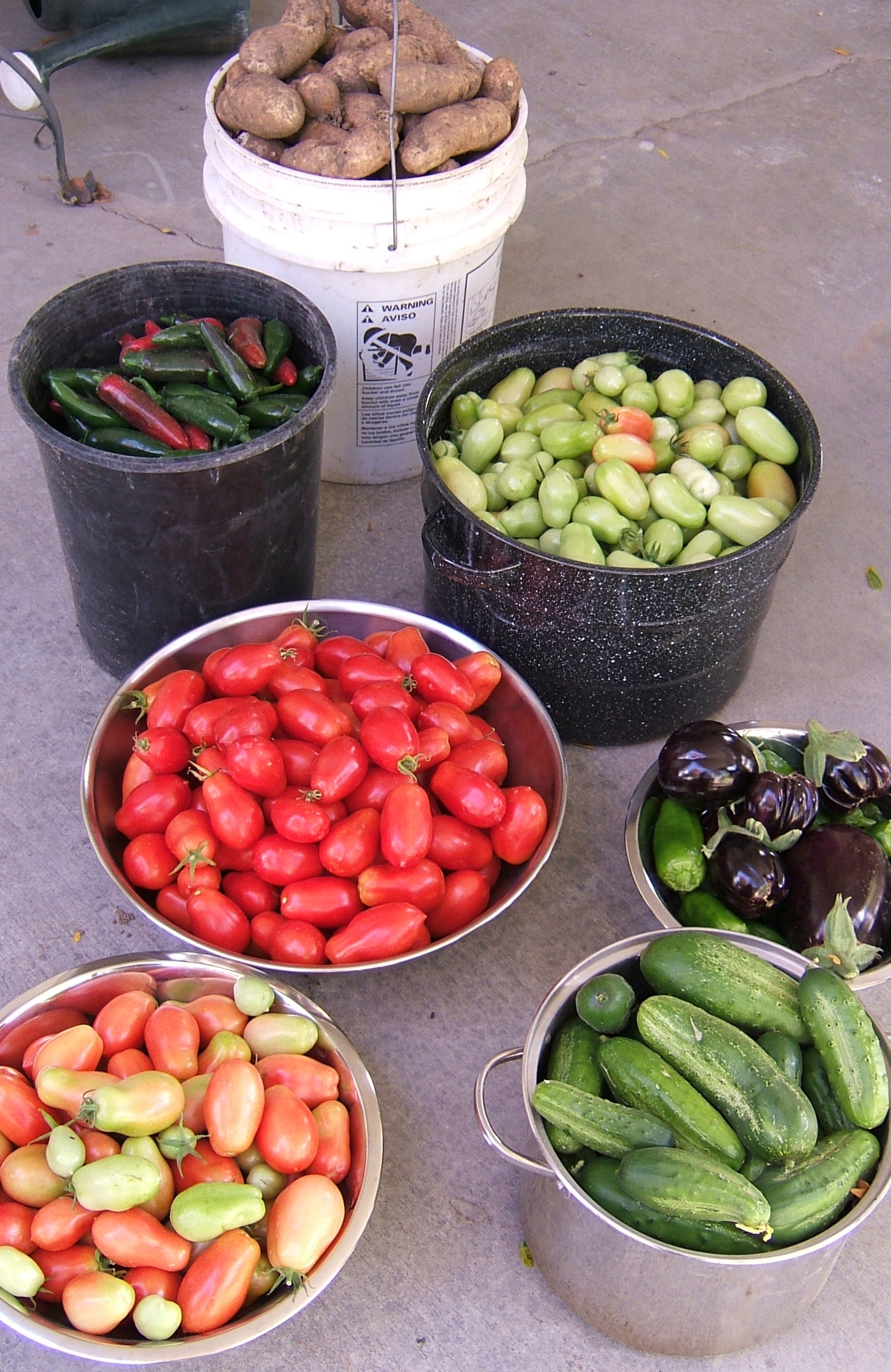
Part of this year’s harvest.

Thanksgiving is on Thursday so naturally I’ve started thinking about what I’m most grateful for this year.  (Or any year for that matter.)  I thought I’d try for at least the top ten here:

1)  Thank you for my life.  (This is always number one because the fact that I’m still alive after 53 years is nothing short of amazing to me.  For however long it lasts, thank you thank you thank you.)

2)  Thank you for starlight, waters, storms, mountain vistas, seasons, and the hikes I’ve taken through all of them. 

3)  Thank you for things I can’t control.  I hate them but I know they’re good for me.

4)  Thank you for yogurt.

5)  Thank you for the hubster, beloved son, and beloved daughter, as well as giving them the patience to love me back when I’ve made it hard.

6)  Thank you for Dane’s epilepsy cure and helping him to still be able to walk after all.  I was so scared for him.

7)  Thank you for this blog and the chance to have a voice.

8)  Thank you for all the help and support from people over the last year.  In fact, thanks for all people everywhere.  Doing this whole life-thing alone would have really sucked.

9)  Thank you for the depression easing up so much.  I can’t tell you how good it feels to be hopeful again.

10) And lastly, thank you for both light and darkness.  Having both helps keep everything in perspective, y’know?

Here’s wishing everyone a meaningful Thanksgiving full of love and healing.

More of the harvest. Yum!

copyright Dia Osborn 2011

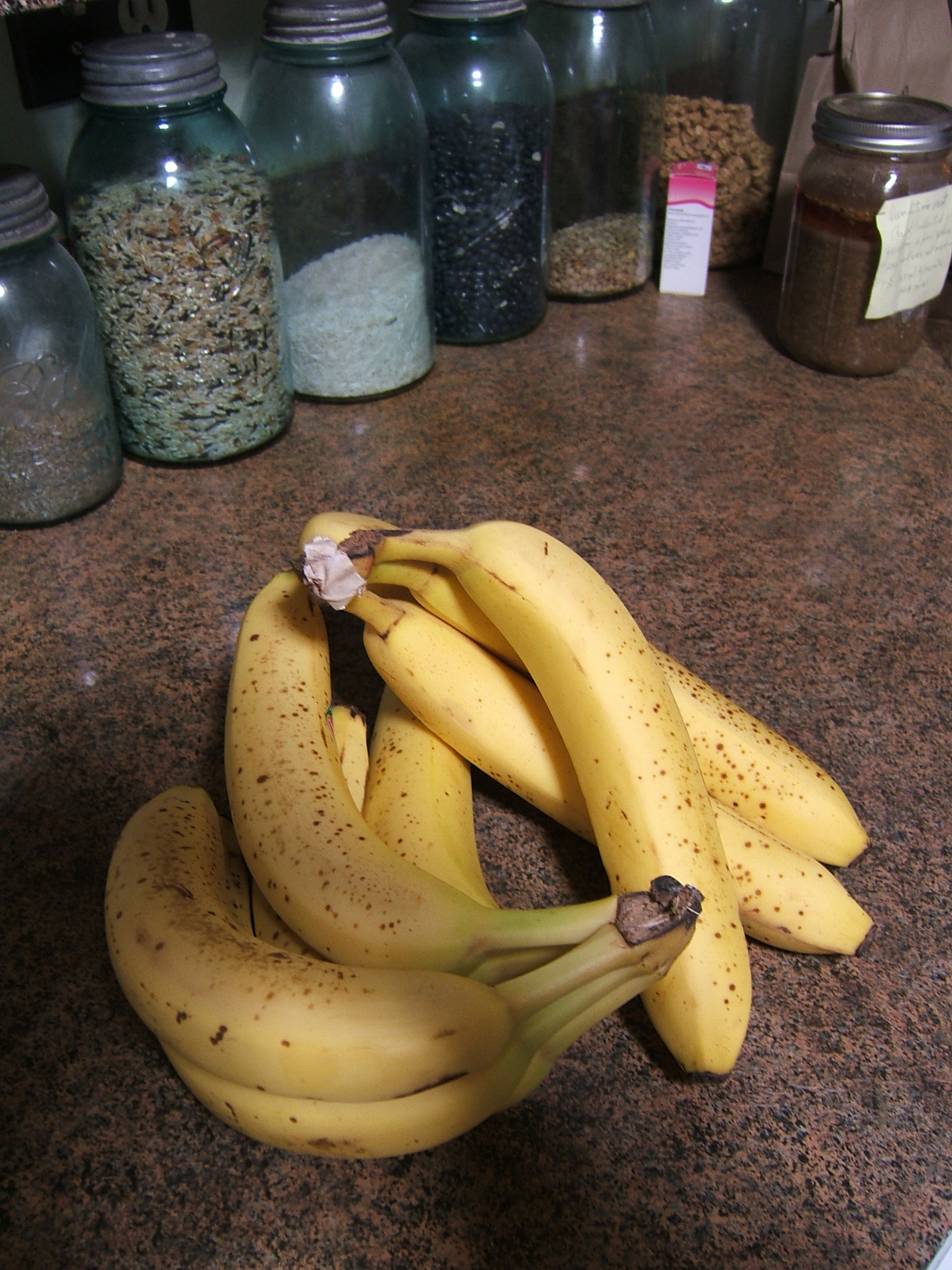
“Nobody ever got fat eating bananas…”

At least that’s what our Weight Watchers leader told us at our orientation meeting two and a half weeks ago.  On this program fruit is “free,” which means we get to eat as much of it as we want.

I’m in heaven.

P.S.  That’s not really me in the photo.

(Image from Fat Banana)

Hey Advertisers: We’re hiding from you for a reason

Linda over at Rangewriter wrote an insightful post titled What is the deal with women’s nipples? where she looked at, among other things, T.V.’s inconsistent censorship of different parts of human anatomy.  It’s an interesting read.  The following thread began on topic but eventually wandered off into rants about commercials…which caught my attention because I totally share their sentiment.  It seems pretty much all of us loathe commercials.  In fact, we dislike them so much that we develop strategies and often purchase/rent expensive hardware just to avoid them.  But of course advertisers know this and are growing ever more cunning in their attempts to trap us into watching them anyway.

In a way it’s amusing.  Our viewing behavior reminds me of octopuses.  Linda also recently tipped me off to a fascinating article titled Deep Intellect which explores the amazing intelligence of these creatures and how recent discoveries are causing scientists to rethink what they know about intelligence in general.  At one point the author describes how octopuses in a research center resisted being taken out of their tanks to be tested in a maze.

“Some octopuses did not like being removed from their tanks. They would hide. They would squeeze into a corner where they couldn’t be pried out. They would hold on to some object with their arms and not let go.

Some would let themselves be captured, only to use the net as a trampoline. They’d leap off the mesh and onto the floor—and then run for it. Yes, run. “You’d chase them under the tank, back and forth, like you were chasing a cat,” Warburton said. “It’s so weird!” “

When I think about how hard we try to escape the commercials that advertisers try and trap us with, I can’t help but think of the octopuses.  We’ve been quite industrious and creative in our attempts.  We started by going off to other rooms during breaks but advertisers just turned up the volume on commercials.  Then someone invented the mute button.  Then someone went one better and invented TiVo so we could first record and then fast forward right through the ads.  Everyone at some point uses commercial breaks to just go off and do other things.  In fact, this behavior is so well known it’s taken for granted.  At a recent Weight Watchers meeting, the handout (distributed to WW meetings nationwide) suggested using commercials to get up and do sit-ups, speed walk around the house, jump rope, or otherwise exercise.  Avoidance of commercials has become institutionalized.

The predator/prey relationship that’s developed with modern advertising (actually, it’s starting to feel a bit like stalking) seems short sighted to me.  Why don’t advertisers, rather than trying to hunt us down and pin our eyelids open, just make better commercials?  Something that people want to watch?  We all know they can do it.  There are some amazing commercials out there, ads we enjoy because they educate/enlighten/move/entertain us.  For example, the commercials made for the Super Bowl each year have become one of the highlights of the game…they even have their own spin-off show.

Advertisers need to realize that it’s not that we don’t want to watch commercials, it’s that we don’t want to watch boring commercials.  They’re perfectly capable of giving us something valuable in return for our attention…a fair and reasonable exchange which most people could get behind.  And if they did I imagine it would go a long way towards developing some brand loyalty instead of making us want to avoid a company as much as we want to escape their annoying ads.

Here are a couple of my personal favorites, commercials that I would not only willingly watch during a break in any TV show, I would (and did) hunt them down on the internet to watch again afterwards of my own volition.  (Not to mention feature them in a blog post.)

First, this thought provoking commercial from Carlsberg Beer:  The Bikers

Second, a mythically humorous one from Toyota: Shoot it!

Third, pure fantasy from James Boag’s Draught:  Pure Waters  (Beer makers as a group seem to already understand what I’m talking about.)

Fourth, some amazing innovative design from Audi:  Audi RS6

And then of course, there is my personal all time favorite, this inspirational commercial from Pantene:  The Violinist

This, of course, is only a tiny example of the excellence our advertisers are capable of. The Clio Awards are given each year for the best in advertising in all forms of media, the world over.  You can see some of the other excellent commercials that have won in previous years in this small sample on AEF, the Advertising Educational Foundation.

copyright Dia Osborn 2011

Season of Soup

Some parents’ newly-adult children continue to come home for monetary handouts or a place to do laundry.  My daughter returned to graze from the big pot of soup I always had simmering on the stove.  Soup is my staple.  My life.  It’s the natural expression of my inner low maintenance and generally uninspired chef.  If I lived alone and never had visitors the only utensils I’d own would be a couple of spoons and a large, glass bowl.

Although I admit, in the last couple of years since we stopped using air conditioning and turned to the whole house fan at night for our summer cooling, I’ve reluctantly turned towards cooler foods like salad with miscellaneous grilled things on top.  It’s an oh-so elegant alternative to soup since it can  also be served in a bowl.  But when the sun finally, finally! starts it’s slanting descent–when I sense the first hint of autumn chill on the wind–I breathe a happy sigh, get down on my knees, and drag the cauldron out from the back of the cupboard again.  The season of soup is returning.

This shift from summer to fall cooking is like my version of migration; a genetic impulse surfacing from a lost and lazy ancestor in the past, a distant grandmother who cared as little as I do if the different food groups touch each other beforehand.  Clearly, she was not from a Mediterranean climate with its joyful people who eat for love and beauty.  No, she came from someplace cold and dark, with long winters and fur shoes.  A far northern locale with scarce and unimaginative food like root vegetables and frozen meat.

She would have had the northern lights in lieu of cuisine, though, and she would have loved them.   I got that from her, too.  I’d trade a rich sauce for the Aurora Borealis any day of the week.  Here’s a Youtube video that explains why.  (For the genitalia-averse, please beware the explicit educational ad for condoms tucked in amongst the tile display of ads afterwards.  But for anyone still mystified as to proper application, this ad is probably for you.)

Today it’s in the 30’s outside and I have a cozy fire burning in the woodstove and eight or nine overripe bananas sitting on the countertop.

Traditionally I would’ve used them for banana bread but the hubster and I have recently started a diet and sweet breads, while allowed, are challenging from a portion-control perspective.  (Forgive me, but half a slice?  Really?  Whoever thought that up must have been tongueless.)  So instead I’m considering an exploratory foray into some kind of a sweet soup.  Perhaps mixed with chicken broth, caramelized (which I used to call burned-because-I-was-distracted) onions, butternut squash, cream (damn…I mean nonfat milk) and lime pieces?  Or should I go with a spicy red curry stew, with onions, pumpkin, peas, and coconut milk (damn…I mean lite coconut milk mixed half and half with nonfat milk)?  It all sounds so exotic, so gourmet, I know…until one realizes I’m driven solely by a depression-era hoarding instinct (also inherited from cold and hungry forbears) that disallows the waste of a crumb.  I could no more throw away a banana than I could eat my own child.

But oh how good it feels to be cold again.

copyright Dia Osborn 2011

(Ha ha!  Written in under two hours!!  Progress is made.)

CSA’s and Thoughts About How Hard It Is To Address Childhood Sexual Abuse

I have to start writing faster.  I’m too anal and obsessive, to the point where I spend three hours on a sentence that I should just delete.  Then I do.

(I’m now fighting off the compulsion to go back and extensively rewrite the previous three sentences before I can move on.  Sigh.)

So, since I’m up against my deadline today, and since I’ve wasted the entire week on writing and re-writing a few paragraphs of a post that I’ve now decided not to use, and since I now have nothing to show for all the hours I worked, today I’m going to just write something and then throw it up in the air to see if it flies.  Here goes.

First, CSA’s (Community Supported Agriculture.)  We joined a CSA hosted by a local farm this year and it’s been a terrific experience.  Our membership included a set poundage of locally grown, organic fruits and vegetables each week in addition to which we splurged for a free-range chicken or a dozen eggs on alternate weeks.  It’s a whole different way to eat, let me tell you.

We met a number of new vegetables we don’t normally consume (lemon cucumbers and purple potatoes…yum!!, beets…no.  An unfortunate childhood brush with forced feeding seems to have ruined me forever for beets…) and menu planning was an exercise in surrender and total flexibility.  I had no idea what I’d find in the bag from week to week so Tuesday nights involved a steep learning curve and creative (if not always edible) menu planning.  I was feeling increasingly overwhelmed by it all until the lucky discovery that I could throw everything I didn’t know what else to do with into a roasting pan, coat it with olive oil, and then grill it for half an hour.  No waste, little effort, and surprisingly tasty results.

Here’s a pre-roasting photo of some beautiful, colorful mixed vegetables we got from the farm:
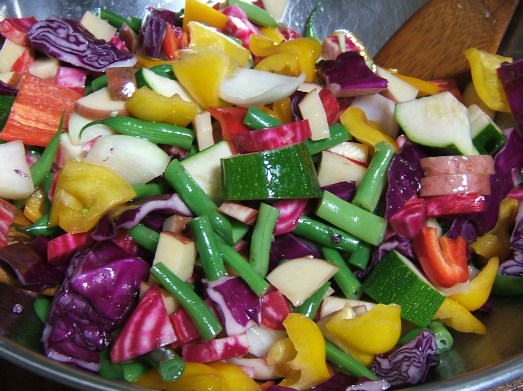
It was like eating a trip to Mardi Gras.  What a pleasure.  We’ll definitely be signing on as CSA members again next year.

And now, the difficult part of this post.  The avalanche of shocking revelations this week of child sexual abuse in the showers at Penn State stirred up a lot for me again and…I’m sure…many others who live with that particular legacy.  It also, unfortunately, stirs up a lot for those who love us.  The coverage was so extensive it proved impossible to escape and of course it dredged up old ghosts.  I grew increasingly agitated as the week progressed which inevitably led to the hubster and I having an emotionally loaded discussion about it all which was painful and distressing.  My tail was lashing and claws were out, and he was doing his level best to listen without actually emerging from the behind the door where he might become a possible target himself.

But somehow, in spite of the dangers, we stuck with the discussion, refusing to collapse back into the standard, polite silence that Big Lie insists is more civilized but is really just poisonous and creepy and awful.  The hubster stayed near-but-not-too-close until my wild anger finally broke and the rain of tears began, at which point he knew from experience it was safe to come out and help me wrestle the remaining storm of emotions back to the mat.

We had a really great talk after that and wound up finding a lot of hope and anchors to tie into, and by the time we were through we both felt a lot more positive, strong, and courageous looking forward than we had beforehand.  Here are a couple of the insights we came too:

First, Silence is the biggest enemy we have, bigger even than the predators and the crimes themselves.  Without our longstanding cultural willingness to look the other way, predators would have a far more difficult time finding the hiding and secrecy they need. They exploit and thrive on our instinctive tendency to avert our eyes.  It’s also been well-established that having to keep the secret of abuse afterwards does more lasting damage to a victim than the original abuse itself.  So silence really is the worst thing…but it’s also the one thing that all of us can address, no matter where we are.

Second, stepping up to the plate and reporting this kind of abuse is one of the riskiest, most frightening, and potentially devastating things that a person can do.  Ask any victim.  And it’s not much different for their advocates.  A revelation of this nature has the annihilating power of a nuclear bomb, and to unleash that devastation on a person, or a family, or a community, or an institution that one either still deeply cares about and/or is afraid of, requires a level of courage far beyond what most of us have ever had to muster.  And when it reaches a powerful institutional level as it did with the Catholic church and Penn State, the inevitable costs involved in speaking out can grow so daunting it paralyzes.  I’m not surprised that the men who knew about Sandusky’s predation failed to speak up.  Frankly, I would have been more surprised if they had.  Protecting the status quo has been stand-by operating procedure for centuries, if not longer.  We shouldn’t underestimate just how revolutionary the current movement to expose and address childhood sexual abuse really is.  We’re breaking some serious new trail here so everyone should expect a lot of turbulence during the transition.

In a sense, reporting child sexual abuse is a lot like throwing yourself in front of the gun.  You never know whether someone will decide to shoot you or the predator.  I remember when Mackenzie Phillips released her book with the bombshell that she’d had an incestual relationship with her father that lasted into adulthood.  In spite of all the other unconscionable things her father had done to her that no one argued with, and in spite of the fact that Ms. Phillips was a catalog of symptoms that correlate to childhood sexual abuse, the majority of media coverage still had a bias toward protecting her father and doubting her.  Very few public voices at the time seemed inclined to believe her and the spiraling frenzy of blowback was frightening.

(That was another tough week for those of us with childhood sexual abuse in our past.  As one blogger so succinctly put it at the time, “Evidently, the only thing more taboo than committing incest is a victim trying to talk about it afterwards.”)

One thing that the hubster and I came to in our discussion was the realization that there were times when we, too, had failed to speak up in situations that called for it.  They hadn’t involved anything nearly as extreme as witnessing a child being raped in a university shower, but then most of the time these kinds of things don’t.  On the contrary, they’re usually small enough that we can tell ourselves they’re innocuous and really not worth making a stir over.  Yet it’s on the smaller things where it’s easiest to begin to develop a voice.  When we hear someone at the next table trashing someone we care about, or when our friends are hassling someone unfashionable, or when our coworkers are stealing office supplies, or when someone tells us an offensive joke.  These are the times we can practice saying Y’know, that’s not right.  Please stop.  I believe we’re better than that.  

The hubster said he uses the shame from the memory of his past failure as a motivation to do it differently next time.  Because in that way, he actually harnesses past harm as an energy for future good.  I loved that, because it means that past mistakes are never written in stone.  We can’t go back and change them but they don’t have to define us.  We can define ourselves instead by what we do about them going forward.

And…shoot.  It still took me seven hours to write this frigging post.  The whole spontaneous thing is definitely gonna require practice.

copyright Dia Osborn 2011

Do’s and Don’ts Around People Who Are Wounded And Reeling

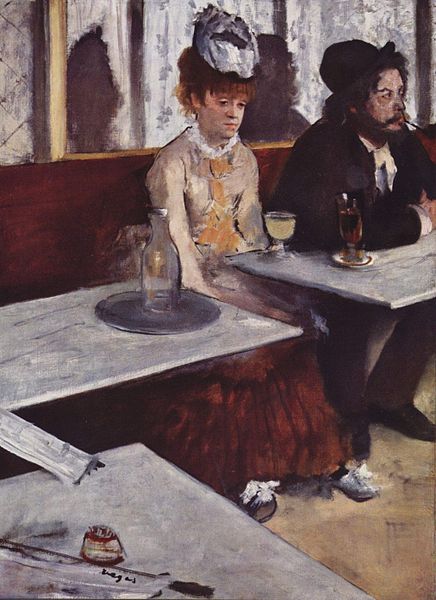
L’Absinthe by Edgar Degas

I was thumbing through the journal I kept during the hospice years and came across this entry:  [Identifiers have been changed BTW.]

“Gertie was visibly shaken yesterday.  Her mom’s youngest brother, aged 94, died this past weekend and, as she stared down at the coffee table she told me, “I’m afraid she’ll go now, too.  She’s the last one you know.”   Grammy’s appetite has been off and Gertie doesn’t think she’s eating enough to survive.

She’s not.

All the other times when Grammy was going through one of her diminished-appetite spells, Gertie would worry and I would try to gently explain that loss of appetite is natural toward the end.  But she always acknowledged and dismissed the fact simultaneously.

The truth is she’s just not ready to lose her mom and I’m now beginning to suspect she never will be.  Watching her yesterday—the way she stared off into nothingness as she spoke, eyes turned inward, searching and frightened—I wondered how long she’ll survive herself, once her mother is gone.  I even wondered if she’d go first. [Gertie was 83 at the time.]  For such a strong, stubborn, tenacious woman she is remarkably fragile underneath it all.

And quite ill herself.

So yesterday I said nothing.  Didn’t ask her, “Are you ready for this?” Or say, “You know Gertie, she may be getting ready to go now.”  Of course she knows.  Shock is already starting to creep in, an early mist rising to help shield her from the unbearable loss lying just ahead.  Instead I just sat there, as still as I could.  Quiet.  Listening.  Trying to catch and contain as many of her scattering pieces as I could.

I didn’t want to move or breathe or do anything to disturb the tendrils of mist gathering around her.   She is so achingly delicate.”

As I read it all came back to me in a rush; how grieving people (and those who are catastrophically ill or dying) are sacred.  The wounding and shock caused by any kind of profound loss makes a person vulnerable; and a society’s traditional job is to close ranks around them, shielding them until they have a chance to stop reeling and reorient.  To get through the worst of it and find their footing again.

In older times this understanding of the sacredness of those in deep grief was fairly common, but I think we may have grown a little fuzzy about it since then.

Although…I do think most people still feel this sacredness instinctively.  I often see it in the awkward pause that happens after someone confides they’ve lost a loved one, or that they have a catastrophic illness.  The person receiving the news is usually aware that something huge just fell out of the sky right in front of them, but they frequently appear confused as to what they’re supposed to do about it.

So even though I frequently fail to follow these myself (they’re appropriate…not easy) here are a few of the Do’s and Don’ts about how to interact with a person who, through no fault of their own, has become temporarily sacred:

The DO’s:

1)  Do no harm.  The disorientation of the deeply wounded is the emotional equivalent of a compromised immune system.  Even if they try joking about it or brushing it off as embarrassing, remember that their shields have taken a hit and are not functioning properly.  Be gentler, be kinder, be slower, be quieter.

2)  Do acknowledge their wounding.  Go ahead and be silent for a moment, then look at them (really look at them…don’t shuffle your feet and look at anything else but) and say I’m sorry.  Then be quiet again. That’s it. This is the traditional ceremonial acknowledgement of wounding in our culture and, when genuine, it’s enough.  Even if it’s been years since their loss took place, it’s still okay to say this.  You’d be amazed how long some wounds can last.

3)  Do follow their lead.  If they feel like talking about it and you have time, then listen.  (Listening is actually one of the greatest gifts you can give.  People usually need to tell the story of what happened, or is happening, multiple times in order to coax events out of the weird, limbo world of shock and back into practical reality where they can harness and deal with it.)

On the other hand, if they don’t want to talk about it, then it’s okay to let it go.  They don’t have to.

And if, as is often the case, they don’t know what to say and stumble around awkwardly searching for words, then just be quiet and patient while they figure it out.  Let them know you’re fine with awkward. Wounded people are bewildered and need extra time. Giving it to them willingly is like encircling them with a protective charm.

Which leads us to the final Do:

4)  Do be willing to be silent.  Sometimes words just aren’t big enough and, in that case, compassionate silence says everything necessary.

Then there are The DON’Ts:

1)  Don’t give advice unless specifically asked.   Everyone has to find their own way through this one.

2)  Don’t abandon or ignore them.  Even if you feel awkward or uncertain yourself, being willing to stay anyway is worth it’s weight in gold. Wounded people already feel a little disembodied and unconnected.  Ignoring them could make this experience chronic or permanent.

3)  But Don’t rub their noses in it either.  Everyone grapples with grief and loss differently and if they prefer to deal with their emotions privately, then respect their ability to know what they need most.

4)  And finally, Don’t try to save them from their task.  You can’t…and it’s not necessary anyway.  Wounded people are vulnerable, not incompetent.  Believe in them. The journey of illness and loss is hard but it can be strangely deepening, too, and those who navigate it with courage and grace enrich us all.  It’s more than worth our while to give them whatever help they need.

copyright Dia Osborn 2011