The Generosity of Dying

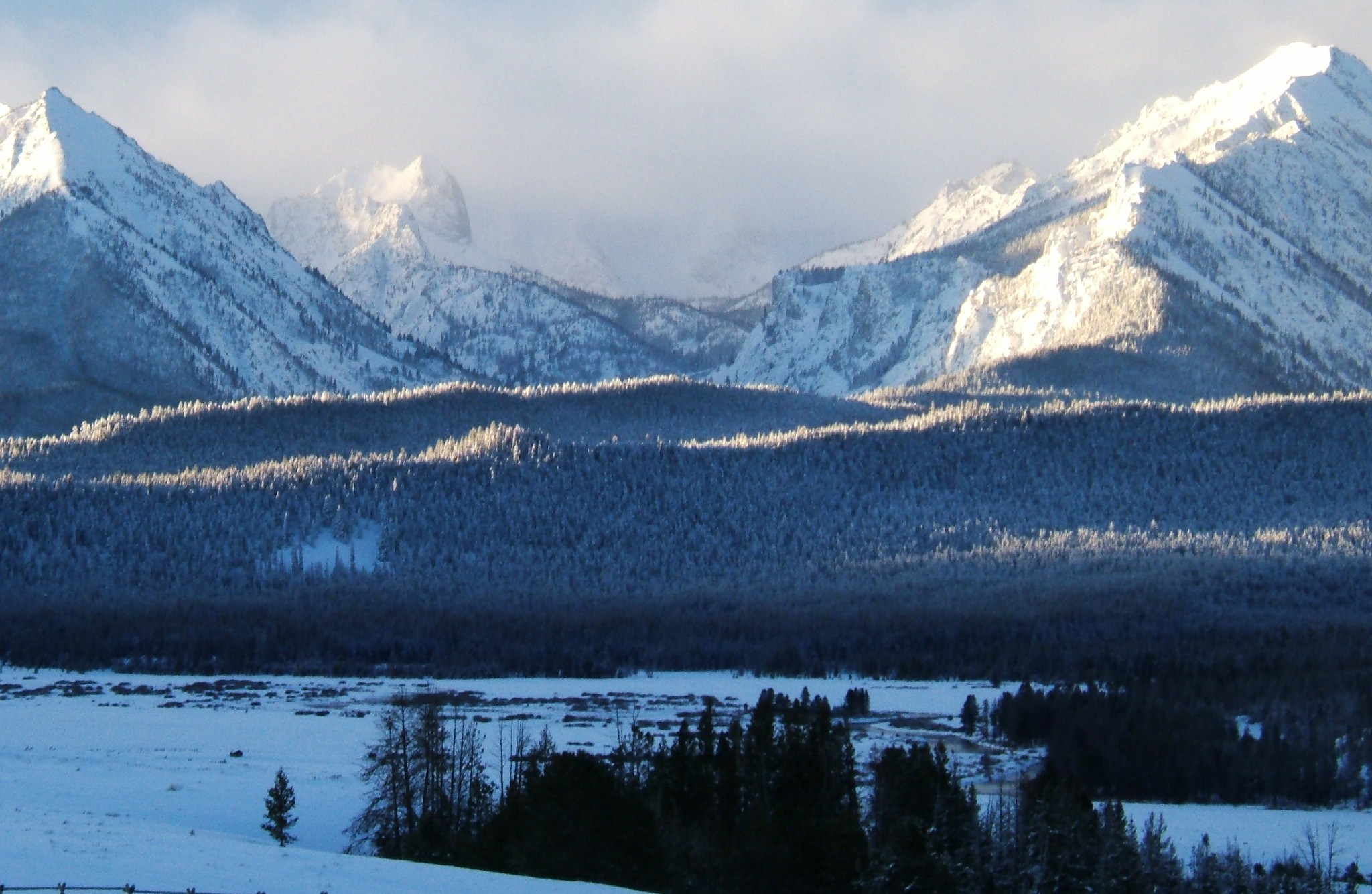
view from the family cabin

When I think about dying as some grim, black destiny waiting to reach up from the dirt, grab me, and drag me back under someday, it’s pretty scary.  How could it not be?  That perspective makes me feel small, helpless, and…frankly…screwed.   But there’s another way of looking at it that spares me the Freddie-Krueger’s-a-coming sensation and it goes something like this:

Inescapability aside, it’s also true that dying is the final gift I get to give back.

I discovered this perspective while hanging around out in the natural world.  Idaho has the largest total area of intact wilderness in the lower forty-eight and, like most people who live in this state, I love spending time outdoors.  The wilderness has long been the community where I experience my deepest sense of belonging.  The high lakes and rocky trails, swollen rivers, green canopies and night skies are the congregation and confessional I most naturally turn to—the places where, for whatever reason, it’s easiest for me to uncurl and unclench, drop my arms, and slowly look up in trust again.

They’re also the places that teach me the most about life’s cycles and seasons, its hardship, endurance, and resurrection, its silence, beauty, and hope.

And dying.  Of course, dying.  Sometimes, while wandering through a part of the forest that’s shadowed and damp, I’ll come across one of the old giants, an ancient tree lying broken and rotting, stretched across boulders and trails.  It can take the old Douglas firs and Ponderosa pines decades to decompose, years sometimes just to fall all the way to the forest floor because the surrounding trees catch and hold them in a slow, deep kind of tree-grief.

I sympathize with the forest’s unwillingness to let them go, these great old ones.  I feel the ache of loss, too, gazing up at their towering frames, suspended and creaking as the other trees supporting them slowly give way over the years in an unfolding ballet of grace, sorrow and ultimate collapse.

But they do eventually fall, they break, they settle and rest, where the busy (and far briefer) lives of the forest floor can set about their work of release.  Ants and beetles.  Fly larvae, bacteria, and a host of other microorganisms all nibbling away at the bonds that hold the mighty trees together until finally, at some mystical point where every bit of chemical bonding in the wood is broken down to a brittle point of perfection, the dead tree explodes in slow motion, spilling out across the ground in an aromatic blanket of rich, red compost.

It amazes me.  Every time.  It stops me dead in my tracks and I just stand there breathing in as deeply as I can, gulping the sweet smell of pine decay.  Or I kneel to run my fingers through the moist, rotted particles, gathering a handful to carry home to my garden as a gift from an ancient life that gave itself away, leaving its nourishment for all that follows.

It was there on my knees one time that it first occurred to me, how perhaps human dying doesn’t have to be entirely sad and clinging.  It’s not that I think it’ll be easy to give all this up.  I don’t.  I love this world, my life, and the thought of saying those final good-byes to the mountains and moonlight, to everyone I love, to everything I felt and learned, touched and became over the years, is heartbreaking.

And yet…and yet.  To think that I’m leaving room and resources for the others yet to come, helps.  The knowledge that by standing aside, I’ll leave space for someone else to step up and gaze at the stars or across the peaks and be stunned by their beauty like I was, makes my own loss easier.  More worthwhile.  My death will mean that someone else gets a chance to come forward and cradle a newborn in their trembling arms for the first time, or to search for new ways to heal and comfort the illnesses of the future, or to experience any of the thousand thousand other gifts that go along with just being alive and drawing breath.

When I think about it like this, the generosity of dying takes my breath away and I’m no longer as frightened or resentful.  Instead, I feel like everything will still be okay.  In the act of giving myself away like that, somehow I’ll still be okay.  In the deep place inside me, the old place, I know this now which is why I don’t really want to tear my hair or gnash my teeth anymore.

When my time comes I’d rather just say Today, I have taken enough.  It’s time to move aside and leave room for others to come and gaze and marvel, too. I leave the food I won’t eat, the warmth I won’t require, the resources I won’t take for myself, to others who still have their whole life before them. And here on the ground where I stood, I leave a pile of everything I’ve collected during my years, a pile of everything I was and learned and became.  I leave it as a gift for those that follow, and as a small token of my gratitude for everything.

Everything.

I think back now to the dying people who allowed me into their homes and intimate circles.  I remember the stories they gave me, the wisdom and secrets and pain they shared that fell like rich, moist particles of compost inside me.   I must have breathed in the swirling, escaping molecules of their vanishing bodies as I held them, dressed them, bathed them.  Breathed them deep down inside me like the sweet scent of pine and humus, breathed their memories and joy, their suffering and release, and been nourished by it.

Up in the mountains, walking the trails and witnessing the dying and decay that’s always and everywhere present up there, I’ve always felt renewed.  Surrounded and cradled in the generosity of the natural world, I eventually came to see that I, too, am an integral part of this sustaining circle.  Which is why, when it’s my turn to step aside and return the life that was loaned to me for this brief, miraculous, blessed, blessed ride, I want to do it with gratitude rather than regret, and with prayers of generosity in my heart for all who follow.
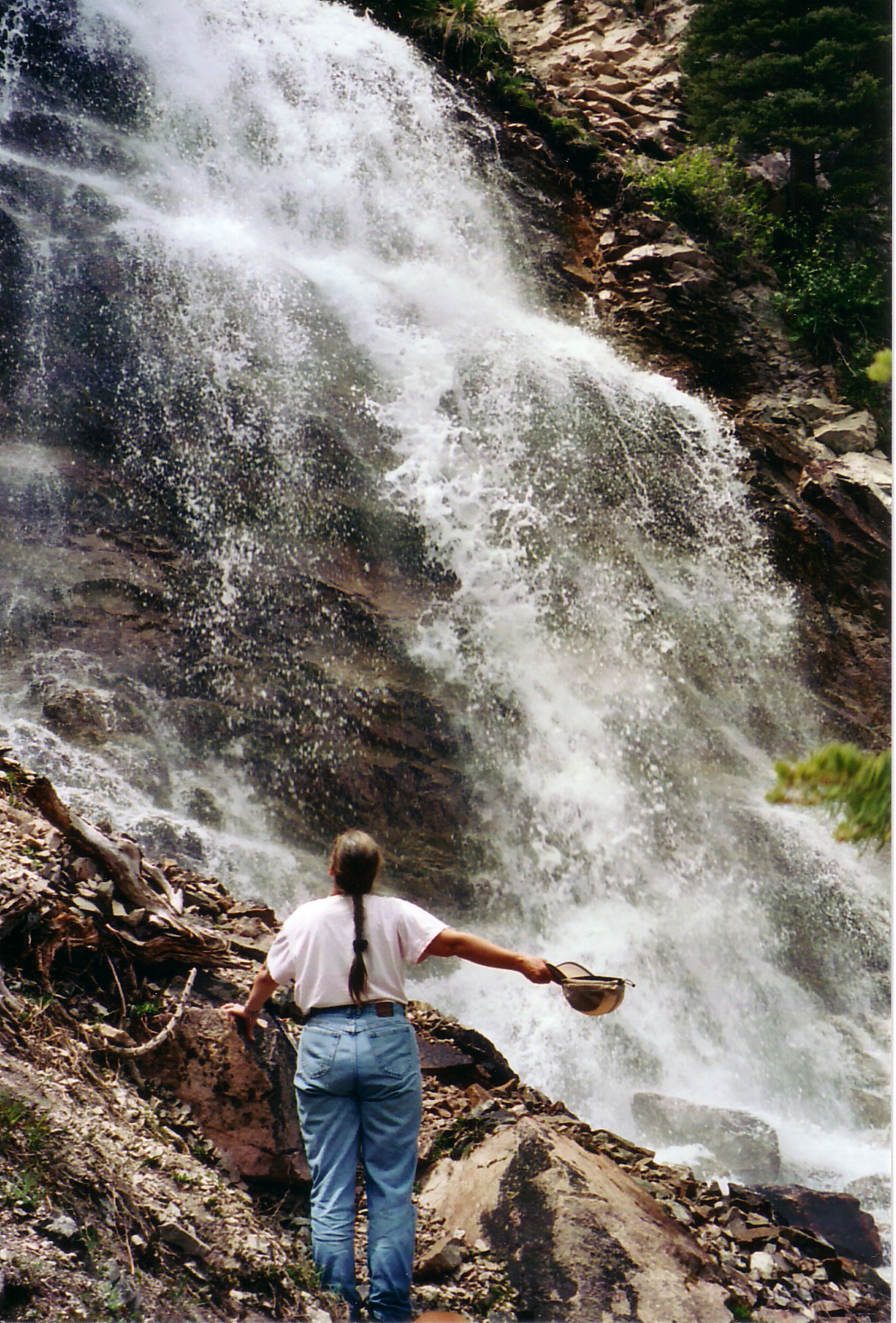
Bridalveil Falls

copyright 2010 Dia Osborn

How Much Money Is A Dog’s Life Worth?

Well, Dane the rescue mutt’s digestive troubles mushroomed and Friday turned into an emotional day from hell.  He was off his feed on Thursday and by the following morning refused to eat at all.  This has never, ever happened.  Ever.

This dog has eaten grocery bags, sticks, and bread by the loaf.  He vacuums up windfall fruit, grazes on tomato bushes, and chewed an entire crop of carrots down as far as he could get into partially thawed soil.  He once frantically tried to swallow an entire fresh-caught mole without chewing when he saw me coming.  He eats grass like a cow, cow shit like a fly, and anything at all if it’s started decomposing.  He can down a huge, rawhide chew toy in under three minutes and goes through soft bones like taffy.

He’ll eat anything, gladly and at lightning speed.  We’ve exhaustively tried to train him not to and failed.  Short of a muzzle or strict house incarceration we can’t stop him.  So on Friday morning, when he refused to eat, I felt a flicker of real fear.

Then I discovered the brown, splattered stains of diarrhea all over the guest bedroom carpet.  (Visit? anyone? anyone?) Next I went out in the backyard and a quick survey of four days worth of dog excrement told me this problem had been developing for a while.  Dog flatulence was the least of our problems.  Dane had turned into a sick, little, hundred-pound puppy.

I finagled a vet appointment for 1:30 in the afternoon which left my mind roughly six hours to play in the field of worst case scenarios.  Bowel obstruction?  X-rays and surgery?  Another thousands-and-thousands-of-dollars vet bill?

Or euthanasia?

My mind leaped to these extremes for two reasons.  First, because I was still reeling from the $3400 cat bill last month.  And second, because the hubster (after I put in a worried call at work to let him know what was going on) informed me Dane spent some stolen time five days earlier feasting on rotting, bony, fish carcasses along the banks of the Salmon River.   The hubster and visiting friend had taken him with them on their fishing trip, and he sneaked off at one point and gorged himself on fish skeletons.  Fast forward to Friday and it was time to pay the piper.

Now, just to take you all off tenterhooks, the boy is fine.  The vet concluded the gastrointestinal upset was probably caused by a bacterial infection he picked up while scavenging all the crap.  He’s now dining on four, large, butter wrapped, antibiotic pills a day, along with moist cans of bland dog food.  He can’t believe his good luck and is touting the benefits of eating rotting fish to all who’ll listen.

What I really wanted to talk about here were some of the grim choices I considered during those six, hellacious hours of uncertainty, most of which revolved around the following question:  Financially speaking, just how much is a pet’s life actually worth?

Most pet owners eventually face a vet bill formidable enough to consider the question and feelings can run pretty high about what the answer should be.   There are, of course, the two extreme camps.

1)  People like this:

“Yeah, it is great when people have no money to care for their pet so they put it to sleep. They usually get another one too. Hope you are not that stupid. Pets are a luxury item and you need to be prepared for these type of problems.”

And 2)  the “it’s just a dog” people:

“I don’t know what the rest of you are smoking but its just a dog. I can see someone spending that kind of money to fix your child’s leg but not a pet!…In my opinion, you should let your dad take care of the problem, put it out of your mind, and pick up a new healthy dog at a shelter.”

But while both these views share the gift of moral simplicity, neither addresses the complex reality that an explosion of new, medical interventions has forced on us.

Once upon a time veterinary options were limited and, when it got serious, there was no choice at all.  It was just time to put Spot or Whiskers down.  But the evolution of veterinary medicine has catapulted us into a brave new world where, for those lucky enough to have deep pockets, there are now some real medical miracles available.  There are currently surgical and pharmaceutical treatments for animals that rival human ones, both in complexity and cost, but the majority of pet owners don’t have that kind of money.  In fact, these days most of us are struggling just to meet the demands of our own human, health care needs.

So if the first claim was true, that people who can’t afford new, higher vet bills shouldn’t have pets at all, it would eliminate a large number of potential pet owners.  Personally, I shudder to think what would happen at animal shelters across the country if this ever happened.  Adoptions would slow to a trickle and the number of animals being euthanized for non-medical reasons would balloon.

On the other hand, most people would (thankfully) disagree with the second opinion…that we should look at our pets as disposable possessions, like Bic lighters or paper plates.

So where does that leave the rest of us?  How are we supposed to navigate the conflicting requirements between taking in a beloved companion and not being able to afford catastrophic costs?

Well first of all, I think the original question, How much is a pet’s life worth?, is inherently flawed.  The life of an animal can no more be measured in monetary terms than the life of a human being can.  Life is life.  It’s sacred.  It’s one of the great Mysteries.  We can’t create it or even make it last all that long once its appeared, and it’s ridiculous to try to reduce something transcendent like that to a pile of cold, hard cash.

Yet, here’s the rub:  Even though ultimately we have no control over this thing called life, we’re still all assigned as stewards.  We’re each responsible for at least our own and, every time we drive a car, own a pet, have a child, or vote on a health care bill among a million other things, we’re also shouldering responsibility for the lives of others.  There’s no escape.  And while sometimes this responsibility is a beautiful, luminous gift, sometimes, like when we have to make a life and death choice for ourselves or another, it can morph into a near-unbearable burden.

I cried off and on all morning, waiting to take Dane to the vet.  His illness unexpectedly sucked me down to a place where I found myself considering The Choice.  There was a possibility that we might be facing yet another vet bill mounting into the thousands of dollars and we had to decide whether we could really afford it.  For whatever reason, Dane has been a disastrously expensive pet.  Over the course of the last five years, between health issues, accidents, special nutrition needs, and a strong predatory instinct, he’s cost us into the five digits.  We never dreamed a pet could cost this much.  His needs have eclipsed the expense and work required by every other animal we’ve owned combined, and yet we continue to adore him because he’s an affectionate, joyous, grateful dog who tries so very, very hard to make us happy.

But in the end, we’re not among the lucky few with unlimited financial resources.  At some point, because Dane is the wild, fragile, phobic, allergic, epileptic, boisterous, playful, smart dog that he is, the mounting costs are going to exceed what we can pay without jeopardizing other critical family needs.

And that, my friends, is where I think the real question lies.  Not How much money is a pet’s life worth? but How do I balance the financial needs of my pet with the financial needs of the rest of us? At what point exactly do my spending choices move me from being a caring, responsible pet owner into a negligent parent, spouse, offspring, or general member of society?  Our pets are a big responsibility but they’re by no means the only one.  This will always be a difficult question because there’s no firm answer, each case is unique, yet most of us will eventually have to answer it one way or another, either consciously or by default.

For us, because Dane is only one member of a larger family, someday we’ll probably have to make The Choice and it will probably be devastating and, yes, money will probably play a role.

But let’s be clear.  While finances may set the final parameters for what we can give him medically, money will never, ever define his worth to us.  It can’t.  It can never measure the depths of his big, beautiful, generous heart, or the love, joy, and adventures we’ve shared, or our unending gratitude at being chosen, for at least a little while, as the stewards of his life.

copyright 2010 Dia Osborn