Dog Fumes

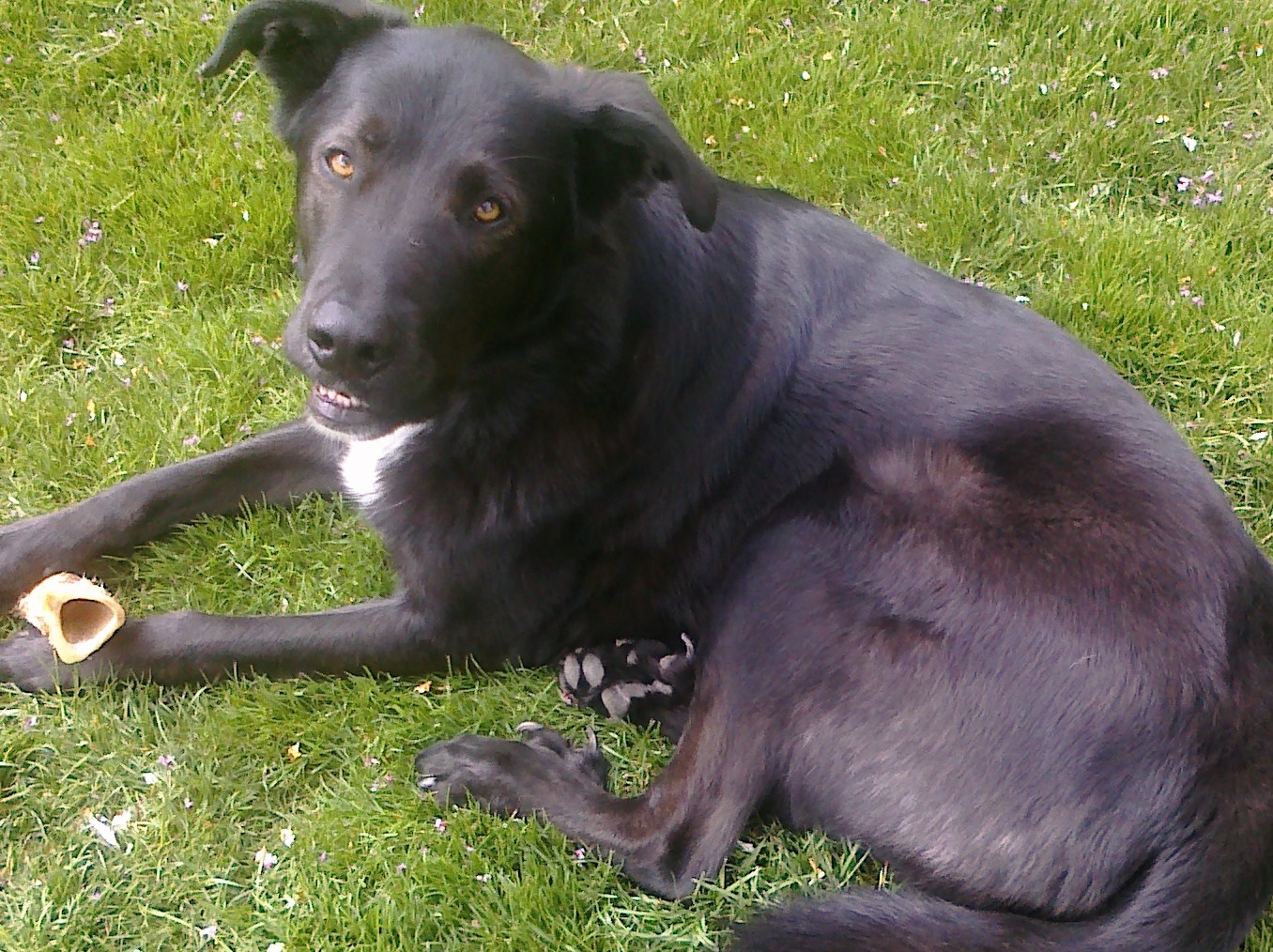
I don’t know what he ate but his inability to digest it could kill us.  You could swim in this smell.  Carve holes in it.  You could sew it into a coat and wear it to attract lobbyists.  I think it’s tinting the upholstery.  It’s that bad.  If you don’t hear from me within three days, suspect the worst.

(Image: Wikipedia)

copyright 2010 Dia Osborn

Incurable Miracles

One of the most common responses I used to get from people when they found out I worked with hospice was, That must be depressing. I was never quite sure how to answer that.

Because it wasn’t depressing at all.  It was a whole lot of other things; hard, heartbreaking, inspiring, curious, overwhelming, humorous, wonderful, challenging, exhausting, transformative, and ultimately very, very uplifting.

But never depressing.  Not once.  And I’m a depressive.

I’ve been riding the cycles of major depressive episodes for almost two decades but, far from aggravating the symptoms, hanging around with dying people actually helped.  They showed me what it can look like, living in the world of no-cure.  How being incurable in no way limits the ability to make your miracles.

I’d always thought the dying were about-as-good-as-dead, so imagine my surprise to discover they’re actually still very much alive.  In some ways more than most people.  Dying didn’t suppress their ability to live, it enhanced it.  They still felt everything we all do, only times a million.  They were throbbing with life.  Writhing and radiant from it.  The fact that some of that life was transcendent love and some was sheer hell was incidental.

Life has always been a package deal.

So anyway, I’ve never been able to explain this beautiful side of dying with words.  But here’s a video called The Unseen Sea by Simon Christen that captures the essence of it.  This is how it felt during the hours I spent with them, turning and toileting, bathing and dressing, capturing all the last whispered, aching, illuminated stories of their lives.  It often felt like floating on an ocean, carried along by some timeless, perpetual current that ebbed and flowed, swirling around us, filmy and comforting and soft.

This is some stunning time lapse photography of the changing skies around San Francisco.  Just make sure you turn up the sound because the music is exquisite, too.

The Unseen Sea from Simon Christen on Vimeo.

You can find the original posting of this video at Simon Christen’s Vimeo site here.

copyright 2010 Dia Osborn

Facing the Coward Within

Bullying: Image from Wikipedia

I was raised military.  My father was a career warrior, my mother was a career warrior’s wife and, in our house, adherence to a code of honor was required.  The code went basically like this:  honorable people practice courage.  They stand up for what’s just and try to protect those who are more vulnerable than them.  It’s what my father was fighting to do for us every time he went off to risk his life, and it’s what we were expected to do back home while he was gone.

The opposite of honorable people, we were taught, were bullies because they target the vulnerable instead of protecting them.  An act of bullying was cowardly and dishonorable because it didn’t offer any kind of meaningful challenge.  It was weak, a sign that they didn’t think they could face somebody their own size.  That’s why men never hit women or children, women were the protectors of children, older kids didn’t lead younger kids into trouble, and nobody targeted old people, disadvantaged people, or animals.

It’s was okay to fight with equals though.  That’s how we honed our skills.

In the last month or so the disturbing number of boys and young men committing suicide because of bullying has finally hit the headlines.  The recent cases were all targeted because they were gay or perceived as gay and the bullying grew so vicious and sustained that it finally became unbearable.   This is hardly a new phenomenon.  Our gay, lesbian, bisexual, and transgender children have always been among our most vulnerable,  but far from receiving the additional support and understanding every vulnerable child needs, they’ve traditionally been scapegoated.  And they’re not the only children being driven to these kinds of extremes.  While those who seem different are always at highest risk, with the anonymity that cyberbullying provides, any child can now be targeted and potentially destroyed.   We’ll probably never know just how many of our children we’ve lost to the pain and despair this kind of treatment inspires, but the rates seem to be rising and I’m deeply grateful the issue is finally getting mainstream attention.

It’s not easy to manage the intense rage these incidents can invoke.  However I know that, while justice is necessary, we can’t just turn around and scapegoat right back in a blaze of self-righteous smiting.  Even though that provides a measure of relief in the short-term, in the long run it won’t change the dynamics of the bullying going on.  It’ll reinforce them.   Bullying the bullies is not a strategy for lasting change.

Like any kind of deep and meaningful change, it has to happen on the individual level first before the society as a whole can change.  We each have to look in the mirror and find the bully that’s lurking within.  Then we have to own it and challenge it, whenever and however it shows up.  We all have issues of cowardice and dishonor hiding down there.  It’s part of being human.

Look.  If we, as a society, genuinely valued honor and courage the way we claim to, this level of bullying would never have gotten a toehold.  But we haven’t valued those things.  We’ve valued their opposite.

Not only have we tolerated escalating levels of bullying for years, we’ve encouraged and rewarded it.  We’ve laughed at the comedians and gossips (conservative and liberal) whose jokes are harmful and belittling.  We’ve tuned into radio stations and analysts (conservative and liberal) that blast, rant, spew, and demean.  We’ve allowed ourselves to be swayed by the politicians (conservative and liberal) who turn us against one another.  We’ve divided our very communities, neighborhoods, and schools into those who are like us and those who are not, and then shunned, mistrusted, belittled, or even targeted, the latter.  We have all done these things to varying degrees.

And now we’re reaping the whirlwind that we’ve sown.

These shining, beautiful boys who are now lost belonged to every last one of us, and we’re all to blame for the fact that they took their own lives in order to escape the society that we created for them.  The gifts they carried and contained for the rest of us– their joy, determination, promise, insights, creativity, solutions, strength, courage, sacrifice, and love–is now gone.  Lost.  Forever.  We’ve not only flagrantly and stupidly wasted the greatest treasure that any nation has, its children, but we’ve also invited an epidemic of suicide into our midst.   While there were specific individuals involved in each case, that in no way absolves the rest of us from the thousand, thousand little ways we each helped to establish a culture of bullying in the first place.  Nor does it relieve us of the responsibility to do whatever is necessary to change it now.

Here’s a role model that’s helped me.  I’d like to leave this post with one of the most inspiring examples of courage and selflessness I’ve seen come out of all this.  If anyone is wondering what the kind of honor I’m talking about looks like in practice, please take the time to watch this.    It’s a video (about thirteen minutes long) of a city councilman in Fort Worth, Texas who is risking his career in order to reach out to those who might also be considering harming themselves.  He’s speaking specifically to gay children but the message goes far beyond that.

It’s one of endurance, love, and faith, and speaks to anyone who’s ever experienced the kind of despair that can lead to a journey down the dark road.

copyright 2010 Dia Osborn

Shhhhhh…..

image: Shhh by Str8UpSkills

Once again I’m reminded that most people don’t enjoy talking about dying the way I do.  Last night we had a guest.

A long-time friend of the hubster’s arrived yesterday evening after a lapse of at least fifteen years, and the three of us sat down to do some catch-up over platters of nachos, ginger snaps, and tea.  The conversation ranged back and forth between us, as good conversations are supposed to, until it tripped over the subject of my hospice work at which point my enthusiasm for the topic hijacked the next half hour or so.

Looking back now I can recall a few moments that should have cued me to our guest’s growing discomfort.   Initially he squirmed, but that wasn’t definitive.  It was always possible that our cozy, leather couch was making him uncomfortable.  Then he took a stab at changing the subject…twice…but I can be like a rat terrier when locked onto something that interests me.  The hubster finally stepped in to back him up on a third attempt but I deftly steered that topic back around to dying, too.  

Finally, I started hearing terms like “morbid” and “depressing” thrown into the mix at which point I realized I really, really needed to shut up, but it was too late.  I was having a Toyota moment.  My tongue was like a gas pedal pushed to the floor, resisting any and all attempts to disengage it, and I couldn’t for the life of me close my mouth.  I just couldn’t.  I watched our guest’s eyes dart around the room, looking for a path of escape as I came barreling down on him, but no matter how I pumped the brakes my mouth just wouldn’t stop.

The hubster finally seized on a millisecond of silence (supplied by my need for air) and stretched his arms, yawned, and claimed it was time for bed.  At 8:30.  Our guest seized the opportunity and made a break for his room, a polite good night trailing over his shoulder as he disappeared behind the door.

Needless to say, I woke up in the middle of the night feeling the peculiar kind of dismay and regret that only 3:00 a.m. can inspire.  Why do things always look so much worse at that time of night anyway?  The darkness and silence of those hours are like some kind of weird, mental magnifying glass, blowing up even harmless thoughts into looming, misshapen monsters, never mind an embarrassing, social faux pas.  I spent the next two hours tossing and turning, obsessively crafting a range of apologies (from dignified to humorous to prostrate) before finally dozing back off again from sheer exhaustion.

The hubster woke me up in the morning and the first thing I did was sit up, throw my arms around his neck, and tell him how sorry I was for being such a motor mouth.  He burst out laughing.

Tough night? He hugged me back.  You weren’t that bad.  Really.  I stopped it before it went too far.

And by god, I loved him for the effort….for trying to tell me it wasn’t as bad as it was, for laughing at my flaws instead of condemning them, and for shrinking the midnight monster back down to a more manageable size.  Whether what he said was true or not is beside the point.  (I’m pretty sure our guest paused and peered both ways before venturing out of his room this morning.)  The important thing is that he cared enough to say it.

I ended up not apologizing to the hubster’s friend.  Partly because I thought it would just embarrass him to bring it up, partly because I didn’t trust myself not to try and explain again why the topic of dying is so important to me.  He didn’t need to hear anymore about it.  Unlike me, his earliest experience with dying was traumatic and scarring, and no amount of sharing from my side was going to wipe away the long shadow it left in its wake.  I can’t believe I missed that.  I wish I would have talked less and listened more.

I’ll try and remember that next time.

copyright 2010 Dia Osborn

Teaching Stories and Working with Dying Bodies: Context Helps A Lot

“Let me light my lamp,”

says the star,

“And never debate if it will help to

remove the darkness.”

– Rabindranath Tagore

It’s here my friends.  Autumn.  Not the calendar date which arrived weeks ago, but autumn in the trenches, where I’m scrambling to strip-harvest the last of the tender vegetables, get the cold frames covered, and dig out all the wood stove accoutrements from the garage.  Last night was our first frost and I woke up this morning reluctant to slip out from under the down comforter to a chilly house.

It was time…finally time…for the first fire.

We heat primarily with a wood stove and…let me just say before anyone gets their panties all in a bunch…we use a high-efficiency, EPA certified stove, that gets maximum energy capture with minimum greenhouse gas and particulate matter emissions.  We also live in the mountain west where pine beetles are killing off wide swathes of our forests, so our fuel consists of dead trees that would otherwise provide fuel for catastrophic forest fires spewing greenhouse gases and particular matter into the sky.  We have a back up furnace for burn bans, use only clean, seasoned wood, keep our stove and chimney clean, and burn hot fires.

While it’s not a perfect source of energy we believe, used responsibly, it’s one of the wiser choices for our neck of the woods.

It’s also a high maintenance way to heat a home which wouldn’t work for a lot of people but it’s satisfying for us.  It’s like a dance that spans the entire year.  Splitting wood in the spring, cleaning the stove in summer, stoking fires through fall and winter, and collecting ash for the garden once spring returns.  We work our way through the seasons of cold and dark, waking and sleeping to the ebb and flow of temperatures in each load.  It’s like a slow waltz with wood, axe, oxygen, and match as partners.

It’s also a lot cheaper than our ancient electric furnace.  Très bien.

Staring at the crackling fire this morning I flashed back to a story I heard long, long ago.  It was a teaching story which has helped me a lot over time, as any good teaching story should.  Thirty or so years ago I met an elderly monk one night, at a time when I was in a lot of pain.  I was pushing my dinner aimlessly around my plate in the college cafeteria when he just he showed up.  (It was not a Catholic school and had no proximity to a monastery.  Kinda spooky.)  We wound up talking in the library into the wee hours of the morning and, even though we covered a broad range of topics that night, I only remember two things:

1)  When we stood up and hugged good-bye I rubbed his back with my hand like I would a friend and afterwards, when I realized what I’d done, was aghast.   It’s not that Father Monk looked in any way offended but while I had no idea then, and still don’t today, what is the proper etiquette for hugging a monk, I assume you’re not supposed to fondle them.

And 2) he told me the story of the Log and the Flame.

I had just told him about an experience of heightened awareness I’d been having since I was a small child, one I was having increasing difficulty integrating into my everyday life.  The experience itself had always been luminous and joyful, but as I’d gotten older the contrast afterwards was becoming a problem.  Once the experience ended, the regular, daily world looked pretty bleak by comparison and I’d fall into a depression that could last for days.

Integration of any kind of extreme reality presents a challenge.  I’ve often heard people describe the shock and disorientation they felt when traveling for the first time between a wealthy country and one where grinding poverty is endemic.  The gap between the two worlds is huge and can raise a storm of new thoughts and emotions that need time and effort to wrestle to the mat.  The same dynamic exists when someone wins the lottery, or visits the dying for the first time, or enters a prison, or any other environment that lies at the opposite end of a spectrum.

This holds true for extremes of internal experience as well as external.  When I was a child the feeling of wonder and belonging that the heightened awareness gave me was easy, because I was already living in the imaginative, magical universe of childhood.  But as I entered adolescence the contrast grew more stark and by the time I went to college the wide swings of emotion involved (feeling loved and luminous one moment, then stranded, dark, and alone the next) were getting hard to deal with.

I couldn’t figure out how to rope and ride that particular whirlwind.  I needed some guidance.

Father Monk was the right man for the job.  As soon as he heard my description of the experience he nodded in understanding, then proceeded to talk about the wild swings I was having in Christian terms of purification.  It sounded kind of like a colon cleanse only spiritual.  Then he told me the story of the Log and the Flame.

When the log is first laid on the flames, he said, the two are separate and distinct, but then the fire begins to catch the bark and wood.  As it spreads and encircles it, the log starts to sizzle and hiss and then, as the fire penetrates deeper, the wood blackens and moans, cracks and crumbles.  It’s a difficult process for the log to go through but eventually, the wood glows red and then dissolves as it’s transformed into the flame itself.

I gotta tell you here…I liked it.  Not only as a constructive context for framing the struggle I was having, but as a truly dynamite teaching story as well.  Turns out it works in all kinds of situations because, as archetypes go, fire is pretty universal.  Back then Father Monk’s story helped me sort out and harness what was good in the experience I was having, as well as clearly identify the challenge involved so I could develop some tools to manage that part of the swing.

But I also remembered the story years later when I was working with hospice, and it gave me a whole new perspective on what was happening to the bodies that were basically disintegrating beneath my hands.

Watching a body separate from the life it’s been housing takes some getting used to.  It really does.  As graphic processes go, dying has to be up there with the best of them.  The sights, sounds, textures, and odors involved require some aggressive acclimation and nobody is fine with them at first.  Nobody.

But once I grew familiar with the symptoms and my gag reflex subsided, I relaxed and found myself surrendering into the journey these people were taking.  On a few occasions, while standing by their bedsides and gently, oh-so-gently, bathing their shrinking, wasting bodies, I even had that experience of heightened awareness again, where it felt like I was falling into some great stillness that cradled the room.  It reminded me of standing up in the mountains at night bathed in starlight and silence, the Milky Way brilliant and arcing across the sky.  Everything just suddenly felt so big.

And as I slowly touched and turned them, wetting and wringing the washcloth before laying it’s warmth over another patch of quivering skin, tenderly washing away the sweat and sloughing skin, the fecal matter or encrusted blood, I would notice it again.  How they seemed to be faintly glowing there in front of me, like there was something radiant just under their skin that made them look translucent, and every time it took my breath away.

It reminded me of the story of the Log and the Flame.  Only in this case it was like these people were the logs and the flame was something inside them, illuminating them as their bodies slowly dissolved.  It was extraordinary to watch and, while I have absolutely no idea what was causing the phenomenon, I found the beauty in it reassuring.  It helped me care for them better, turning my sadness from something heavy and dragging into something sweeter, more poignant, and clean.  I tumbled head over heels in love with them, each time.  Fell in love with their beautiful, crumbling bodies that were busily transforming into something else.

I think that’s the hallmark of a great teaching story.  It provides a bigger context to help explain not only the beauty, but the darker, harsher aspects of life that are always taking place, too.   It offers a map, a guide, to help navigate through events that can otherwise be confusing, overwhelming, or destructive.   The Log and the Flame was that kind of teaching story for me, one that’s continued to help across decades, and I wanted to take a moment, with a first-fire crackling merrily in the background, to look across some thirty-odd years and thank you again Father Monk, for such a great gift.  You have no idea how much it’s helped.


copyright 2010 Dia Osborn

The $3,000 Cat Will Live

I went across the street to check on Tinkerbell this afternoon and am delighted to be able to give you the following update:

It’s been a little over a week since she was attacked and the old gal is looking terrific.  I mean, really.  Wow.  I looked it up to see how cat years translate into human ones and I can only hope I’ll look as good as she does after major surgery in my eighties.

The incision (which runs around roughly a third of her torso) is healing beautifully and she goes back to the vet tomorrow to have the staples out.  Evidently, Dane’s teeth didn’t actually puncture the skin so at least there’s no danger of infection there.  The damage was due to crushing and shaking and was mainly internal.  She’s been off of pain meds for a few days and, while she’s clearly still feeling tender, she’s not crying anymore or growling when someone reaches out to touch her.  They had a cone on her head at first but she’s been so good about not licking any of her wounds that they were able to take it off fairly quickly.  She can now climb up and down on Neighbor Son’s bed, where she sleeps, with the help of some makeshift stairs and she’s eating well.  And gloriously, there’s no more gurgling sounds when she breathes so the lung involvement is improving, too.

She was shaved over nearly half her body for the surgery but is being pretty good natured about how ridiculous it makes her look.  I’ve been worried all week that the trauma might radically change her personality.  She was a very sweet cat before the attack and in the first couple days afterwards she became suspicious and hostile.  But the fear and trauma seem to be slowly resolving as well and, while she looked pretty groggy while I was over there, she was also surprisingly affectionate.

She still refuses to go outside however, and Neighbor Lady fears that she may never be able to coax her out again, but I mean really…who can blame her?  If I thought there was a gigantic, black,  hairy, quick creature with fangs lurking outside my front door, waiting to crush and shake me to death the minute I stepped outside, I’d be doing take-out and Netflix till hell freezes over.  You go, girl.  Be strong.  Stay safe.

There’s even a little silver lining to the whole thing: she’s lost some weight from the ordeal which is a good thing since she was fat as a pillow before Dane got a hold of her.  Overall, Tinkerbell is doing far, far better than we, as Dane the Cat Mauler’s owners, have any right to expect.  She’s still got some healing work ahead of her but Neighbor Lady seems to think she’s going to be just fine.

I sat on the bed to pet her for a while and the little darling was purring like a motorboat and rubbing her head against my hand whenever I stopped.  She bore me absolutely no malice whatsoever, even though it was our negligence that caused the whole thing, and frankly, it made me feel like shit.  Smaller than shit.  Suddenly, I realized that up until that moment I’d just been thinking about her as a generic kind of every-cat.  That cat.  And as a dog-not-cat person it meant that, other than the generic compassion I feel for all animals, I didn’t really care.  Even though Tinkerbell is the one who bore the brunt of the assault and suffered all the pain, fear, and indignity it entailed, all my concern was really for Neighbor Lady.

Actually, if I was to be really honest, my concern has only been about a quarter for Neighbor Lady and the rest for us.  (There they are in all their glory again, Ladies and Gentlemen…Wheedle and Cheat.)

But sitting there looking down into her cat eyes, that were so full of genuine affection and good will as they gazed back up into mine, (not the slightest shadow of harm or grudge to be seen), I kind of fell in love with her on the spot.  Powie! Just like that.  I melted and suddenly felt a wave of remorse that was truly, truly painful.  Up until that moment (even with a $3400 vet bill) I hadn’t really gotten it, how bad we’d been as dog owners. Oh, I knew we were legally responsible and financially responsible and I knew we had a responsibility as good neighbors to step up to the plate.  But somehow I didn’t get the suffering.  I just didn’t understand until Tink looked up at me with those big, innocent eyes and suddenly I was aghast at my cavalier attitude.

Neighbor Lady joked with me a couple of times about our $3,000 cat and I looked up at her and told her Yeah. I feel like we’re her godparents now. She laughed and I laughed along with her so she wouldn’t realize I was serious as a heart attack.  I do feel like I’m responsible for her in some way now.  I want her to live to be twenty-five years old, gray, and crippled so I can keep going back over, rubbing her head, and hearing her purr.

I love that cat.

copyright 2010 Dia Osborn

Master of Surprise

October is a big month for me.  It includes my mother’s birthday, my daughter’s birthday, my patron saint’s day, the anniversary of the day I was initiated into Eastern meditation (I used to convert a lot,) the anniversaries for my mother’s wedding, my brother’s wedding, and my own, a dentist appointment, a trip back east for the hubster, and what is arguably my favorite holiday of all time, Halloween.

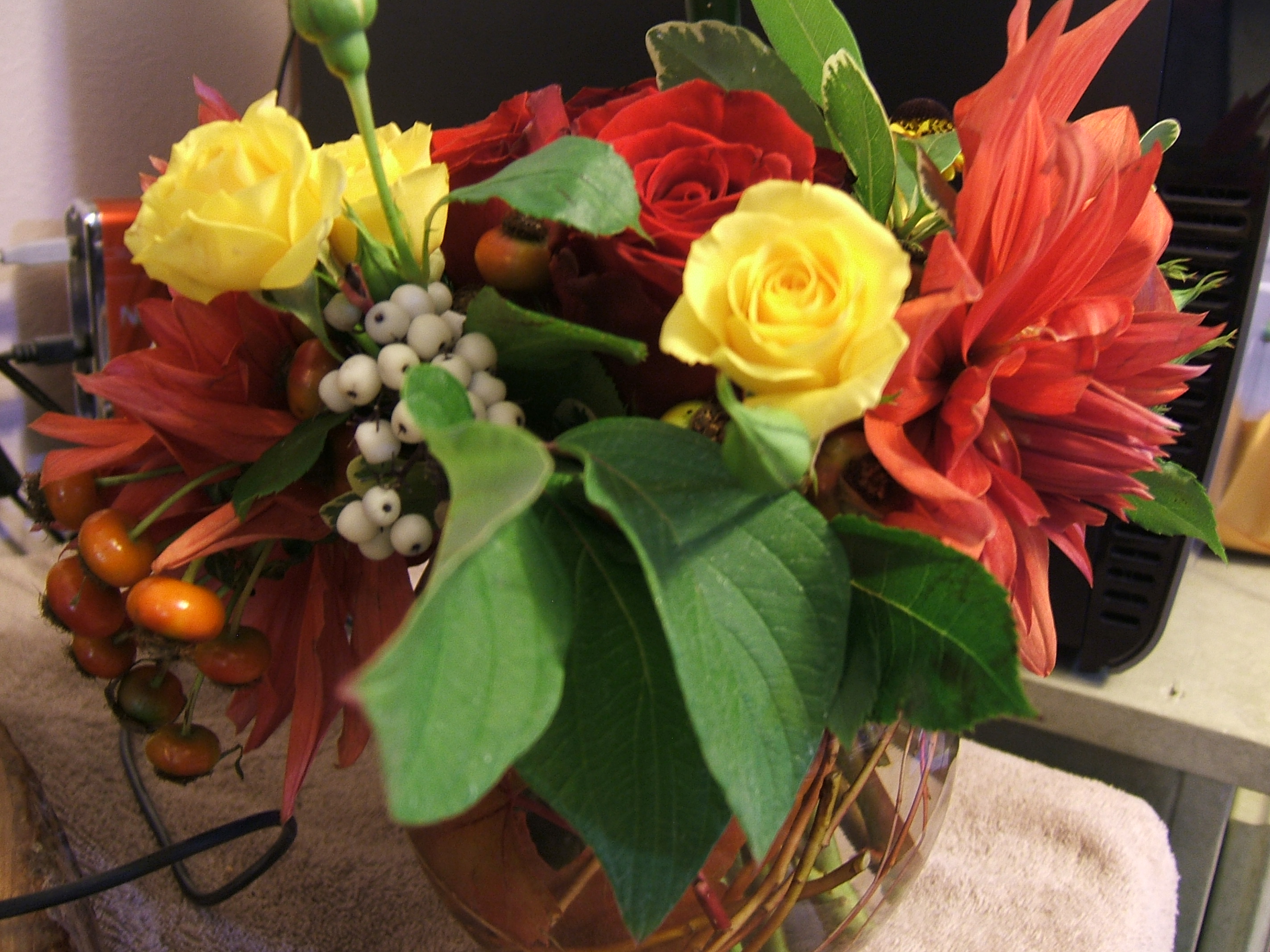
So guess which one the flowers are for?

(If you guessed the dentist, you’re wrong.  Everything went okay this time.)

No, these are an anniversary surprise from the hubster, something he arranged to have delivered while he was far, far away in New Jersey on our special day.  The card is actually signed in his handwriting so I know they aren’t just an FTD.com cover-up.  He really pre-remembered and went to all the trouble of setting things up, which makes me feel warm and fuzzy and loved, but then totally awful, too, because I pre-forgot and didn’t arrange anything.  (Which is why I’m now writing this blog post.)

Unlike me, who can’t keep a secret long enough to surprise our dog, the hubster is a master of diversion of surprise.  Yesterday morning at the crack of dawn, just as he sat down on the edge of our bed to wake me up to take him to the airport, I surged up from a dead sleep in a panic because I just remembered that I forgot.

Oh no! I wailed.  I forgot our anniversary!  I didn’t do anything for you!

Then, crafty devil that he is, he assumed a look of chagrin to match my own, hung his head a little, and echoed, Oh no…I didn’t do anything for you either.

And because not only am I incapable of keeping a secret to save my life, I’m as gullible as the day is long, I believed him.  I was wildly relieved and made him promise not to do anything to try and make it up, and then I promised him I wouldn’t either.  We agreed to do something when he got back after which I thought I was home safe and guilt-free.

But he lied, he lied, he lied…which is just one more reason why I adore the man.

Happy Anniversary, sweetheart.  And thank you, too, for marrying me on that breathtaking, autumn day back in Jefferson County Park all those years ago.  Thank you for chasing me when I took off running during the ceremony, for catching me before I got to the trees, for carrying me back to the preacher in your arms, and for understanding why, after my first marriage, that I just really, really needed to make sure.

I sure do love you.

copyright 2010 Dia Osborn


Of Troughs, Wombs, Longing, and Loss

Today is the sixteenth month anniversary of my mother’s death.  Her birthday was a week ago and I’m experiencing some sort of strange sadness-lag.  Kind of like jet lag, only emotionally.  I was fine on her birthday.  I actually had a great day with lots of fun and happy thoughts about her.

The hubster and I spent that day taking his father on a belated birthday, airboat ride down in the Snake River Canyon.

There were storms rolling in across the southern part of the state later in the afternoon and we were treated to thunder echoing off the canyon walls, one of the most spectacular double rainbows I’ve ever seen, and some distant lightning.

“Hand of God” looking isn’t it?

(Smiting?  Anyone?  Anyone?)

It was wild and intoxicating and celebratory, the kind of day my mom would have adored, and there were a few times during the day when I secretly felt like what was going on in the sky was the meteorological equivalent of confetti and giant candles on a big afterlife cake.

But that was the anniversary of her birth.  Now I’m at the anniversary of her death and the happiness engines have reversed and I’m feeling sad instead, gliding back down into one of the shadowed troughs between waves on this huge ocean of grieving.  I thought I’d grown accustomed to the ups and down of the whole process but this slide has taken me by surprise.  The troughs have grown farther apart over time, and I guess it’s been long enough since the last one that I actually forgot and thought I was done.

Silly, silly me.  Like the waves of the sea are ever done.

Maybe in the end this isn’t so much an ocean of grieving as an ocean of love, and this vast, rhythmic fluctuation of ups and downs, joy and sadness, fullness and loss is simply a continuation of the love my mother and I always shared…and still seem to share in some new yet confusing way.

On the morning that she died my sister and I gathered water, soap, and washcloths by her bedside.  We closed the door to the room and together bathed her for the last time, gently touching her arms and legs, her face and hair, all the intimate, beloved parts of her body that granted us entrance and life so many years ago.  At one point I stopped and rested both hands over her womb.  I closed my eyes, struggling to remember what it was like back then, when I was infinitely fragile, tiny, and curled.  Waiting and dreaming.  Contained and safe in the first home I ever knew in the world.

Perhaps this ocean of love I’m drifting up and down, up and down in now is like some second, larger womb I came into when I exited the first.  A continuation of the warmth, protection, and nourishment she enveloped me with after I left her body and began to grow outside of her.  What she smiled and still cradled me in as I pushed her away, developed into a woman, and came to believe I was somehow separate.  Only in the end, not quite so separate as I thought.

Thank God.

And now, even with her beautiful body collapsed and dead and returned to ash, I can still float along in the waters of this other great womb that her love for me once created, and my love for her now sustains.  It’s probably okay to welcome today’s weight of longing as much as I welcomed the joy of a few days ago because in the end, they’re each a different expression of the same exquisite gift.

I miss you, Mom.  I’ll always miss you.  Thank you for loving me.

Thank you for everything.

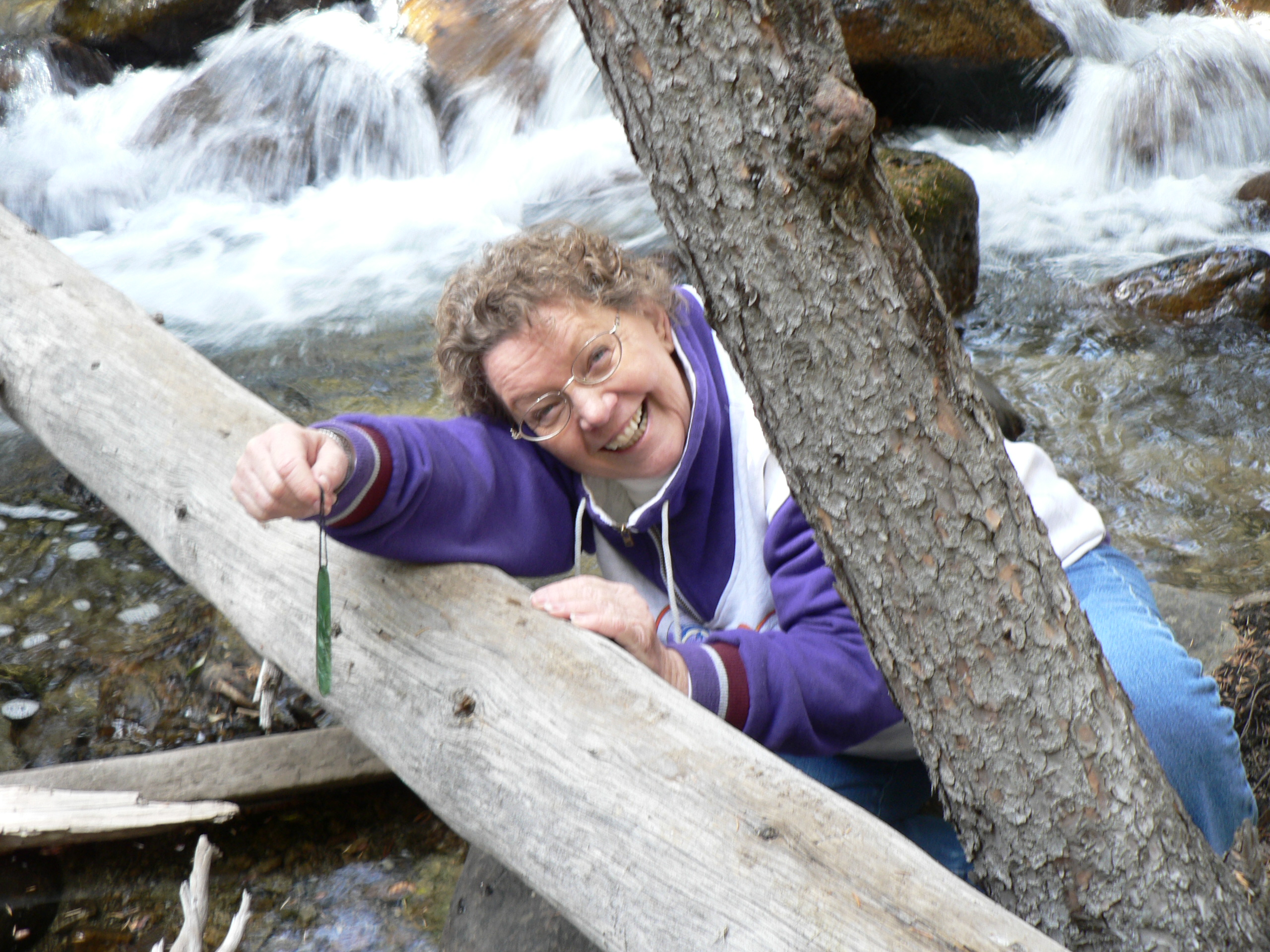
Taken on her 70th birthday, playing in a tributary of the Salmon River: The River of No Return

copyright 2010 Dia Osborn

The $3,399.28 Cat

I’m home again.  Finally.  Two weeks is a long time to be away, even when I’m away somewhere that I love.

We traveled all day yesterday to get back here.  Up at 4:00 a.m., long drive down to St. Louis, long wait at the airport, long flight with two stops in Denver and Salt Lake City, then home sweet home at 8:00 at night.  I was frazzled, exhausted, and shutting down hard.  My cell phone went dead around 2:00 in the afternoon, so I didn’t pick up the two frantic voice mails left on it until after recharging around 9:30 p.m.

That was when I learned that Dane the mangy, rescue mutt, oh mighty predator of predators, attacked the neighbor’s sixteen year old cat Tinkerbell in the afternoon and mauled her pretty badly.

The first voice mail was from our daughter (voice trembling uncontrollably) telling me that the attack took place but everything seemed to be okay.  Daughter was house-, dog-, and garden-sitting for us while we were gone.  Daughter was overwhelmed by those additional duties on top of the five course load she’s carrying this semester at college and the thirty hour week she works as a waitress.  Daughter couldn’t manage Dane’s afternoon walk so she called Sweet and Helpful Neighbor Lady across the street who cheerfully offered to help.  But Daughter didn’t realize that Neighbor Lady had cats and made the mistake of taking Dane Cat-Hater over to her house off-leash.  The rest, as they say, is now history.

The second voice mail was left about four hours after the first.  It was from Neighbor Lady (voice also trembling uncontrollably) letting me know they were at the vet where they’d discovered that Tinkerbell was not okay at all.  In fact, Tinkerbell had multiple broken ribs and a punctured lung, and surgery on her was going to cost about $3,000.  She was sobbing into the voice messaging center that they couldn’t afford it and, if we didn’t pay for it, they were going to have to put her down.  I about shit.  Then I told the hubster.  He about shit, too.

Which is when I first noticed the interesting little voices piping up in my head, having a spirited referendum in there.  The first voice (naturally) was Guilt.

I told you!  I told you a thousand times.  We should have made it a rule that he’s always on leash when he’s out of the house!

The next voice was Blame.

It’s the hubster!  The hubster hates leashes!  He refuses leashes! And how in the hell could Daughter not know that Neighbor Lady didn’t have cats? We’ve been neighbors for thirteen years for godsakes!

Then Wheedle and Cheat chimed in.

Y’knooooow…mentioned Wheedle.  It must be close to an hour and a half since Neighbor Lady called.

Yeaaaaah, that’s right…seconded Cheat.  I wonder…what-oh-what could have happened since then?

Do you think they may have already put her down? continued Wheedle.  It would be so sad…

so sad…echoed Cheat.

But it wouldn’t cost us nearly as much…suggested Wheedle.

It would save us a fortune! chimed Cheat.

It would put the cat out of its suffering, too…said Wheedle.

It would be a kindness, Cheat nodded his head emphatically.

Maybe…Wheedle tilted his head to one side and gazed up at the ceiling…we should just say we didn’t get the message and call in the morning?

How compassionate! Cheat agreed.

Compassionate? said Guilt much struck.

Can we really do that? said Blame perking up.

It was only after this exchange that Tattered Shred of Decency finally spoke up.

Oh, come on you guys, her voice was gentle but firm.  Couldn’t you hear the anguish in Neighbor Lady’s voice?  Tinkerbell is like her child.  We can’t dump this off on her.

But we don’t even like cats, muttered Cheat.

Remember how Tinkerbell used to come in our backyard and shit in the pea gravel pathways? reminded Blame.

And y’knoooow…Wheedle slithered back into the conversation.  Tinkerbell is a very, very old cat…

There was a significant pause here.  It was a hurdle even for Tattered Shred but she powered up and managed to clear it.

Doesn’t matter, she finally crossed her arms over her chest.  Neighbor Lady loves her and can’t bear the thought of losing her.  Not like this.  Don’t you remember all the times Neighbor Lady helped us when we were in a tight spot?

Nobody answered.

Has she ever, ever done anything to hurt us?  Or anybody else for that matter?

Silence.

And is the pain she’s in right now any fault of her own?

Four heads hung down in shame and wagged slowly back and forth.

So the hubster and I called her back.  Neighbor Lady and Neighbor Hubster were still at the vet and Tinkerbell was still alive.  Only somehow, during that hour and a half delay, the surgery’s cost had grown from $3,000 to $4,000.  And by the time I actually talked to the front desk person to give her our credit card number, the upper estimate had mysteriously mushroomed to $5,000.  I wasn’t sure what was going on but at that point I thought it wisest to let the clinic know we were capping the amount we’d pay at $4,000.  Privately, the hubster, Tattered Shred, and I remained flexible about covering more, but we didn’t want the emergency clinic thinking we were patsies.

The final amount topped out at $3399.28 and we considered ourselves lucky.  (Could that be what the clinic was trying to accomplish by raising the upper end?)

I’m not sure why it’s so much harder to be a good human being when large sums of money are involved, but it is.  Thousands of dollars just hurts.  Ow.  However, the fact that Neighbor Lady is such a genuinely good and loving person made it a whole lot easier for me to step up to the plate and do the right thing.

Is goodness contagious then?

(Shittiness certainly is.  I admit if the cat had belonged to the lady who lives behind us, the one who wanted to chop down our apple tree to keep a few apples from falling in her yard, the referendum in my head would have been longer and the outcome uncertain.)

It’s the old Golden Rule I guess.  Be unto others as you would have them be unto you.

Only you know what?  Neighbor Lady doesn’t have any strings attached where her be-unto is concerned.  She’s not kind and decent because that’s how she wants to be treated in return.  It’s just who she is.  She’s a naturally stellar human being.  Frankly, I don’t think I’ll ever be that good a person but at least her influence helped raise me a little higher this time around.  Maybe if I put a little effort into it there could be some kind of trickle down effect from all this.  Next time I’m dealing with Apple Tree Hater, maybe I’ll strive to be a little more understanding and forgiving, too.

Maybe this incident could even morph into something that winds up improving our little part of the world.  I owe it to Tinkerbell to at least try.

This morning, the hubster and I drove past a dead cat flung to the side of the road that had been hit and killed by a car.  I felt the twinge of regret I always feel with roadkill and then heard the hubster mutter, That better not be our three thousand dollar cat. We looked at each other and started laughing as we realized that for the first time, for whatever time she has left, we’re now heavily invested in the welfare of a feline.

Could it get any stranger than that?

copyright 2010 Dia Osborn