A Yuletide Wish

Image from Wikipedia

THOUGHTS FROM THE YULETIDE 2010

Dearest family and friends, old and new;

Greetings from the slushy, drizzling, overcast, and fog-riddled, slightly-far north town of Eagle, Idaho!  We fervently hope the holiday season is bringing you a lot more sunlight than we’ve seen here over the last month, and that your vitamin D and serotonin levels are correspondingly higher.  I really shouldn’t complain of course.  We need the moisture, and the snow in the mountains is a godsend.  But still. We’ve been buried under low, heavy clouds and dense fog for so long now that it’s starting to feel a lot like Venus.

The family is doing well.  Cal’s had a great year at work and, yes, he’s still traveling back and forth to the Northeast every month and loving the job.  Go figure.  A double life really seems to suit him.  And thanks to both good luck and their stellar work ethics, Lorin and Kit survived the transition and still have jobs after Hewlett Packard bought Palm last year, laying off a lot of the old work force in the merger.  McKenna graduates from Boise State University in a few days with a B.A. in English/writing emphasis and a minor in History and has developed into both a talented academic and a sensible, hard working woman.  We really couldn’t be prouder.  As for me, I was eventually buried under the organizational demands of trying to write a book about dying, so I shelved the project and started a blog about dying instead.  Turns out it’s a lot easier to continue to sound coherent in a few paragraphs than it is throughout hundreds of pages.  Who knew?  I have a deepened respect for anyone who writes an entire book about anything.

*          *          *

Well, right after I wrote the above paragraphs two weeks ago the tsunami hit and I was swept out to sea by the combined demands of holiday preparations, graduation celebrations, blogging schedule, joining a gym (not the best timing on that one…), and cramming a block of dental/medical appointments into the end of the year to try and catch the insurance benefits before they expire.  That’s how I find myself sitting here a day and a half before Christmas, stuffed and tired, pressured by deadlines, sweating and sore, screened and cleaned, just a wee bit stressed out, and still trying to think of something warm, fuzzy, and holiday themed to say in the yuletide letter this year.

Merry Christmas?

Actually, I say that carefully.  A few years ago Cal and I took a walk along the river on Christmas day and ran into an older couple who wished us a Merry Christmas as they passed by.  When we smiled and wished them the same, to our surprise they became agitated and stopped to talk.  Evidently, they’d wished someone else a Merry Christmas earlier in the day and whoever it was had bristled and taken offense at the greeting.  Our older couple had retaliated by taking offense at the fact that offense had been taken and, lo and behold, in direct opposition to the spirit of the season, the cycle of bad feelings was up and running, passing on its merry little way downriver to us.

I’ve thought about that one ever since.  I realize there’s often tension these days around what Christmas…and other traditions for that matter…are supposed to mean, how they’re supposed to be celebrated, and whether or not they should even hold the prominent place they do in a secular society.  It’s understandable.  I think we all tend to get a little territorial about the traditions that are most important to us, and it’s only natural to resist the intrusion of other traditions onto our own.

The urge to protect the unique rituals, values, and celebrations that nourish, strengthen, and guide us in our lives is universal.  I know I certainly don’t want anyone else messing with the way I celebrate my season.  But having said that, please believe me when I say that neither do I have any desire to dictate how you should celebrate yours.

We weren’t a particularly religious family when I was growing up, so my parents took the Santa Claus track and really poured themselves into celebrating the magic of Christmas.  They went to great lengths to create as much joy, wonder, and sense of miracle for us kids as possible and, funny though it might sound, some of the most important, foundational lessons of my life were learned from the way they taught us to celebrate the season.

First of all, they taught me that Santa Claus was real. That there actually existed a jolly, caring, magical being who was so generous–so loving and happy–that he devoted his whole life to flying through the world to try and touch, enrich, or bring love to every last, living person in it.  Naturally, this understanding evolved quite a bit as I grew up.  (You’ll be relieved to know I no longer believe in Santa.) However, it also instilled a couple of lasting and important beliefs in me:

1) There are powerful and benign forces at work in creation that sincerely desire my happiness, and

2) Gifts aren’t always given because they’re earned or deserved.  Sometimes generosity is just for its own sake.

Secondly, my parents taught me that sometimes miracles come in the night, and I can’t begin to tell you how much courage and hope I’ve drawn from that lesson over the years.  Throughout my childhood and on into adulthood, it’s helped me to be less afraid of the shadows, to trust that along with the monsters, darkness also harbors miraculous, luminous gifts.  And I honestly think the odd faith I developed from that early lesson helped me more during the lean, dark years of my battle with depression than anything else.

Third, my mom and dad required us, from the time we were small, to think about, select, wrap, and give gifts to each other.  And when we finally got to open them all on Christmas morning, we always did it one at a time, each of us taking turns opening a present while everyone else watched and shared in our excitement.  We circled around and around this way, as many times as it took, until everyone was done and it was this ritual, more than any other in my life, that taught me how the giving and receiving of gifts is really a banquet for everyone to sit down and enjoy.  I learned that whether I’m giving or receiving, ripples of happiness can be created either way, and the truer the spirit with which I do both, the wider the ripples become.

There were a thousand other lessons of course, opportunities to develop qualities like patience and self-control, as well as learning how to manage things like disappointment, envy, and greed.  I’ve continued to build on these early lessons all my life, and I feel like the Christmas traditions practiced by my family were actually fundamental and essential to the development of my deepest sense of humanity.  I’ve always known that my family’s way of celebrating Christmas was neither the “right” way nor the only one, but it was our way and that made it beautiful, nourishing, and perfect for us.  It created magical ties of love, faith, strength, and generosity that bound us closer together, and gave us a way to reaffirm each year the things that my family cherished most.  And I’ve done my level best to pass the same gifts and lessons down to my own children.

I guess this is all just a long way of trying to explain that, if Cal and I wish you a Merry Christmas or Happy Holidays or Peace of the Season or any other kind of holiday wish, it’s not because we’re trying to impose our childhoods, or beliefs, or values, or culture on you.  We’re not.  We don’t believe in that.  We love the fact that everyone gets to find and draw meaning for their life in the way that feels right and true and most nourishing to them.  And we love even more that we all have the freedom to do just that.  No.  All we’re really trying to do with the greeting is make a deep, sincere, and heartfelt wish for you from the language of our childhood joy:

For us Merry Christmas means that, no matter what holiday you do or don’t observe, and no matter how you do or don’t observe it, from the depths of our hearts and with the greatest good will, we wish for you all that is best in your world, from all that is best in ours.

With great love and even greater hope,

Cal and Dia

Wikipedia again

copyright Dia Osborn 2010

Life Is Like A Trust Fund

In “Dying” Is Still Alive I talked about the cost of focusing so much on trying to cure a life threatening illness that we risk going straight from being sick to being dead, with no time left for the opportunities that dying offers in between those things.  In the comment section afterwards, Linda of What Comes Next? posed an important question:  When fighting a life threatening illness, is it possible to embrace dying too soon…to forfeit the opportunity to rise above it and live longer? This is a great question and one that a lot of people ask.

What I’d like to do is break it down into two parts.

Part # 1)  Is it possible to embrace dying too soon?

My answer, which probably won’t surprise anyone, is absolutely not.

Personally, I think we should all start embracing dying (i.e. looking at it, accepting it, and using the daily awareness to live as wisely and fully as possible) early on, ideally in childhood.  The opportunities for exposure are rife.  Like the first time we see our father crush a bug, or our mother put a cooked leg of something on our dinner plate, or have a family pet die, or hear about our little friend Emily losing her grandpa.  As I’ve mentioned before, it’s never hard to find dead bodies scattered along the side of pretty much any road in America and, if all else fails, there are the innumerable references to, and reports of, dying and dead on the news twenty-four hours a day.

However, since children learn how to embrace dying from their parents, and since most parents don’t know how to teach it, most of us wind up as adults lacking the skill.  In fact, most parents not only fail to teach how to embrace it, they treat it as something unspeakable and do their best to hide it.  The most common metaphor for dying used in our culture is The Enemy, a horrible, looming foe to fight against tooth and nail, both bitterly and indefinitely.

As a result, most of us don’t learn to embrace dying as the last, natural, grueling-but-luminous stage where, if we’re lucky and blessed, we have the time necessary to successfully wrap up our life.   Instead, we deny it as long as possible which can drastically shorten or, sometimes, even eliminate the opportunity to fulfill our end-of-life tasks.   Most people don’t seem to realize that it takes time, sometimes a lot of it, to wind up our affairs, make our bequests, and absolve and be absolved by those we care about.  To link trembling hands one last, aching, transcendent time and say I love you.  I’ve always loved you.  I will always love you.

As a death averse society, we haven’t fully grasped yet that dying at peace, with no regrets, and with our loved ones prepared for a life without us afterwards, is a necessary and worthy goal.

Instead, most us learn to look at dying as the gruesome, terrifying end of everything.  To run.  Run! Hard and fast, for as long as possible toward escalating medical intervention; drugs, surgeries, and treatment regimes that can not only consume most of the time we have left and create more layers of suffering, but actually shorten our lives as well.

In La Crosse, Wisconsin, where end-of-life discussions are the established, accepted norm, life expectancy is actually one year longer than for the average American population.  And a 2006 study by the NHPCO found that the mean survival rate for patients on hospice was 29 days longer than it was for patients who were not on hospice.

For a person who’s spent their entire life regarding dying as something horrific, it’s a real challenge to switch gears, turn around, and embrace it when it finally comes.  Not impossible mind you, but definitely harder.

Helping people make this switch was one of the major goals we always worked toward in our hospice.  We fought hard to help people make the difficult transition from fighting for life to accepting dying because we saw, consistently, what a profound and healing difference it makes.  There’s more trauma involved when the state of dying is embraced late, or never embraced at all.  There just is.  Sometimes this is unavoidable, as in the case of a swift or sudden death.  But more often in today’s medical system, it happens as a result of focusing entirely on finding a cure without also preparing for dying.

Which brings me to the second part of Linda’s question.

2)  Is it possible to forfeit the opportunity to rise above it and live longer?

While this question initially seems to reduce the situation to its simplest elements, I think it’s actually creating a trap.  To explain, I’d like to use a teaching story.

Imagine you were born with a trust fund, and in this trust fund was a billion dollars. All your life you’ve been able to draw from this fund whenever you wanted, using the money for any old thing your heart desired.  While you learned early on that the trust would eventually wind down and close, everyone was kind of fuzzy about the dates on that part.  So in the end you just kind of forgot about it and started spending.

Then one day your lawyer calls to tell you that the termination clause has been activated.  He’s learned that you’re going to lose access to the funds in about six months.  He knows there’s no way to break the clause entirely, but he thinks that if you fight it, you might be able to win a temporary stay.  Buy some extra time.  The tricky thing is, you have to draw down the money in the trust fund to mount the court battle.

You now have three forces at work:

First, there’s the hope:  You might win extra time and still have some money left in the fund afterward.

Second, there’s the real and measurable cost:  You’ll be diverting money to the fight and depleting the funds you need for everything else in your life.

And third, there’s the risk:  Court costs these days can easily eat up most of the trust.  Even if you eventually win more time, the funds might already be exhausted.

Considering these three things, you really, REALLY need to ask yourself some important questions before you decide on a strategy.  The trick is what are the best questions to ask?  Naturally, you want the ones that will give you the most insight and wisdom, the ones that will be most helpful in guiding you in your choices during the time you have left.  So what are those questions?

Linda’s question, adapted to our metaphor, is one possibility.  If I just accept the clause and forgo taking it to court, will I miss the opportunity to use the trust fund longer? The answer?  Well…yeah. Of course you would.  The answer to that one, just from the standpoint of pure logic, is obvious.  Which initially makes the right choice seem like a no-brainer.  Of course you should fight.  Anything else would be giving up.

However, this way of looking at it is actually misleading.  It makes it sound like, universally, there’s only one possible option that everyone should always make.  But that’s not true.  Why?  Because every person is different; with different needs, different dreams, different circumstances, different ages, different strengths, different fears, and different prospects.  All these things need to figure into the choices that each person makes, so the questions we ask need to include them.  Ideally, they’d run more along these lines:

Okay.  Exactly how much extra time are we talking about fighting for here?  Rough guess, what are the odds of my winning this fight?  Am I really interested in betting the farm on longer, riskier odds?  Just how much money is left in the fund to fight for at this point anyway?  Is there something other than legal fees I really want or need to spend that money on?  What will I lose by mounting a fight?  What’s more important to me; having the funds available to spend in the future, or spending them today on what I love?

And what is perhaps the most important question of all:  How much of the fund should I reserve for what I love, value, and cherish the most, to ensure I have no regrets–that my loved ones will still be okay–when the trust eventually closes?

The metaphor of a trust fund is apt because, in reality, life isn’t something that belongs to us. It’s not like our mothers gave birth and then picked up a receipt at the front desk.  Life has never been ours, something we’re entitled to own and control.  On the contrary, it’s only ever been a miraculous, incomprehensible, immeasurable resource controlled by something else too big to understand.  Life is something that we didn’t earn and don’t even necessarily deserve, but that we nevertheless get to use however we want, for free.

To me, life is exactly like a trust fund…only times a gazillion. It’s our fortune.  Our treasure.  A limitless, jaw-dropping, sphincter-releasing wealth beyond our wildest, freaking dreams.  I’m talking real-life fairy tale here, a winning-the-biggest-lottery-of-all-time kind of luck.  A staggering, incalculable store of riches that’s set up in trust for us when we’re born and that we get to draw on and use for as long as we’re here.

But of course, as with all fairy tales, there is that one small catch:  We only have access for a limited time.  And while the question how much time? is certainly a compelling one, it’s unanswerable.  For me it’s more valuable to ask instead, What is the best and brightest use of whatever time I do have?

The medical mindset at work today tends to glorify the fight to live, and skim over the deep human costs involved in such a fight.  This often leads people to continue fighting in the face of increasingly long odds, instead of devoting their remaining energy to fully living whatever time they have left.  It’s surprisingly easy for the fight itself to take over and become the goal.  That’ why it’s so important to remember that the fight is only worthwhile in so far as the life it seeks to preserve is worth living.  When it begins to consume and destroy that life instead, then it’s time to stop.

We’re living in a transitional age where developing technologies have granted us miraculous gifts.  We’ve gone from having little to no choice at all about how we die to an overwhelming explosion of options and, even though we don’t have any more power to prevent death today than we ever did, we’ve developed an extraordinary, mind-blowing capacity to manage its timing.

However, there’s still a gaping hole that exists between these developing powers and our understanding of how best to apply them.  Subconsciously, we’re wrestling with a lot of confusion.  All the old instincts about dying are alive and well and active, lurking just below the surface.  We’re still firmly in the grip of old memes, superstitions, beliefs, and attitudes about it, only now we’ve added layers of wild (and often unrealistic) expectations born of a new, more sophisticated world.  Our collective understanding and response to dying, developed through tens of thousands of years of helplessness, hasn’t evolved as quickly as our intellectual, technological knowledge, creating turmoil and chaos.  But it’s also opened the door for some amazing exploration and new possibilities in how we want to ultimately embrace and manage the way we die.

We’re living in an exciting, intoxicating age where we’re all medical pioneers, where we all get to explore and experiment in our own lives with how best to apply this new wave of knowledge.  I suspect, as we evolve and mature in our understanding of what dying and death mean in today’s world, we’ll become more skilled in balancing our profound desire to live with a deepened, more authentic acceptance of dying.   We’ll discover new and wonderful ways to navigate, treat, live…and still dance…with chronic and terminal illness.  Ways that, today, we can’t even begin to imagine.

I think the current, explosive growth in medical possibilities offers us a parallel opportunity, both as individuals and societies, to grow and develop at a pace that simply wasn’t possible before.  We now have  the chance for our deepest humanity–our collective courage, generosity, insight, humility, and wisdom–to grow at the same exponential pace as our technology.

Personally, I love it.

copyright 2010 Dia Osborn

Battery Killer Cold

We’ve escaped.

We had an early pre-Thanksgiving dinner for family on Sunday and then the hubster and I loaded up the backpacks, threw the snowshoes in the car, and drove threw a winter storm up to the family cabin in the Sawtooth Wilderness Area.  (I’d post a link to a website with photos here but it’s a miracle we’ve got even patchy internet access.  I don’t want to push my luck.)

We literally drove up to the cabin, something unheard of this time of year, particularly during a snowstorm.  It’s on a dirt road that’s accessible during the summer but buried in winter and usually we park down on the highway when the snow hits and backpack from there.  But we’re both growing sadly fat and the idea of carrying fully loaded backpacks for two miles, uphill, made us both feel wheezy, desperate, and, perhaps, a little stupid.  We gambled and, this year at least, won.  We were able to rev the engine, spin the wheels, and fishtail all the way up to the door, unload everything, then slip and slide all the way back down (laughing insanely) to leave the car on the highway where it belongs.  Coming back up again on foot was easy after that.

And now the adventure begins.  This last snowstorm lasted for two days and next, within hours, we’re supposed to catch the leading edge of a front with a blast of arctic air behind it.  Temps, you ask?  Well, funny you should ask, I reply.  Tonight and tomorrow it’s supposed to get somewhere down around 25-35 degrees below zero and the high tomorrow will be -3.  It will be utterly fantastic (albeit very brief) star gazing conditions if the skies are clear.  You’ve never seen the Milky Way like how it looks on snowshoes at high altitude with frigid temps…like it’s close enough to pull down and wrap up in. It’s breathtaking and so totally worth frostbite.

(Kidding.)

Then it’s supposed to warm back up as another winter storm blows into the region with eight more inches or so of snow.

Now.  The big question I know all of you are just dying to ask is, After that kind of cold will the car actually start when you come back down on Saturday? Good question! Very astute.  This cold is so cold, it’s the kind where even jumper cables may not be enough.  These are electrical charge sucking temperatures. It’s Battery Killer cold.  The answer is of course, we don’t know.  Personally, I doubt it, but the hubster refuses to speculate because he knows I’ll freak out if he confirms my dark suspicions.

So…oh well.  I guess we’ll just find out on Saturday…something fun and surprising to look forward to all week.  In the meantime, we’ve got four solid days of spectacular, wild, isolated, snow covered, mountain-peak rimmed beauty to keep us occupied.  If internet access continues and I can do it, I’ll try and post some pictures.

The winter wildness of it all is really, really, something to behold.

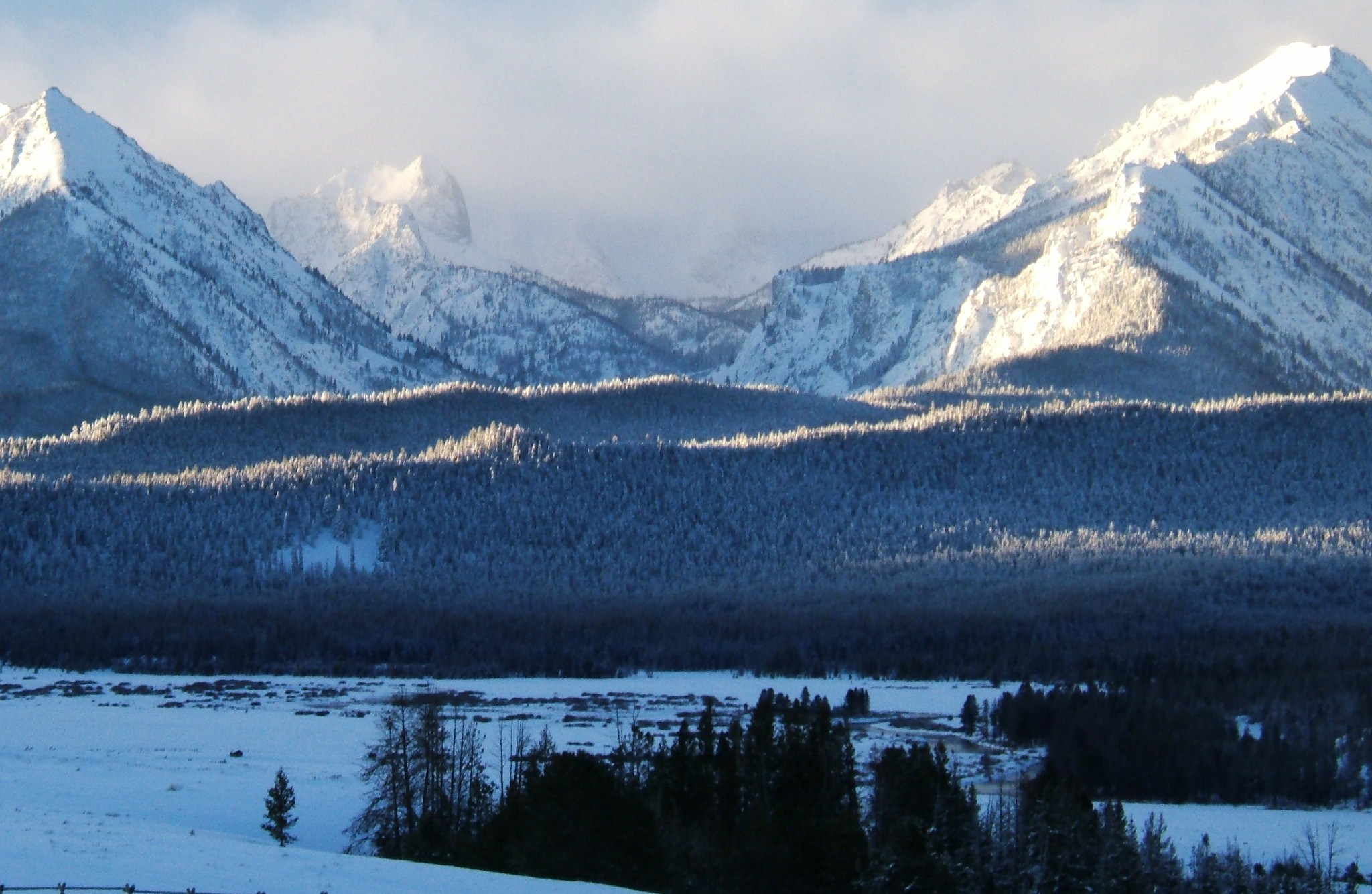
Update:  I just remembered I have a picture of the mountains outside the front window that I used in a post a couple weeks ago.  I’ll re-post it here.  This is what the mountains would look like from where I’m sitting right now if I could actually see them through the storm:

copyright Dia Osborn 2010

Teaching Stories and Working with Dying Bodies: Context Helps A Lot

“Let me light my lamp,”

says the star,

“And never debate if it will help to

remove the darkness.”

– Rabindranath Tagore

It’s here my friends.  Autumn.  Not the calendar date which arrived weeks ago, but autumn in the trenches, where I’m scrambling to strip-harvest the last of the tender vegetables, get the cold frames covered, and dig out all the wood stove accoutrements from the garage.  Last night was our first frost and I woke up this morning reluctant to slip out from under the down comforter to a chilly house.

It was time…finally time…for the first fire.

We heat primarily with a wood stove and…let me just say before anyone gets their panties all in a bunch…we use a high-efficiency, EPA certified stove, that gets maximum energy capture with minimum greenhouse gas and particulate matter emissions.  We also live in the mountain west where pine beetles are killing off wide swathes of our forests, so our fuel consists of dead trees that would otherwise provide fuel for catastrophic forest fires spewing greenhouse gases and particular matter into the sky.  We have a back up furnace for burn bans, use only clean, seasoned wood, keep our stove and chimney clean, and burn hot fires.

While it’s not a perfect source of energy we believe, used responsibly, it’s one of the wiser choices for our neck of the woods.

It’s also a high maintenance way to heat a home which wouldn’t work for a lot of people but it’s satisfying for us.  It’s like a dance that spans the entire year.  Splitting wood in the spring, cleaning the stove in summer, stoking fires through fall and winter, and collecting ash for the garden once spring returns.  We work our way through the seasons of cold and dark, waking and sleeping to the ebb and flow of temperatures in each load.  It’s like a slow waltz with wood, axe, oxygen, and match as partners.

It’s also a lot cheaper than our ancient electric furnace.  Très bien.

Staring at the crackling fire this morning I flashed back to a story I heard long, long ago.  It was a teaching story which has helped me a lot over time, as any good teaching story should.  Thirty or so years ago I met an elderly monk one night, at a time when I was in a lot of pain.  I was pushing my dinner aimlessly around my plate in the college cafeteria when he just he showed up.  (It was not a Catholic school and had no proximity to a monastery.  Kinda spooky.)  We wound up talking in the library into the wee hours of the morning and, even though we covered a broad range of topics that night, I only remember two things:

1)  When we stood up and hugged good-bye I rubbed his back with my hand like I would a friend and afterwards, when I realized what I’d done, was aghast.   It’s not that Father Monk looked in any way offended but while I had no idea then, and still don’t today, what is the proper etiquette for hugging a monk, I assume you’re not supposed to fondle them.

And 2) he told me the story of the Log and the Flame.

I had just told him about an experience of heightened awareness I’d been having since I was a small child, one I was having increasing difficulty integrating into my everyday life.  The experience itself had always been luminous and joyful, but as I’d gotten older the contrast afterwards was becoming a problem.  Once the experience ended, the regular, daily world looked pretty bleak by comparison and I’d fall into a depression that could last for days.

Integration of any kind of extreme reality presents a challenge.  I’ve often heard people describe the shock and disorientation they felt when traveling for the first time between a wealthy country and one where grinding poverty is endemic.  The gap between the two worlds is huge and can raise a storm of new thoughts and emotions that need time and effort to wrestle to the mat.  The same dynamic exists when someone wins the lottery, or visits the dying for the first time, or enters a prison, or any other environment that lies at the opposite end of a spectrum.

This holds true for extremes of internal experience as well as external.  When I was a child the feeling of wonder and belonging that the heightened awareness gave me was easy, because I was already living in the imaginative, magical universe of childhood.  But as I entered adolescence the contrast grew more stark and by the time I went to college the wide swings of emotion involved (feeling loved and luminous one moment, then stranded, dark, and alone the next) were getting hard to deal with.

I couldn’t figure out how to rope and ride that particular whirlwind.  I needed some guidance.

Father Monk was the right man for the job.  As soon as he heard my description of the experience he nodded in understanding, then proceeded to talk about the wild swings I was having in Christian terms of purification.  It sounded kind of like a colon cleanse only spiritual.  Then he told me the story of the Log and the Flame.

When the log is first laid on the flames, he said, the two are separate and distinct, but then the fire begins to catch the bark and wood.  As it spreads and encircles it, the log starts to sizzle and hiss and then, as the fire penetrates deeper, the wood blackens and moans, cracks and crumbles.  It’s a difficult process for the log to go through but eventually, the wood glows red and then dissolves as it’s transformed into the flame itself.

I gotta tell you here…I liked it.  Not only as a constructive context for framing the struggle I was having, but as a truly dynamite teaching story as well.  Turns out it works in all kinds of situations because, as archetypes go, fire is pretty universal.  Back then Father Monk’s story helped me sort out and harness what was good in the experience I was having, as well as clearly identify the challenge involved so I could develop some tools to manage that part of the swing.

But I also remembered the story years later when I was working with hospice, and it gave me a whole new perspective on what was happening to the bodies that were basically disintegrating beneath my hands.

Watching a body separate from the life it’s been housing takes some getting used to.  It really does.  As graphic processes go, dying has to be up there with the best of them.  The sights, sounds, textures, and odors involved require some aggressive acclimation and nobody is fine with them at first.  Nobody.

But once I grew familiar with the symptoms and my gag reflex subsided, I relaxed and found myself surrendering into the journey these people were taking.  On a few occasions, while standing by their bedsides and gently, oh-so-gently, bathing their shrinking, wasting bodies, I even had that experience of heightened awareness again, where it felt like I was falling into some great stillness that cradled the room.  It reminded me of standing up in the mountains at night bathed in starlight and silence, the Milky Way brilliant and arcing across the sky.  Everything just suddenly felt so big.

And as I slowly touched and turned them, wetting and wringing the washcloth before laying it’s warmth over another patch of quivering skin, tenderly washing away the sweat and sloughing skin, the fecal matter or encrusted blood, I would notice it again.  How they seemed to be faintly glowing there in front of me, like there was something radiant just under their skin that made them look translucent, and every time it took my breath away.

It reminded me of the story of the Log and the Flame.  Only in this case it was like these people were the logs and the flame was something inside them, illuminating them as their bodies slowly dissolved.  It was extraordinary to watch and, while I have absolutely no idea what was causing the phenomenon, I found the beauty in it reassuring.  It helped me care for them better, turning my sadness from something heavy and dragging into something sweeter, more poignant, and clean.  I tumbled head over heels in love with them, each time.  Fell in love with their beautiful, crumbling bodies that were busily transforming into something else.

I think that’s the hallmark of a great teaching story.  It provides a bigger context to help explain not only the beauty, but the darker, harsher aspects of life that are always taking place, too.   It offers a map, a guide, to help navigate through events that can otherwise be confusing, overwhelming, or destructive.   The Log and the Flame was that kind of teaching story for me, one that’s continued to help across decades, and I wanted to take a moment, with a first-fire crackling merrily in the background, to look across some thirty-odd years and thank you again Father Monk, for such a great gift.  You have no idea how much it’s helped.


copyright 2010 Dia Osborn

A Sense of Presence (Can you feel me now?)

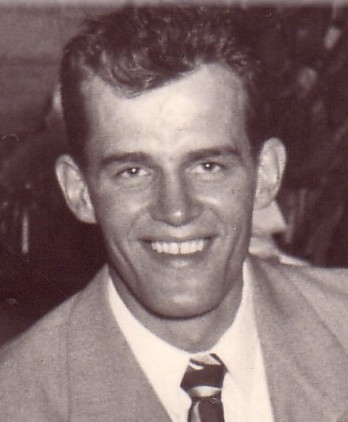
Uncle George, husband, father, friend, and legendary storyteller.

I thought a lot about my encounter with Alf and the Fly this weekend, about how vivid the sensation was when I felt Alf’s presence during the memorial service.  The subject was up again because we drove down to Reno to join extended family in celebrating the life of an uncle who died earlier this year.  During a conversation with one of my cousins (a daughter of said uncle), she described a moment, while going through his things shortly after he died, when she suddenly felt like he was right there with her, giving her an intimate message of love through, of all things, an obscure word in one of the National Geographic magazines that he loved.

She, too, experienced a sense of presence.

Many of you might recognize what she described because you’ve felt something like it yourself.  It turns out that experiencing a sense of presence is fairly common, not only among the survivors of those who’ve recently died but in a variety of other settings as well.  The experience is so common in fact that it’s been given names like the third man, widow effect, and the ever magical imaginary friend of young children. There has also been a fair amount of research done on the phenomenon and I’d like to touch on a few of the studies as referenced in a fascinating book called The Third Man Factor by John Geiger.

(BTW, if you ever get a wild hair and feel like reading a variety of personal accounts of  a sense of presence, here’s a forum on The Third Man Factor website.  These examples are unique because most of them result in a person surviving a situation where otherwise they might have perished.)

Geiger’s book deals primarily with the experience of a sensed presence in extreme, survival situations but he references other circumstances where the experience regularly manifests.  Needless to say, given my focus on dying, I was particularly interested in those dealing with the widow effect, the experience of a sense of ongoing relationship with someone who’s died.  He cites one study by researchers at the University of Arizona at Tuscon in 1988, where about half of the 500 widows questioned reported sensing the presence of their deceased partner, and another survey of 227 widows and 66 widowers in Wales which produced a similar finding.

“That study, by W. Dewi Rees, published in the British Medical Journal, found that most people who had the experience reported they had visits intermittently throughout the day, while 10 percent said they ‘felt that the dead spouse was always with them.’  All said they sensed the presence of the deceased; a few also said they actually saw or heard him.  Rees found the experiences were in no way frightening, and concluded, ‘these hallucinations are…normal and helpful accompaniments of widowhood.’  Other research into widows of men killed in automobile accidents in Japan found the incidence even higher, and there, too, the researchers concluded the presence ‘may be a positive sign in helping them adapt to the loss.'”  (pp. 153-154)

Geiger also sites a larger survey conducted in the UK in 1995 that didn’t just look at widows and widowers, but included a broader cross-section of society.  It revealed that “the continuation of an important relationship after death is not confined to those who have lost a spouse.”  People reported sensing the presence of parents and other family members as well as friends.

Clearly this experience of sensed presence is widespread among the recently bereaved.  Yet prevalent or not, as most people are painfully aware, there’s a social stigma attached to talking about it.  I’ve found the majority of people, at least initially, are reluctant.  Some, deeply so.  They’re afraid others will think less of them for believing in “that kind of thing,” or worse, that people won’t believe it happened at all.   But it does happen, to a large segment of the population, and I hope that Geiger’s book will be a watershed, marking a shift in trend where it becomes more acceptable for people to speak openly about their experiences.

Because being able to speak about these experiences is important for reasons I’ll explain in a moment.

I found it interesting that Geiger himself expected a lot of resistance to the idea that the experience of a sensed presence is real and was surprised when none materialized.  He realized most people don’t doubt that the experiences are actually happening.   The controversy centers around what might be causing them.

The first thrust of The Third Man Factor is to confirm the experience itself and Geiger lays out evidence that makes it indisputable.  People are sensing something that feels like a presence.  (This is huge.  Absolutely huge. He’s finally provided a framework within which people of all intellectual backgrounds can talk about the subject.)

The second purpose aims at reconciling the traditionally supernatural elements of these experiences with possible scientific explanations and he presents some compelling evidence for the role that stress, loneliness, and neurological function play in the phenomenon.   The book is well researched and, while his conclusions ultimately raised as many questions for me as they answered, I was still wildly relieved to hear the subject discussed in a practical, factual manner instead of the half-embarrassed, half-apologetic whispers that I usually hear.

Now, let me be clear.  While I’ve long been intrigued by the dynamic tension between science and spirituality, and I’m always curious to hear what both sides have to say, on a purely practical level I, personally, don’t care what’s causing these experiences of sensed presence.  It’s not relevant to me.  It’s an interesting question, don’t get me wrong, and fun to explore when nobody’s dying.  But when someone is dying, the arguments are really just an intellectual exercise.

Once you’re in that room and it’s you or your loved one lying on the bed suffering, once it’s you facing down the maw of unbearable loss, once it’s your family that’s been swept away in the maelström of vulnerability that dying entails, you’ll probably discover that the arguments about what’s causing an experience of sensed presence aren’t nearly as important as whether or not it helps.

It’s like drowning in the middle of the ocean.  If a boat pulls up and throws you a life buoy you probably won’t care about where the thing was manufactured.  Nor will you ask to see a business card from whoever is throwing it to you.   What you will care about, deeply, is whether or not it floats and, if it does, you’ll grab it with gusto and hang on for dear life.

I think everyone should be allowed to speak openly about any unusual experience they have during the dying process.  (FYI, there are a lot of them.) Because even though no one can definitively explain them yet, they still provide enormous comfort and reassurance during a journey that’s tough at best and devastating at worst.

I’ve often felt frustrated by the fact that such a luminous, nourishing, (and it turns out commonplace) human experience is relegated to the back of the shame-closet where we stash our bogey men and under-the-bed monsters.  I don’t think anyone should ever have to feel embarrassed because they experienced something that helped them cope and heal.  Neither should anyone have to hide the fact that they’re experiencing something lovely even if it’s odd, because doing so robs the rest of us.  I’ve studied the faces of those listening when this kind of thing is shared and the effect of these stories on others is almost always one of wonder, hope, or relief.

Which are good things, things that are in relatively short supply.  We want more wonder, hope, and relief in the rooms of the dying.  Trust me on this one.  They help.

These days, in rational society, we tend to resist things that involve Mystery.  We have our science and we like our rational explanations and we’re uncomfortable with odd-shaped things that sound weird and don’t fit.  The problem with that is, as soon as we enter the dying process we also enter the Mystery.  The two things are a package deal and the ticket covers both rides.  Everyone has to grapple with the fact that questions grossly outnumber answers at the end of life, both existentially and physiologically.

Whether these questions revolve around an experience of sensed presence, or the surprising level of foreknowledge or control many have over the actual moment of death, or the perennial biggie concerning what will happen to us once it’s all over, or the most basic question of Well…what’s causing this symptom?, one thing is certain; sooner or later something will occur during dying that everyone will guess at but no one will know.  And if that something is a sense of presence that lightens the load or eases the pain?  If it provides a pool of nourishment from which we can drink a little courage, respite, or strength?

Then perhaps the most useful explanation is simply that these experiences of sensed presence are a rare and beautiful gift at a time when we need one the most.  Maybe it’s okay to not know any more than that for now, but open both hands anyway, accept the gift, and whisper thanks.

For anyone interested, here’s a brief interview of John Geiger talking about the book, The Third Man Factor.

copyright 2010 Dia Osborn