When beliefs change…

I’ve always been something of a spiritual nomad…or possibly a spiritual polygamist,  depending on who’s judging…but it felt destined.  Like I was born into a desert too damn vast, silent, and starlit not to explore.  I had to roam.  Something deep inside would have died or worse if I hadn’t been able to wander from church to temple to tree covered glade, asking all the weird questions that have always haunted me, looking at life through every set of eyes I could borrow.

Desperate and searching for grace.

I wound up assembling a belief system from it all.  A little rag tag, to be sure, but one that helped me navigate the good times and survive the bad and, really, that’s all a good set of beliefs is supposed to do anyway.  It was enough for me.

And then I entered the homes of the dying and all my carefully collected beliefs got blown out of the water.  Kablam!  Just like that.  I looked down at the tattered shreds in my hands, muttering what?  What?! then looked up at a world that was beautiful, luminous, in a way I’d never noticed before.  So much so, in fact, that it was hard getting things done, because it’s challenging to focus when your heart swells to the point where you’re about to burst into tears all the time.

So what do I believe in all these years later?   It’s hard to answer because it feels like the thoughts drained down out of my head and into my chest.  I don’t have words for it yet—what I believe in I mean.  What I have are recollections.  Memories.  Moments of awareness.

Like standing by the bedside of a dying woman in tremendous pain, tenderly, slowly, oh-so-gently bathing her aching, quivering body.  I had the oddest sensation that my hands grew huge, full of something sweet and searing, as if they were cradling her and cradling her family and cradling their home and cradling myself.  And afterwards I walked out to the car and gripped the steering wheel like I was falling off a cliff, trembling and shaken by some vast current I felt flowing through the house.  A current that had come to collect her, surrounding and floating and washing her away to somewhere else.

There’s a memory of sitting, nodding, by a dying man’s armchair as he lay still and quiet, eyes closed.  And suddenly I noticed all the particles inside him, particles in the room.  Strange, lovely, luminous things that rose and orbited through the air, combining and recombining like  miniature constellations and galaxies.  They seemed slow and graceful and ancient to me, alive and vibrant as if they were conscious, and looking at them made me feel like my skin was glowing.  I still remember the wonder I felt, the amazement, like they were tiny, radiant beings coming together to create our bodies, our chairs and clothing and cars, all the diversity of the physical world around us.  But only for a heartbeat before they dispersed again, moving on to create something else after us, new constellations and galaxies, new bodies, new life.

I watched the wrinkling nose of a dying man as he described the stench of the field where the bodies were stacked after the attack on Pearl Harbor.   Listened to a dying woman recount playing beside the ovens of a converted German concentration camp as a child.  Felt the hair rise on the back of my neck as an old mother’s eyes darted from corner to corner, whispering how four of her children all died at once, long ago, trapped in the tree house they built and accidentally burned with a book of matches they found.

There are so many memories now, recollections of standing witness as heart after heart foundered and broke, falling one after another into a waiting pool of stillness.   It was a dark and tender pool, big enough to hold all their pain and all their lives, and each time my heart broke and fell in, too, with theirs.

Each time.

That’s what I believe in now, I guess.  I believe in that pool of tenderness, waiting and waiting to catch my heart each time it breaks.  I believe that my suffering and joy are entwined, inseparable and, in the end, the same, and that I’m fine just the way I am, whether it feels like it or not.  I believe that everything is still okay, no matter how lonely, frightening, or painful it gets, and that the more I surrender and fall, the safer I feel.  And I believe that that moment…that brief, exquisite moment…when my heart breaks and falls and finally remembers, is the biggest miracle of all.

copyright 2010 Dia Osborn

A Sense of Presence (Can you feel me now?)

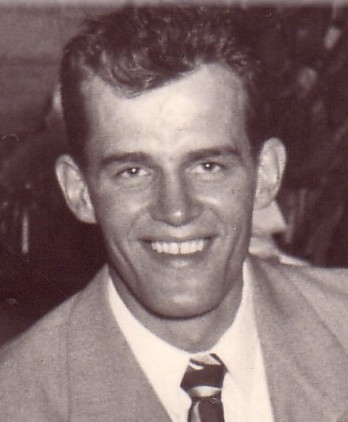
Uncle George, husband, father, friend, and legendary storyteller.

I thought a lot about my encounter with Alf and the Fly this weekend, about how vivid the sensation was when I felt Alf’s presence during the memorial service.  The subject was up again because we drove down to Reno to join extended family in celebrating the life of an uncle who died earlier this year.  During a conversation with one of my cousins (a daughter of said uncle), she described a moment, while going through his things shortly after he died, when she suddenly felt like he was right there with her, giving her an intimate message of love through, of all things, an obscure word in one of the National Geographic magazines that he loved.

She, too, experienced a sense of presence.

Many of you might recognize what she described because you’ve felt something like it yourself.  It turns out that experiencing a sense of presence is fairly common, not only among the survivors of those who’ve recently died but in a variety of other settings as well.  The experience is so common in fact that it’s been given names like the third man, widow effect, and the ever magical imaginary friend of young children. There has also been a fair amount of research done on the phenomenon and I’d like to touch on a few of the studies as referenced in a fascinating book called The Third Man Factor by John Geiger.

(BTW, if you ever get a wild hair and feel like reading a variety of personal accounts of  a sense of presence, here’s a forum on The Third Man Factor website.  These examples are unique because most of them result in a person surviving a situation where otherwise they might have perished.)

Geiger’s book deals primarily with the experience of a sensed presence in extreme, survival situations but he references other circumstances where the experience regularly manifests.  Needless to say, given my focus on dying, I was particularly interested in those dealing with the widow effect, the experience of a sense of ongoing relationship with someone who’s died.  He cites one study by researchers at the University of Arizona at Tuscon in 1988, where about half of the 500 widows questioned reported sensing the presence of their deceased partner, and another survey of 227 widows and 66 widowers in Wales which produced a similar finding.

“That study, by W. Dewi Rees, published in the British Medical Journal, found that most people who had the experience reported they had visits intermittently throughout the day, while 10 percent said they ‘felt that the dead spouse was always with them.’  All said they sensed the presence of the deceased; a few also said they actually saw or heard him.  Rees found the experiences were in no way frightening, and concluded, ‘these hallucinations are…normal and helpful accompaniments of widowhood.’  Other research into widows of men killed in automobile accidents in Japan found the incidence even higher, and there, too, the researchers concluded the presence ‘may be a positive sign in helping them adapt to the loss.'”  (pp. 153-154)

Geiger also sites a larger survey conducted in the UK in 1995 that didn’t just look at widows and widowers, but included a broader cross-section of society.  It revealed that “the continuation of an important relationship after death is not confined to those who have lost a spouse.”  People reported sensing the presence of parents and other family members as well as friends.

Clearly this experience of sensed presence is widespread among the recently bereaved.  Yet prevalent or not, as most people are painfully aware, there’s a social stigma attached to talking about it.  I’ve found the majority of people, at least initially, are reluctant.  Some, deeply so.  They’re afraid others will think less of them for believing in “that kind of thing,” or worse, that people won’t believe it happened at all.   But it does happen, to a large segment of the population, and I hope that Geiger’s book will be a watershed, marking a shift in trend where it becomes more acceptable for people to speak openly about their experiences.

Because being able to speak about these experiences is important for reasons I’ll explain in a moment.

I found it interesting that Geiger himself expected a lot of resistance to the idea that the experience of a sensed presence is real and was surprised when none materialized.  He realized most people don’t doubt that the experiences are actually happening.   The controversy centers around what might be causing them.

The first thrust of The Third Man Factor is to confirm the experience itself and Geiger lays out evidence that makes it indisputable.  People are sensing something that feels like a presence.  (This is huge.  Absolutely huge. He’s finally provided a framework within which people of all intellectual backgrounds can talk about the subject.)

The second purpose aims at reconciling the traditionally supernatural elements of these experiences with possible scientific explanations and he presents some compelling evidence for the role that stress, loneliness, and neurological function play in the phenomenon.   The book is well researched and, while his conclusions ultimately raised as many questions for me as they answered, I was still wildly relieved to hear the subject discussed in a practical, factual manner instead of the half-embarrassed, half-apologetic whispers that I usually hear.

Now, let me be clear.  While I’ve long been intrigued by the dynamic tension between science and spirituality, and I’m always curious to hear what both sides have to say, on a purely practical level I, personally, don’t care what’s causing these experiences of sensed presence.  It’s not relevant to me.  It’s an interesting question, don’t get me wrong, and fun to explore when nobody’s dying.  But when someone is dying, the arguments are really just an intellectual exercise.

Once you’re in that room and it’s you or your loved one lying on the bed suffering, once it’s you facing down the maw of unbearable loss, once it’s your family that’s been swept away in the maelström of vulnerability that dying entails, you’ll probably discover that the arguments about what’s causing an experience of sensed presence aren’t nearly as important as whether or not it helps.

It’s like drowning in the middle of the ocean.  If a boat pulls up and throws you a life buoy you probably won’t care about where the thing was manufactured.  Nor will you ask to see a business card from whoever is throwing it to you.   What you will care about, deeply, is whether or not it floats and, if it does, you’ll grab it with gusto and hang on for dear life.

I think everyone should be allowed to speak openly about any unusual experience they have during the dying process.  (FYI, there are a lot of them.) Because even though no one can definitively explain them yet, they still provide enormous comfort and reassurance during a journey that’s tough at best and devastating at worst.

I’ve often felt frustrated by the fact that such a luminous, nourishing, (and it turns out commonplace) human experience is relegated to the back of the shame-closet where we stash our bogey men and under-the-bed monsters.  I don’t think anyone should ever have to feel embarrassed because they experienced something that helped them cope and heal.  Neither should anyone have to hide the fact that they’re experiencing something lovely even if it’s odd, because doing so robs the rest of us.  I’ve studied the faces of those listening when this kind of thing is shared and the effect of these stories on others is almost always one of wonder, hope, or relief.

Which are good things, things that are in relatively short supply.  We want more wonder, hope, and relief in the rooms of the dying.  Trust me on this one.  They help.

These days, in rational society, we tend to resist things that involve Mystery.  We have our science and we like our rational explanations and we’re uncomfortable with odd-shaped things that sound weird and don’t fit.  The problem with that is, as soon as we enter the dying process we also enter the Mystery.  The two things are a package deal and the ticket covers both rides.  Everyone has to grapple with the fact that questions grossly outnumber answers at the end of life, both existentially and physiologically.

Whether these questions revolve around an experience of sensed presence, or the surprising level of foreknowledge or control many have over the actual moment of death, or the perennial biggie concerning what will happen to us once it’s all over, or the most basic question of Well…what’s causing this symptom?, one thing is certain; sooner or later something will occur during dying that everyone will guess at but no one will know.  And if that something is a sense of presence that lightens the load or eases the pain?  If it provides a pool of nourishment from which we can drink a little courage, respite, or strength?

Then perhaps the most useful explanation is simply that these experiences of sensed presence are a rare and beautiful gift at a time when we need one the most.  Maybe it’s okay to not know any more than that for now, but open both hands anyway, accept the gift, and whisper thanks.

For anyone interested, here’s a brief interview of John Geiger talking about the book, The Third Man Factor.

copyright 2010 Dia Osborn


Alf and the Fly Part I

Once upon a time there was a man named Alf who was dying.  Again.  He was dying before, a few times…at least that’s what the doctors said.  But it turned out they were mistaken and he wasn’t dying at all.  He was just living faintly from time to time.

Alf had lived with a diagnosis of congestive heart failure for twelve, long years and, somewhere in the middle of all that illness and decline, his heart got bored and figured out it could trick people into thinking he was dying.  His heart enjoyed tricking people.  It was like a coyote it was so tricky.  It liked to make the doctors think This is it! so they would then tell everyone else, including Alf, the news.  And that was when it would surprise them all by coming back strong and not dying after all.  It made his heart look like a hero.

That’s how I first met Alf.  His heart was at it again and, in spite of all the times it had tricked them in the past, everyone was certain this time was different.  So, as often happens when someone’s illness is declared terminal, hospice was called into the case.

I came into their lives as a home health aide and I spent hours and hours every week helping Alf and his wife, Mrs. Alf, with things like, oh…showers and transfers and household chores.  There was always cooking and cleaning and errands to do.  Help with personal hygiene and bathroom support.  I was the supply inventory-er and medication monitor as well as a critical all-around liaison with the rest of the hospice team and a jack of all trades for sure and certain.  In fact, so indispensable was I that they paid me an extortionate wage well down into the single digits, a sum that made me the envy of nobody in particular and the wonder of all those who knew how much I’d paid for my college education.

But I digress.

I worked with Alf for close to two years before everyone finally wised up and realized he wasn’t dying this time either.  But what a two-years it was!  We had a ball, Alf and I, and he taught me lots of wonderful things.  For instance, being a great one with his hands, we spent many happy hours together building bird houses which is when he taught me how to use a table saw.

Now if you’ve never seen a wobbling, wheelchair bound, mule-stubborn, ninety-three year old man who can barely pull himself upright to begin with, lean unsteadily on his elbows while using his bare hands to guide a tiny piece of wood past a twelve inch diameter, hot steel, spitting saw blade, then you just haven’t lived my friend.  Everything always turned out okay (miracle!) but each time afterwards I had visions of flying fingers and blood splatter dancing in my head.

image

We also had a grand adventure at the local, home improvement warehouse where Alf wanted to race an electric shopping cart up and down the aisles at top speed.  He never got full control of the thing but he wasn’t a man to let a detail like that stop him–at least not as long as the other customers were willing to keep diving out of the way and store employees hadn’t figured out yet who was running into the shelves.  No sirree Bob.  Alf was beyond such mundane considerations.  Alf was magnificent.  Dirty looks and mumbled expletives weren’t nearly enough to dampen his wild elation at finally getting behind the wheel of something with a motor again.

All in all we had a great run.

But eventually, everyone figured out he wasn’t dying this time either and the gig was up.  He was discharged from hospice   and without the benefit of a daily schedule to throw us together, he and I slowly drifted apart.  I heard bits and pieces over the next couple of years about how he declined to the point where they finally had to put him in a nursing home, about how he just lay there curled up and incapacitated, unable to feed or dress or toilet himself anymore.  I couldn’t help but wonder why his heart wouldn’t just buck up and surrender like the rest of his body.  I shook my head at its foolishness.  Sometimes, being trickier than tricky can really work against you.

But the day finally came when Alf turned the tables on his heart.  He died peacefully in his sleep while it was off dozing, slipping out before it had a chance to wake up fully and figure out what was going on. His family was bewildered at first by the strange turn of events and understandably wary, which could be why they decided to have an open casket at the service

Just in case.

Alf’s was my first ever viewing.  I walked up to the front of the funeral parlor to look at him as soon as I arrived and, between you and me, I was feeling guilty as all hell because I hadn’t been to visit him in so long.  But the minute I saw him lying there in his Sunday suit, looking trim and dapper as ever, I felt better.  He was okay now, finally free of his tricky heart, and in the end that’s all that really mattered.

I leaned over the side of the casket to whisper an apology in his ear while at the same time laying my hand every-so-gently on his chest, but then nearly jerked it off again upon discovering he was ice cold and hard as a freaking rock.  The sensation startled me.  It felt like a frozen rack of ribs slipped into a coat and tie.  It took me a minute to get my head wrapped around the practical details of what’s required to keep a dead body looking fresh and presentable, and then promptly forgot all about it as I returned to bidding him a fond farewell, the best of luck, and a heartfelt wish for grace and fun on his journey to wherever he was headed next.

Thanks for everything, AlfReally.  It was an honor.

I made my way to a seat in the back row, took my place between our hospice’s Social Worker and Nurse, folded my hands primly in my lap, and settled in to try and behave myself during the service.

And that was when the Fly showed up.

Once again, this post has gotten a little too long (windbag?) and I’m gonna have to finish up next week.  Stay tuned.

copyright 2010 Dia Osborn

Alf and the Fly, Part II

When we left Alf last week he was lying in state at the front of the room while the rest of us sat politely listening to the pastor (who clearly never met his subject) reiterate the sterilized summary of his life as laid out in the obituary.  I was doing my level best to stay awake and fend off the head-bob when the Fly first started buzzing around me.

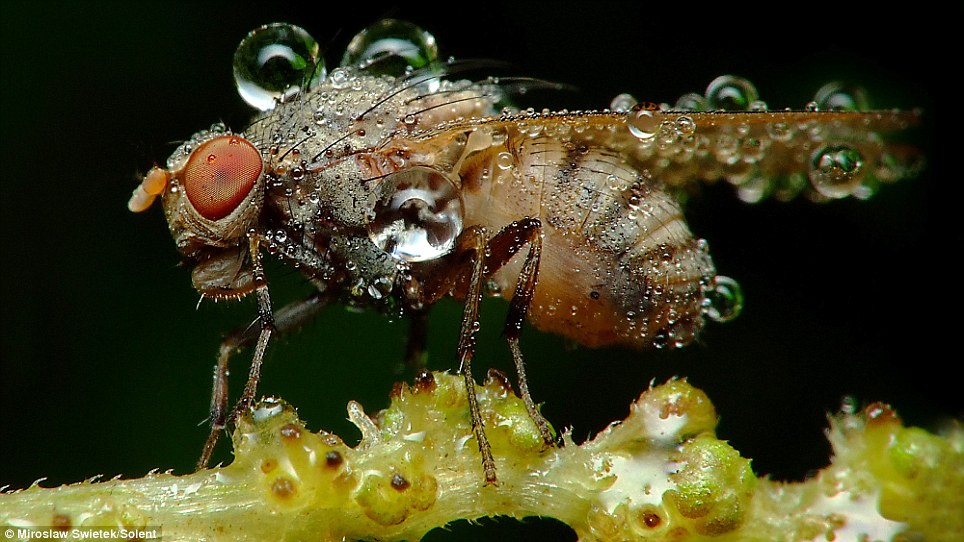
This was just one of a number of remarkable photographs published in The Daily Mail. It was taken by physiotherapist Miroslaw Swietek at around 3am in the forest next to his home.

I was surprised.  For one thing, it was hard to believe that something as wildish and chaotic as Musca domestica could survive in a place like that.  The room felt as sterile and life-sucking as the sermon currently bouncing off its stark, white walls.   Call me wrong but I’d have bet good money that anything smaller than, say, a finch or a bat would have died and dropped to the floor the instant it hit the atmosphere.  Equally amazing was the fact that the Fly (fat, hairy, and droning) had to negotiate five doors and a security force of germ-phobic staff to penetrate that far in.  Truly, this was one determined fly.

However, my wonder was soon replaced by consternation.  The Fly, after buzzing in circles above my head a few times, commenced a series of land-and-crawl maneuvers targeting places like the top of my head and the side of my face.  At first I just brushed it away while still maintaining my focus on the pastor, but after the third or fourth time The Fly finally had my undivided attention.  I studied the situation.  When I glanced at our Social Worker and Nurse on either side of me it was plain they were outside the fly zone.  Neither displayed the harassed look I was rapidly adopting.  And when I looked around at everyone else in the immediate vicinity I realized they weren’t being bothered either.

Naturally, this annoyed me.   So the next couple of times I swatted the creature towards the Nurse, to see if it would switch victims and crawl on her instead.  But it didn’t.  It not only came right back at me each time, it seemed to redouble its efforts.  That was when it struck me that, for some odd reason, the Fly seemed intent on making my life, and my life alone, miserable.

It got worse.  After a few swipes the thing started dodging my hand, feinting to one side in the air before diving back in to skip across my forehead, my cheek, my nose.  Or, if I swung after it had already landed and was doing the Tinkerbell dance across the back of my neck, it would leap into the air just long enough for me to slap myself before gracefully alighting again in a swift succession of tiny steps.

The Fly was really starting to get to me.

Yet it wasn’t until it began lifting my collar to crawl under my shirt and down my back that I truly began to panic.  What the hell was this thing?  It was like no other bug I’d encountered, intelligent, crafty, and motivated.  Like something out of a Jeff Goldblum movie.   I was right on the verge of making a full-blown scene, shrieking and jumping to my feet, writhing madly while trying to slap my back and tear off my shirt, when something stopped me.  I had the strangest thought.

Alf?

The Fly stopped in its tracks.  It stayed still for a moment, huddled there under the fabric between my shoulder blades, then turned around and crawled back up out of my shirt, lifted into the air, and began to fly around in front of my face in a figure eight pattern.  I couldn’t believe it.  My mind was spinning.  Just how is that kind of thing supposed to work?  My imagination took off and I wondered wildly whether Alf had temporarily turned into the Fly itself, or if he had just rigged a tiny, leather bridle and bit and was now sitting astride its back, grinning and waving at me with a cowboy hat.

It was at that point that the Alf Cloud descended.  I felt it wrap around me like something warm and soft, and then an image of him…smiling, standing with nary a wheelchair, walker, or cane in sight…exploded in my mind.  It felt like he was right there in the room.  I could almost smell the clean soap coming off him, feel something warm like body heat.  He was chuckling and I almost laughed out loud, too, but then remembered where I was.

It was odd and wonderful and such a relief.  He still felt exactly like Alf only without any of the weakness and strain.  No frustration, irritation, or pain.  He felt strong and easy and laughing, not at me but with me, like he knew that I of all people would appreciate this new-found freedom he’d found.  And I did.  I really did.  The last tattered remnants of sadness and guilt washed away and there was nothing left inside but happiness for him.

I grinned.  You rascal. And as soon as I said it, the Alf Cloud was gone.  The Fly stopped its circling and meandered away, bumping into people and chair backs and walls as it went.

I told our Social Worker about the experience on the way home and we shook our heads, wondered what it all meant, then chatted for a while about what we thought might happen when we died ourselves.  I told him I was hoping for a lot of love.  He said he’d be happy if he could still experience anything that felt like sex.

The next day when I arrived at the office our Social Worker had already been there for some time and was sitting at his desk when I walked in, studying a small fly crawling around near his coffee mug.  He glanced up at me and smiled.

I was just wondering, he said, then looked back down at the fly.

Mom?


copyright 2010 Dia Osborn

We Don’t Stop Being Who We Are Just Because Our Minds Go

I’ve been thinking about my hospice work and the extraordinary privilege I had of entering these homes–so many of them different (some extremely different) from my own.  And not simply gaining access but entering as a full-fledged, intimate partner to the families.  The whole thing makes me shake my head in wonder.

These are, on the whole, people who don’t really want me there.   I’m never in somebody’s home because a family was just out looking for somebody extra to add to the mix.  No.  These are people in great pain and tremendous overwhelm.  They’re often near drowning in the extraordinary demands of the dying process and this makes them need—often desperately—extra help to meet those demands.  That’s where I come in.  I’m there because I can offer them the kind of help they need, and they’re only letting me in because they have no other choice.

And I can’t emphasize enough the risk that they’re taking in doing so.  There are a lot of vultures out there who prey on the vulnerable in a myriad of different ways and these families, in their exhaustion and bewilderment and deep grief, are exposed.  And they know it.  But here I am, a total stranger with a belief system that often differs widely from their own, coming in to witness every last, little area of their lives; their pain, their limits, their frailties, and their mistakes.

I hold my presence in their home as a huge responsibility.  I feel like part of my job is to create a shield around them with my respect and reverence for their sovereignty over their own lives.  I’m there to learn as much as I can about the moral and spiritual pillars that they’ve chosen so that I can help shore them up against the flood that’s engulfing them, support them from the level of the foundation that they’ve already built.  Because that’s always the one that will serve them best in navigating the dying journey.

After watching the dying and their loved ones take that journey over the years, I’ve come to believe that dying is not the ideal time to begin questioning one’s spiritual framework.  Furthermore, it’s a bad time for someone else to come in, take advantage of a dying person’s vulnerability, and start trying to stir up doubts in order to convert them to another one.  Hopefully, by the time we start to die our values and beliefs are things that have been built up over time, taken from the many questions, tests, ideas, and experiences we’ve faced in our life.  If we’ve had enough time and done things right, our values should have already been put through the fire, tested and confirmed so that, when something catastrophic finally happens, they’re there to fall back on for strength.  For a person with a confirmed faith in any system of beliefs, trying to switch that system while dying is like trying to jump from one kayak to another in the middle of a class-5 rapids.  It would be both stupid and dangerous.

(The one instance where I suppose it might be of help–introducing a possible set of beliefs to someone while they’re dying–would be if the person was floundering and terrified.  If for some reason they didn’t have a spiritual framework of their own and wanted help finding one.  But they would have to ask for it.   Then I suppose offering them one would be more like pulling them out of the water and into any boat.)

One of the patients I worked with was a centenarian whose mental faculties, at 102, were drifting.  She was a devout, lifetime Seventh Day Adventist, a branch of Christianity which I discovered, interestingly enough, does not believe in heaven.  Her daughter/caregiver explained that Adventists believe a person’s soul, rather than going to heaven, stays with their body after dying, sleeping peacefully with no awareness of the passage of time, until the second coming of Christ at which point Jesus resurrects their bodies and makes them new again.

So this was the belief that this woman had chosen and embraced all her life.  But in an odd twist, it was now contributing to an unwelcome side effect.  Sometimes, in moments of dementia and confusion, she spoke of her mother (who had died years earlier) as lying cold and alone in the ground somewhere—the idea obviously distressing her a great deal.  She’d grip my hand, moaning and crying, and it was difficult for me to distract her.  As she was nearing death she seemed to be experiencing more and more fear about being laid in the ground herself (abandoned!) and, listening to her I was reminded of the way children often misunderstand and twist abstract concepts in a way that frightens them.

It was the first time I was confronted with a question that often comes up with dementia.  Part of me wondered whether–for reasons of compassion–it might not be kinder to give her a different, more comforting, view even if it differed from the one she’d embraced before dementia.  If it could bring her more peace, would it be all that wrong to tell her that her mother was not lying cold and alone in the ground somewhere but was actually up in heaven?  (Which seemed like the closest alternative to her own belief system, but it could just as easily have been some other lovely place if she’d buy it.)  Or should I stick with the faith she’d committed herself to throughout her life, the one she chose when she was still strong, rational, and clear, even though it was now causing her some profound distress?

Actually, the question was strictly hypothetical, an intellectual exercise.  First off, as a hospice worker my duty was always to honor the values and beliefs of whatever home I entered and support the family from those.  Making up something else to suit random circumstances just wasn’t an option.  And secondly, her daughter was a fierce advocate for her mom and, even if I had been tempted to take the easy route and tell her mom a fib, I would have been turned out of the house in a heartbeat.  The daughter would have felt that I’d betrayed them all and she would have been right.

But eventually, in spending time in their home, in listening to the family’s stories of the strength of their mother’s faith and in seeing the comfort and joy she still drew—even in her dementia—from singing and praying in the language of her faith, I drew my own conclusions.

Over time I became certain that, if we could go back twenty years to when she was still strong and lucid, and I could explain what was going to happen and ask her what she’d want me to do, the patient herself would be the first to tell me that–no matter how confused she might become in her final days, no matter how much fear and suffering it might temporarily cause her in her dying process–under no circumstances should I ever mislead her, try to support and care for her from any other basis, than the tenets of truth which she had adopted, embraced and lived by all her life.

It was a good lesson for me and deepened my understanding of what respect really means.  The dying are achingly vulnerable.  It would be so easy in this work to fall into pity and coddling, to take shortcuts to try and ease their suffering, but it would be wrong to do so.  The symptoms of dementia, of oxygen deprivation, of disorientation, exhaustion, and loss of memory, do not in any way mean that a person has suddenly turned into someone weak, stupid, or childish.

As human beings we are far, far more than just a brain that is currently running up to speed.  We’re rich and emotional and complex and unfathomable, as well as a whole lot stronger than we tend to believe.

copyright 2010 Dia Osborn

You’re Not Dying ‘Til We Say You Are

In the last post I mentioned how our society tends to quarantine the dying in unconscious and insidious ways, thereby making them harder to see and harder to reach.  Since then I’ve been thinking about one method  of quarantine in particular that’s surprisingly effective.  It involves who gets to declare whether a person is really dying or not and has evolved out of our current medical paradigm.

In The Hour of our Death, Phillippe Aries, a twentieth century French historian, says that prior to our modern medical age the first person who knew that dying was an imminent event was usually the person who was doing it.  Not so today.  When was the last time you heard anyone announcing that they were dying without a battery of medical tests and a doctor’s validation?

This is because, in today’s world, doctors are the guardians of the portal.  Only they are allowed to officially declare that someone is dying and even then, only after administering exhaustive tests followed by exhaustive treatment regimes that fail to work.  (That’s the scientific methodology for figuring out if we’re dying or not by the way.  If nothing works, then we are.)  This simple mechanism of controlling the diagnosis serves to make the majority of dying people invisible by removing their authority to 1) know that they’re dying in the first place and 2) even if they do realize it, communicate it in a way that anyone else will believe.

It’s really quite brilliant.

This current stage of development springs from our modern desire for tests, certifications, and proof.  If a dying person can’t provide us with these things then we tend not to believe them.  After all, how could they possibly know if they’re dying or not?  They’re not a doctor.  (Unless they are, in which case we’re a little more likely to believe them.  But even then we’re going to need to see the scans.)

Now, there are a number of reasons why this creates a problem.  On the personal level:

1)  It denies our sovereignty over our own body, and

2)  If we know we’re dying and no one believes us, it makes us feel invisible and crazy.

And on a strategic, fiscal level,

3)  It makes a dying diagnosis the most expensive diagnosis that money can buy,

4)  Most doctors are loathe to tell someone they’re dying, so many either postpone doing it until it’s too late for the information to be of any real use, or they never do it at all, which

5)  Is a huge problem because insurance and Medicare won’t pay for hospice care without a doctor’s referral.

But all that being said, there’s still another reason which is the primary one I wanted to explore here:

6) This mechanism of control takes our primal need to deny death and institutionalizes it into the very system that oversees the dying.

Needless to say, this gives our powers of denial quite a boost.  It sets up a bewildering array of hoops to jump through and there’s nothing denial loves more than hoops, because the more complicated it is to face something, the longer we can put it off.

So it’s no longer just anybody who can announce it’s my time anymore.  Only doctors can.  But even then, it’s not just any doctor.  It usually requires a specialist, maybe two or three of them.  But even a specialist can’t pronounce until they’ve done all the tests.  Blood tests, panels, x-rays, scans, ‘oscopys, surgeries, and more.  And they have to administer all the treatments, too.  Then the treatments to treat the side effects of the treatments.  Then the experimental treatments.  And of course all this costs a fortune which sets up hoops of insurance and loans and savings being depleted and assets being used up first.

(Which, come to think of it, is the other way of figuring out whether we’re actually dying or not.  If we run out of money and can’t pay for any more treatments, then we are.  So in some cases, insurance administrators are actually the guardians of the portal.)

It’s odd to me, how in some ways we’ve come to equate dying with treatments.  Are there still treatments left?  Then we’re not dying yet.  No treatments left?  Then we are.  But this is all wrong.  Treatments have nothing to do with dying.  Dying happens independently.  When we’re dying, we’re just dying.  There may be zillions of treatments left still to try but none of them are going to work.  Why?  Because we’re dying. In this case going through all the treatments first is primarily about satisfying the mind: our mind, the minds of our loved ones, the doctor’s mind.  It’s our modern way of answering the question:  Is it my time? If all the treatments fail then the answer is yes.

In any case, what all this hoop-jumping does is enable us to postpone the acknowledgment that yes, I am now finally, definitely, incontrovertibly dying for as long as humanly possible, sometimes far beyond anything that could be considered rationally productive.  In fact, sometimes it can even postpone the diagnosis until after we’ve become terminally unconscious, at which point we never have to face it at all.  And it offers another benefit as well.  It also allows the rest of us to avoid facing our fears about death.  Because as long as we can believe that someone isn’t dying then, in our mind at least, they’re not.  Even if they are.  Poof!  Dying has disappeared and we don’t have to fear it for a little while longer.

But there’s a cost to this denial and it’s a price that every one of us will eventually pay.  As each of us enters our dying time, this kind of institutionally backed denial automatically places us in a kind of perceptual quarantine.

Our society doesn’t want to hear that we’re dying.  They don’t want to know.  Even after the point is reached where we who are dying are ready to accept it, ready to commence the end-of-life tasks required for wrapping things up and saying good-bye, the society around us will still only want to hear the stories about cures.   And because we can’t deliver that story we’ll be marginalized, shrouded, and ignored.  Our laws and social policies will funnel most of the resources to those who are still willing to fight to live, and we and our loved ones will have a far more limited amount of help, if any, available to us.

I’m going to close this post with a quote from an article in the Literature, Arts, and Medicine Database:

In today’s world we encounter “invisible death,” a somewhat paradoxical name because its invisibility allows the savage beast free rein. Death is no longer “tame” because we deny its existence so effectively we no longer develop personal and communal resources to give it meaning. Death’s invisibility enhances its terror; our culture’s loss of spirituality enhances death’s meaninglessness.

copyright 2010 Dia Osborn

A-Coming or A-Going

An important thing I learned while working with hospice was that the dying didn’t need me hauling any more heavy emotions into the room.  At all.  They had plenty enough of their own to deal with, not to mention all those generated by the loved ones surrounding them, and while all those emotions were natural and perfectly appropriate, they were weighty.  Very.  In fact, if they were barometric pressure, the skies would be swollen, threatening, and dark.  Nobody needed me tossing some of the more typical reactions to dying…sadness, pity, horror?…into the mix, too.

What they did need was help.  Calm and guidance were good and cheerfulness was like a cherry on top.

It’s hard to explain to someone who hasn’t seen it what it looks like, the kind of emotional buoyancy that helps most in the homes of the dying.  It’s not that I behaved like a game show host or anything.  It wasn’t a cheerfulness born out of summer carnivals and silly pranks, first love and hot pants.

Although I did usually fall in love with them, these people who were allowing me into their lives at a time when they were fragile and reeling, and the loving of them made me happy.  I also cared about what was happening to them, deeply.  I knew they were suffering and I wanted to do whatever possible to ease the journey they were on, to lessen their fear.

But mostly I was cheerful because I felt really, really lucky to be there at all.

It’s not easy to gain access to the dying, a fact that most people don’t realize because they don’t want access.  But if they did they’d soon find there are more barriers in place around the dying than at almost any other stage of life.  Part of this is due to a tendency on the part of overwhelmed loved ones to circle the wagons against anyone who’s not absolutely necessary.  Another part is due to the fact that dying people just don’t get out much.  But mostly access is challenging because our society quarantines the dying in powerful, unconscious, and insidious ways, not only making it harder for them to be seen (and thereby remind us of things we don’t want to be reminded of), but also making it more difficult for those of us who want to, to find and reach them.

I felt profoundly lucky to reach them, every time, to be allowed into the chamber from which they were preparing to take their departure.  I discovered a host of amazing people cradled and waiting in an equally amazing, intermediate world.

I often felt like I’d stumbled into some secret society where the mystery of the ages was finally revealed.  And I had a ring side seat.  It reminded me of the two magical days when I spread my legs and watched a trembling, wide-eyed babe slip into the world.  Only opposite.  Because at both ends of the spectrum the same magical portal appears, briefly opening to allow life’s safe passage between this dimension and some other.  And I was equally spellbound whether that life was a-coming or a-going.

To me, it seemed miraculous either way.

copyright 2010 Dia Osborn

…Do As The Mainers Do.

In our last episode I’d just witnessed the dying throes of a lobster being boiled alive for dinner.  My appetite had taken a big hit and I was now facing the prospect of having to sit down and dine.  I was in trouble.


Well, I’d just learned I knew nothing about how to cook a lobster.  It was now time to discover that I knew even less about eating one.  For any other novices out there, a quick word of warning:  This is not…I repeat not…a task for the squeamish. One must butcher the carcass oneself, right there on the plate.

Fortunately, I had experienced mentors by my side, guiding me throughout the meal.  The coaching was excellent and I was rarely at a loss, no matter which part of lobster anatomy confronted me.  So did I eventually overcome my queasiness and enjoy the meal?

Regrettably, not really.

Some parts of the experience are a little blurry for me now but I remember enough.  Like the sensation of ripping off the legs, one by one, and sucking all the meat I could out of the delicate, shell tubing.  I can still hear the cracking sound as I tore the tail off the carcass and carefully, per instruction, pushed the pink flesh out of the big end of that larger shell tube with my finger.  I vividly remember the spoonful or so of some soft, green, texturally questionable substance which our hostess encouraged me to eat as a particular delicacy.  She called it tomalley and assured me that it was a favorite of hers, so I gave it a try.  It was sweet in an overly ripe, already partially digested kind of way and secretly I wondered if she was fucking with me.  Frankly, it looked like lobster pre-poop, the kind of stuff that collects in the lower intestine just before it’s expelled, but I was just being paranoid.  I looked it up later online and discovered it consists of the liver and pancreas.  Throughout the meal I had a bowl of melted butter available in which to dip the meat, but my stomach took exception to the addition of a slimy, oil coating on foreign matter it was already struggling to keep down.  Butter was out.

And oh yeah.  I think, in my determination to not waste any of it, I may have eaten some cartilage.  This was towards the end of the meal when my conscientious consumption sparked concern.  I remember chewing on something stringy and tough until our hostess leaned over, eyebrows raised, and murmured y’know, most people don’t eat that part.

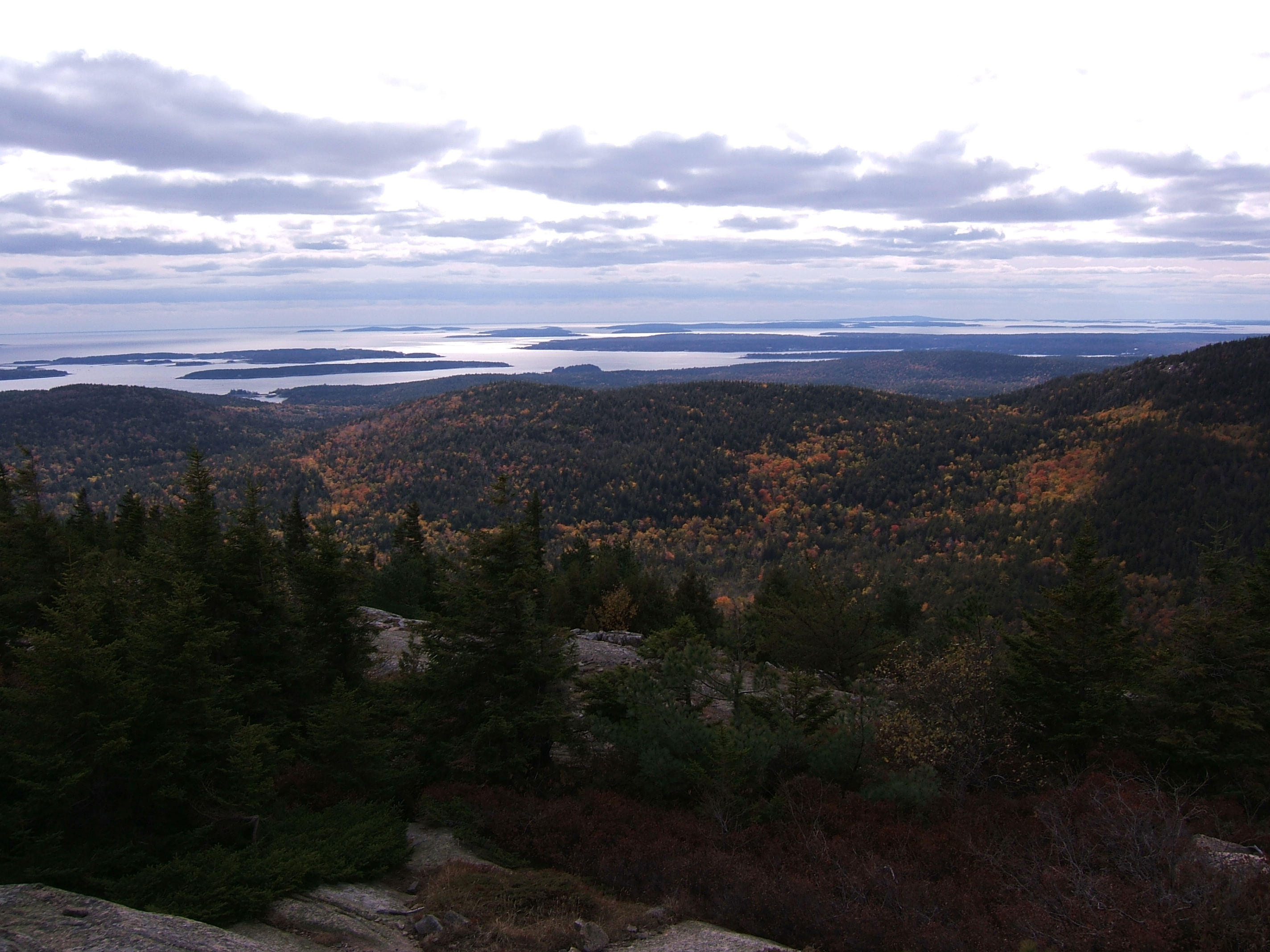
No.  I can’t say I enjoyed it.  In fact, not only was that the last  lobster I ate, it was the last seafood of any kind.  Which, believe me, is no small feat for a tourist traveling along the Maine coast in October.  Seafood is a big part of what people come for and it figures large in most menus.  Fortunately, during the next leg of our trip up in the staggering beauty of Acadia National Park, we found an outrageously tasty, local place called Chow Maine where we ate for five days in a row until it was time to finally fly home.

Looking back now I have regrets.  I’m sorry I let my queasiness get the better of me and wield the influence it did over the the trip.  I wish I’d gotten over it so I could have eaten more of the fabulous seafood cuisine that Maine has to offer.  It’s hard to understand how my reaction to a single incident could last that long but I’m not sure how one is supposed to overcome that level of digestive revolt.  Nausea is not a sensation that lends itself to compromise.

But in spite of the fact that it affected my appetite the way it did still, I’m glad and grateful for my experience with the lobster.  I’m satisfied that I seized the opportunity to finally participate in the killing/butchering part of the food cycle.

Over the years I’ve eaten my fair share of poultry, fish, and beef.  I’ve willingly participated in the death of all the fellow creatures that a meat diet requires, but always and only as an end consumer.  I’ve been happy there was someone else to handle the gut wrenching violence required to turn a living, feeling, innocent, helpless animal into something dead and edible, because that division of labor makes it easier to maintain the illusion that my hands are still clean.

But still, there are costs growing in the system that gnaw at me.  I can’t help but wonder if it might not be better to participate in the whole process a little more, mainly for the sake of the animals out there that are not only dying, but also increasingly being forced to live under some horrifying and inhumane conditions.

Just so we’re clear, I’m not talking about lobsters here.  Lobsters live (admittedly shortened) natural lobster lives in their natural lobster world before they’re finally caught and cooked.  They spend their lives aggressively eating whatever species of neighbor they can, occasionally each other, and I suspect they’d eat me, too, if I ever fell off a boat and sunk to the bottom.  More power to ’em.  I don’t want to be a hypocrite.  I’m willing to participate in the system if that ever falls to my lot.  I don’t object to the food chain itself.

The part of the food system that I’m referring to is industrial agriculture  (dubbed factory farming.)  Because in that system, the lives the animals are forced to live are an unmitigated nightmare.  Here’s just one example of an egg farm in California but there are countless others, all equally difficult to watch.  I can’t help but feel that my own unwillingness to take responsibility is part of the problem.  As long as I can have nameless, faceless people out there, killing nameless, faceless animals in some other galaxy far, far away, then I can continue to pretend like our meat really comes neatly packaged, skinned and weighed from grocery stores.  Styrofoam trays are the wombs from which pork chops and ground beef emerge.  Chicken breasts and steaks grow on trees, and you can tell if they’re not ripe yet because they’re still frozen in the middle.

No.  There’s something inherently dishonest…cowardly…about hiding behind a shopping cart and a checkbook like that, something disrespectful to the creatures and lives that are being sacrificed for my nourishment and sustenance.  They’re dying for godsakes.  The least I can do is try and ensure that they live a good life beforehand and die a humane death when the time comes.  I can stand witness to their suffering, care about it, say I’m sorry, and give sincere thanks before I bite a big chunk out of them.

I know if I was being eaten, I’d vastly prefer it was by someone who appreciated the costs on my side.

That’s what I tried to do in Maine.  For the lobsters.  It was harder than I thought it would be, a lot harder, but I think, with time and experience, it would get easier.  (Although even after research, I’m still not sure how I would kill the next one.  There’s a lot of controversy about which method is most humane.)

Of course back here in Idaho, my learning curve won’t involve lobsters.  Maybe I’ll learn how to hunt instead.  Or maybe someday I’ll raise a cow for butchering.  But until then I think I’ll start with the chickens I intend to raise for eggs, learn how to swiftly and cleanly break their necks once they’re past their laying prime.  Stand up, be a mensch, and do the sacred deed myself, then mourn and honor my beautiful girls as they deserve to be mourned, before we gratefully feast on their final gift to our family.

I just need to make damn sure that they live really great, happy, deeply beloved lives until then.

copyright 2010 Dia Osborn

When in Maine…

Up until seven months ago, Maine was the last state in the union that I’d never been to.  Living a nomadic lifestyle into my forties, I’d at least stopped to get gas in each of the other forty-nine.  But Maine had eluded me.  Maine is not a just-passing-through kind of place.  If one plans to ever step foot in the state, one must intend to go there.

So finally, last October, my husband and I took a vacation and spent ten, solid days there, decisively ending my lifelong quest to bag the Big Fifty.

And I couldn’t have picked a better place to finish.  Maine is drop-dead gorgeous and the people who live there are as solid and generous as their land.  I even found myself thinking about moving there a few times during the trip which was surprising since 1) I have no desire to abandon my children and family on the other side of the continent, 2) I’ve become a high desert creature and at my age probably wouldn’t adapt well and, 3) I don’t much care for lobster.

Not that I knew this last about myself before we went.  I’ve lived landlocked and relatively poor most of my adult life so lobster as a cuisine choice was never an option.  Not so in Maine, however.  No, no, madames et monsieurs.  You see in Maine, in October, it’s lobster high season and during this time period the little bottom dwellers are readily and cheaply available to everyone, high or low.

And I was ready for it.  I was eager.  I was all about putting on a bib and whacking a little, orange carcass to pieces with a wooden mallet.  (Although it turns out that’s crab.  For lobster, one uses a nutcracker.)

We stayed with a couple of natives (Mainers in the local vernacular), foodie friends who were excited to deflower the lobster-virgin.  They decided to initiate me Maine style with whole boiled lobster to be dismembered by hand, and a hot butter dip.  We went down to the famous and fabulous Harbor Fish Market to select our critters…which is where I made my first big mistake.

While the others shopped for chowder ingredients to round out the meal I stood near the giant tank where the fresh catch is held, watching the store-guy fish lobsters out of the dark water for customers.  He held them up in the air, turned over on their backs, while their claws, legs, and little antenna waved helplessly in the air, groping for something familiar from their own ocean world.  They were bewildered, not realizing yet that their old life was gone forever.  I felt a pang of kinship.

That feeling of dislocation is familiar to me.  Back when I made my first descent into a major depressive episode, I too felt disoriented and frightened by the foreign (albeit internal) landscape I landed in.  I did a lot of waving and groping of my own back then, trying to return to the familiarity of my old life.  It took me a while to figure out that I could never go back, and even longer to realize (unlike the lobsters) that I didn’t really want to.  The Woman I Was had grown up on too many secrets.   Turns out she needed to go if I was ever to achieve a sense of wholeness.

But I digress.  Back in the fish market I shook off my brief unease and, determined to enjoy the whole experience, joined the others as they returned to the car, lobsters tucked away in a cooler, packed in ice.  By the time evening rolled around they were still very much alive and waving away at us.  Our hostess was busy in the kitchen, preparing to cook them, and I was busy up in my head, preparing mentally for the sacrifice to come.  I take dying seriously, no matter what kind of life is engaged in doing it.  I always have.  It’s not that I see anything wrong with life coming to an end.  I don’t.  To me it’s a law of nature that stands tall and respected along with the rest.  It’s something that’s happening all the time, everywhere, all around us and there’s nothing that we see, touch, eat, smell, use, value, wear, want, hold, or love that isn’t at some point, somewhere in the chain of it’s existence, touched by, involved in, or responsible for the dying of something else.  Nothing.

And that’s comforting to me.  It’s how I know that nothing’s going wrong.  Dying is supposed to happen.  That knowledge helps anchor me, whenever I come up against it myself.  I use it to brace for the maelstrom that always accompanies dying, by remembering oh yeah, it’s just time.

It was always going to be time.

That evening, in the home of our friends, it was those lobsters’ time and I didn’t have a problem with that.  But I was also responsible for it, they were being killed in my honor, and that was a big deal to me.  So in return, out of gratitude and respect, I wanted to make sure that their dying went as smoothly as possible.  It seemed like the least I could do.

Unfortunately, what I didn’t understand about the process involved in killing them was a lot.

Our hostess was tolerant, respectful, and perhaps a little amused as I knelt by the cooler and said last rites over them.  Then, after studying her method as she transferred a couple to the pot, I picked one up myself, walked over and, with one last quick prayer, pushed it headfirst into the boiling water after which I stood back to watch.

Enter:  The maelstrom.

The lobster mythology that I’d heard over the years said they die the instant they hit the water.  That’s what I figured was going to happen.  Too late I realized that, having lived most of my life among inland people who had no easy access to lobster as a recipe ingredient, the stories I’d heard about how to cook them all came from others like myself who knew nothing about it.

Turns out they don’t die instantly.  At least this one didn’t.  I stood staring in horror as his limbs and antenna continued to wave around under the surface of the boiling water for an unconscionable period of time.  It’s not that he appeared to be in acute pain.  At least not that I could tell.  He wasn’t screaming for help or trying to climb out of the pot or anything.  But he was clearly conscious and experiencing all the sensations that go along with full body immersion in boiling water and, as that realization dawned, my prayers did an abrupt reversal in tone from blessings and thanks to something more along the lines of Dear holy God, what have I done?

I couldn’t move.  I kept saying But it’s still moving…it’s still moving over and over until finally our hostess walked over and gently, compassionately put the lid back on the pot so I couldn’t see inside anymore.  It broke the spell and I fell away from the stove, badly shaken.  Needless to say my appetite was gone.  Obliterated.  It had been replaced by a low grade nausea which I did everything in my power to hide.  After all, I was the one who had asked for this and they’d knocked themselves out to give it to me.

I was now facing a dilemma.  I discovered I no longer wanted to eat a lobster.  The allure was definitely, definitely gone.  However, there was a whole potful of the little guys who had just been boiled to death for my edification and there was no way in hell I could walk away now.  I had to eat one.  In fact, I had to eat every last shred of anything conceivably edible I could rip off its little carcass, because I couldn’t let it go to waste.  Not after what I’d just seen.

Whoops…I went way too long again.  I’ll have to stop here and finish next week.  Stay tuned.

copyright 2010 Dia Osborn

Predators, Bagels, and Rodents, Oh My!

My wife-in-law, who co-writes non-fiction books on subjects like happiness and love, once observed that writing about a topic for any length of time usually translates into having to live it, too.  She first mentioned this to me while working on her book about love, when issues surrounding both love (wonderful! fantastic! fabulous!) and not-so-love (bummer…sadness…lowly low) had ballooned in her life, forcing her to grapple with the subject matter in a way that an intellectual treatise alone didn’t require.

I’ve noticed a similar dynamic while working on a book about dying I started after nearly six years with a local hospice.  Only instead of the love/not-so-love polarity mentioned above, I’ve been wrestling with a fear-of-dying (worrying…fretting…clinging) versus a really-truly-living (grateful! wonder! wowie kazowie!) one.  I’m trying to figure out just how exactly this whole thing is supposed to look.  How does one live a no holds barred, balls to the wall, drink it all in and keep on dancing kind of life in the inevitable face of dying?

And am I?

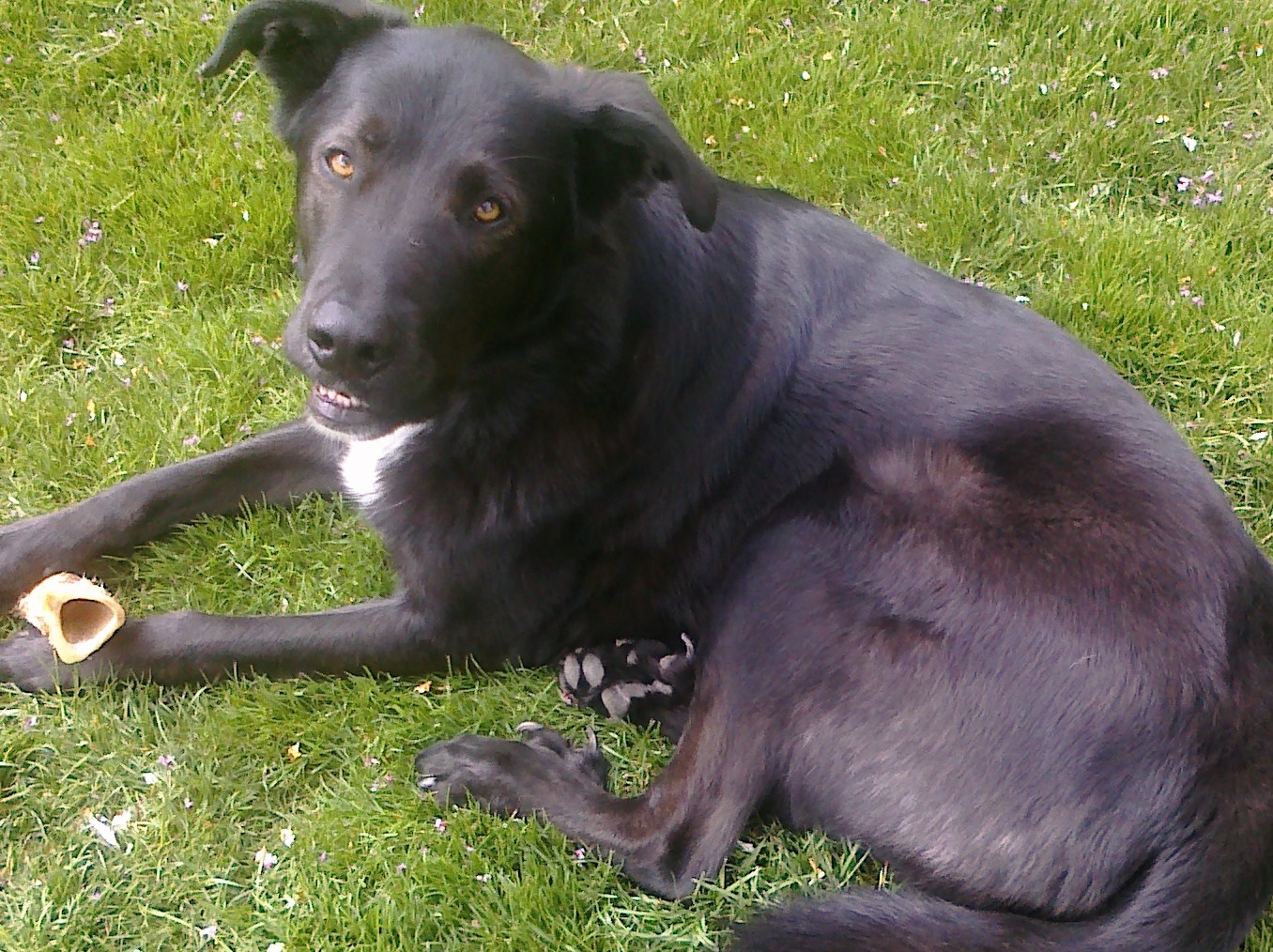
Yesterday afternoon I took our hundred pound, five-year old, rescue mutt up in the hills for our daily romp.  As usual, as soon as I gave him the all clear, Dane ranged far and wide off the trail, scouting out the endless smorgasbord of mangy and malodorous things he always finds to eat up there.  (He was abandoned young and lived on the streets for a while, nearly starving to death before animal control finally caught him.  The experience left scars.  I imagine if he could write a book, it would be all about food.)

He’s an avid scavenger, which is often disgusting, but something I can live with.  The challenge is that he also has the strongest predatory instinct of any dog I’ve ever had and he’s got a knack for hunting.

The first sign we saw of this instinct was innocuous and involved a dozen onion bagels I left on the kitchen counter the week we first brought him home.  The whole incident was my bad.  First off, he’s a really big dog and kitchen counters clearly offered no meaningful deterrent.  And second, he’d surreptitiously eaten two loaves of bread (and the bags) while I was showering on previous days so I should have known better than to leave the bagels out like that.

At first I thought he’d eaten them all.  But a half hour later I noticed him trotting towards the dog door with something in his mouth and, yes, it was a bagel.  Turns out he’d only eaten six and cached the rest.  During the ensuing treasure hunt we unearthed the others under pillows, inside shoes, behind drapes, and one that he’d carefully placed inside a box which he then closed.

Did I mention he’s smart?  He’s smart.

The bagel incident was annoying but pretty cute.  The one involving the warm and flopsy, back half of a wild rabbit we confiscated a couple of months  later wasn’t.  (He caught a wild rabbit!? you exclaim.  Only half?! I reply.)  There have been a few other victims.  Mainly rodents  and an occasional bird.  The number has fallen over the years as he’s gotten older but it’s still nothing I ever get used to.

And then yesterday he caught and killed a young ground squirrel.  A baby.  It was awful.  When I first spotted it outside its hole, I hung onto his collar until we’d scared it back inside.  I thought it was safe to let him go after that but the damn thing suddenly popped back up out of the hole and skittered away across open ground.  Dane was after it in a flash.  (It kind of takes my breath away how fast he moves when hunting.)  He scooped it up, chomped it three times like it was a squeak toy, and then just dropped it and walked off.

Now it’s not that I would have let him eat it had he tried, but he didn’t, and that kind of horrified me and ticked me off both.  I mean, what did he even kill it for if he didn’t want to eat it?  It’s so hard sometimes, trying not to put all my moral judgments onto a dog.  I realize it’s not that complicated for him.  Hey…it runs, I chase it lady. But I still struggle.

Then I realized the little ground squirrel wasn’t dead yet and I crouched down next to it uneasily while it twitched and spasmed there on the ground.  My father’s voice in my head told me I should put it out of its misery but I couldn’t bring myself to do it.  I just couldn’t.  I once drowned a litter of mice and (even though it’s probably not true) swore afterwards I’d never do anything like that again. Killing is a tough job, and it doesn’t get any easier just because it’s the compassionate thing to do.

Then I noticed the ground squirrel was heading into shock.  It’s eyes glazed over and the spasms slowed, so instead of having to search for a rock with which to crush it I thankfully knelt down in the dirt and started to sing.  Soft.  Crooning.  I told it sorry and thank you.  That it was beautiful to me and the hard part would soon be over.  I murmured words of encouragement, strength, and caring, and as its little body relaxed and grew more peaceful, I relaxed and grew more peaceful, too.  And it ended like that, a minute later.  The sunshine was warm and the breeze lifted fine dust all around us, gently.  Dane was snuffling around in the sagebrush a little ways off and everything felt quiet.  So very, very quiet.

It was a good ending.  Peaceful.  Sad.  Bittersweet.  Loving and tender and still.   It was a useless death but then, really, most of dying is.  I’m not sure, in the grand scheme, there’s anything wrong with that.  What was most important to me was that the baby didn’t suffer long and it didn’t die abandoned and alone.  (Of course again, in the grand scheme, I’m not sure any of us ever dies abandoned and alone but still, I think it makes a big difference, us being there for one another.)

So back to my original question, when it comes to life, am I or am I not balls to the wall, drinking-it-in-and-still-dancing?  Well, yesterday it wasn’t exactly dancing but it sure felt balls to the wall.  It’s never been that hard for me to live with gusto when the living is good.  I’ve always felt like the true testing comes when life turns to the darker side like it did yesterday.  And when it suddenly mushroomed up bloody and appalling I didn’t run, I didn’t rationalize, and I didn’t beat my dog.  I just gathered up a broken, little body and did my level best to keep on loving through the whole mess.  And for those few moments it felt like I’d unclenched my fists, dropped my arms, and let the whole twisted, shining shebang wash in and fill me.

No holds barred.

copyright 2010 Dia Osborn